A select few face overwhelming challenges in life. Encouraged by a heart filled with perseverance, these trailblazers adopt an attitude where “Can” outplays “Can’t.”
Born in 1786, young James Holman joined the British navy at age 12 during Europe’s Napoleonic Wars. He became an accomplished sailor and rose to the rank of lieutenant.
When he reached the age of 25, his life faced the insurmountable. Serving with the navy during the War of 1812 (British-American conflict), he contracted severe rheumatism. Unable to overcome the pain in his legs, ankles, and feet, Holman could barely walk. Eventually, the illness caused him to lose his eyesight.
Due to his blindness, he was awarded an act of royal charity. Joining the Knights of Windsor, he received a pension and residence at Windsor Castle. He was expected to live quietly there until his eventual death.
Holman was never content to sit idly and watch his life decline year by year. He refused to live as an isolated invalid, and he moved to Edinburgh, Scotland to attend medical school.
Queen Victoria’s own doctor backed up Holman’s need to be free from the confines of Windsor Castle. His painful rheumatism responded well to healing sunshine from continuous travel’s change of scenery and climate.
Holman’s time at Edinburgh motivated him to travel the world and fill his days with curiosity and fun. In 1819, he began his first journey to Europe, and he continued this quest over the next four decades. Traveling unaccompanied, he always traveled solo.
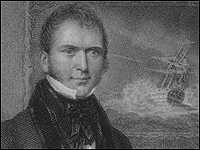
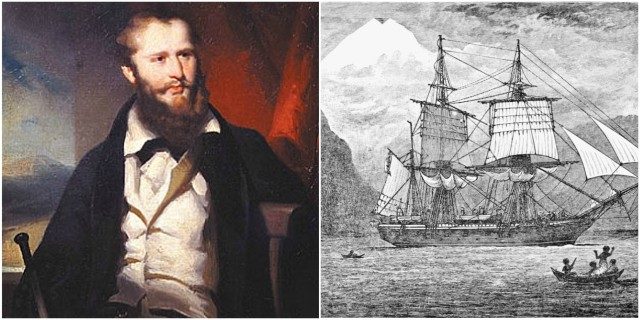
Left: A young James Holman from his naval days (courtesy of NPR). Right: A mature Holman with a full-grown beard (courtesy of Vintage News).
His first foreign travels took him to France. With little money, unable to speak the native language, and blind, Holman found his life’s purpose. His own words described his initial travels: “Behold me, then, in France! Surrounded by a people, to me, strange, invisible, and incomprehensible.”
By 1832, he had completed circumnavigation of the globe. By 1846, he had visited every inhabited continent. It was calculated that he traveled an estimated 400,000 kilometers. His metal-tipped walking stick was a constant companion.
Many adventures awaited Holman over the years. In Russia, he was imprisoned and later exiled as a spy. In Africa, he was involved in actions against the slave trade.
In his later years, Holman compiled memoirs of his travels. Five volumes would eventually be published, but most were not widely read.
Following his death in 1857, Holman’s life moved to obscurity. His adventures were long forgotten, but this would change.
In 2006, author James Roberts published a biography of Holman’s life and travels in A Sense of the World: How a Blind Man Became History’s Greatest Traveler.
People once again discovered the man known as the “Time Traveler.”
For more details about Holman’s extraordinary life, here is a link to more: Explorers Web.
We do not always feel joyful, but we are always to count it joy.
From James 1:2-3: “My brothers and sisters, whenever you face various trials, consider it all joy, because you know that the testing of your faith produces endurance.”
A. B. (Albert Benjamin) Simpson (1843-1919) was a Canadian-born pastor, theologian, and Christian author. He founded the Christian and Missionary Alliance.
A select few face overwhelming challenges in life. Encouraged by a heart filled with perseverance, these trailblazers adopt an attitude where “Can” outplays “Can’t.”
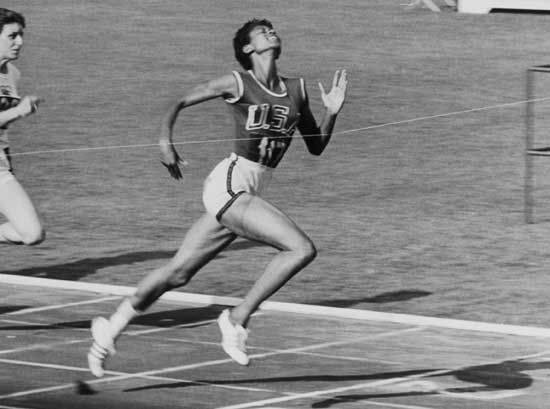
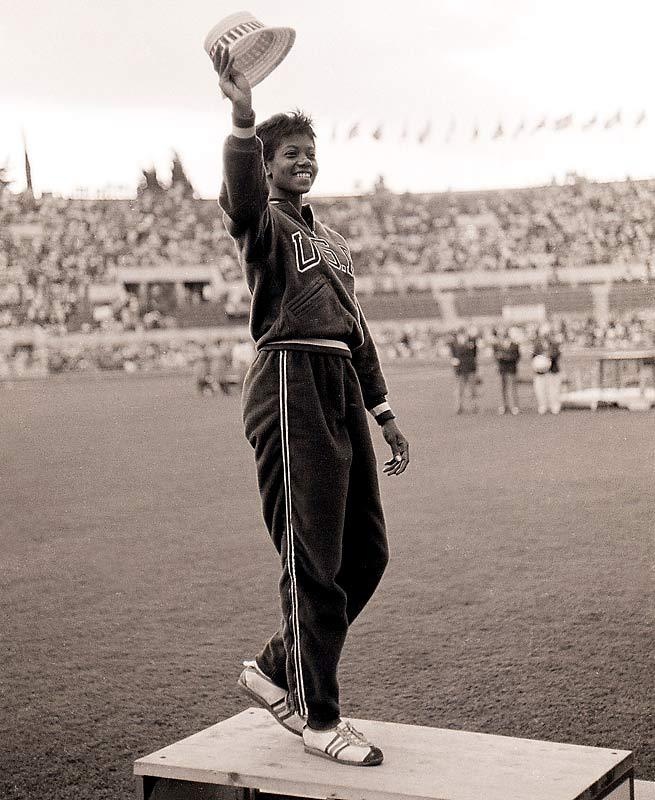
Olympics track star Wilma Rudolph overcame many obstacles in her life to achieve ultimate adoration for her speed and grace.
From the words of Wilma Rudolph: “Never underestimate the power of dreams and the influence of the human spirit.”
Born in 1940, Wilma was born in St. Bethlehem, Tennessee. She was part of a large family with 21 siblings. Facing a challenging life in the segregated South, she found athletics to be her path forward in life.
However, before Wilma pursued basketball and later track, she faced major hurdles because of health issues. Born prematurely, she endured bouts with double pneumonia, scarlet fever, and polio. Her weakened left leg required her to wear a brace, and some doctors didn’t expect her to ever be able to run.
Wilma remembered her childhood journey with these words: “My doctors told me I would never walk again. My mother told me I would. I believed my mother.”
Eventually, her leg grew stronger, and the brace thankfully disappeared. She became active in sports during her high school years. She was recruited by the legendary track coach at Tennessee State University in Nashville, Ed Temple.
While still in high school, Wilma qualified for the 1956 Summer Olympics in Melbourne, Australia. At age 16, she was the youngest athlete on the U.S. team. As a member of the 4 x 100 meter relay, she earned a bronze medal.
After high school graduation, Wilma moved on to Tennessee State. This natural, gifted runner prepared and trained to return to the Olympics in 1960 at Rome, Italy. Nicknamed “Skeeter” by her teammates, Wilma was more than ready to compete.
At the Rome Olympics, Wilma became the first American woman to win three gold medals in track and field at a single Olympics. Competing individually in the 100 and 200 meters, she overwhelmed the other competitors for two gold medals. Wanting her teammates to also earn a cherished gold medal, Wilma anchored the winning 4 x 100 meter relay.
Accolades for Wilma continued to pour in following her Olympics’ exploits. Because of her speed, beauty, and grace, the Italian press nicknamed her “The Black Gazelle.” The Associated Press awarded her Female Athlete of the Year in 1960 and 1961.
Wilma retired from competition in 1962. She fulfilled her dream of earning a college degree. For a few years, her post-athlete life included teaching, coaching, and working with underprivileged children.
The story of this African-American girl overcoming polio, poverty, and racism became a film, “Wilma,” which was released in 1977.
The following video shares a few highlights of Wilma Rudolph’s life and Olympic career.