In the United States, the “Pledge of Allegiance” has been recited countless times in school classrooms, at the beginning of meetings, sporting events, and other instances. The original 29 words were inspired by the writings of Francis Bellamy (from 1892) and became official in 1923. In 1954, the words, “under God” were added. These 31 words mean much more than just a mere collection of words.
I have posted this video before, but it is worth a second look. Here is American comedian, Red Skelton, sharing his interpretation of the words’ meaning in the “Pledge of Allegiance.”
Honor and good faith and justice are equally due from this country toward the weak as toward the strong.
Of all the properties which belong to honorable men, not one is so highly prized as that of character.
Henry Clay (1777-1852) was an American lawyer and statesman. He served in both houses of the American Congress. He spent his adult life in the state of Kentucky.
Norman Rockwell found endless ways to portray American life, just as he is doing in this photograph. (Courtesy of Pinterest)
Commonplaces never become tiresome. It is we who become tired when we cease to be curious and appreciative.
The view of life I communicate in my pictures excludes the sordid and ugly. I paint life as I would like it to be.
Norman Rockwell (1894-1978) was an American artist and illustrator. His works were published in magazines, advertisements, covers, calendars, and so much more. He accurately displayed the essence of American life.
Under the night sky, Hollywood’s best shine bright
Notable scenes from drive-ins come to the screen
Danny and Sandy from “Grease” making the scene
Winning combination fuels drive-ins’ success
Love of movies plus cars, who would ever guess?
Practicing social distancing, cars spread out
Another summer night, film-inspired blowout
Family piles into the station wagon
Good thing we traded that tiny Volkswagen
Mom and Dad, reservations in the front seat
Wearing pajamas, kids view from the back seat
Transporting all of us to a place of fun
Kids become quiet . . . fall asleep, one by one
Comfy family night under twilight’s stars
Slice of Americana, with movie stars
Courtesy of Pinterest.
Practicing social distance before anyone knew what it meant, America’s drive-ins have been a fixture since arriving in New Jersey in 1933. Following World War II, the American landscape exploded with new drive-ins. By 1952, outdoor movie attendance exceeded indoor theaters for the first time. During the 1950s, the number of drive-ins peaked at 5,000 or so.
Wherever you live or where your travels take you, you may have a favorite mountain paradise. One of my precious favorites is the Beartooth Mountains in south-central Montana, a stone’s throw away from Yellowstone National Park.
You are invited to share one of your special places in the comments.
Montana’s rugged Beartooth Mountains [photo courtesy of pinterest].
This informative post will be published on Saturday in place of my regular one. You are invited to participate with the opening question.
Brain Teaser Question
A plane crashed between the border of France and Belgium. Where were the survivors buried?
(answer found at the end of this post)
Featured Facts
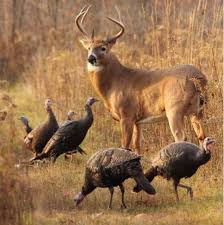
The wild turkey of North America is a wary and magnificent bird. While domestic turkeys fulfill America’s demand for Thanksgiving dinners, the wild turkey freely intermingles with deer as they frequently share the same habitat.
Here are a few quick facts about the wild turkey:
Habitat: woodlands, grasslands, swamps (prefer mixture of woodlands and open clearings)
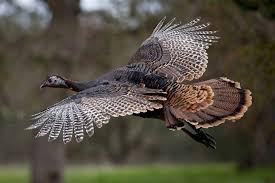
Wingspan: 4-5 feet
Weight: male, up to 24 pounds; female, up to 12 pounds
Diet: nuts, seeds, fruit, insects, small lizards (omnivorous)
Lifespan: 3-5 years
One of the American Founding Fathers, Benjamin Franklin, is said to have preferred the turkey over the bald eagle as the nation’s choice of national bird. Of course, the eagle’s fortunes have soared while the turkey’s have stayed closer to home.
Turkeys are found in nearly every region of the the lower 48 states of the United States. Conservation efforts have allowed the turkey population to recover from reduced numbers because of hunting and loss of habitat. In the early 1900s, roughly 200,000 turkeys roamed America’s woodlands and grasslands. Today, their number has ballooned to 6-7 million.
Sometimes nicknamed the “bird of courage,” the turkey is a related species to the ring-necked pheasant. There are five subspecies of turkeys in North America: Eastern, Osceola, Rio Grande, Merriam’s, and Gould’s.
Turkeys are not migratory, but they may wander during the autumn season. They are most active in foraging during the early morning and evening. Their nests consist of shallow dirt depressions, surrounded by vegetation. Natural predators of the turkey include coyotes, bobcats, mountain lions, Golden Eagles, and Great Horned Owls. Turkeys must defend their nests from other predators, including raccoons, opossums, skunks, snakes, foxes, and woodchucks.
A male turkey features more colorful and distinctive features than a female. Their distinctive red wattle hangs from the beak, and a dark tuft of feathers covers the breast. A female’s colors are more muted, subtle, and duller.
Turkeys will roost overnight in trees, which provide greater protection from predators. Mature turkeys are capable to running up to 20-25 miles per hour, and they can fly short distances at speeds of 50-55 miles per hour.
clockwise from top left: mature male in his colorful attire, female hen (note smaller size and more subtle colors), flock gathering, in flight to escape predator or seek SAFETY in tree, comfortable among deer’s presence, female with her brood. (Images courtesy of Pinterest)
Answer to Brain Teaser Question
They weren’t buried because survivors don’t need to be buried.
This informative post will be published on Saturday in place of my regular one. You are invited to participate with the opening question.
Brain Teaser Question
Throw away the outside and cook the inside; then eat the outside and throw away the inside. What is it? (Hint: delicious with extra butter)
(answer found at the end of this post)
Featured Facts
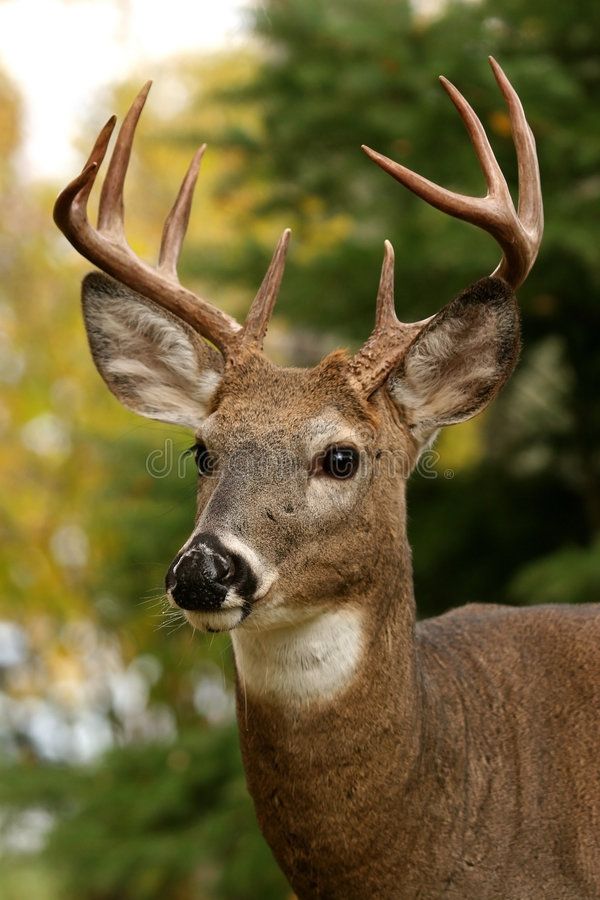
The most common of all deer species in the United States is the white-tailed deer. Sometimes they are referred to as whitetail deer or Virginia deer.
Here are a few quick facts about the white-tailed deer:
Height (at shoulder): 2.5 to 3.5 feet
Weight: bucks (males), 200-300 pounds; does (females), 100-200 pounds
Average lifespan: around 10 years
White-tailed deer live throughout the continental United States. They can be found in a variety of habitats: open wooded areas, wetlands, meadows, and prairies. Their diet consists of grasses, leaves, twigs, fruit, flowers, lichen, and legumes (such as alfalfa and clover). Their four-chamber stomach allows them to eat just about anything.
Throughout most months, white-tailed deer feature a reddish-brown coat. This changes to grayish-brown during the late fall and winter. For short distances, they are able to run up to 30 miles per hour, and many can jump fences nearly eight feet tall.
Being one of the smallest deer in the United States, the white-tailed species differs from its larger cousin, the mule deer. Most mule deer are found in the western United States, and there are slight differences in physical characteristics. Bucks usually weigh 400 pounds or more. They also possess larger ears and antlers.
The chief predator of white-tailed deer is man. However, it is also pursued by natural predators in the wild. These animals may include the cougar, wolf, bear, mountain lion, and coyote.
Does typically give birth to two or three fawns. They are easily identified by the spots found on their bodies. Fawns will usually be nursed for 8-10 weeks. Young bucks will stay with their mother for about one year while young does will stay for nearly two years. Most mature bucks live a solitary life, and they will only gather around does during the fall breeding season.
Many people have read Hungarian-born, Austrian writer Felix Salten’s novel from 1922, Bambi, a Life in the Woods. Salten uses a European setting so the deer in his writings is a roe deer. This differs from the deer used in the Disney animated film from 1942, “Bambi.” Here an American white-tailed deer is featured.
top left and moving clockwise: mature white-tailed buck, white-tailed fawn, white-tailed doe, roe deer buck (European), another white-tailed buck (notice the smaller size and more narrow spread of the antlers), mule deer buck (notice the larger size and wider spread of the antlers), two white-tailed bucks fighting over a female during the autumn breeding season. (Images courtesy of Pinterest)
















 Big Sky Buckeye