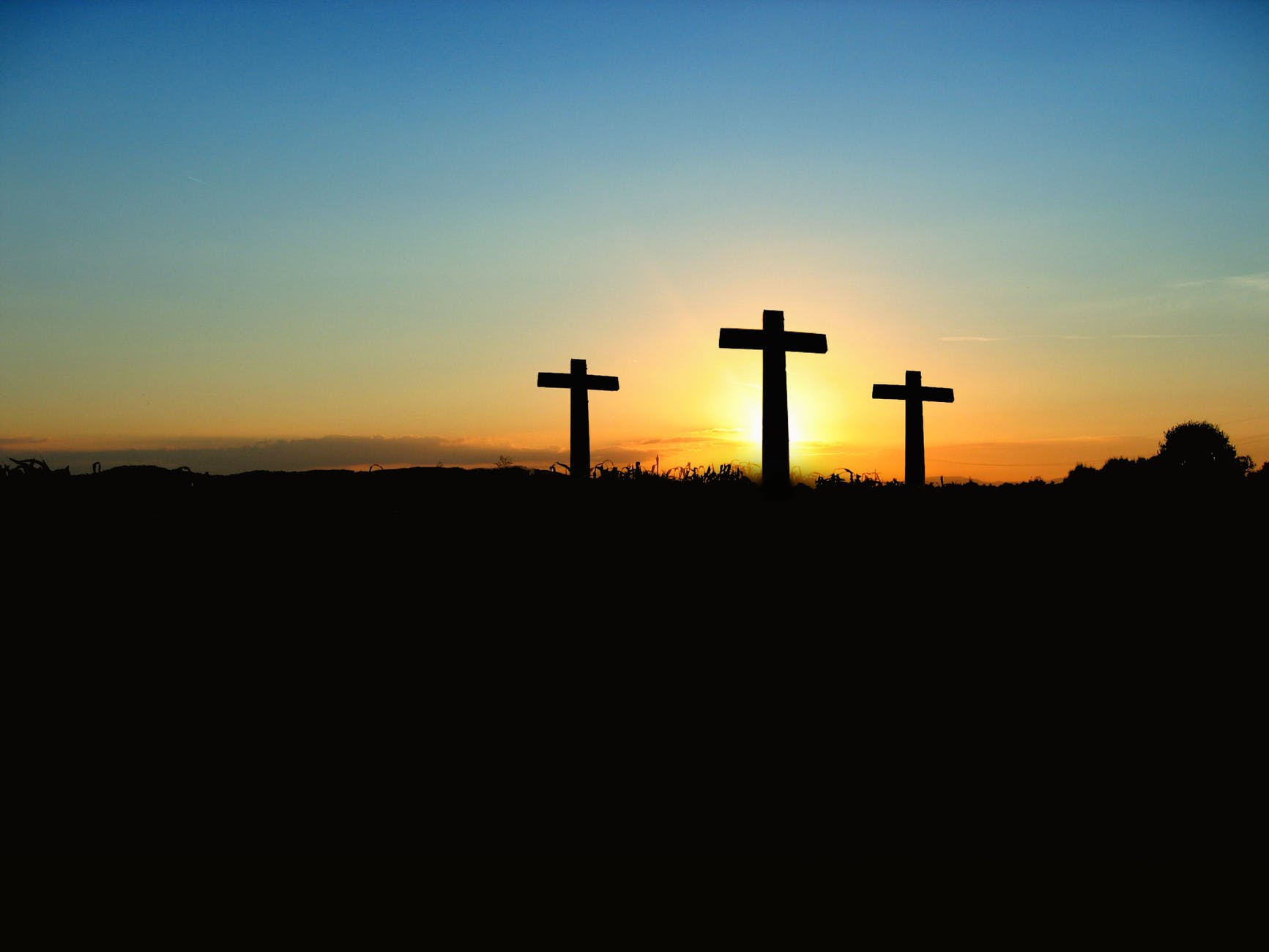
All of history looks back at that moment–to the tragedy and triumph of that cross. First the crucifixion, then the resurrection of the Son of God.
From Romans 5:8: “God proves His love for us in that while we still were sinners Christ died for us.”

All of history looks back at that moment–to the tragedy and triumph of that cross. First the crucifixion, then the resurrection of the Son of God.
From Romans 5:8: “God proves His love for us in that while we still were sinners Christ died for us.”

Nation’s outstretched hand
Shaping distant land
Trade benefits both
Bringing steady growth
Prosperity’s health
Welcoming new wealth
Benevolence molds
Filling now with cold
This mighty power
Seeing its plans sour
Citizens lack voice
Having little choice
Uproar fuels action
Bringing reaction
Hostile clouds amass
Reaching dark impasse
Big brother nation
Facing frustration
Rebels gather ‘round
Fading common ground
More Redcoats arrive
Gathering beehive
Independence shouts
Calling freedom out
Colonists stand firm
Battling to affirm
Mother country’s heart
Tearing self apart
British might stands down
Watching its meltdown
America stands
Molding freedom’s hands

Throughout history, many nations have attempted to mold and shape other lands into their own image. Terms such as imperialism, colonization, and nation building sometimes come to mind. It is worth noting that the British attempted to establish a foothold on the American continent starting in 1607. By the mid-1770s, their plans for a continuing American empire were crumbling. Few, if any other nations, have learned from this lesson in history . . . America included.

Circus shows once filled with excitement to delight
Few spectators now attend circus magic each night
Generation ago, numerous children experienced it all
Now mighty Big Tops have vanished with a huge fall
Sitting in the crowd with a perfect seat
Thrilled to adore another tasty treat
The ringmaster keeps the thrilling show moving along
Audiences soon realize that each act lasts only so long
Three rings keep crowd’s enthusiasm mounting with ease
Here come zany clowns, filled with foolishness to please
Dazzling jugglers and daring acrobats delight
Children dream of being in the circus spotlight
Sitting in the crowd with a perfect seat
Eagerly watching performances so sweet
Lions, tigers, and bears—Oh, what a sight to behold
Bravery shown by animal tamers, awesome and bold
Always pleasing are gigantic elephants from afar
Their majestic presence makes them the stars
Evening’s ultimate act flies high above three circus rings
Trapeze artists dangle with suspense from their swings
Sitting in the crowd with a perfect seat
Looking forward to each astonishing feat
Fewer circus companies still travel the globe
The “Greatest Show on Earth” needed to fold
Audiences once filled the Big Top’s nightly crusade
Now dying out, precious memories stumble and fade
New generation of young children shall never wonder
How circus night brought applause as loud as thunder
Sitting in the crowd with a perfect seat
Recalling circus images that will repeat


Vanishing prairie hangs on
Isolated town foregone
Time long ago, grand premiere
History fading each year
Showing up on highway map
Road’s wide spot, taking a nap
Middle of farming country
Seldom find even one tree
Boarded-up wood-frame schoolhouse
Empty, forgotten courthouse
No longer town’s pride and joy
Critters, varmints now employ
Railroad track hides in tall grass
Recalling past trains, first-class
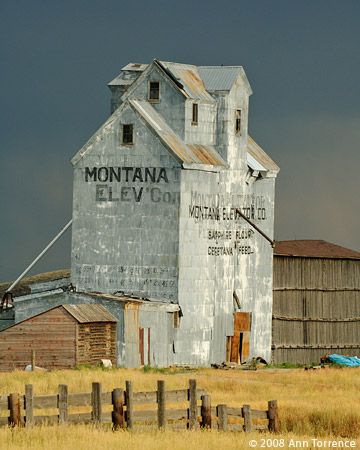
Grain elevator hanging on
Memories live, town’s swan song
Single street light standing guard
Night’s shadows, lasting vanguard
Yesteryear’s grandest of homes
Mystery for Sherlock Holmes
Faded sign for Ruth’s Café
Long absent dinner entrees
Movie theater shuttered
Smelling fresh popcorn, buttered
Few remember town’s past times
Hearing nature’s windy chimes
Past glory days, now long gone
Dim sunset, well past its dawn

During my teaching career, I taught 25 years in the eastern prairie country of Montana. Today, many small farming communities struggle for survival while others such as the one in this poem live on only as memories.

Howling wind joins darkness
From mountains standing tall
Screaming into valleys
Her spirit lives to bawl
River bottom cuts through
Shudders at her loud cry
Escaping into night
Her spirit never dies
Myths and legends live on
Woman wanders away
Never noticed again
Her spirit roams to prey
Crazy Woman Mountains
Dramatic island range
Lives into eternity
Her spirit must not change
Another winter night
Shivering voice calls out
Noisy lungs never sleep
Her spirit lives throughout

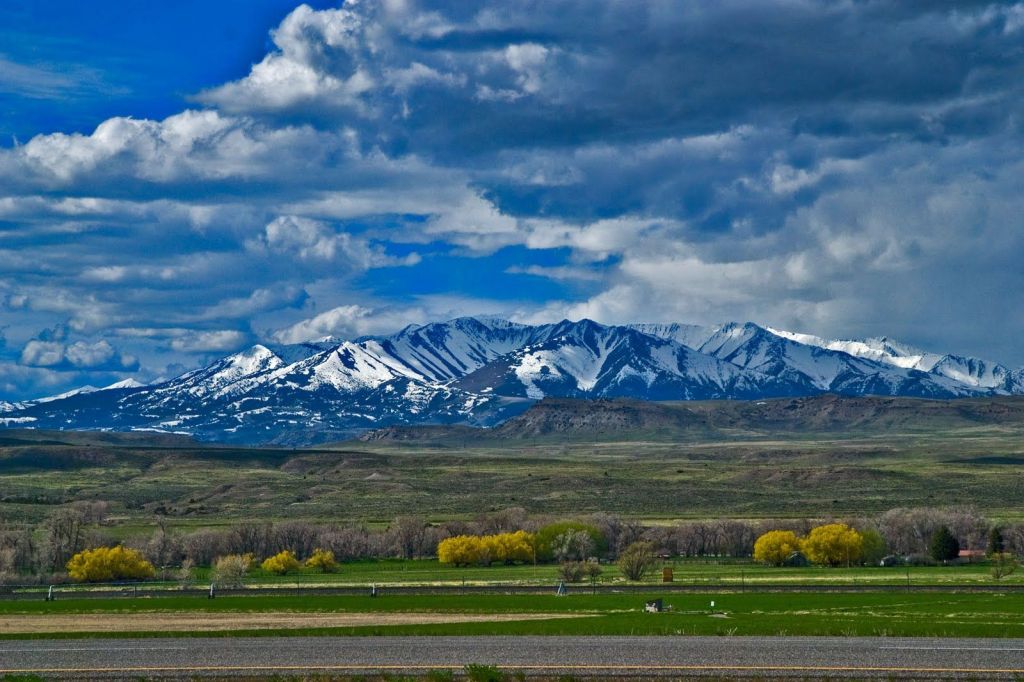
Montana’s Crazy Mountains stand as a sentry above the valley near the town of Big Timber. Nicknamed the “Crazies,” the wind always seems to be blowing. If you wish to read more about them, here is a link to the mountains.
Every couple of months or so different snapshots about the Buckeye State of Ohio will be featured.
Just like the place where you live, Ohio is loaded with facts which very people may actually know. Being relatively new to Ohio (arriving here about 13 years ago), I am still searching and discovering more.
Ohio is sometimes referred to as the “Buckeye” state. But, how many people really know what a Buckeye is? The Buckeye tree is found throughout the state, and its nut is also called a Buckeye. While the trees are found in other Midwestern locations, only Ohio has adopted it.

Besides being a nickname for the state, Buckeyes is also used as the name for The Ohio State University’s athletic teams. To be honest, it seems a bit strange to use the name of a “worthless nut” for a college sports team name.
Ohio was granted statehood in 1803 while Thomas Jefferson was President. However, does anyone know the rest of the story? When the American Congress approved statehood for Ohio, they forgot one significant step. Ohio’s state constitution was not ratified by the federal government. This error was overlooked until 1953 when President Dwight Eisenhower signed legislation approved by Congress to rectify this oversight.

Ohio is home to eight of America’s Presidents. Any Americans who can name them all should be applying for a spot on the game show “Jeopardy.” With the exception of William Henry Harrison, all were born in Ohio. Harrison was born in Virginia, but lived in Ohio when he was elected President.
The remaining Presidents include: Ulysses S. Grant, Rutherford B. Hayes, James A. Garfield, Benjamin Harrison, William McKinley, William Howard Taft, and Warren G. Harding. There has not been a President from Ohio since Harding (elected in 1920). Seeing that Harding has been ranked as one of the most inefficient Presidents in history, one might understand why Ohio has been on the Presidential sidelines ever since.


This is the third post of a relatively new feature here at Big Sky Buckeye. Every couple of months or so different snapshots about the Buckeye State of Ohio will be featured.
Ohio uses a number of nicknames. Many people have heard of the “Buckeye” state, but fewer know some of its other nicknames.
Declared by the U.S. Congress in 2003, Ohio is also known as the “Birthplace of Aviation.” Four noteworthy Ohioans have stood out for their individual contributions to American aviation.
Many people know of the inventive brothers, Wilbur and Orville Wright (1867-1912 and 1871-1948). Growing up in Dayton, this tandem worked hard to earn a living from their bicycle business, but they were dreaming of more. Their ambitions credited them with inventing and flying the first aircraft in 1903 at Kitty Hawk, North Carolina. In winning a coin toss, Orville took the controls of the plane on this historic flight.
Few people may know of the top fighter ace from World War I, Eddie Rickenbacker (1890-1973). Born in Columbus, this daring aviator earned 26 aerial victories during the Great War. Being nicknamed “Fast Eddie,” this man seemed destined for greatness. For his war exploits, he was awarded the American military’s Medal of Honor. Later in life, he experienced more success as a race car driver, automotive designer, and airline executive.


On the left: the Wright brothers. On the right: Captain Eddie Rickenbacker. (Photos courtesy of Pinterest)
One of the most recognized of the early American astronauts was John Glenn (1921-2016). Hailing from New Concord, he flew as a U.S. Marines fighter pilot in World War II (57 combat missions) and the Korean War (63 combat missions). Following his military service in Korea, Glenn served as a fighter test pilot. Little did he know that this step in his aviation career would open a door to outer space. Selected as one of NASA’s original seven astronauts, he orbited the earth three times in 1962 aboard the Friendship 7 space flight in a Mercury capsule.
Any discussion about Ohio’s aviation pioneers would not be complete without including Neil Armstrong (1930-2012). From his hometown of Wapakoneta, Armstrong would bring a well-rounded resume to his training in NASA’s second group of astronauts. The Korean War veteran served as a naval aviator and test pilot. Following Armstrong’s successful Gemini 8 mission, he was groomed to make the historic moon landing on July 20, 1969 with Buzz Aldrin. As he stepped onto the moon’s surface, his words still resonate even today: “That’s one small step for man, one giant leap for mankind.”


On the left: John Glenn. On the right: Neil Armstrong. (Photos courtesy of Pinterest)
Each of these Americans played an important role in the development of aviation in the United States, taking us from the first flight to landing man on the moon. Outside of Dayton stands the Wright-Patterson Air Force Base, which is also home to the world’s oldest and largest military aviation museum—National Museum of the United States Air Force.
The sheer number of exhibits is overwhelming, but here is a very brief sample. Follow this link to the museum website.
The inspiration for this poem comes from an essay written by William E. Farr, “Troubled Bundles, Troubled Blackfeet: The Travail of Cultural and Religious Renewal.” This essay is part of a larger collection of writings that link Montana’s past with its future in the book, MONTANA LEGACY.

Facing an uncertain world
Life asking questions of “when”
Intertribal wars threaten
Hostile danger setting in
Preserving Blackfeet culture
Each passing generation
Saving sacred heritage
Hold for next generation
Ritual artifacts cache
Spiritual lives won’t rest
Supernatural visions
Medicine dreams will attest
Honoring warrior life
Holy treasures speaking out
Collected and safeguarded
Sacred bundles carry clout
Filling with key elements
Common and natural sought
Feathers, hides, shells, horns added
Teeth, wood, bones . . . each with a thought
Passing on these rituals
Mother Earth, Creative Sun
Guarding life’s sacred relics
Legacy, father to son

In December, 1989, the Romanian Revolution ignited with passion which would no longer wait in silence. The rest of the Eastern Bloc countries under Soviet influence had already experienced peaceful change from communist dictatorships. Under Nicolae Ceausescu’s harsh leadership, Romania was the final holdout as the democratic wave of freedom blitzed across Eastern Europe. This poem shares some of this revolution’s story.

Ruthless, authoritarian rule controls the cards
Harsh, brutal regime crushes dissenting voices
Quietness hides the remaining, burning embers
Daily life conceals wounds, offering few choices
Citizens endure lack of even the basic needs
Challenging days, facing endless heartbreak
Darkest days of winter, hunger and little heat
Voices stifled, experiencing numbing heartache
Freedom routed, plummeting to rock bottom
System of repression forcefully controls lives
Defiant opposition, beaten down to nothing
Dictator’s untruths cover up with empty lies
Scattering of small voices continues to speak out
Smoldering protests fueled with hungry passion
Government crackdowns to silence any dissent
Voices growing bolder, backed with compassion
Massive protests ignite courage in a distant city
“Timisoara” becomes a rallying cry for liberation
Unexpectedly, dark and evil house of cards folds
Season of change witnesses rebirth of a nation


Marveling at an American treasure
Outdoor movie screens offer nighttime pleasure
Drive-ins share their unique personality
Double features, hometown hospitality
Big screen stars on America’s movie night
Under the night sky, Hollywood’s best shine bright
Notable scenes from drive-ins come to the screen
Danny and Sandy from “Grease” making the scene
Winning combination fuels drive-ins’ success
Love of movies plus cars, who would ever guess?
Practicing social distancing, cars spread out
Another summer night, film-inspired blowout
Family piles into the station wagon
Good thing we traded that tiny Volkswagen
Mom and Dad, reservations in the front seat
Wearing pajamas, kids view from the back seat
Transporting all of us to a place of fun
Kids become quiet . . . fall asleep, one by one
Comfy family night under twilight’s stars
Slice of Americana, with movie stars

Practicing social distance before anyone knew what it meant, America’s drive-ins have been a fixture since arriving in New Jersey in 1933. Following World War II, the American landscape exploded with new drive-ins. By 1952, outdoor movie attendance exceeded indoor theaters for the first time. During the 1950s, the number of drive-ins peaked at 5,000 or so.