Born in the Big Sky Country of Montana and now living in the Buckeye State of Ohio, Richard is the creative mind behind Big Sky Buckeye. Retired after 40 years of teaching, I enjoy writing, photography, traveling, and following a healthy lifestyle.
Common sense in an uncommon degree is what the world calls wisdom.
Silence does not always mark wisdom.
Samuel Taylor Coleridge (1772-1834) was an English poet, theologian, and philosopher. He was considered to be one of the founders of the Romantic Movement in England.
From John 3:16-17: “For God so loved the world that He gave his only Son, so that everyone who believes in Him may not perish but may have eternal life. Indeed, God did not send the Son into the world to condemn the world, but in order that the world might be saved through Him.”
Photo by u0410u043du043du0430 u0420u044bu0436u043au043eu0432u0430 on Pexels.com
Things will happen that seem to be totally contradictory, but these are God’s arrangements. My job is simply to obey it.
From Joshua 1:9: “I hereby command you: Be strong and courageous; do not be frightened or dismayed, for the Lord your God is with you wherever you go.”
Charles Swindoll (born 1934) is an American pastor and Christian author.
Immersed in God’s river of living water, our regular Bible reading fills our faith with His truth.
Do you write a daily journal? This inspiring thought comes from my journal, and much of what is written in my journal comes from reading and commenting on other bloggers’ posts. Thanks to many of you for adding so much to my journal.
If you will give God your right to yourself, He will make a holy experiment out of you. God’s experiments always succeed.
From Romans 12:1-2: “I appeal to you therefore, brothers and sisters, on the basis of God’s mercy, to present your bodies as a living sacrifice, holy and acceptable to God, which is your reasonable act of worship. Do not be conformed to this age, but be transformed by the renewing of the mind, so that you may discern what is the will of God—what is good and acceptable and perfect.”
Oswald Chambers (1874-1917) was a Scottish evangelist and Christian teacher. Following his death from an illness while in Egypt during World War I, his wife took on the task of transcribing the detailed notes she had written from his lectures and sermons. Gertrude Hobbs Chambers’ efforts resulted in the publication in 1924 of MY UTMOST FOR HIS HIGHEST. I frequently read from this devotional, and it has greatly deepened my faith and understanding of God’s Word.
This informative post will be published on Saturday in place of my regular one. You are invited to participate with the opening question.
Brain Teaser Question
What kind of ship has two mates but no captain?
(answer found at the end of this post)
Featured Facts
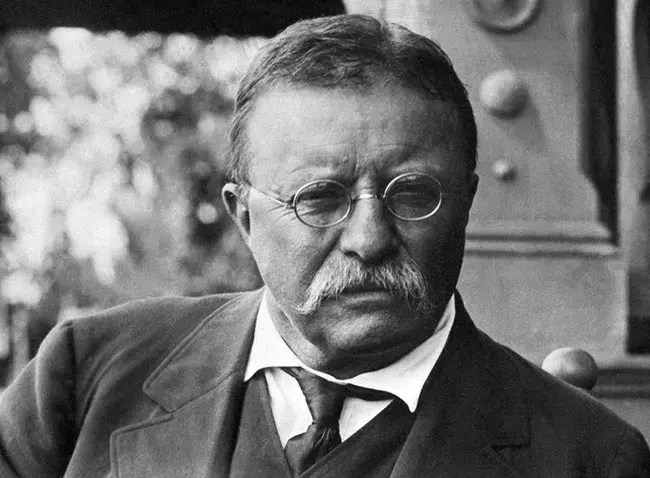
At times seeming bigger than life, Theodore Roosevelt ascended to the American Presidency in 1901. Upon William McKinley’s assassination, Roosevelt became the 26th President of the United States.
Here are some interesting facts about President Roosevelt:
Political party: Republican
Home state: New York
Lifespan: 1858-1919
Term of office: 1901-1909
Notable occupations: rancher, soldier, author
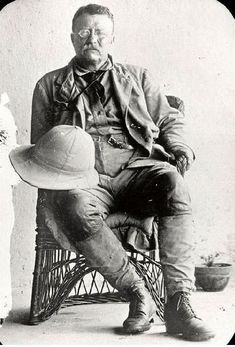
Roosevelt’s transition into politics was stimulated by personal family loss. In 1884, he lost both his wife, Alice, as well as his mother, Martha. Both died on the same night. A devastated Roosevelt spent two years away from his home state while living on and operating a cattle ranch in the western Badlands of the Dakota Territory, near present-day Medora, North Dakota.
Upon his return from the West, T. R. (as many called him) followed fresh stepping stones, which would eventually lead him to the White House. Prior to being elected New York’s Governor in 1898, he also served as President McKinley’s Assistant Secretary of the Navy. During his tenure with the naval department, the United States entered the Spanish-American War of 1898.
During the Spanish-American War, Roosevelt organized and lead a volunteer cavalry unit, better known as the “Rough Riders.” Roosevelt and his men served gallantly in the short-lived war’s action in Cuba. Roosevelt earned another nickname which would follow him for the rest of his life, “The Rough Rider.”
As President, Roosevelt served out McKinley’s term of office as well being elected in his own right in 1904. A major theme of his domestic agenda revolved around the “Square Deal.” He supported progressive reforms and promised to battle large industrial combinations (also called trusts). His foreign policy was built around a philosophy of “speak softly and carry a big stick.” He modernized and enlarged the American navy.
Roosevelt’s final years as President brought new challenges and achievements. Known as the conservation President, he doubled the number of America’s national parks. His administration oversaw construction of the Panama Canal in 1904 (the canal would open in 1914). In 1906, Roosevelt would receive the Nobel Peace Prize for his help in ending the Russo-Japanese War.
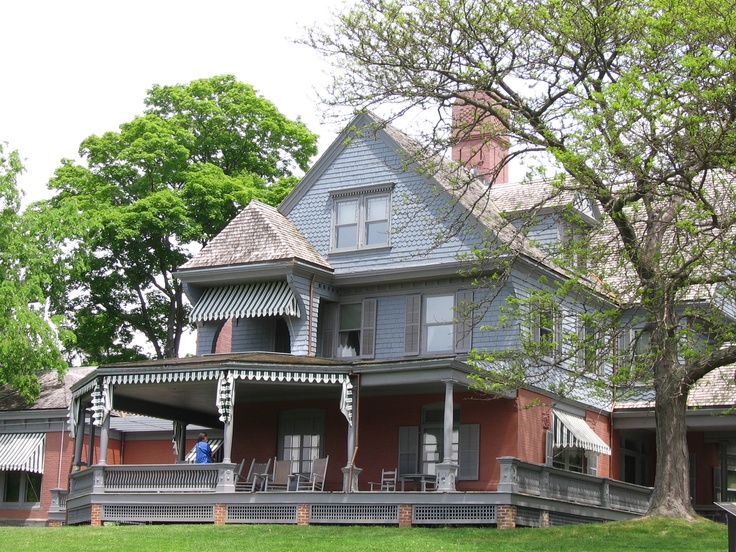
left column: dual images of older and younger roosevelt, on african safari following his presidency, at the panama canal during construction. right column: roosevelt the conservationist traveling out west, on the campaign trail, family home at sagamore hill, lieutenant colonel of the rough riders.
Today’s work ethic will unlock tomorrow’s opportunity.
Do you write a daily journal? This inspiring thought comes from my journal, and much of what is written in my journal comes from reading and commenting on other bloggers’ posts. Thanks to many of you for adding so much to my journal.
A man who is good enough to shed his blood for the country is good enough to be given a square deal afterwards.
Far and away the best prize that life has to offer is the chance to work hard at work worth doing.
[Both quotes come from separate speeches during 1903 where President Roosevelt was proposing his “Square Deal” as part of the federal government’s progressive reforms.]
Theodore Roosevelt (1858-1919) was the 26th President of the United States.
This series of poems (written in the German-inspired style of Elfchen or Elevenie) shares a total of eleven words in each poem, with a sequence by line of one, two, three, four, and one words.















 Big Sky Buckeye