Don’t judge your feelings; notice them. Use them as your map. Don’t be afraid of the truth.
Peace. It does not mean to be in a place where there is no noise, trouble, or hard work. It means to be in the midst of those things and still be calm in your heart.
Lori Gottlieb (born 1966) is an American bestselling author, therapist, and speaker.
Peace comes not from the absence of trouble, but from the presence of God.
From John 14:27: “Peace I leave with you; my peace I give to you. I do not give to you as the world gives. Do not let your hearts be troubled, and do not let them be afraid.”
Troubles we bear truthfully can bring us a fresh vision of God and a new outlook on life–an outlook of peace and hope.
From Isaiah 40:28-29: “Have you not known? Have you not heard? The Lord is the everlasting God,the Creator of the ends of the earth. He does not faint or grow weary; His understanding is unsearchable. He gives power to the faint,and strengthens the powerless.”
From Proverbs 22:24-25: “Make no friends with those given to anger,and do not associate with hotheads, or you may learn their waysand entangle yourself in a snare.”
Daniel Webster (1782-1852) was one of America’s greatest orators and statesmen. He served in the United States Congress for 18 years as well being Secretary of State under three different Presidents.
When we make time to be alone with the Father and quiet in His presence, we experience His peace.
From Psalm 131:1-2: “O Lord, my heart is not lifted up,my eyes are not raised too high; I do not occupy myself with thingstoo great and too marvelous for me. But I have calmed and quieted my soul,like a weaned child with its mother;my soul is like the weaned child that is with me.”
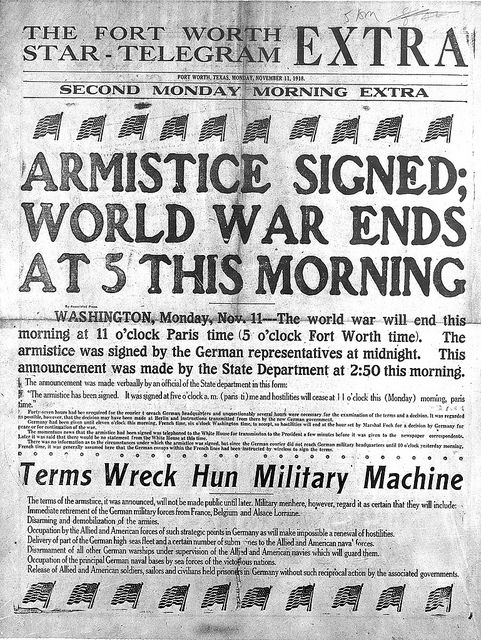
The Great War (later renamed World War I) began on July 28, 1914. The rapid mobilization of armies carried the war forward until November 18, 1918. This poem shares a narrative voice of those decisive years.
American World War I cemetery near Verdun, France. (courtesy of Pinterest)
Entangling treaties joining nations
Old school diplomacy’s fixation
Glorification of war’s romance
Titanic wills collide, ghostly dance
Distant continent boiling over
Single shot ignites war’s makeover
Ill-prepared, mortal combat waiting
Millions now face death, devastating
Modern weaponry overpowers
Military tactics of old sour
Now transforming nations’ fertile ground
Mankind’s killing fields, forever found
Privileged few making decisions
Common citizens fill divisions
Ruthless fighting in blood-filled trenches
Calling soldiers into death’s clenches
Exhausted nations, pushing ahead
World waiting for war’s sunset instead
Men, resources, and will running low
At last, reason stops war’s bloody flow
War to end all wars finally ends
Lasting peace stands ready to pretend
When the armistice was signed, the world hoped for lasting peace. (courtesy of Pinterest)
English writer, H. G. Wells (1866-1946), who is sometimes called the “Father of Science Fiction,” also provided social commentary. These words share his sentiments about war: “It is not reasonable that those who gamble with men’s lives should not stake their own.” “If we don’t end war, war will end us.”
From Psalm 29:3-4: “The voice of the Lord is over the waters;the God of glory thunders,the Lord, over mighty waters. The voice of the Lord is powerful;the voice of the Lord is full of majesty.”
The lyrics and music of “O God, Our Help in Ages Past” is a familiar hymn to many. Inspired by Psalm 90, the lyrics were composed by English hymn writer and theologian, Isaac Watts, in 1708.
From Isaiah 9:6-7: “For a child has been born for us,a son given to us; authority rests upon His shoulders;and He is named Wonderful Counselor, Mighty God,Everlasting Father, Prince of Peace. His authority shall grow continually,and there shall be endless peace for the throne of David and His kingdom. He will establish and uphold it with justice and with righteousnessfrom this time onward and forevermore. The zeal of the Lord of hosts will do this.”
You are invited to join in prayer: Lord God, your love and mercy promise hope, joy, and peace. During this season of Advent, open our hearts in preparation to receive our Savior. Amen.
Written in 1865 by English hymn writer, William Chatterton Dix, the hymn of “What Child Is This?” is sung by Charlotte Church. The lyrics are based upon the verses from Isaiah 9:6-7, and the tune is “Greensleeves.”