This informative post will be posted on Saturday along with my usual writing. You are invited to participate with the opening question.
Brain Teaser Question
Which Montana town’s name is best represented by Morse Code for the letter “I”?
(answer found at the end of this post)
Featured Facts
The state of Montana is blessed with a litany of small towns with unique names. One town was named for the “pair of dots” design of an area rancher’s cattle brand.
Here are some interesting facts about this small town in the Treasure State:
Population of 26 (2020 Census).
Located along the Musselshell River in the central region of the state.
The town’s property was donated by an area rancher, George R. Wilson.
The town was founded in 1900.
In an interesting and related note, one other Montana community is named for a rancher’s cattle brand. The town of Circle, which is located in the northeastern region between the communities of Glendive and Wolf Point, is named after the circle-shaped brand of an area ranch.
Main Street view of this mystery town (courtesy of Pinterest).
Answer to Brain Teaser Question
Two Dot
This is also the name of this mystery town in Montana. Rancher George R. Wilson, who donated the land for the town from his vast land holdings, also went by the name of Two Dot Wilson.
One of Montana’s most treasured gems resides in Glacier National Park. Founded in 1910, the park sits along the Rocky Mountain spine of northwestern Montana with the Blackfeet Reservation nestled to its east.
(Courtesy of Pinterest)
With over 700 miles of trails, the park fulfills any hiker’s paradise. Trails range from easy (Trail of the Cedars), to moderate (Avalanche Lake), to strenuous (Grinnell Glacier). A variety of wildlife populates the park with over 70 types of mammals and over 260 avian species.
With nicknames of “Crown of the Continent” and “Backbone of the World”, Glacier National Park provides quite an experience with some of America’s most exceptional natural wonders. Mountains, scenic vistas, rivers, lakes, and glaciers wait to be captured by any photographer’s camera.
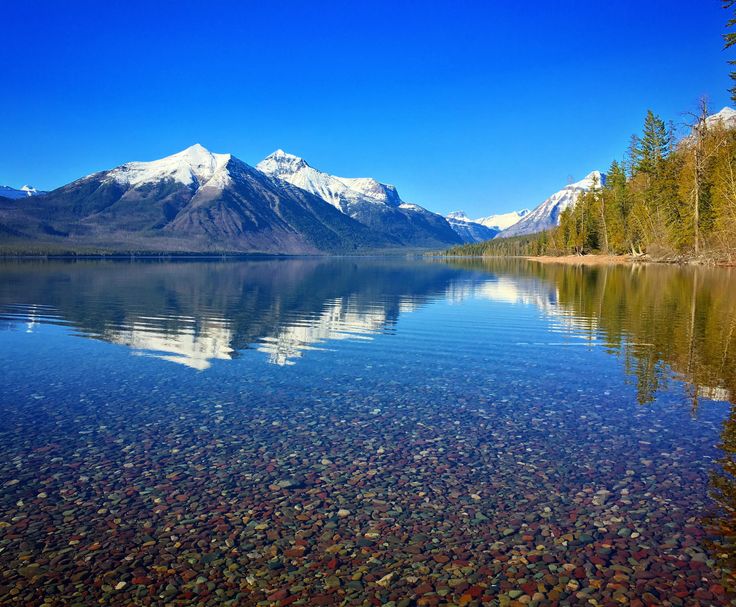
Lake McDonald stands as one the hallmark sights to visit with its crystal-clear waters and mountainous surroundings.
Lake McDonald (courtesy of Pinterest)
The Going-to-the-Sun highway presents an incredible automobile journey, second to none.
One of the grandest hotels in the park is found at Many Glacier Hotel, which is located along Swiftcurrent Lake. It has been open since 1915, and was designed as a series of chalets. When one looks at its two-story structure, it is easy to believe that the location might be Switzerland instead of Montana.
Exterior and interior views of Many Glacier Hotel (courtesy of Pinterest)
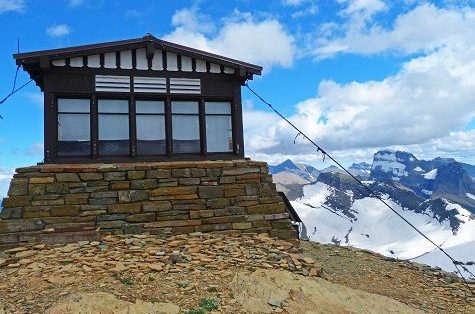
Built in 1936, the Swiftcurrent Fire Outlook offers quite a view. One feels almost like standing on the top of the world.
From 1939, a scene of downtown Billings, Montana. This is the eventual home for a young couple moving to Billings about three years earlier. (courtesy of Pinterest)
Grandparents Jim and Marge experienced a love story that began in their teenage years. Little did they know where life planned to take them in the years to come.
In 1911, Jim was born in the tiny town of Marmarth, North Dakota. The small community of about 800 was founded as a railroad town along the Milwaukee Road line. The transcontinental railroad traveled from Chicago, Illinois to Seattle, Washington.
When Jim was an infant, his family moved to Cleveland, Ohio. He excelled academically and athletically during his school years.
Born in 1912, Marge already lived in Ohio when Jim moved there. Eventually their lives intersected during junior high school. Her father was a Cleveland native while her mother was born in Belfast, Ireland.
With their love blossoming, Jim and Marge were married in 1928. Jim pursued his career goal of becoming an engineer with his studies at the University of Akron.
Sadly, the arrival of the Great Depression crushed Jim’s pursuit of a college degree. With money very tight, Jim needed to pursue a different career.
In 1936, Jim, Marge, and their first-born son traveled to Billings, Montana. Jim had been hired to work for a wholesale and produce grocer. Working for the Gamble-Robinson Company for 40 years, Jim eventually became the general manager of its Billings office.
When World War II arrived, Jim accepted his responsibility and served with distinction in the U.S. Army until being honorably discharged at the war’s end. Meanwhile his young family endured without him being at home.
Marge and her three young children managed to make life as pleasant as possible during Jim’s wartime absence. Unable to drive a car, Marge used other means for transportation. Rationing of vital commodities during the war made for useful transactions because Marge traded her gasoline ration cards for other ones.
Billings was growing, but it still had the feel of a smaller, close-knit community. Neighbors helped out each other. Church was a center of worship and fellowship for the young family as well.
When Jim returned home, the family continued to live in Billings at the same home. As childhood sweethearts, Jim and Marge experienced quite a life journey, which took them from their former homes in Ohio to a lasting one in Montana.
Two views of the front of the family home on Beverly Hill Blvd. Both taken long after the house had been sold. (courtesy of Pinterest and Google Maps)
This story recalled the start of my mother’s family. Being the middle child and only daughter (born in 1938), Martha started a family of her own with the birth of her first child in 1956 (Richard). Eventually the family would number five sons and one daughter.
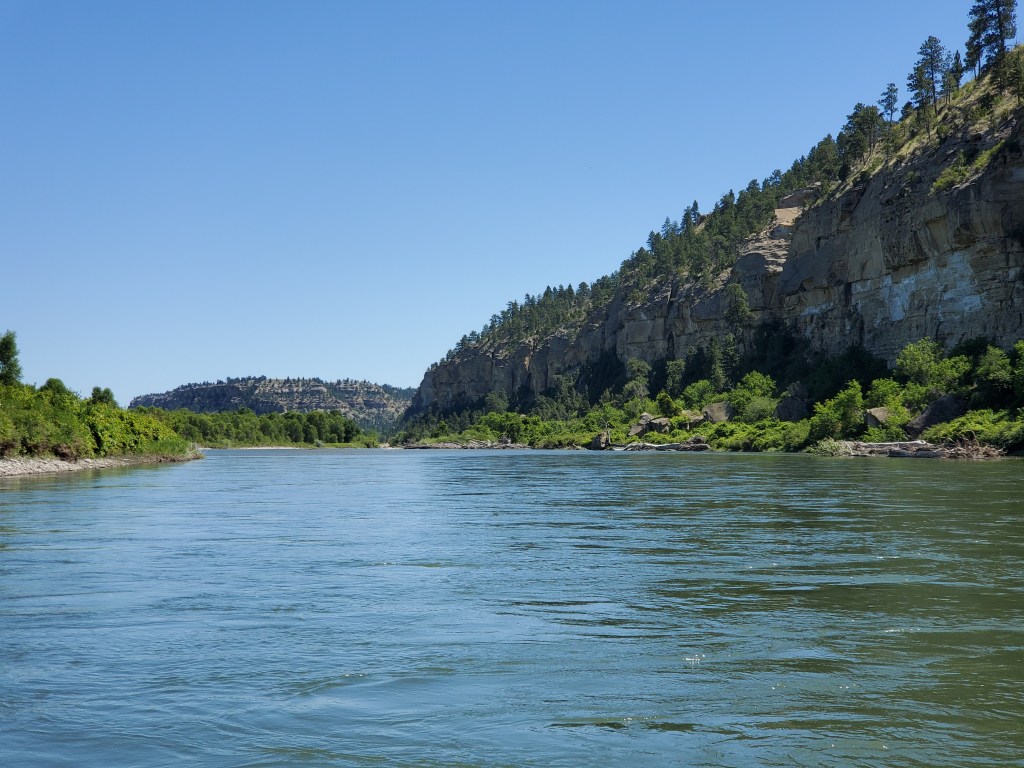
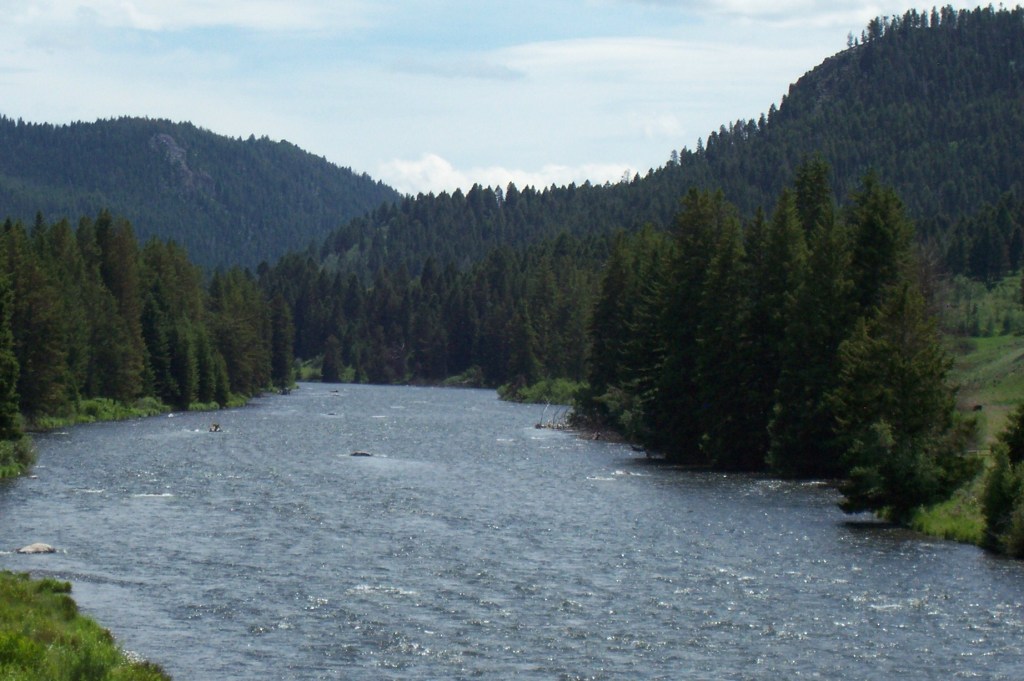
Montana’s Yellowstone River east of Columbus (left) and east of Livingston (right).
Mighty Yellowstone
Accepting her role
Endless, flowing river
Onward journey, its goal
Creation’s design
Starting near Yount Peak
In and out of mountains
Deepest canyon she seeks
Marked with persistence
Tumbling over falls
Upper, Lower, Tower
Energy never stalls
Currents running free
Leaving her alone
Man forsakes building dams
Nature’s free-flowing zone
Destiny calling
Joining up as one
Big Muddy’s faithful mate
Yellowstone’s cherished run
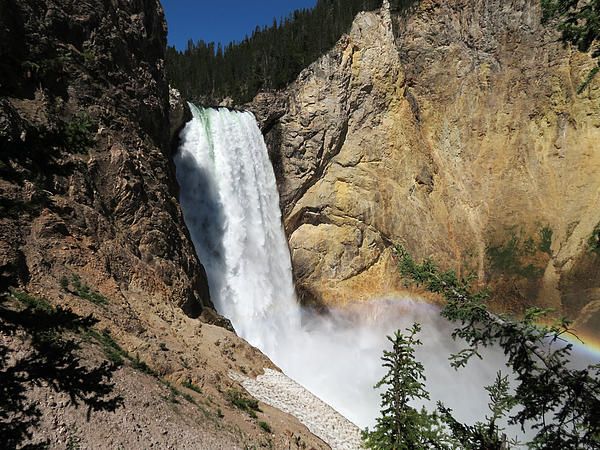
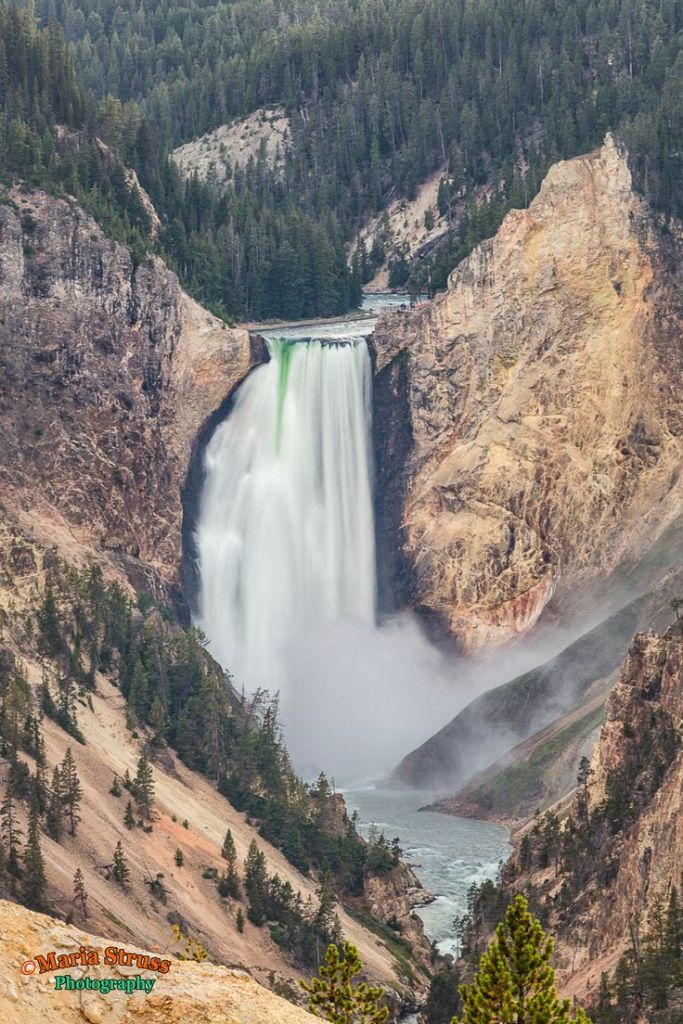
Yellowstone River falls in Yellowstone National Park (from left to right): Upper and Lower (courtesy of Pinterest).
During its 692 mile journey, the Yellowstone River journeys from the depths of Wyoming’s Absaroka Mountains and Yellowstone National Park into Montana. Upon merging with the Missouri River just across the North Dakota border, these two mighty rivers become one. The confluence is located near Ft. Buford and Ft. Union historic sites.
This informative post will be posted on Saturday along with my usual writing. You are invited to participate with the opening question.
Brain Teaser Question
Bonnie’s father has five daughters but has no sons. Four of the daughters are named Chacha, Cheche, Chichi, and Chocho. What is the fifth daughter’s name?
a) Chuchu
b) Chochu
c) Chuchy
d) Chochy
e) none of these
(answer found at the end of this post)
Featured Facts
Montana’s history began long before being admitted to the Union on November 8, 1889, as the 41st American state. Nicknamed the Treasure State and later the Big Sky Country, many people and events helped to shape its future.
Some interesting facts about Montana:
Yogo sapphires, which are known for their clear, cornflower-blue color, are only mined in Montana.
Montana’s meaning is rooted in Spanish–it means “land of mountains.”
Ironically, only about one-third of the state is mountainous. The remaining two-thirds consist of primarily prairie grasslands.
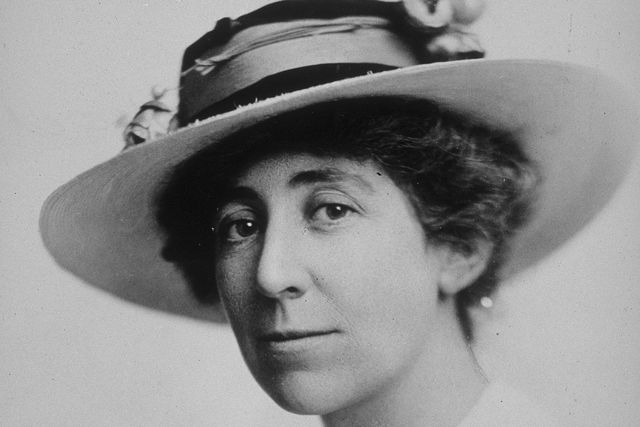
Many political figures from Montana made history far beyond its borders. In the election of 1916, Jeannette Rankin (1880-1973) was elected to the U.S. House of Representatives. She became the first woman ever elected to Congress.
Mike Mansfield (1903-2001) represented Montana in the U.S. Senate from 1953 to 1977. He also served as Senate Majority Leader from 1961-1977, which is the longest tenure ever.
Representative Jeannette Rankin and Senator Mike Mansfield. (Courtesy of Pinterest)
Answer to Brain Teaser Question
None of these. The fifth daughter is Bonnie herself.
From 1939, a scene of downtown Billings, Montana. This is the eventual home for a young couple moving to Billings about 20 years earlier. (courtesy of Pinterest)
Grandparents Herman and Annie experienced a most unusual courtship. Little did they know where life planned to take them in the years to come.
Herman was born in 1890 in Brainerd, Minnesota. He moved to North Dakota in 1911, then to Forsyth in eastern Montana. In 1916, as Europe filled with the winds of war, he arrived in Billings, Montana. He had been hired to be a mail carrier.
Annie was born in 1895 on a small farm in Harlon County, Nebraska. Not even a blizzard dared to delay her birth. Her early schooling was spent in a sod school house. In 1915, her family moved to Leavenworth, Washington where she finished high school, worked in a photo shop, and was employed as a staff operator by the Great Northern Railroad.
Both of their unassuming lives intersected along the railroad tracks of the Great Northern. Herman was traveling to Fort Lewis outside of Seattle on a troop train. He was being trained to serve in the American army which was shipping troops to Europe during World War I.
Along the rail line, many young ladies passed out slips of paper with their name and address. Herman received one from Annie. Later, he sent her a card, and thus began a courtship by correspondence.
The two of them met briefly at Fort Lewis before Herman shipped out to France. Upon returning safely from the war, Herman met up with Annie to be married in 1919.
They moved to Billings where Herman still found his mail carrier job waiting. Together they raised a large family of six sons and two daughters. Ultimately, the siblings witnessed the blessing of 32 grandchildren.
Taken from the front of the house along Jackson Street, the family home (built in 1920) as it looks today. Nearly all of the large trees have been removed. (courtesy of Pinterest)
This story recalled the start of my father’s family. Being the youngest child (born in 1935), Jim started a family of his own with the birth of his first child in 1956 (Richard). Eventually the family would number five sons and one daughter. My youngest brother became the final grandchild when he was born in 1967.
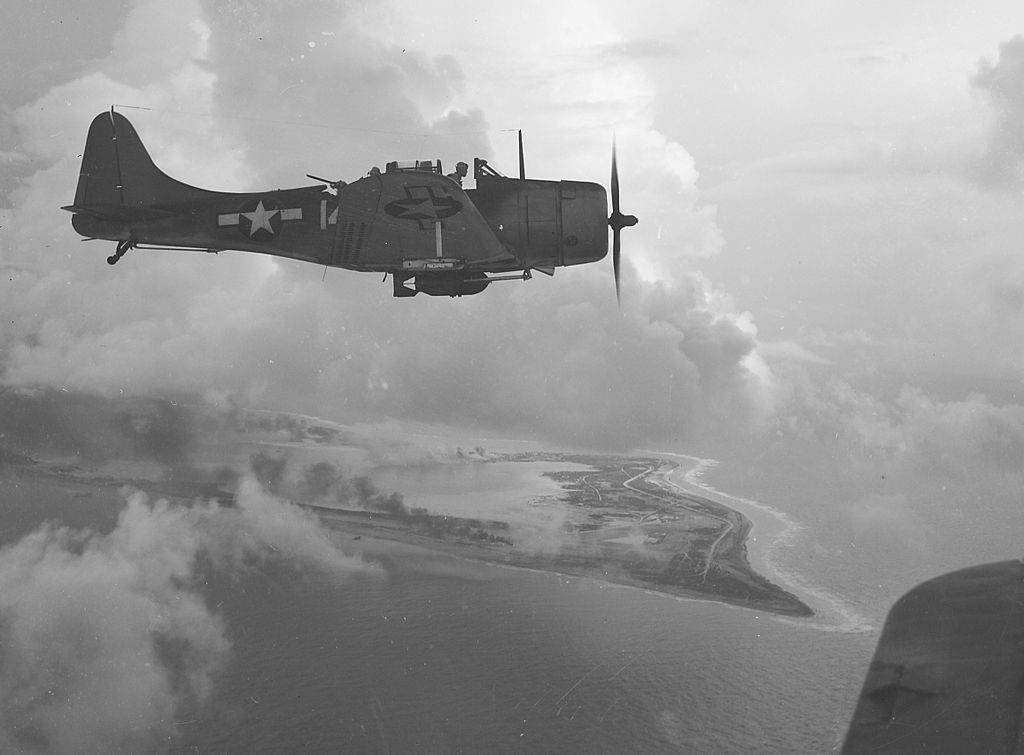
From World War II, fearless U.S. Navy aviators piloted the SBD Dauntless dive bomber. (courtesy of Pinterest)
During World War II, countless men and women served unselfishly to preserve freedom and a democratic way of life. From a small Montana homestead came one of these true heroes.
Born in 1914 under the clouds of the Great War (now called World War I), Stanley “Swede” Vejtasa was born in eastern Montana where his family was operating a small farm. While the homestead site and local post office (Paris, Montana) disappeared long gone, certain memories will always remain.
Following graduation from Circle High School (McCone County in Montana), Vejtasa attended classes at both Montana State College (later renamed Montana State University) and the University of Montana.
In 1937, he enlisted in the U.S. Navy with the intention of becoming an aviator. In 1939, he earned his wings at the Naval Air Station in Pensacola, Florida. His first carrier assignment was with the USS Yorktown. In 1942, he was assigned to the USS Enterprise.
Lieutenant Vejtasa pictured with his 4F4 Wildcat fighter. The Japanese flags displayed on his aircraft represent downed enemy aircraft. He ultimately earned ten. (courtesy of Pinterest)
Vejtasa’s heroic duty as a carrier pilot earned him three Navy Crosses. He was the only American naval aviator to be awarded medals for both dive bombing and aerial combat.
On May 7, 1942, Ensign Vejtasa earned his second Navy Cross at the Battle of the Coral Sea. Flying a SBD Dauntless dive bomber from the USS Yorktown, he successfully attacked and aided in the sinking of a Japanese aircraft carrier.
On October 6, 1942, Lieutenant Vejtasa earned his final Navy Cross while flying from the USS Enterprise as a fighter pilot. In the Battle of Santa Cruz, he and other pilots provided air cover for the carriers Hornet and Enterprise. Facing intense dogfights with Japanese fighter planes, he remained cool under fire. With courage and precision, the lieutenant shot down seven enemy aircraft.
Captain Vejtasa remained a career officer in the U.S. Navy, and he continued to serve his country until his retirement in 1970.
The following video captured memories of combat as shared by Stanley “Swede” Vejtasa. He described his experiences from the Battle of the Coral Sea.











 Big Sky Buckeye