Overcoming Life’s Insurmountable: Wilma Rudolph

Photo by Brett Jordan on Pexels.com

A select few face overwhelming challenges in life.  Encouraged by a heart filled with perseverance, these trailblazers adopt an attitude where “Can” outplays “Can’t.”

Olympics track star Wilma Rudolph overcame many obstacles in her life to achieve ultimate adoration for her speed and grace.

From the words of Wilma Rudolph:  “Never underestimate the power of dreams and the influence of the human spirit.”

Born in 1940, Wilma was born in St. Bethlehem, Tennessee.  She was part of a large family with 21 siblings.  Facing a challenging life in the segregated South, she found athletics to be her path forward in life.

However, before Wilma pursued basketball and later track, she faced major hurdles because of health issues.  Born prematurely, she endured bouts with double pneumonia, scarlet fever, and polio.  Her weakened left leg required her to wear a brace, and some doctors didn’t expect her to ever be able to run.

Wilma remembered her childhood journey with these words:  “My doctors told me I would never walk again.  My mother told me I would.  I believed my mother.”

Eventually, her leg grew stronger, and the brace thankfully disappeared.  She became active in sports during her high school years.  She was recruited by the legendary track coach at Tennessee State University in Nashville, Ed Temple.

While still in high school, Wilma qualified for the 1956 Summer Olympics in Melbourne, Australia.  At age 16, she was the youngest athlete on the U.S. team.  As a member of the 4 x 100 meter relay, she earned a bronze medal.

After high school graduation, Wilma moved on to Tennessee State.  This natural, gifted runner prepared and trained to return to the Olympics in 1960 at Rome, Italy.  Nicknamed “Skeeter” by her teammates, Wilma was more than ready to compete.

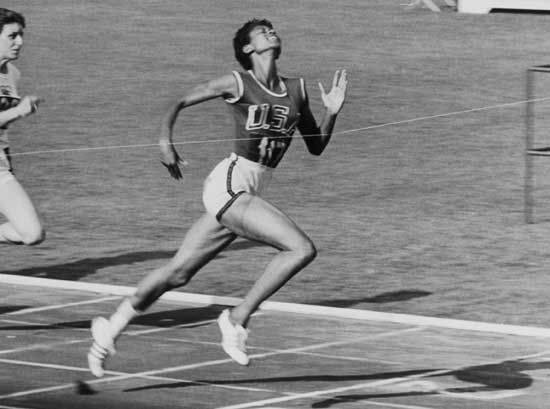
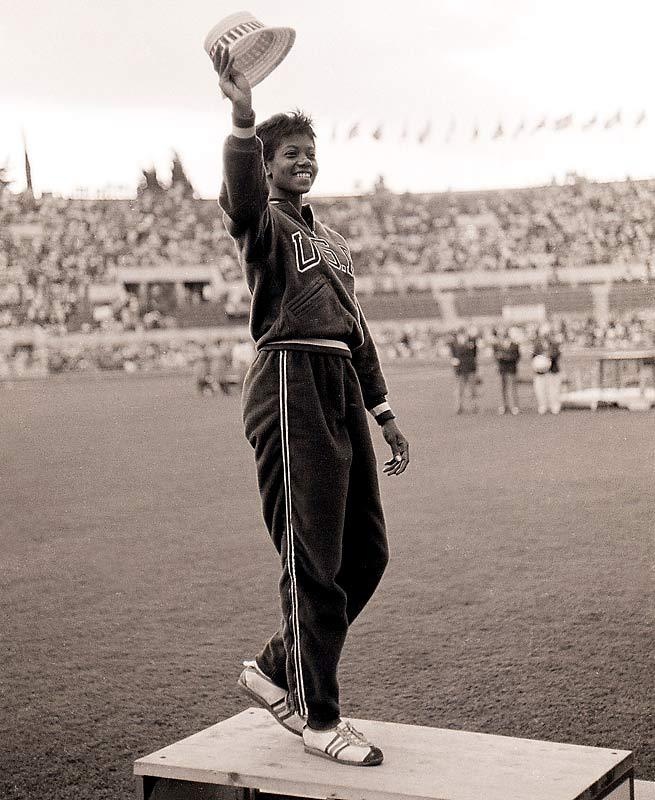
At the Rome Olympics, Wilma became the first American woman to win three gold medals in track and field at a single Olympics.  Competing individually in the 100 and 200 meters, she overwhelmed the other competitors for two gold medals.  Wanting her teammates to also earn a cherished gold medal, Wilma anchored the winning 4 x 100 meter relay.

Accolades for Wilma continued to pour in following her Olympics’ exploits.  Because of her speed, beauty, and grace, the Italian press nicknamed her “The Black Gazelle.”  The Associated Press awarded her Female Athlete of the Year in 1960 and 1961. 

Wilma retired from competition in 1962.  She fulfilled her dream of earning a college degree.  For a few years, her post-athlete life included teaching, coaching, and working with underprivileged children.

The story of this African-American girl overcoming polio, poverty, and racism became a film, “Wilma,” which was released in 1977. 

The following video shares a few highlights of Wilma Rudolph’s life and Olympic career.

Trivia’s Facts and More (9/10)

Photo by Pixabay on Pexels.com

This informative post will be posted on Saturday along with my usual writing.  You are invited to participate with the opening question.

Brain Teaser Question

Suppose a bird is standing in a closed box that is resting on a scale.  When the bird flies in the box, does the scale read the same, more, or less than when the bird is resting?

(answer found at the end of this post)

Featured Facts

As one of the smaller states in the American Union, Maryland’s geography features contrast between the eastern Chesapeake and Atlantic shores and the western Appalachian Mountains.

Here are some quick facts about the Old Line State:

  • Capital City:  Annapolis (home of the United States Naval Academy)
  • Bird:  Baltimore oriole (nickname of Baltimore’s major league baseball team)
  • Motto:  Fatti Maschii, Parole Femine (Strong Deeds, Gentle Words)

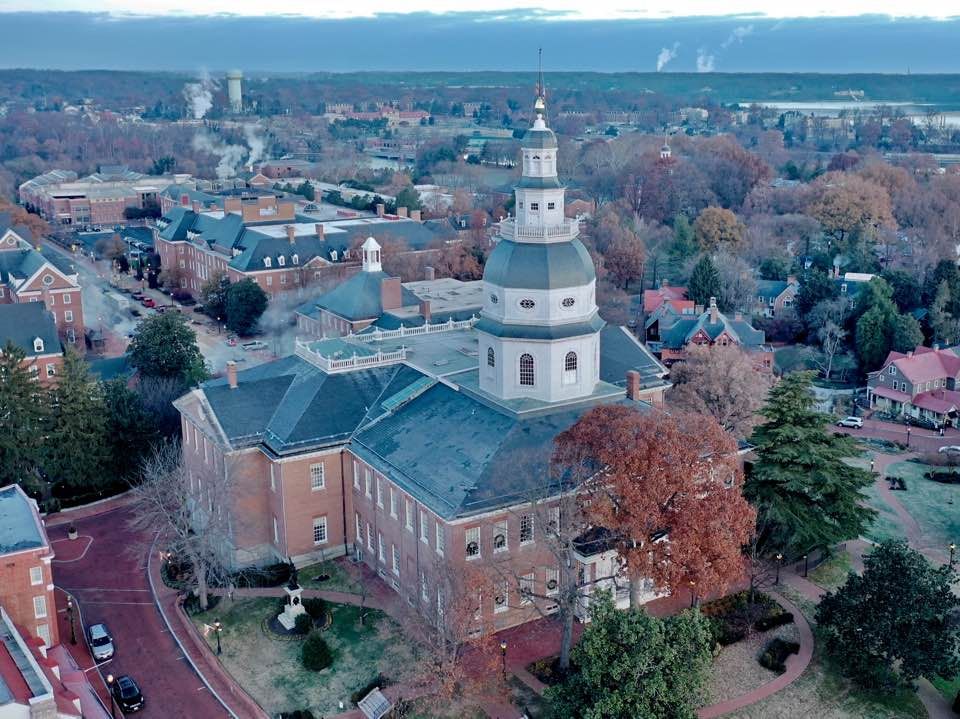
The State House, which is located in Annapolis, was occupied in 1799.  It is the oldest such building in the United States.  One note of history is that the building served briefly as the nation’s capitol from November 26, 1783 to August 23, 1784.

Maryland’s State House. (courtesy of Pinterest.)

Answer to Brain Teaser Question

When the bird flies, it pushes down on the air, which pushes down on the scale.  The scale reads the same.

Trivia’s Facts and More (8/13)

Photo by Pixabay on Pexels.com

This informative post will be posted on Saturday along with my usual writing.  You are invited to participate with the opening question.

Brain Teaser Question

Complete the analogy:  MUSIC is to VIOLIN as . . .

(a) NOTES is to COMPOSER   (b) SOUND is to MUSICAL INSTRUMENT   (c) DRAWING is to CRAYON   (d) FURNITURE is to CARPENTRY TOOLS   (e) SYMPHONY is to PIANO

(answer found at the end of this post)

Featured Facts

The state of South Dakota was granted statehood on November 2, 1889.  Many people are familiar with its most famous landmark, Mount Rushmore.  Who are the four presidents depicted there, and what order are they arranged?  Answers to follow.

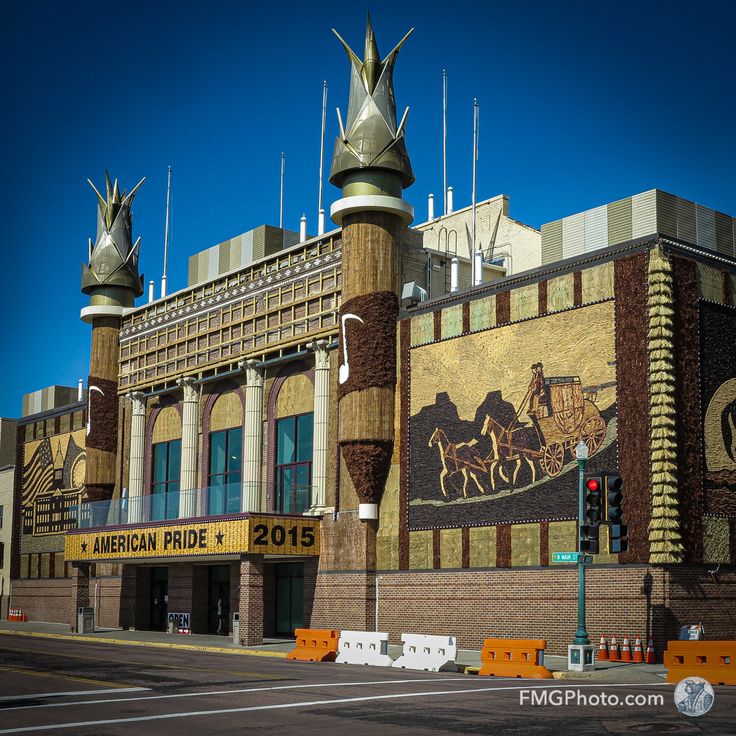
Fewer people have probably heard of the Corn Palace in Mitchell.  If one travels on Interstate 90 between Rapid City and Sioux Falls, the journey will go through Mitchell.  The exterior of the building is decorated with native corn, grain, and grasses arranged into large murals.  

The four Presidents found on Mount Rushmore in the following order are George Washington, Thomas Jefferson, Theodore Roosevelt, and Abraham Lincoln.

Here is the Corn Palace in all of its glory. The theme and murals change annually. The upper portion above the entrance has not been finished when this photo was taken. (courtesy of Pinterest)

Answer to Brain Teaser Question

“D”

Put MUSIC and VIOLIN in a sentence relating the two words.  Music is played on a violin by someone who knows how to play it; just as furniture is created by carpentry tools by a person who knows how to use them.  NOTE:  Anyone can draw with a crayon, and a symphony is not played with a piano, but with an orchestra.

Jon Meacham Quotes

Photo by Darwis Alwan on Pexels.com

In our finest hours, though, the soul of the country manifests itself in an indication to open our arms rather than to clench our fists.

Politicians often talk too much and listen too little, which can be self-defeating.

Jon Meacham (born 1969) is an American writer, historian, and American President biographer.  He is currently the Canon Historian of the Washington National Cathedral.  He has been awarded a Pulitzer Prize for Biography from his published work about American President Andrew Jackson.

Overcoming Life’s Insurmountable: Glenn Cunningham

Photo by Brett Jordan on Pexels.com

A select few face overwhelming challenges in life.  Encouraged by a heart filled with perseverance, these trailblazers adopt an attitude where “Can” outplays “Can’t.”

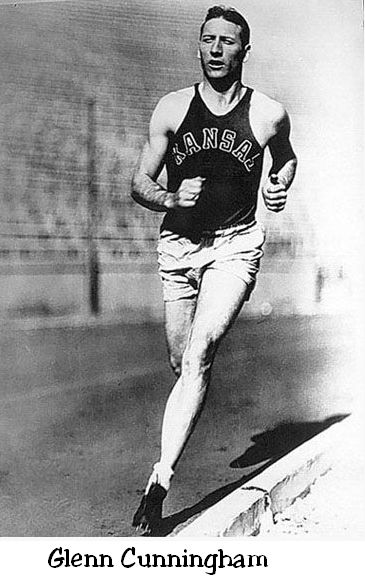
Born in 1909, American Glenn Cunningham transformed into one of the world’s best middle distance runners.  However, there was much more to this man’s personal story.

Born in Kansas, seven year-old Glenn endured burns suffered from a gasoline explosion at school.  The lower part of his body was substantially burned.  Doctors said that the young boy would never walk again.

Hopelessly crippled by the burns to his legs, young Glenn proved many people wrong about his future.  Not only would he walk, but he ran right into the record books.

Nicknamed the “Kansas Ironman” and “Kansas Flyer,” Glenn’s perseverance and dedicated training brought him into a setting that few could ever have imagined.  He emerged as one of the world’s premiere track athletes in the 1930s.  The mile run became his specialty, and he went on to win numerous races and championships. 

In 1934, he established a world record in the mile run (4:06:08), and his performance would not be bettered for three years.  After his world record run, Glenn was quoted, “I always believed that I could walk normally, and that was the truth.  Now I will run, and run faster than anyone else.”

Glenn’s amazing willpower and faith carried him onto the world stage.   Running the 1500 meter run in two different summer Olympics, he proved his greatness.  He placed fourth in the 1932 Olympics at Los Angeles, but he saved his best for 1936 at Berlin when he earned a silver medal. 

Glenn’s Christian faith was visible in his actions and words.  One of his favorite Scripture verses came from Isaiah 40:31:  “But those who wait for the Lord shall renew their strength; they shall mount up with wings like eagles; they shall run and not be weary; they shall walk and not faint.”

Throughout his distinguished running career, Glenn endured frequent leg pain.  Few could imagine how he needed to overcome so much with a faith-filled, inner strength.

As Glenn’s running career wrapped up, the country needed his service in World War II.  He served in the U.S. Navy, and he developed new physical training programs.  Later he taught athletics and physical education at Cornell College in Iowa. 

One of his most noted ventures exhibited his desire to care for underprivileged children.  He and his wife established the Glenn Cunningham Youth Ranch, which offered a temporary home for over 10,000 foster children.

These closing words from Glenn epitomized his approach to his life:  “In running it is man against himself, the cruelest of opponents.  The other runners are not the real enemies.  His adversary lies within him, in his ability with brain and heart to master himself and his emotions.”

Trivia’s Facts and More (8/6)

Photo by Pixabay on Pexels.com

This informative post will be posted on Saturday along with my usual writing.  You are invited to participate with the opening question.

Brain Teaser Question

An explorer found a silver coin marked 7 B.C.  He was told it was a forgery.  Why?

(answer found at the end of this post)

Featured Facts

The state of Wyoming is often referred to as the Cowboy State.  The capital city is Cheyenne, which is located just north of the Colorado state line. 

Admitted to the Union on July 10, 1890, Wyoming later adopted a motto of “Equal Rights.”  There is significance in this state motto as exemplified by these three facts:

  • The Wyoming Territory gave women the right to vote in 1869, which is well ahead of the 19th Amendment granting women the right to vote in both state and federal elections.
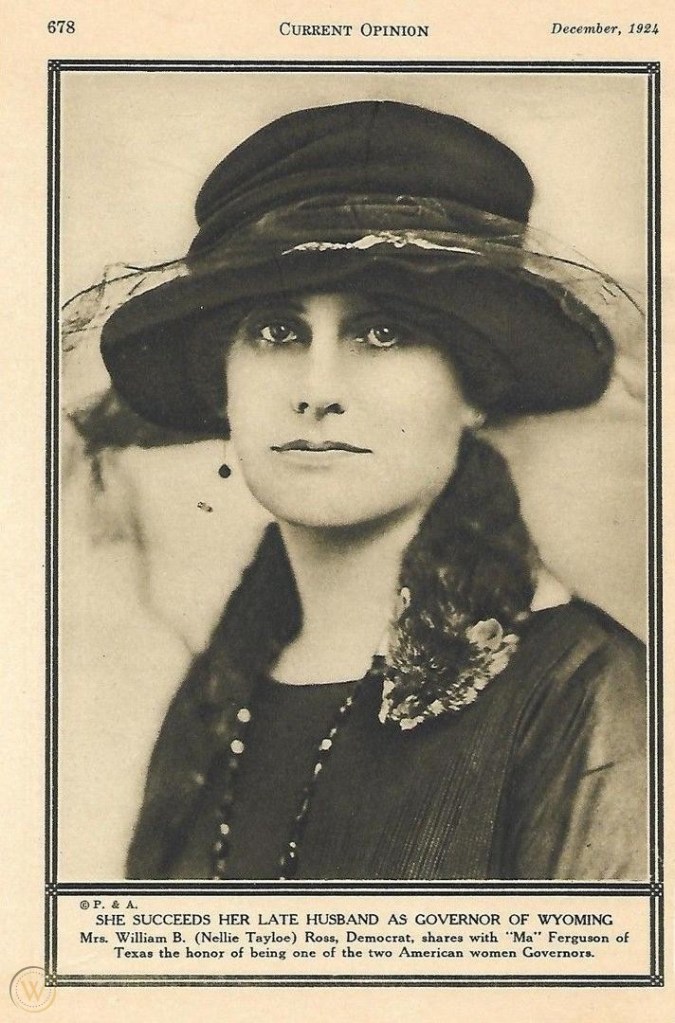
  • Nellie Tayloe Ross was elected governor of the state in 1925.  She was the first woman governor in the United States.
  • One of Wyoming’s nicknames is “Equality State.”
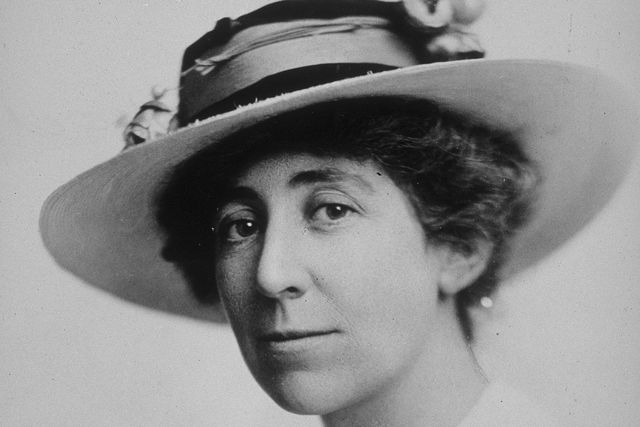
Wyoming Governor Nellie Tayloe Ross. (Photo courtesy of Pinterest.)

Answer to Brain Teaser Question

The label B.C. only could have come into usage after 0 B.C.  Therefore, the coin could not have been minted in 7 B.C.

Time’s Traveler

Photo by Ekaterina Belinskaya on Pexels.com

Generations marching

Clock’s hands never stand still

Time’s traveler journeys

Years navigate downhill


History’s recorder

Passport to each event

Time’s traveler writing

Every book’s contents


Stories fill with people

Exploits reign paramount

Time’s traveler sees all

His recollections count


Worldly landmarks indexed

Mile after mile recalls

Time’s traveler postcards

Destination now calls


Energy never sleeps

Chronicles each step

Time’s traveler breathing

At library’s doorstep


Photo by Pixabay on Pexels.com

To End All

The Great War (later renamed World War I) began on July 28, 1914.  The rapid mobilization of armies carried the war forward until November 18, 1918.  This poem shares a narrative voice of those decisive years.

American World War I cemetery near Verdun, France. (courtesy of Pinterest)

Entangling treaties joining nations

Old school diplomacy’s fixation

Glorification of war’s romance

Titanic wills collide, ghostly dance


Distant continent boiling over

Single shot ignites war’s makeover

Ill-prepared, mortal combat waiting

Millions now face death, devastating


Modern weaponry overpowers

Military tactics of old sour

Now transforming nations’ fertile ground

Mankind’s killing fields, forever found


Privileged few making decisions

Common citizens fill divisions

Ruthless fighting in blood-filled trenches

Calling soldiers into death’s clenches


Exhausted nations, pushing ahead

World waiting for war’s sunset instead

Men, resources, and will running low

At last, reason stops war’s bloody flow


War to end all wars finally ends

Lasting peace stands ready to pretend


When the armistice was signed, the world hoped for lasting peace. (courtesy of Pinterest)

English writer, H. G. Wells (1866-1946), who is sometimes called the “Father of Science Fiction,” also provided social commentary.  These words share his sentiments about war:  “It is not reasonable that those who gamble with men’s lives should not stake their own.”  “If we don’t end war, war will end us.”

Buckeye Snapshots (Issue #5)

A recent scene from a Buckeyes’ game at the “Shoe.”

Listed on the National Registry of Historic Places, Ohio Stadium is hallowed ground for The Ohio State University football team.  The Buckeyes have played here since 1922.

Nicknamed the “Horseshoe,” the venerable stadium graces the west side of campus near the Olentangy River.  The journey to build this magnificent home goes back to the World War I era.

The Buckeyes playing field back in the 1910s is Ohio Field.  The unassuming name cannot hide the fact that this football home is less than adequate.  Seating is limited to 14,000, but some games find more fans viewing from the perimeter of the field as a standing-room only (sometimes in excess of 20,000).

The catalyst behind the need for a much larger stadium for the Buckeyes is traced to the success of the team in 1916, 1917, and 1919.  Ohio State’s first three-time All-American, Charles “Chic” Harley leads the team to numerous victories and conference championships.  Playing in the period before college football’s Heisman Trophy, Harley would have been a cinch to win this prestigious award as college football’s most outstanding player.  One might say that Ohio Stadium is the field Chic built.

Needing a much bigger stadium, Ohio Stadium is constructed with its unique horseshoe design.  Ohio Wesleyen becomes the first opponent to play here on October 7, 1922.  The original stadium’s seating capacity is 66,000, but it is far exceeded later in the 1922 season when the Buckeyes host the Michigan Wolverines before 71,138 spectators.

Field-level view during a youth flag football event. My grandson was participating.

Here are some quick facts about the “Horseshoe.”

  • Current seating capacity:  102,780
  • Fourth largest on-campus facility in the United States
  • Largest crowd:  110,045 for the 2016 Michigan game
  • Over 36 million fans have entered the stadium since 1922
Ohio State has captured many national football championships as evidenced by these banners. An additional one has been added for 2014.

George Orwell Quotes

Photo by Pixabay on Pexels.com

If liberty means anything at all, it means the right to tell people what they do not want to hear.

The most effective way to destroy people is to deny and obliterate their own understanding of their history.

English novelist and journalist, George Orwell (1903-1950), was an outspoken political commentator, but he was much better known for his literary works, including the novels 1984 and ANIMAL FARM.