Grandpa and his six-year old grandson were having a lively discussion about television technology, and Grandpa was quite amazed with the young lad’s knowledge.
His grandson continued to rattle off how modern television works with services such as Netflix, Hulu, YouTube, and a few others. Grandpa was still plugged into his cable contract, and he was content to stay there. He knew next to nothing about these television streaming services.
As their time was wrapping up, Grandpa remembered something he had stored in the basement. Together, the two of them went down into the drafty and dark subterranean warehouse, which was filled with so many of Grandpa’s treasures. Grandpa enjoyed showing many of them to his grandson.
In the far corner was an old television set. Its time was long gone, but it still owned some real estate in the basement.
Grandpa asked his grandson a question, “Have you ever seen television rabbit ears?”
His grandson replied, “No, how did they work?” Grandpa had ignited his curiosity again.
Reaching into a box behind the ancient TV, Grandpa pulled out the simple looking rabbit ears.
His smiling grandson was ready to see what would happen next. He said, “Wow Grandpa! How did you wear those rabbit ears?”
It is mid-morning on a nearly empty street corner in a remote, medium-sized town when Milt runs into one of his best friends, Fred. Little do these two men know, but their improbable rendezvous will bring both of them inner strength and hope.
Both men are in their eighties, but each is blessed with good health. Being retired, they don’t always have a chance to catch up on news.
Milt is a widower, who lost his beloved Sharon several years back. Fred’s lovely wife, Judy, struggles with many chronic health concerns.
The two friends continue to visit on the deserted street corner. Milt tells Fred, “I am really concerned about this virus news.” As he speaks, both men realize they need to stand a bit farther apart due to reminders in the news about social distancing.
Milt replies back, “Me, too. I guess we have lots of company.” Both men have been overly cautious about being safe with their exposure to the disease.
Fred shares news from home about his bride of 61 years. He continues talking to Milt, “I am really worried about Sharon. Her health is very fragile, and I hope she can weather the storm ahead with this virus out there.”
Milt looks across at his friend, and he sees the deep worries of concern and anxiety in Fred’s face. Milt asks, “May I pray for you?” Milt nods in agreement.
In closing the prayer, Milt shares a special prayer with his long-time friend: “God, grant us the serenity to accept the things we cannot change, the courage to change the things we cannot change, the courage to change the things we can, and wisdom to know the difference.”
Before the men depart and continue with their day’s journey, Fred shares a verse from one of his favorite Psalms (27:1): “The Lord is my light and my salvation; whom shall I fear? The Lord is the stronghold of my life; of whom shall I be afraid?”
The Serenity Prayer was originally written by theologian Reinhold Niebuhr. The most common version of the prayer was published in 1951, but Niebuhr used variations of the prayer in sermons as early as 1934. In the story, Milt adapted the prayer to fit the situation.
When he turned 60 years of age, Pete received his Golden Buckeye card in the mail. Being officially granted “senior” status wasn’t all that he expected.
He really hadn’t put his card to use. Quite frankly, he had forgotten about the card. It was still hiding in his wallet, not much worse off than when it arrived in the mail.
One day, Pete wondered, “I don’t look and feel too bad.” After all, he still walked outdoors and bicycled indoors. He was in fairly good shape, so he thought.
Then his 80th birthday showed up, quite unannounced and definitely without any fanfare.
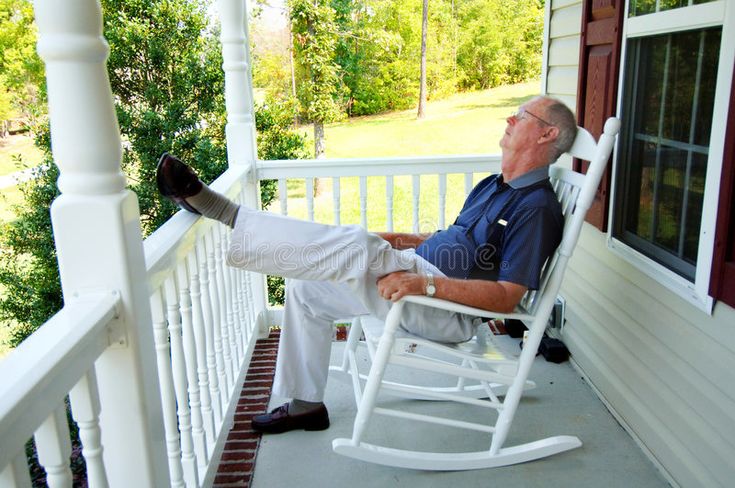
He guessed that everyone must be waiting to give him a rocking chair in a few years when his horsepower finally runs out.
The next morning, Pete looked into the mirror and told himself, “I’m not ready yet!”
Could this be Pete in a few years? (Courtesy of Pinterest)
The right fielder just happens to be the newest boy in the neighborhood. His family makes their new home down on Lexington Drive, not far from a park with a baseball diamond.
A group of boys organize pick-up baseball games every morning during the summer at the park’s diamond. The right fielder shows up, eager to play, but he is the final player picked for one of the teams.
Few of the other boys put much faith in the smallish right fielder’s short stature. His glove is well-worn as the seasoned leather molds around his small hand, and his tattered jeans feature a gash at the knee which provides for some extra ventilation. He wears a faded cap with the Brooklyn Dodgers “B” logo still showing.
On most pick-up baseball teams, whoever plays right field is usually one of its weaker players with not much of a glove, little speed, and a dreadfully weak throwing arm. Willing to play right field serves as a consolation prize for being picked last.
The right fielder humbly accepts his position. He is hungry to play ball, and he just wants to fit in with the other boys.
He enjoys a decent game at the plate with a couple of solid hits. His teammates begin to take notice of his skills. The right fielder has yet to see a ball hit his way.
The score remains tied with two outs now in the bottom of the final inning. A runner stands in position to score from second base as he waits for a much needed hit to bring home the winning run.
With the crack of the bat, the runner is on a dead sprint to third base on his way to home plate. The ball has been hit like a shot into right field. The right fielder makes a quick jump on the sharp hit, fields the ball cleanly, and sets up his feet for a throw to the catcher.
The runner is rounding third base, and the field is buzzing with excitement. The catcher positions himself just in front of home plate as he prepares to receive the right fielder’s throw.
With a hop and a step, the right fielder uncorks a frozen rope of a throw. It carries low toward the waiting catcher. The runner looks to be a dead duck. The throw arrives at home plate well ahead of the runner.
The catcher flinches as the ball skips off of the turf in front of the plate. With a perfect bounce up, the ball arrives well ahead of the runner. Sadly, the catcher misjudges the throw, and it bounds over his glove into his body.
Runner safe! Game over!
With the game over, the rest of the boys discover they have a pretty darn good right fielder. They’ve never seen a throw quite like his.
The annual county fair wraps up most of its activities on Saturday, and the PRCA rodeo highlights the day’s events.
Professional cowboys travel to this small town every August in search of top prize money as they show off their skills. However, the real adventure and fun arrives at the end of the rodeo competition.
Every year the Wild Horse Ride wraps up the afternoon. Gathering from the area’s farms and ranches come “wannabe” cowboys.
The goal for each rider is to mount a horse and ride around the race track. It’s winner-takes-all at the finish line.
The riders are divided up into teams, and each team consists of two other individuals. The mugger controls the untamed horse’s head so it cannot rear back. The shanker holds the lead rope so the wild horse doesn’t run away. The rider is left to saddle the anxious horse and race it.
As the announcer starts up the competition, a mad scramble commences as each team frantically works together. One rider, LeRoy, is the first to saddle and mount his overly aggressive horse. He turns his horse around and heads to the race track, well ahead of the other riders.
However, there remains one big problem. LeRoy’s mount is galloping in the opposite direction around the track, and he will never be able to turn the horse around. The crowd roars with laughter at LeRoy’s dilemma.
To this day, many rodeo goers still remember “Wrong Way” LeRoy!
Pete lines up his tee shot on the first hole. Will his golf game be up to par?
He takes his stance, and his graceful and controlled swing looks perfect. Well it should; after all, it was just his warm-up swing.
Swinging for real, Pete’s tee shot flies away and looks to be splitting the fairway right down the middle. Suddenly, the golf ball changes direction as its speed shatters the sound barrier . . . hooking and hooking, left and more left!
Through the fairway.
Into the backyard of a home, sitting along the fairway’s left rough.
This tee shot looks hungry to score.
Through the kitchen window.
Right into Fred’s morning “Cup of Joe.”
Filled with a swagger and some pumped up jazz, Pete wanders up to the kitchen window and peers inside.
He confidently asks Fred, “Do you mind if I play through?”
Puzzled, Fred looks down at the golf ball swimming in his cup of fresh brewed coffee. Without saying a word, he seems to be singing the blues!
As Grandpa’s pick-up truck drove into the Gallatin National Forest, Lydia continued to remind him of Grandma’s instructions. Grandma expected them to return home with the most perfect Douglas fir tree for Christmas.
Seven-year old Lydia was excited to make her first trip into the forest to pick out a Christmas tree. Both she and Grandpa were dressed warmly in layers of outer clothing, snow boots, and stocking hats. The early December day was going to be snowy and cold.
Lydia’s family always used an artificial Christmas tree, which was better described by Grandma as a “fake” tree. Her eyes were filled with so much excitement, and her smile reminded Grandpa of the blessing of spending time with his beloved granddaughter.
With the tree permit in hand, Grandpa knew just the right place to find a tree in a dense grove of smaller to medium-sized trees. Grandma had sent along a delicious lunch of sandwiches and hot chocolate.
Upon finding their destination, Grandpa parked the truck along the road. The two of them would have to hike into the forest for about a mile or two.
Eventually their search found the special grove of trees. Lydia’s expression was priceless as she witnessed her first look at “real” Christmas trees.
Grandpa gave Lydia her final instructions. She needed to pick out a seven-footer, according to Grandma’s expectations. After about 20 minutes, she found just the right tree. Grandpa checked the measurements of the tree, and he was sure it would fit in the living room back home.
Crawling under the Douglas fir with his tree saw, Grandpa began to carefully cut the tree away from the frozen ground. He made certain to leave a short stump of less than six inches, just as the Forest Service expected him to do.
With Lydia’s help, they tied up the tree on a small sled that they’d brought. Now they could easily transport the tree back to the waiting pick-up truck.
Sitting in the warm cab of the truck, Lydia and Grandpa enjoyed some tasty sandwiches with hot chocolate. Their laughter and conversation kept them warm as well.
Soon it was time to drive back home with their treasured tree for Christmas. Lydia took a nap along the way, but she woke-up when Grandpa pulled the pick-up into the driveway.
Grandma stepped outside to see how the two tree hunters had made out. She called to Lydia, “How did you do?”
Beaming with her warmest smile ever, Lydia ran and hugged her, “We found the most perfect tree. Anything for Grandma!”
I woke up in the middle of the night last week. A muffled series of sounds were coming from the kitchen, and no doubt my beautiful wife was up to something.
She had been fasting all day after we both enjoyed a pleasant mid-morning brunch., and now her hunger harshly interrupted her need for sleep.
I rose out of bed and began to creep silently toward the kitchen.
In the meantime, my wife was in the process of raiding the fridge for a midnight smorgasbord. She had laid out a scrumptious feast on the kitchen counter with all kinds of tasty treasures.
She selected only three items, and was more than ready to sample a scrumptious, fried chicken leg and a cold piece of her favorite pepperoni pizza.
As I approached the kitchen, the only light was coming from the still-open refrigerator. As I slipped unannounced into the kitchen, my wife’s midnight buffet was serving up its final course . . . dessert of course!
She was enjoying her final choice . . . a slice of decadent triple chocolate cake.
She turned and was shocked to see me up at this midnight hour (since I am usually a very sound sleeper). She confidently told me, “I’m not night eating. It’s time for ‘nunch.’”
With her mouth full, she asked, “Do you want the final slice of this yummy cake?”
Dry, parched farmland stretches for endless miles. Tender wheat sprouts are beginning to wither under early June’s hottest sun. Will rain arrive in time to save this year’s crop?
At the intersection of two country roads sits a small, wood-framed church. The location is called Fertile Prairie, which seems appropriate with the scattered farms up and down either road.
Today the church gathers farmers and their families. They have been assembling daily to join as one voice in prayer. Their petitions focus on God’s faithfulness. According to His plans, in time He will release nature’s rain-filled drink for their wilting fields.
While prayers continue to be lifted from the inside of the church, dark clouds are filling the outside sky. Will they finally bring the Lord’s blessed rain?
At first, a few drops find the parched ground. More follow in unison until a steady, grace-filled rain is watering the fields.
Outside the church stands six-year old Tommy. He has been waiting outside and smiling at the darkening clouds. His young heart feels joy as the rain begins to nourish the land.
Inside the church, the assembly hears the falling rain. They gather at the door to look out. Smiles, filled with hope, share praises to the Lord.
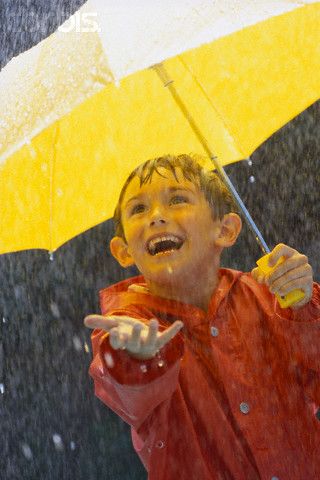
They realize that Tommy is standing under an umbrella. He is the only person who brought an umbrella. This young boy has never wavered in his own faithfulness.
Tommy’s mother asks him, “What on earth caused you to bring an umbrella today?”
Tommy confidently replies, “Last night during my prayers, God reminded me to bring an umbrella. Never doubting, I made sure that I brought one today.”
From 1939, a scene of downtown Billings, Montana. This is the eventual home for a young couple moving to Billings about three years earlier. (courtesy of Pinterest)
Grandparents Jim and Marge experienced a love story that began in their teenage years. Little did they know where life planned to take them in the years to come.
In 1911, Jim was born in the tiny town of Marmarth, North Dakota. The small community of about 800 was founded as a railroad town along the Milwaukee Road line. The transcontinental railroad traveled from Chicago, Illinois to Seattle, Washington.
When Jim was an infant, his family moved to Cleveland, Ohio. He excelled academically and athletically during his school years.
Born in 1912, Marge already lived in Ohio when Jim moved there. Eventually their lives intersected during junior high school. Her father was a Cleveland native while her mother was born in Belfast, Ireland.
With their love blossoming, Jim and Marge were married in 1928. Jim pursued his career goal of becoming an engineer with his studies at the University of Akron.
Sadly, the arrival of the Great Depression crushed Jim’s pursuit of a college degree. With money very tight, Jim needed to pursue a different career.
In 1936, Jim, Marge, and their first-born son traveled to Billings, Montana. Jim had been hired to work for a wholesale and produce grocer. Working for the Gamble-Robinson Company for 40 years, Jim eventually became the general manager of its Billings office.
When World War II arrived, Jim accepted his responsibility and served with distinction in the U.S. Army until being honorably discharged at the war’s end. Meanwhile his young family endured without him being at home.
Marge and her three young children managed to make life as pleasant as possible during Jim’s wartime absence. Unable to drive a car, Marge used other means for transportation. Rationing of vital commodities during the war made for useful transactions because Marge traded her gasoline ration cards for other ones.
Billings was growing, but it still had the feel of a smaller, close-knit community. Neighbors helped out each other. Church was a center of worship and fellowship for the young family as well.
When Jim returned home, the family continued to live in Billings at the same home. As childhood sweethearts, Jim and Marge experienced quite a life journey, which took them from their former homes in Ohio to a lasting one in Montana.
Two views of the front of the family home on Beverly Hill Blvd. Both taken long after the house had been sold. (courtesy of Pinterest and Google Maps)
This story recalled the start of my mother’s family. Being the middle child and only daughter (born in 1938), Martha started a family of her own with the birth of her first child in 1956 (Richard). Eventually the family would number five sons and one daughter.