The deeper into the heart of God I go, the more the Enemy will oppose me, bu the more God will draw me. The Enemy may be strong, but his strength is limited, whereas God’s grace has no limit.
From Ephesians 2:8-10: “For by grace you have been saved through faith, and this is not your own doing; it is the gift of God—not the result of works, so that no one may boast. For we are what He has made us, created in Christ Jesus for good works, which God prepared beforehand so that we may walk in them.”
A select few face overwhelming challenges in life. Encouraged by a heart filled with perseverance, these trailblazers adopt an attitude where “Can” outplays “Can’t.”
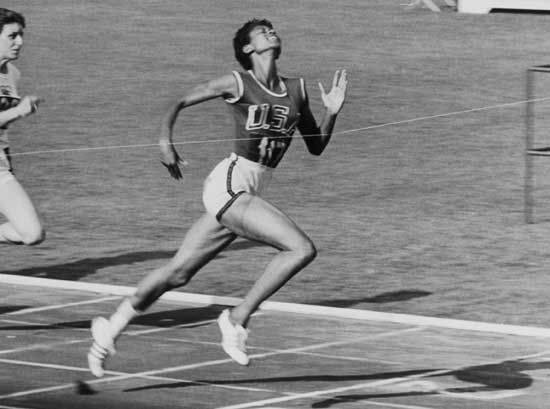
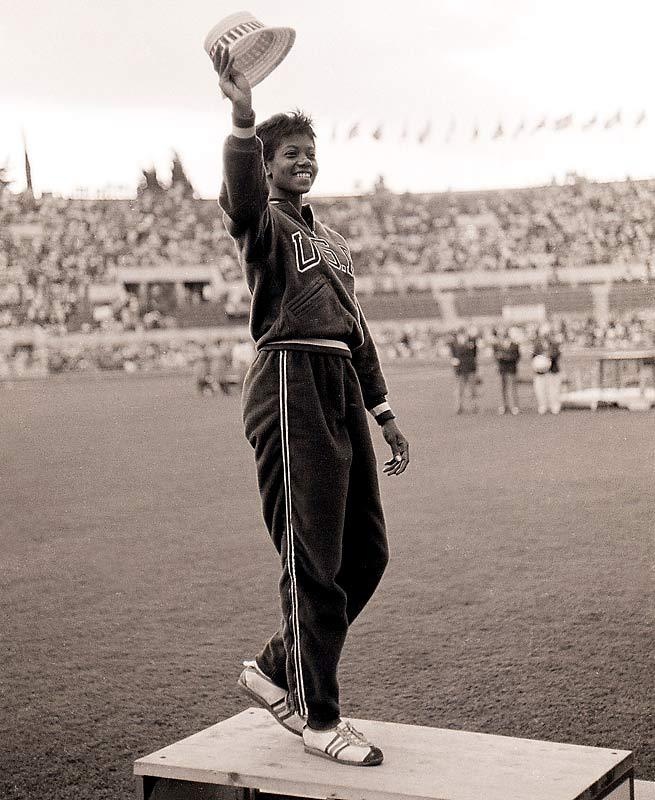
Olympics track star Wilma Rudolph overcame many obstacles in her life to achieve ultimate adoration for her speed and grace.
From the words of Wilma Rudolph: “Never underestimate the power of dreams and the influence of the human spirit.”
Born in 1940, Wilma was born in St. Bethlehem, Tennessee. She was part of a large family with 21 siblings. Facing a challenging life in the segregated South, she found athletics to be her path forward in life.
However, before Wilma pursued basketball and later track, she faced major hurdles because of health issues. Born prematurely, she endured bouts with double pneumonia, scarlet fever, and polio. Her weakened left leg required her to wear a brace, and some doctors didn’t expect her to ever be able to run.
Wilma remembered her childhood journey with these words: “My doctors told me I would never walk again. My mother told me I would. I believed my mother.”
Eventually, her leg grew stronger, and the brace thankfully disappeared. She became active in sports during her high school years. She was recruited by the legendary track coach at Tennessee State University in Nashville, Ed Temple.
While still in high school, Wilma qualified for the 1956 Summer Olympics in Melbourne, Australia. At age 16, she was the youngest athlete on the U.S. team. As a member of the 4 x 100 meter relay, she earned a bronze medal.
After high school graduation, Wilma moved on to Tennessee State. This natural, gifted runner prepared and trained to return to the Olympics in 1960 at Rome, Italy. Nicknamed “Skeeter” by her teammates, Wilma was more than ready to compete.
At the Rome Olympics, Wilma became the first American woman to win three gold medals in track and field at a single Olympics. Competing individually in the 100 and 200 meters, she overwhelmed the other competitors for two gold medals. Wanting her teammates to also earn a cherished gold medal, Wilma anchored the winning 4 x 100 meter relay.
Accolades for Wilma continued to pour in following her Olympics’ exploits. Because of her speed, beauty, and grace, the Italian press nicknamed her “The Black Gazelle.” The Associated Press awarded her Female Athlete of the Year in 1960 and 1961.
Wilma retired from competition in 1962. She fulfilled her dream of earning a college degree. For a few years, her post-athlete life included teaching, coaching, and working with underprivileged children.
The story of this African-American girl overcoming polio, poverty, and racism became a film, “Wilma,” which was released in 1977.
The following video shares a few highlights of Wilma Rudolph’s life and Olympic career.
This informative post will be posted on Saturday along with my usual writing. You are invited to participate with the opening question.
Brain Teaser Question
Suppose a bird is standing in a closed box that is resting on a scale. When the bird flies in the box, does the scale read the same, more, or less than when the bird is resting?
(answer found at the end of this post)
Featured Facts
As one of the smaller states in the American Union, Maryland’s geography features contrast between the eastern Chesapeake and Atlantic shores and the western Appalachian Mountains.
Here are some quick facts about the Old Line State:
Capital City: Annapolis (home of the United States Naval Academy)
Bird: Baltimore oriole (nickname of Baltimore’s major league baseball team)
Motto: Fatti Maschii, Parole Femine (Strong Deeds, Gentle Words)
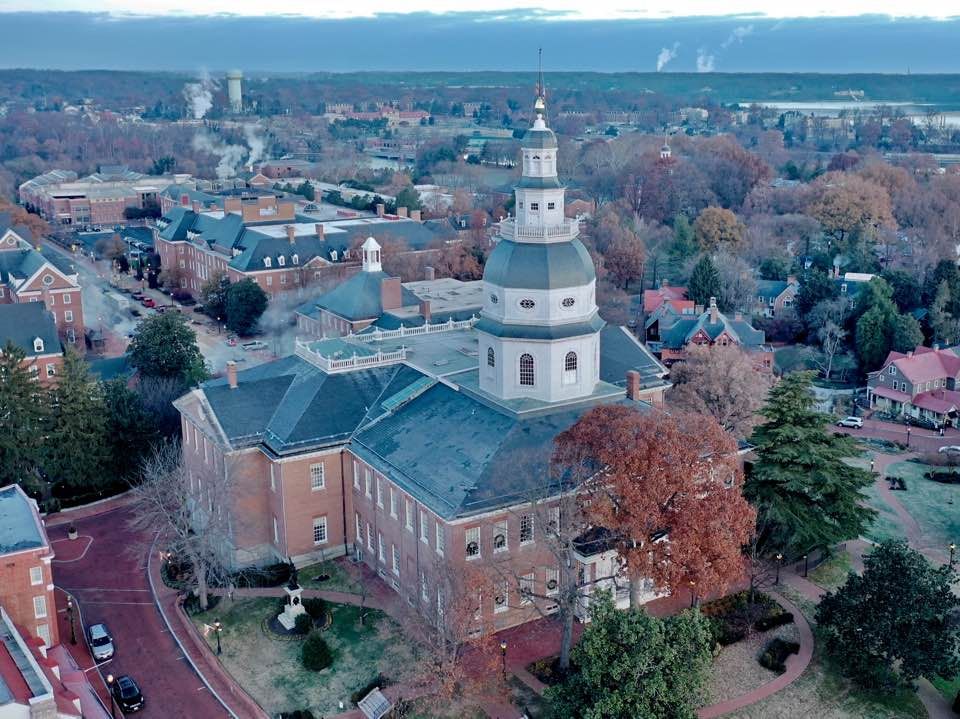
The State House, which is located in Annapolis, was occupied in 1799. It is the oldest such building in the United States. One note of history is that the building served briefly as the nation’s capitol from November 26, 1783 to August 23, 1784.
Maryland’s State House. (courtesy of Pinterest.)
Answer to Brain Teaser Question
When the bird flies, it pushes down on the air, which pushes down on the scale. The scale reads the same.
This series of poems (written in the German-inspired style of Elfchen or Elevenie) shares a total of eleven words in each poem, with a sequence by line of one, two, three, four, and one words.
Keep alive the dream; for as long as a man has a dream in his heart, he cannot lose the significance of living.
Don’t ask yourself what the world needs. Ask yourself what makes you come alive, and go do that.
Howard Thurman (1899-1981) was a American author, theologian, and civil rights leader. His writings mentored many leaders in the civil rights movement, including Dr. Martin Luther King, Jr.
From 1 Peter 1:3: “Blessed be the God and Father of our Lord Jesus Christ! By His great mercy He has given us a new birth into a living hope through the resurrection of Jesus Christ from the dead.”
From 1 Peter 1:8-9: “Although you have not seen Him, you love Him, and even though you do not see Him now, you believe in Him and rejoice with an indescribable and glorious joy,for you are receiving the outcome of your faith, the salvation of your souls.”
From Psalm 32:6-7: “Therefore let all who are faithfuloffer prayer to you; at a time of distress, the rush of mighty watersshall not reach them. You are a hiding place for me;you preserve me from trouble;you surround me with glad cries of deliverance.”
Charles Spurgeon (1834-1892) was an influential English preacher. Even in modern times, his writings and many sermons have remained a constant source of encouragement to Christians around the world. He has often be referred to as the “Prince of Preachers.”












 Big Sky Buckeye