While we cannot escape our dark society, God has provided everything we need to live in the light of our all-sufficient Savior, Jesus Christ.
From Ephesians 5:8-9: “For once you were darkness, but now in the Lord you are light. Walk as children of light, for the fruit of the light is found in all that is good and right and true.”
From John 7:37-38: “On the last day of the festival, the great day, while Jesus was standing there, He cried out, ‘Let anyone who is thirsty come to Me, and let the one who believes in Me drink.’ As the scripture has said, ‘Out of the believer’s heart shall flow rivers of living water.'”
From Revelation 22:1-3: “Then the angel showed me the river of the water of life, bright as crystal, flowing from the throne of God and of the Lamb through the middle of the street of the city. On either side of the river is the tree of life with its twelve kinds of fruit, producing its fruit each month, and the leaves of the tree are for the healing of the nations. Nothing accursed will be found there any more. But the throne of God and of the Lamb will be in it, and His servants will worship Him.”
Our faith is blessed with eternity’s heavenly river of infinite grace.
Do you write a daily journal? This inspiring thought comes from my journal, and much of what is written in my journal comes from reading and commenting on other bloggers’ posts. Thanks to many of you for adding so much to my journal.
Thine to work as well as pray, clearing thorny wrongs away; plucking up the weeds of sin, letting heaven’s warm sunshine in.
From Isaiah 61:11: “For as the earth brings forth its shootsand as a garden causes what is sown in it to spring up, so the Lord God will cause righteousness and praiseto spring up before all the nations.”
John Greenleaf Whittier (1807-1892) was an American poet. His Quaker background entrusted him to advocate for the abolition of slavery in the United States.
This informative post will be published on Saturday in place of my regular one. You are invited to participate with the opening question.
Brain Teaser Question
My attitude seems to change daily, sometimes in the very next hour. Please pardon my windy breath, cold touch, hot temperament, and moist fingers. Who am I?
(answer found at the end of this post)
Featured Facts
One of North America’s most curious creatures is the diminutive kangaroo rat, which lives in the dry and semi-arid deserts and grasslands.
Here are a few quick facts about the kangaroo rat:
Body length: about 4-6 inches
Tail length: about 7-8 inches
Weight: about 5 ounces
Diet: seeds, leaves, stems, grains, fruit (herbivores)
Lifespan: averages 3-5 years
As one of the smallest of rodents, the kangaroo rat is related to mice and rats. It is sometimes called the desert rat. It possesses a large head with big eyes and small ears. Usually its color is a sandy brown.
Being called a “kangaroo” rat, the nearly 20 different species borrow some characteristics from the Australian kangaroo. Equipped with long rear limbs with four toes, they are able to hop like tiny kangaroos. They also use their muscular hind legs to drum the ground.
Being most active at night, the kangaroo rat benefits from the cooler temperature as well as using the darkness to avoid interactions with predators, such as owls, snakes, bobcats, foxes, badgers, and coyotes. Its ability to hop up to 9 feet proves to be another asset in its necessary defense from predators.
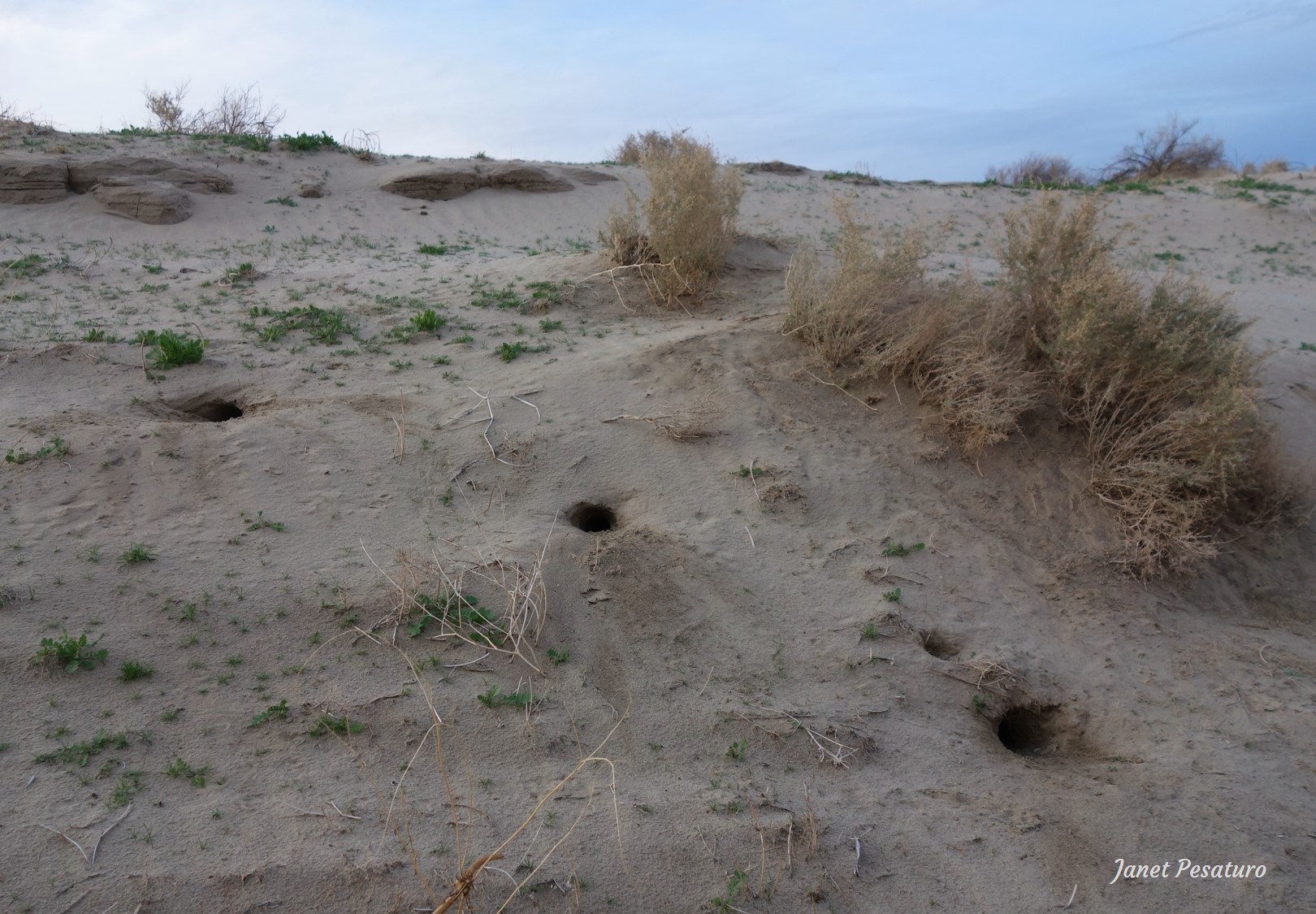
Males and females remain separate except during during the breeding season. Each kangaroo rat acts quite territorial as it protects its burrows and food storage. The underground burrows provide an escape from the heat of the sun, and its kangaroo-like pouches in its large checks act as an efficient way to carry food back to store.
The life cycle of the kangaroo rat allows for breeding once or twice each year. The gestation period lasts for 3-4 weeks. Litters of pups average about five in number. Pups are weaned after 2-3 weeks, and they reach sexual maturity in about 2-3 months.
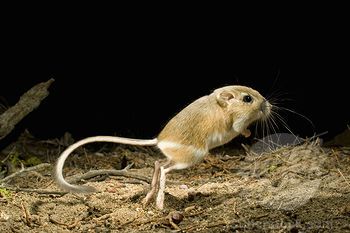
top left and moving clockwise: close-up of mature kangaroo rat, a series of underground burrows are nestled in the hillside’s sandy-like soil, a kangaroo rat entering a burrow, notice the length of the tail in contrast with the body size of the kangaroo rat, and a kangaroo rat preparing to hop. (Images courtesy of Pinterest)
God’s creation connects us daily with nature’s precious ribbons.
Do you write a daily journal? This inspiring thought comes from my journal, and much of what is written in my journal comes from reading and commenting on other bloggers’ posts. Thanks to many of you for adding so much to my journal.
This series of poems (written in the German-inspired style of Elfchen or Elevenie) shares a total of eleven words in each poem, with a sequence by line of one, two, three, four, and one words.
The darkness shall never hope to thwart the plans of God Almighty. His light shall always overcome.
Do you write a daily journal? This inspiring thought comes from my journal, and much of what is written in my journal comes from reading and commenting on other bloggers’ posts. Thanks to many of you for adding so much to my journal.
There may be any number of things dark to your understanding, but they do not come in between your heart and God.
From John 14:1: “Do not let your hearts be troubled. Believe in God; believe also in Me”
Oswald Chambers (1874-1917) was a Scottish evangelist and Christian teacher. Following his death from an illness while in Egypt during World War I, his wife took on the task of transcribing the detailed notes she had written from his lectures and sermons. Gertrude Hobbs Chambers’ efforts resulted in the publication in 1924 of MY UTMOST FOR HIS HIGHEST. I frequently read from this devotional, and it has greatly deepened my faith and understanding of God’s Word.





 Big Sky Buckeye