Overcoming Life’s Insurmountable: Phillis Wheatley

Photo by Brett Jordan on Pexels.com

For the final Saturday of each month, a different and unique feature will be published.  Today’s narrative takes a look at the accomplishments of American poet Phillis Wheatley.  Saturday’s regular feature, “Trivia’s Facts and More,” will return next week. 

A select few face overwhelming challenges in life.  Encouraged by a heart filled with perseverance, these trailblazers adopt an attitude where “Can” outplays “Can’t.”

Facing upheaval in her young life, Phillis Wheatley manages to overcome in a journey few can ever imagine.  Born around 1753, she becomes the world’s first African-American author with published works.  However, her story needs to be told from the beginning.

Coming to the American colonies in 1761, this young girl enters the slave trade.  Leaving her West African home, her tender life is uprooted.

She is purchased as a domestic slave for a New England merchant’s wife.  Without realizing it at the time, John and Susanna Wheatley will soon transform Phillis’ life.

Phillis’ name is taken from the slave ship which brought her to America, the Phillis.  She later adopts her last name from the Wheatley’s.

The Wheatley’s daughter, Mary, begins teaching Phillis to read and write.  Her brother, Nathaniel, also helps to tutor Phillis as well.

Seeing potential in the young Phillis’ eagerness to learn more, John Wheatley offers her an academic journey beyond anything most American slaves will ever experience.  Beginning at age 12, she is studying Greek and Latin, learning history and geography, and reading the Bible.

By the age of 14, Phillis writes her first poem, and she continues to write many more.  The Wheatley’s free her from domestic duties so that she can further her studies.  Following the death of Susanna Wheatley, Phillis will be granted freedom.

Quote from Phillis Wheatley:

“In every human breast, God has implanted a principle, which we call Love of Freedom; it is impatient of oppression, and pants for deliverance.”

In 1773, Phillis journeys to London with Nathaniel.  In their search for a publisher of her poems, the two of them find an interested party.  Upon publishing her book of poetry, readers in England and the American colonies discover her poetry.  Even George Washington reads her poems, and Phillis will later meet him.

In Phillis’ final years, she marries a free black man, John Peters.  He toils as an unsuccessful entrepreneur, and his children and wife endure a life filled with poverty.  During this time, Phillis continues to write, but none of these works will be published.  She dies in 1784.

Phillis Wheatley’s only book of published poetry, Poems on Various Subjects, Religious and Moral, was published in 1873.  Before having her poetry published, she needed to provide evidence that she was the writer.  After all, slaves in America usually did not know how to read and write, much less write classical poetry.  

Here is a sample of her poetry, “On Being Brought from Africa to America” (published 1773):

“Twas mercy brought me from my Pagan land,

Taught my benighted soul to understand

That there’s a God, that there’s a Savior too:

Once I redemption neither sought now knew,

Some view our sable race with scornful eye,

‘Their colour is a diabolic die’

Remember, Christians, Negroes, black as Cain,

May be refin’d, and join ‘th’ angelic train.

Courtesy of Pinterest.

Previous editions of other narratives of “Overcoming Life’s Insurmountable” can be found from the links below.  

Glenn Cunningham, American athlete

Wilma Rudolph, American athlete

James Holman, English adventurer

Buckeye Snapshots (Issue #8)

For the final Saturday of each month, a different and unique feature will be published.  Today’s narrative takes a look at an impressive  achievement from the Buckeye state of Ohio.  Saturday’s regular feature, “Trivia’s Facts and More,” will return next week. 

The state of Ohio has proudly displayed one of its favorite nicknames on vehicle license plates, “Birthplace of Aviation.”  This recognition has traced history back to the Wright brothers, Orville and Wilbur, and their bicycle shop in Dayton, Ohio.  Here they planned and successfully designed America’s first aircraft.

Fast forwarding from these early days of aviation as the 20th century unfolded, an Ohio woman sought to make aviation history in 1964.  Geraldine (Jerrie) Mock became the first woman to fly solo around the world.

As a mother of three, this Newark native described herself as “the flying housewife.”  After earning her pilot license at age 32, Jerrie joined her pilot husband, Russ, for frequent small aircraft flights.

Growing up, Jerrie seemed destined for a more adventurous life.  She recalled these memorable words, “I knew one thing.  I wanted to see the world.  I did not conform to what girls did.  What the girls did was boring.”

As her plans advanced toward reality, many assisted her journey financially.  Cessna, Javelin Aviation, and the Columbus Dispatch (newspaper) provided timely help.

Jerrie’s plane was a single-engine Cessna 180.  The plane’s call sign was N1538C, but it was shortened to Three-Eight Charlie.  Her plane was nicknamed the “Spirit of Columbus.”

Jerrie mock enjoyed dressing like a lady when she flew around the world.  pictured next to her faithful cessna, one can see that she certainly added style to her adventure.  (courtesy of pinterest)

The Cessna aircraft was outfitted with several upgrades:

  • dual directional finders
  • short-range radios
  • long-range high-frequency radio
  • autopilot
  • three extra-large fuel tanks (increased the plane’s range to 3,500 miles)

Jerrie’s adventure took-off from the Port Columbus Airport on March 19, and she successfully returned on April 17.  Her around-the-world trek endured radio and brake problems as well as bad weather.

One of the flight’s biggest challenges was when Jerrie landed by mistake on an Egyptian military base.  Another occurred when she noticed a burning wire while surrounded by extra tanks of fuel.  Fortunately, these two potentially flight-ending mishaps were taken care of quickly and without any further issues.

The flight exceeded 23,000 miles (actually 23,103) with an elapsed time of 29 days, 11 hours, and 59 minutes.

Jerrie’s route went east from Columbus toward the Atlantic Ocean with further miles flown over the Mediterranean Sea, Red Sea, Gulf of Oman, Arabian Sea, and Pacific Ocean.  Some of her stops included the Azores, Casablanca, Cairo, Karachi, Calcutta, Bangkok, and Honolulu.

American President Lyndon Johnson awarded Jerrie the Federal Aviation Administration’s Gold Medal for Exceptional Service.  Her faithful partner, the Cessna aircraft, was exhibited at the National Air and Space Museum at Washington, DC.

top:  map outlining Jerrie’s route from columbus, Ohio eastward as she traveled around the world.  bottom:  “The spirit of columbus” hanging as an exhibit at the national air and space museum in washington, dc.  (courtesy of pinterest)

Trivia’s Facts and More (10/21)

Photo by Pixabay on Pexels.com

This informative post will be published on Saturday in place of my regular one.  You are invited to participate with the opening question.

Brain Teaser Question

Which of the following comes closest to being a factual statement?

A)  Lawyer:  “Our whole political system is corrupt.”

B)  Upholster:  “These are the most comfortable chairs we make.”

C)  Coin collector:  “Fewer than ten of these silver coins were minted in the year 1947.”

(answer found at the end of this post)

Featured Facts

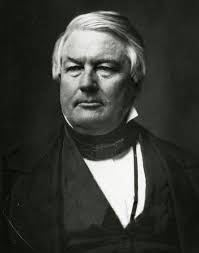
Nicknamed by some as “The Accidental President,”  Millard Fillmore served as the 13th President of the United States (1850-1853).

Here are a few quick facts about President Fillmore:

  • Political party:  Whig (he would be the last President from this party)
  • Home state:  New York
  • Life span:  1800-1874
  • Occupation:  teacher and lawyer

As a young mill worker, Fillmore read the dictionary during breaks.  He was primarily self-taught.  His only formal teacher was Abigail Powers, who would later become his wife.  She was instrumental in starting a Presidential Library, which was housed in the White House.

Like Abraham Lincoln, Fillmore rose from his childhood log cabin to reside in the White House.  He also served in Congress as a U.S. Representative from New York state.

Fillmore was a relative political unknown when he was tapped to become Zachary Taylor’s running mate in the election of 1848.  Few could have imagined that he would be called upon to fill Taylor’s shoes as President.  He joined William Tyler as one more Vice President taking the oath of office following the death of the incumbent President.

One of the most significant achievements of the Fillmore’s administration was supporting the Compromise of 1850.  Though opposed to slavery, he valued the preservation of the Union at any cost.  An uneasy peace would remain until the election of Abraham Lincoln in 1860.

left:  fillmore as president.  right:  fillmore home in buffalo, new york.  (photographs courtesy of pinterest.)


Answer to Brain Teaser Question

C

All others are opinion or conjecture.

Mary Roach Quotes

Photo by Jonathan Borba on Pexels.com

Heroism doesn’t always happen in a burst of glory.  Sometimes small triumphs and large hearts change the course of history.

People are messy, unpredictable things.

Mary Roach (born 1959) is an American author who specializes in writing with themes about science and humor.

Trivia’s Facts and More (8/26)

Photo by Pixabay on Pexels.com

This informative post will be published on Saturday along with my usual writing.  You are invited to participate with the opening question.

Brain Teaser Question

The peacock is an unusual bird with long, beautiful feathers.  It does not lay eggs.  So where do baby peacocks come from?

(answer found at the end of this post)

Featured Facts

Granted statehood on March 4, 1791, Vermont became the first state admitted to the American Union following the original thirteen colonies.

Here are some interesting facts about Vermont, nicknamed the Green Mountain State:

  • Motto:  Freedom and Unity
  • Capital City:  Montpelier (smallest state capital in the U.S.)
  • State Bird:  Hermit Thrush
  • State Flower:  Red Clover

French explorer Samuel de Champlain inspired Vermont’s name with his words upon seeing the land that would later become Vermont.  He called it “les monts verts” which means the green mountains.  

Vermont was the birthplace of two American Presidents:  Calvin Coolidge and Chester A. Arthur.  Its constitution was the first in America to abolish slavery.

Vermont has been well-known for maple syrup and Ben & Jerry’s ice cream.  Made famous in the film, “The Sound of Music,” the Von Trapp family would move from Austria to Vermont where they made a home in the town of Stowe. 

Left:  vermont’s capitol in montpelier.  right:  hermit thrush (state bird).  photographs courtesy of pinterest.


Answer to Brain Teaser Question

From eggs.  The peahen lays the eggs.  The peacock is the male.

H. G. Wells Quotes

Photo by Mathias Reding on Pexels.com

Human history becomes more a race between education and catastrophe.

What really matters is what you do with what you have.

H. G. (Herbert George) Wells (1866-1946) was a British novelist, journalist, and historian.  Many of his published works share a futuristic view, and this has earned him the distinction of being the “father of science fiction.”

Trivia’s Facts and More (4/29)

Photo by Pixabay on Pexels.com

This informative post will be posted on Saturday along with my usual writing.  You are invited to participate with the opening question.

Brain Teaser Question

How many two-cent stamps are there in a dozen?

(answer found at the end of this post)

Featured Facts

The “Volunteer State” of Tennessee was the 16th state admitted to the American Union on June 1, 1796.

Here are some quick facts about this dynamic state:

  • Capital City:  Nashville
  • Bird:  Mockingbird
  • Motto:  Agriculture and Commerce

One of Tennessee’s most famous citizens was Davy Crockett, the famous frontiersman and Congressman.  He was born in 1786, and he was well-known for his exploits at the Battle of the Alamo during the Texan march toward independence from Mexico in 1836.

The most visited national park in the United States has been the Great Smoky Mountains.  The park’s name was derived from the smoke-like bluish haze that was often seen above its mountains.

The city of Nashville has been America’s country music epicenter for many years.  Since 1925, the Grand Ole Opry has been the longest, continually-running live radio program in the land.  A visit to the the historic Ryman Auditorium will create  a memorable visit for any country music fan.

Top Photos:  Great Smoky Mountains National Park, Nashville’s Music Row, Tennessee River Gorge.  Bottom Photo:  Interior of the Ryman Auditorium.  (courtesy of Pinterest)

Answer to Brain Teaser Question

12 stamps

You may have multiplied 2 x 12 to get 24.  But a dozen stamps is 12 stamps, no matter how much each is stamp is worth.

Ken Burns Quotes

Courtesy of Pinterest.

Baseball:  It follows the seasons, beginning each year with the fond expectancy of springtime and ending with the hard facts of autumn.

It is the great arrogance of the present to forget the intelligence of the past.

Ken Burns (born 1953) is an American filmmaker who specializes in documentaries about American history and culture.  Many of his works have been presented in PBS.

Trivia’s Facts and More (2/18)

Photo by Pixabay on Pexels.com

This informative post will be posted on Saturday along with my usual writing.  You are invited to participate with the opening question.

Brain Teaser Question

Which Montana town’s name is best represented by Morse Code for the letter “I”?

(answer found at the end of this post)

Featured Facts

The state of Montana is blessed with a litany of small towns with unique names.  One town was named for the “pair of dots” design of an area rancher’s cattle brand.  

Here are some interesting facts about this small town in the Treasure State:

  • Population of 26 (2020 Census).
  • Located along the Musselshell River in the central region of the state.
  • The town’s property was donated by an area rancher, George R. Wilson.
  • The town was founded in 1900.

In an interesting and related note, one other Montana community is named for a rancher’s cattle brand.  The town of Circle, which is located in the northeastern region between the communities of Glendive and Wolf Point, is named after the circle-shaped brand of an area ranch.


Answer to Brain Teaser Question

Two Dot

This is also the name of this mystery town in Montana.  Rancher George R. Wilson, who donated the land for the town from his vast land holdings, also went by the name of Two Dot Wilson.

Trivia’s Facts and More (2/11)

Photo by Pixabay on Pexels.com

This informative post will be posted on Saturday along with my usual writing.  You are invited to participate with the opening question.

Brain Teaser Question

Which of the following fractions is smallest?

(A)   11/20    (B)   5/6    (C)   5/7    (D)   2/3    (E)   3/4

(answer found at the end of this post)

Featured Facts

The American state of Kansas was admitted to the Union on January 29, 1861.  Its capital city is Topeka (population of 125,963).  

Here are some interesting facts about America’s 34th state:

  • Nickname:  Sunflower State.
  • Motto:  Ad Astra Per Aspera (To the Stars Through Difficulties).
  • The first woman mayor in the U.S. was Susanna Madora Salter, when she was elected mayor of Argonia in 1887.
  • Born in Atchison, Amelia Earhart, who was the first woman to fly solo across the Atlantic Ocean.

Located in Wichita, the largest city of Kansas, is the birthplace of Pizza Hut.  Two brothers started their small pizza business near the campus of Wichita State University in 1958.  Wichita State University students Dan and Frank Carney were the entrepreneurs of this new enterprise.  Today, their historic restaurant still stands, has been updated, and now serves as a museum.

Left:  Mayor Susanna Madora Salter.  Right:  Original Pizza Hut in Wichita.  (courtesy of Pinterest)


Answer to Brain Teaser Question

(A)   11/20

This is the fraction closest to 1/2.  The rest are further from and greater than 1/2.