Trivia’s Facts and More (12/21)

Photo by Pixabay on Pexels.com

This informative post will be published on Saturday in place of my regular one.  You are invited to participate with the opening question.

Brain Teaser Question

Besides the most famous reindeer of all, Rudolph, can you name Santa’s eight remaining reindeer?

(answer found at the end of this post)

Featured Facts

One of the most popular songs at Christmas is “Rudolph the Red-Nose Reindeer.”  People know bits and pieces about the history behind the song; but, here is the rest the story.

In the late 1930s, American retailer Montgomery Ward was looking to create a nationwide marketing campaign for the month of December.  They looked for help from their talented copywriter, Robert L. May.  

As May crafted poetry to share the story of his newly invented character, Rudolph, he enlisted the help of Denver Gillen.  Gillen worked in Montgomery Ward’s art department, and his illustrations would be featured in the short publication.

While Gillen envisoned Rudolph as a young deer with his big, red nose, May crafted rhyming couplets (a sample follows).

Twas the day before Christmas, and all through the hills

The reindeer were playing, enjoying the spills

Of skating and coasting, and climbing the willows

And hopscotch and leapfrog (protected by pillows)

Over 800 Montgomery Ward stores opted in to participate in the December promotion.  Nearly two and a half million copies were ordered (at at cost of 1.5 cents apiece).  The copies were given freely to children who visited each participating store.

Following World War II in 1949, Montgomery Ward decided to bring back their highly successful Christmas promotion, which again featured “Rudolph the Red-Nosed Reindeer.”  Over three and a half million copies were printed.

Eventually Montgomery Ward granted May the copyright privileges to “Rudolph the Red-Nosed Reindeer.”  He shared his poetry story with his brother-in-law, Johnny Marks.  Marks just happened to be a songwriter.  With May’s approval, he adapted the story to lyrics of a Christmas song of the same name.

Actor and singing cowboy, Gene Autry, was signed to record the song, and it became a top hit in 1946.  The lyrics featured an updated story about this famous reindeer.  Later in 1964, television’s classic animated feature, “Rudolph the Red-Nosed Reindeer,” was produced by Rankin/Bass.  

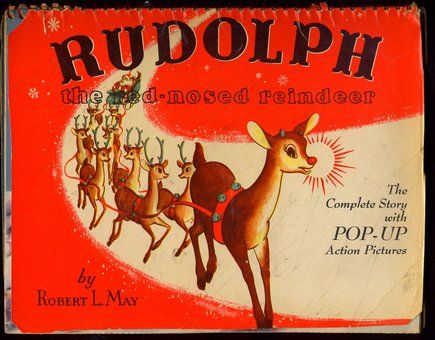
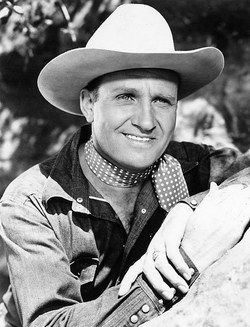
Moving from top left and clockwise:  cover of one version of Robert L. May’s book, Robert L. May, Gene Autry, scene from television’s 1964 feature, gene autry’s album cover.  (Images courtesy of Pinterest)


Answer to Brain Teaser Question

Dasher, Dancer, Prancer, Vixen, Comet, Cupid, Donner, Blitzen

Trivia’s Facts and More (12/14)

Photo by Pixabay on Pexels.com

This informative post will be published on Saturday in place of my regular one.  You are invited to participate with the opening question.

Brain Teaser Question

How do you know that Jupiter, Saturn, Uranus, and Neptune are about to get married?

(answer found at the end of this post)

Featured Facts

The 25th President of the United States was William McKinley, who hailed from the state of Ohio.

Here are a few quick facts about President McKinley:

  • Political party:  Republican
  • Birthplace:  Niles, Ohio (January 29, 1843)
  • Death:  September 14, 1901 (Buffalo, New York)
  • Nickname:  “The Idol of Ohio”
  • Colleges attended:  Allegheny College (Salem, Ohio), Mount Union College (Alliance, Ohio)
  • Occupations:  School teacher, soldier, lawyer

McKinley spent his entire political career in the Buckeye state of Ohio.  Elected to seven terms in the U.S. House of Representatives and two terms as Governor, he was well-positioned to become President of the American Union.

McKinley’s earlier years found him serving in the Union army during the American Civil War, where he led a group of volunteers from his home state.  Later, he practiced law in the city of Canton, which was not far from his childhood roots in Niles.  

McKinley was elected to two terms as President.  In both the elections of 1896 and 1900, his Democratic challenger was William Jennings Bryant.  Unfortunately, he became the third President to be assassinated during the early months of his second term.  

McKinley was attending the Pan-American Exposition in Buffalo, New York when he was murdered.  His Vice President, Theodore Roosevelt, succeeded him as President.

As President, McKinley was a strong supporter of protective tariffs.  During his first term, the United States successfully defended itself in the Spanish-American War of 1898.  In the treaty that ended the hostilities, the United States gained the Spanish territories of Puerto Rico, Guam, and the Philippines.

McKinley’s namesake has been used as the portrait on the United States’ $500 bill.  His name was designated for the highest mountain peak in North America, Mount McKinley.  In 2015 the Alaskan peak was renamed Denali, its traditional native name.

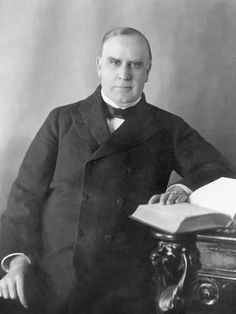
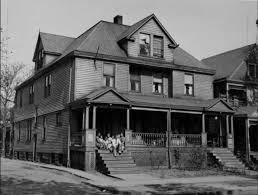
Moving from top left and clockwise:  presidential portrait, canton home, mckinley national memorial (in canton), civil war portrait, his assassination in the cleveland newspaper.  (Images courtesy of Pinterest)


Answer to Brain Teaser Question

They all have rings.

Buckeye Snapshots (Issue #11)

Experiencing personal triumph at the 1936 summer Olympics in Berlin, American Jesse Owens exhibited a resolute attitude and perseverance to overcome many challenges.

Born in Oakville, Alabama in a sharecropper’s cabin in 1913, Owens experienced poverty and racial inequality during his early years.  During the Great Migration, his family found a home and better opportunities in Cleveland, Ohio.

left:  Owens during his time as a member of the ohio state track team.  right:  Owens childhood home in cleveland, ohio.  (Courtesy of pinterest)

Life’s stage was set for Owens to become the first Olympian to ever win four gold medals in a single Olympiad.  As the final pieces of his life’s journey began falling into place, the relationships in his life helped to lead him to further greatness.

Track and field offered a unique opportunity to run for freedom in an integrated environment.  Inspired by his high school coach, Charles Riley, Owens won all major track events and was an Ohio state champion three years in a row.

In 1933, Owens enrolled at Ohio State University, which was well-known for its tremendous track and field program.  Under Larry Snyder’s coaching, Owens continued to mature as a sprinter and jumper. 

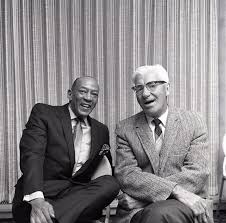
left:  coach charles riley with owens.  right:  later in life, owens with coach larry snyder.  (courtesy of Pinterest)

Meanwhile in Germany, the Nazi regime radically altered the landscape with its Nuremburg Laws, which limited the rights of the Jewish population.  Owens and German Fuhrer, Adolf Hitler, were headed on a collision course.

As America contemplated a possible boycott of the 1936 summer Olympics, Owens’ mentors encouraged him to stand tall in his desire to compete in the games.  In hindsight, many saw the contrast of German Aryan race superiority and anti-Semitism with America’s own inequality and Jim Crow laws that faced many of the Black population.  Owens became a light in the darkness lived by many.

Owens’ journey brought him and America respect internationally.  Nazi propaganda failed to experience a victory at every Olympic event, and Owens’ exploits led the way.

He earned four gold medals in a single Olympiad with victories in the 100 meters, 200 meters, long jump, and 4 x 100 meter relay.  The long jump competition infused Owens with a final relationship to cultivate.

In the trials of the long jump, each competitor received three jumps in order to qualify for the finals.  Owens scratched on his first two attempts, and he faced one final attempt in order to make the final field of jumpers.

His primary German competitor, Luz Long, offered him a tip to move his take-off point well behind the board.  Long’s wisdom restored confidence in Owens before he made his final jump, and he easily qualified for the finals.

Despite Long being German and Owens being American, both felt a bond.  While Long settled for a silver medal in the long jump, he gained a friend in Owens.  Both athletes found a reward far greater than medals and competition.  Their relationship exceeded the drama which surrounded the games.

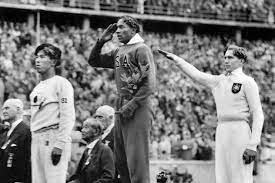
LEFT:  the american national anthem plays after owens receives his gold medal in the long jump, german COMPETITOR luz long is pictured to owens’ left.  right:  long and owens later during the 1936 games. (courtesy of pinterest)

Single Voice

Photo by Polina Kovaleva on Pexels.com

Facing overwhelming odds

Single voice stating its case

Stepping out from shelter’s light

Today, darkness loses race


Standing alone with courage

At last, time for change arrives

Trampling down twisted darkness

Today, faithful light survives


Clinging to truth’s conviction

Multitude of pain erased

Extinguishing all darkness

Today, humble light embraced


Understanding life’s purpose

Human rights boldly proclaim

Recalling depth of darkness

Today, light forgives all blame


Learning from history’s past

Actions taking direct route

Offering nation new light

Today, darkness falls—no doubt


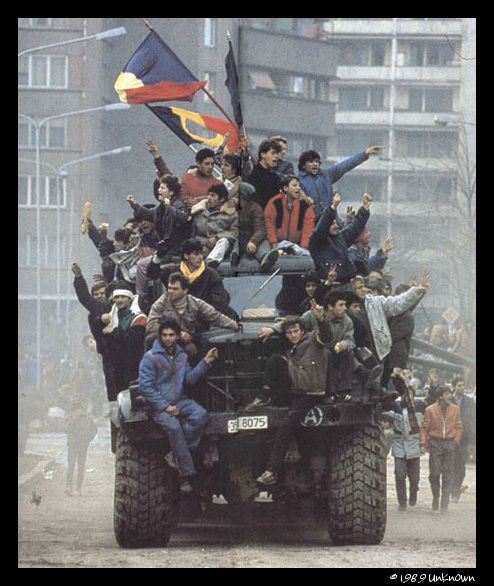
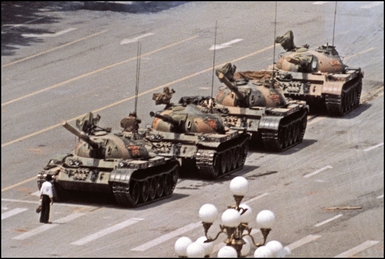
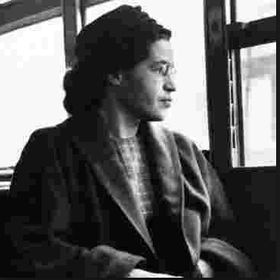
History has amplified the single voices shown below as a testament to taking a stand, respecting the value fellow man, and putting others above self.  Top left and moving clockwise:  1989, Tank Man stopped tanks at Tiananmen Square in China; 1877, Nez Perce Chief Joseph surrendered to American cavalry near Bear Paw Mountains in Montana Territory; 1955, Rosa Parks refused to give up her front seat on a segregated bus in Montgomery, Alabama; 1930, Mahatma Gandhi led peaceful protest during India’s Salt March; 1945, Anne Frank used her diary’s voice as her final witness of living under the brutality of war.  (All photos courtesy of Pinterest)

Overcoming Life’s Insurmountable: Ida Lewis

Photo by Brett Jordan on Pexels.com

For the final Saturday of each month, a different and unique feature will be published.  Today’s narrative takes a look at the accomplishments of American lighthouse keeper, Ida Lewis.  Saturday’s regular feature, “Trivia’s Facts and More,” will return next week. 

A select few face overwhelming challenges in life.  Encouraged by a heart filled with perseverance, these trailblazers adopt an attitude where “Can” outplays “Can’t.”

Renowned American lighthouse keeper, Ida Lewis, is recognized as one of the nation’s true heroes.  Her dedication to her service as well as rescuing many forlorn boaters in the waters around Newport, Rhode Island, is well-documented.

Idawalley Zorada Lewis begins her life journey on February 25, 1842.  Born to parents, Hosea and Zoradia, she becomes a vital, working member of the family by the age of 12.

Her father is appointed as the lighthouse keeper in 1854 at the Lime Rock Light Station.  The tiny postage-stamp sized island of Lime Rock is inaccessible by land.  In the first few months of Hosea Lewis’ tenure as the keeper, he suffers a stroke.  Unable to complete his duties, his wife Zoradia takes over his responsibilities.

Because her mother must also care for her husband’s needs, Ida is called upon to assist with the tending and caring of the lighthouse.  Eventually, she will inherit the official position as the lighthouse keeper.  These daily duties include:

  • Climb the tower and fill the lamp with oil at dusk and at midnight.
  • Trim the wick and polish carbon off the reflectors.
  • At dawn, put out the light.

Ida becomes an accomplished swimmer and rower.  Each day, she pilots the family’s wooden skiff across the harbor in taking her siblings to school.  She also brings back provisions from town.

left to right:  lime rock light station at newport, rhode island; early portrait of lewis.  (courtesy of pinterest)

In the fall of 1958 at age 16, Ida completes her first rescue.  Four young men are clinging to their capsized sailboat, and she rows out to bring them safely back to land.

One of Ida’s best known rescues happens on March 29, 1869.  A vicious snowstorm covers the Newport harbor, and two soldiers are rowing toward Fort Adams.  A 14-year old boy is acting as their guide.  The surging waters become too much, and the boat capsizes.  The boy disappears in the stormy seas while the two men cling to their sinking boat.  Ida and her younger brother row out to the scene and rescue the two men.

Ida’s exploits are reported in newspapers, and one even hails her as the “bravest woman in America.”  She meets many famous people, including President Ulysses S. Grant.

In July, 1881, Ida receives the Gold Lifesaving Medal from the U.S. Coast Guard for her heroism in this rescue.  Her likeness appears on the cover of Harper’s Weekly, and her photograph is reproduced on postcards.

The Secretary of the U.S. Lighthouse Board, William Windom, offers gratitude and praise for Ida’s courage.  Here are some of his words:

“. . . it is peculiarly appropriate that you should receive the national life-saving medal in commemoration of your brave acts as a life-saver, while it is an occasion for added satisfaction that such a memorial of unquestionable heroism should have been won by a woman.”

During her many years of service, Ida is credited with 18 official rescues (and numerous unofficial ones).   She completes her last rescue when she is in her mid-60s.  On October 24, 1911, Ida dies from a stroke. 

In her final years of service, Ida earns an annual salary of $750, which is the highest paid to any lighthouse keeper in the United States.  No doubt, her many acts of heroism earn her this high level of compensation.

left to right:  painting depicting one of lewis’ rescues, later portrait of lewis, and an image contrasting lewis the woman with the oar of a rescuer.  (courtesy of pinterest)

In 1924, the U.S. Coast Guard renames the Lime Rock Light Station.  It becomes the Ida Lewis Lighthouse, and it is the only American lighthouse ever named after a keeper. 

Ida Lewis becomes a strong role model for future generations of American girls.  Her own words proclaim her sustaining faith:  God always gives me the strength to help others in need.”

Previous editions of other narratives of “Overcoming Life’s Insurmountable” can be found from the links below.  

Glenn Cunningham, American athlete

Wilma Rudolph, American athlete

James Holman, English adventurer

Phillis Wheatley, American poet

Buckeye Snapshots (Issue #10)

For the final Saturday of each month, a different and unique feature will be published.  Today’s narrative takes a look at one of the gems of the metro park system of central Ohio.  Saturday’s regular feature, “Trivia’s Facts and More,” will return next week. 

Central Ohio is blessed with an extensive metro park system in the surrounding area of Columbus and Franklin County.  One of the most remarkable parks to discover is Chestnut Ridge Metro Park.

Located about five miles from the city of Canal Winchester, the park contains the first significant ridge of the Ohio foothills of the larger range of Appalachian Mountains.  This particular ridge spans nearly 4,500 feet and rises to a height of just over 1,100 feet above sea level. 

Chestnut Ridge features a variety of trees with the upper ridge containing black oak, shagbark hickory, and northern red oak.  The lower slopes are filled with sugar maples and American beech.  The park’s size measures about 486 acres, and hidden in its depths are outcroppings of black sandstone. 

The park features a totally natural setting with fallen logs and splintered tree trunks.  Notice the moss growing around the hollowed out tree trunk.

With natural trails covered with light gravel, the terrain rates as moderate to difficult for anyone who desires to walk the park.  Poplar Creek meanders through the meadows and trees below the ridge.

Chestnut Ridge features three different trails, and they connect to form a nearly 2.5 mile route.  Nearby wetlands and a fishing pond are located on the lower level of the park, as well as picnic shelters and a small natural amphitheater.

The Meadows Trail covers one mile in distance, and it outlines the lower region of the park.  This route is more moderate than the two remaining trails. 

The other trails offer a more challenging and  difficult terrain.  The Ridge Trail climbs up from each end of the Meadows Trail.  The one-mile distance takes any ambitious hiker up to the highest point of the park. 

The path on the left is typical of the Meadows Trail.  The beginning of the climb up the Ridge Trail is featured on the right.

Between the Meadows Trail and the Ridge Trail sits the Homesite Trail.  The nearly half-mile trail climbs up through the interior section of the park.  Hikers will find the foundation of a former home from the 1930s as well as a garden area around it.  The generous size of the shaded location may allow a fortunate photographer to quietly capture a hungry deer feeding on the tender, green grass.

at the top of the homesite trail one will find the remnants of a former home.  standing in the quiet shadows of the surrounding trees, a deer is photographed, seemingly unaware of any human presence.

The park was named for the American chestnut tree, and many grew up on the crown of the ridge until the early 1900s.  They dominated forests in the eastern United States as well as the Ohio Valley.  These giants topped out at a height of 100-150 feet, and a few featured trunk diameters of nearly ten feet.

In 1904, an Asian fungus arrived in the United States, and it began to slowly and methodically kill the mighty chestnut tree.  By the end of World War I, most of America’s chestnut trees were reduced to sprouts rising from infected stumps.  They resembled pale and sickly dwarf bushes rather than the magnificent chestnut tree.

a final collage of photos:  fall foliage, a carved out hole in a tree trunk along the ridge trail, quiet fishing pond on the lower level of the park, a self-portrait of richard (your tour guide), and a look from the midpoint of the homesite trail (not far from the FOUNDATION of a former house).

Trivia’s Facts and More (3/2)

Photo by Pixabay on Pexels.com

This informative post will be published on Saturday in place of my regular one.  You are invited to participate with the opening question.

Brain Teaser Question

Built on a concrete slab, there is a one-story house where everything is yellow.  The walls are yellow.  The doors are yellow.  All of the furniture is yellow.  The house has yellow beds and a yellow sofa.  What color are the stairs?

(answer found at the end of this post)

Featured Facts

Admitted to the American union on December 11, 1816, the “Hoosier State” of Indiana becomes the country’s 19th state.

Here are a few quick facts about Indiana:

  • Capital City:  Indianapolis
  • State Bird:  Cardinal
  • State Flower:  Peony
  • State Motto:  The Crossroads of America

The word “Indiana” in Latin means “Land of the Indians.”  Native Americans are the original inhabitants of this territory.  European culture arrives in 1673 when a French trading post is built on the Kankakee River.  In 1679, French explorer René-Robert Cavelier, Sieur de La Salle claims the territory for King Louis XIV.

Indiana offers a treasure trove of places to visit.  They provide quite a variety of attractions for tourists coming to the “American Crossroads” state.

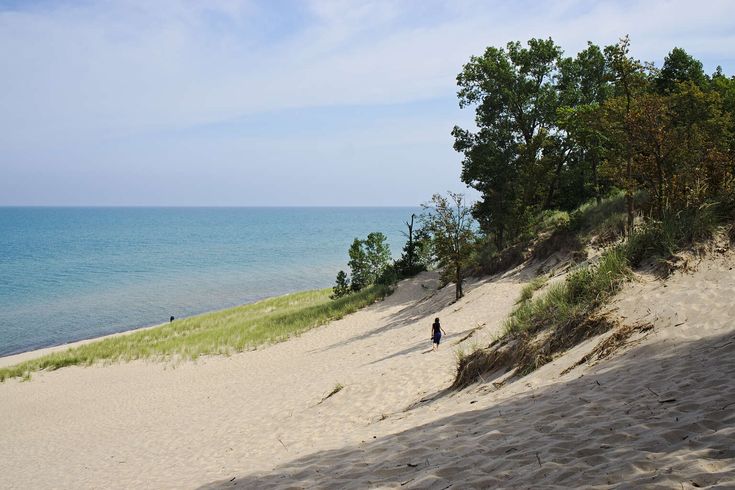
Indiana Dunes National Park is located along 15 miles of the southern shore of Lake Michigan.  Visitors are invited to walk in glacial sands that have been pulled up into nearly 250-foot tall dunes.  In addition to the dunes, hikers experience a thriving ecosystem featuring wetlands, prairies, and old-growth forests.

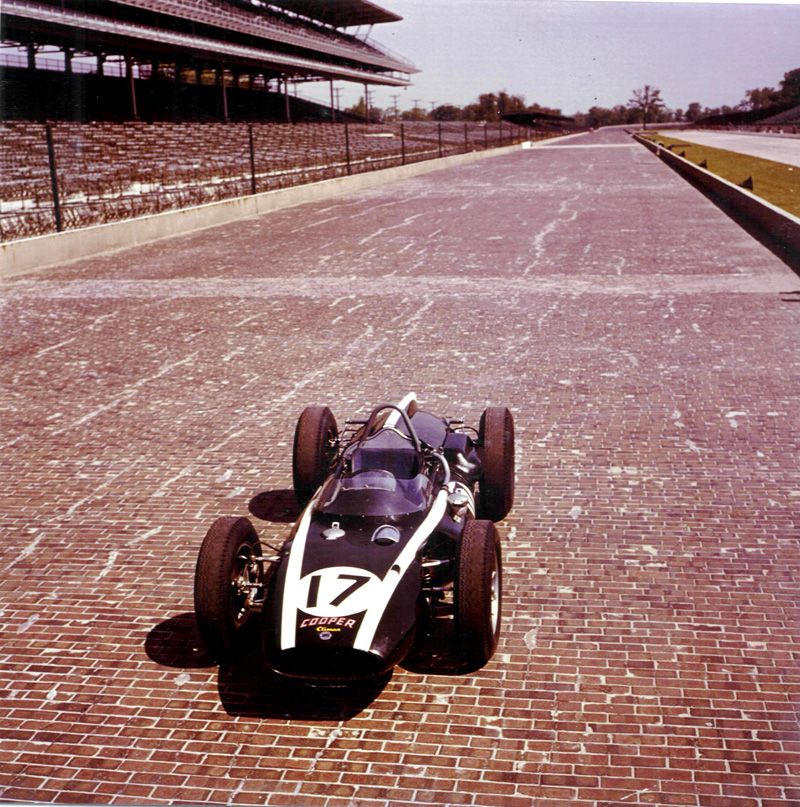
America’s greatest spectacle of auto racing offers drivers a chance to make history over Memorial Day weekend with the Indianapolis 500.  Since its inaugural race in 1911, racing fans have been coming to the speedway.  On race day, over 250,000 spectators make their way to the Brickyard.

Bedford is rightly called the “Limestone Capital of the World.”  The small city is surrounded by large limestone quarries.  Limestone from Bedford has found its way into prominent buildings around the United States, including the Empire State Building in New York City, and the Pentagon and National Cathedral in Washington, DC.

Here are three more significant historical notes from Indiana:

  • The famous Raggedy Ann doll is created in 1915 by Indianapolis author and cartoonist, Johnny Gruelle.  Later on, he adds books, songs, and cartoons to the Raggedy Ann collection.
  • Wabash becomes the world’s first electrically lighted city on March 31, 1880.
  • Fort Wayne hosts America’s first professional baseball game on May 4, 1871.  By the way, Fort Wayne’s Kekiongas won 2-0.

from left to right:  from 1961, Indianapolis 500 speedway with its original bricks (the track is paved for 1962), portion of the limestone quarries near bedford. Indiana dunes national park along lake michigan, Original raggedy ann Stories (1918) written by Johnny Gruelle)  (photographs courtesy of pinterest.)


Answer to Brain Teaser Question

There are no stairs–it’s a one-story house.

Buckeye Snapshots (Issue #9)

For the final Saturday of each month, a different and unique feature will be published.  Today’s narrative takes a look at an impressive  achievement from the Buckeye state of Ohio.  Saturday’s regular feature, “Trivia’s Facts and More,” will return next week. 

A native of Columbus, Ohio, Edward Vernon (Eddie) Rickenbacker lived a dynamic life in ways that few can imagine.  His times filled up with feats of remarkable courage, dedication, and hard work.

Born to parents who were Swiss immigrants, Rickenbacker was born on October 8, 1890.  Along with his six siblings, the family struggled to stay above water with their finances. 

In 1904 at the age of 13, his father was killed in a construction accident.  Realizing that his mother needed money, he dropped out of school to become the family’s breadwinner.  This marked the beginning of Rickenbacker’s resolute attitude to make a difference.  Others witnessed his unwavering, positive outlook over and over again throughout his life.

Rickenbacker loved working on machines and engines.  This led to work as a mechanic, and later into automobile racing.  He exhibited a fearless attitude as a driver, and he survived numerous close calls and accidents.  In 1911, he competed in the inaugural Indianapolis 500, and he finished in 13th place.

left:  prepared to race in the 1915 indy 500.  right:  restored rickenbacker family home in columbus, ohio.  (images courtesy of pinterest)

As America entered World War I in 1917, Rickenbacker’s future destiny waited to be fulfilled.  He joined the army and arrived in Europe where his first role was to serve as mechanic and driver for General John J. Pershing, commander of all American forces in Europe.  What Sgt. Rickenbacker wanted most was to serve in the U.S. Army Air Service.

With encouragement from Colonel Billy Mitchell, a leading American advocate for tactical air power, he finished flight training in just 17 days.  Lt. Rickenbacker was now prepared to serve his country as a fighter pilot.  He was assigned to the 94th Aero Pursuit Squadron.

Just as he had proven to be a fearless race car driver, Rickenbacker accepted the challenges of air combat with the same “can do” attitude.  He became a daring, yet gifted pilot.  His prowess in aerial combat earned “Captain Eddie” the Medal of Honor in recognition of his 134 combat missions and 26 air victories, the highest of all American pilots.  Nicknamed the “Ace of Aces,” he was recognized as the most celebrated American fighter pilot of the war.

Upon being promoted to Captain of the 94th Aero Pursuit Squadron, Rickenbacker impressed upon his pilots that an experienced fighting pilot did not have to take unnecessary risk.  It was a pilot’s business to shoot down enemy planes, not to get shot down.

left:  closeup of lt. rickenbacker.  right:  sitting in the cockpit of his fighter.  (Images courtesy of Pinterest)

Following the war, Rickenbacker turned his attention to a variety of pursuits.  He briefly owned a car manufacturing company before financial troubles closed its operations.  He purchased the Indianapolis Speedway in 1927, and he owned it until 1945. 

In 1938, he bought Eastern Air Lines, and turned it into one of the most profitable airlines during the 1940s and 1950s.  He remained in a leadership position until he retired in 1963. 

Two significant events further sealed the legend of Eddie Rickenbacker.  While traveling on a civilian plane on February 26, 1941, he along with a few other passengers survived a crash.  Both pilots and 11 passengers were killed.  Rickenbacker sustained serious injuries:  shattered pelvis, broken ribs, broken leg, and a torn eyelid.  After several days in the hospital, he made a total and miraculous recovery.

During World War II, Rickenbacker became an eager volunteer and supporter of American troops.  He toured numerous Army Air Corps bases to boost morale and inspect methods of training.  One more brush with death waited for him in the South Pacific. 

Aboard a B-17 flying fortress in October, 1942, Rickenbacker was enroute to New Guinea to deliver a message to American General Douglas MacArthur.  Unfortunately, the plane crashed into the Pacific Ocean a few hundred miles off course.  Rickenbacker and seven other men attempted to survive while floating in rubber rafts.  Forgotten for 24 days, they lived on rainwater and fish.  With Rickenbacker’s leadership and encouragement, only one of the men would perish.  A leading American newspaper, The Boston Globe, described him as “The Great Indestructible.”

left:  standing next to his world war I fighter.  right:  President of eastern air lines.  (Images courtesy of Pinterest)

Overcoming Life’s Insurmountable: Phillis Wheatley

Photo by Brett Jordan on Pexels.com

For the final Saturday of each month, a different and unique feature will be published.  Today’s narrative takes a look at the accomplishments of American poet Phillis Wheatley.  Saturday’s regular feature, “Trivia’s Facts and More,” will return next week. 

A select few face overwhelming challenges in life.  Encouraged by a heart filled with perseverance, these trailblazers adopt an attitude where “Can” outplays “Can’t.”

Facing upheaval in her young life, Phillis Wheatley manages to overcome in a journey few can ever imagine.  Born around 1753, she becomes the world’s first African-American author with published works.  However, her story needs to be told from the beginning.

Coming to the American colonies in 1761, this young girl enters the slave trade.  Leaving her West African home, her tender life is uprooted.

She is purchased as a domestic slave for a New England merchant’s wife.  Without realizing it at the time, John and Susanna Wheatley will soon transform Phillis’ life.

Phillis’ name is taken from the slave ship which brought her to America, the Phillis.  She later adopts her last name from the Wheatley’s.

The Wheatley’s daughter, Mary, begins teaching Phillis to read and write.  Her brother, Nathaniel, also helps to tutor Phillis as well.

Seeing potential in the young Phillis’ eagerness to learn more, John Wheatley offers her an academic journey beyond anything most American slaves will ever experience.  Beginning at age 12, she is studying Greek and Latin, learning history and geography, and reading the Bible.

By the age of 14, Phillis writes her first poem, and she continues to write many more.  The Wheatley’s free her from domestic duties so that she can further her studies.  Following the death of Susanna Wheatley, Phillis will be granted freedom.

Quote from Phillis Wheatley:

“In every human breast, God has implanted a principle, which we call Love of Freedom; it is impatient of oppression, and pants for deliverance.”

In 1773, Phillis journeys to London with Nathaniel.  In their search for a publisher of her poems, the two of them find an interested party.  Upon publishing her book of poetry, readers in England and the American colonies discover her poetry.  Even George Washington reads her poems, and Phillis will later meet him.

In Phillis’ final years, she marries a free black man, John Peters.  He toils as an unsuccessful entrepreneur, and his children and wife endure a life filled with poverty.  During this time, Phillis continues to write, but none of these works will be published.  She dies in 1784.

Phillis Wheatley’s only book of published poetry, Poems on Various Subjects, Religious and Moral, was published in 1873.  Before having her poetry published, she needed to provide evidence that she was the writer.  After all, slaves in America usually did not know how to read and write, much less write classical poetry.  

Here is a sample of her poetry, “On Being Brought from Africa to America” (published 1773):

“Twas mercy brought me from my Pagan land,

Taught my benighted soul to understand

That there’s a God, that there’s a Savior too:

Once I redemption neither sought now knew,

Some view our sable race with scornful eye,

‘Their colour is a diabolic die’

Remember, Christians, Negroes, black as Cain,

May be refin’d, and join ‘th’ angelic train.

Courtesy of Pinterest.

Previous editions of other narratives of “Overcoming Life’s Insurmountable” can be found from the links below.  

Glenn Cunningham, American athlete

Wilma Rudolph, American athlete

James Holman, English adventurer

Buckeye Snapshots (Issue #8)

For the final Saturday of each month, a different and unique feature will be published.  Today’s narrative takes a look at an impressive  achievement from the Buckeye state of Ohio.  Saturday’s regular feature, “Trivia’s Facts and More,” will return next week. 

The state of Ohio has proudly displayed one of its favorite nicknames on vehicle license plates, “Birthplace of Aviation.”  This recognition has traced history back to the Wright brothers, Orville and Wilbur, and their bicycle shop in Dayton, Ohio.  Here they planned and successfully designed America’s first aircraft.

Fast forwarding from these early days of aviation as the 20th century unfolded, an Ohio woman sought to make aviation history in 1964.  Geraldine (Jerrie) Mock became the first woman to fly solo around the world.

As a mother of three, this Newark native described herself as “the flying housewife.”  After earning her pilot license at age 32, Jerrie joined her pilot husband, Russ, for frequent small aircraft flights.

Growing up, Jerrie seemed destined for a more adventurous life.  She recalled these memorable words, “I knew one thing.  I wanted to see the world.  I did not conform to what girls did.  What the girls did was boring.”

As her plans advanced toward reality, many assisted her journey financially.  Cessna, Javelin Aviation, and the Columbus Dispatch (newspaper) provided timely help.

Jerrie’s plane was a single-engine Cessna 180.  The plane’s call sign was N1538C, but it was shortened to Three-Eight Charlie.  Her plane was nicknamed the “Spirit of Columbus.”

Jerrie mock enjoyed dressing like a lady when she flew around the world.  pictured next to her faithful cessna, one can see that she certainly added style to her adventure.  (courtesy of pinterest)

The Cessna aircraft was outfitted with several upgrades:

  • dual directional finders
  • short-range radios
  • long-range high-frequency radio
  • autopilot
  • three extra-large fuel tanks (increased the plane’s range to 3,500 miles)

Jerrie’s adventure took-off from the Port Columbus Airport on March 19, and she successfully returned on April 17.  Her around-the-world trek endured radio and brake problems as well as bad weather.

One of the flight’s biggest challenges was when Jerrie landed by mistake on an Egyptian military base.  Another occurred when she noticed a burning wire while surrounded by extra tanks of fuel.  Fortunately, these two potentially flight-ending mishaps were taken care of quickly and without any further issues.

The flight exceeded 23,000 miles (actually 23,103) with an elapsed time of 29 days, 11 hours, and 59 minutes.

Jerrie’s route went east from Columbus toward the Atlantic Ocean with further miles flown over the Mediterranean Sea, Red Sea, Gulf of Oman, Arabian Sea, and Pacific Ocean.  Some of her stops included the Azores, Casablanca, Cairo, Karachi, Calcutta, Bangkok, and Honolulu.

American President Lyndon Johnson awarded Jerrie the Federal Aviation Administration’s Gold Medal for Exceptional Service.  Her faithful partner, the Cessna aircraft, was exhibited at the National Air and Space Museum at Washington, DC.

top:  map outlining Jerrie’s route from columbus, Ohio eastward as she traveled around the world.  bottom:  “The spirit of columbus” hanging as an exhibit at the national air and space museum in washington, dc.  (courtesy of pinterest)