
In the dark? Follow the Son.
From Colossians 1:13-14: “He has rescued us from the power of darkness and transferred us into the kingdom of His beloved Son, in whom we have redemption, the forgiveness of sins.”

In the dark? Follow the Son.
From Colossians 1:13-14: “He has rescued us from the power of darkness and transferred us into the kingdom of His beloved Son, in whom we have redemption, the forgiveness of sins.”
Witnessing
Empty tomb
Christ conquers death
Good News travels afar
Discipleship

Sowing
Gospel’s teachings
Christ always leading
Reaping light’s trusted way
Love

Nurturing
Infinite wisdom
Shepherding wayward hearts
Christ’s perfect lesson plans
Life
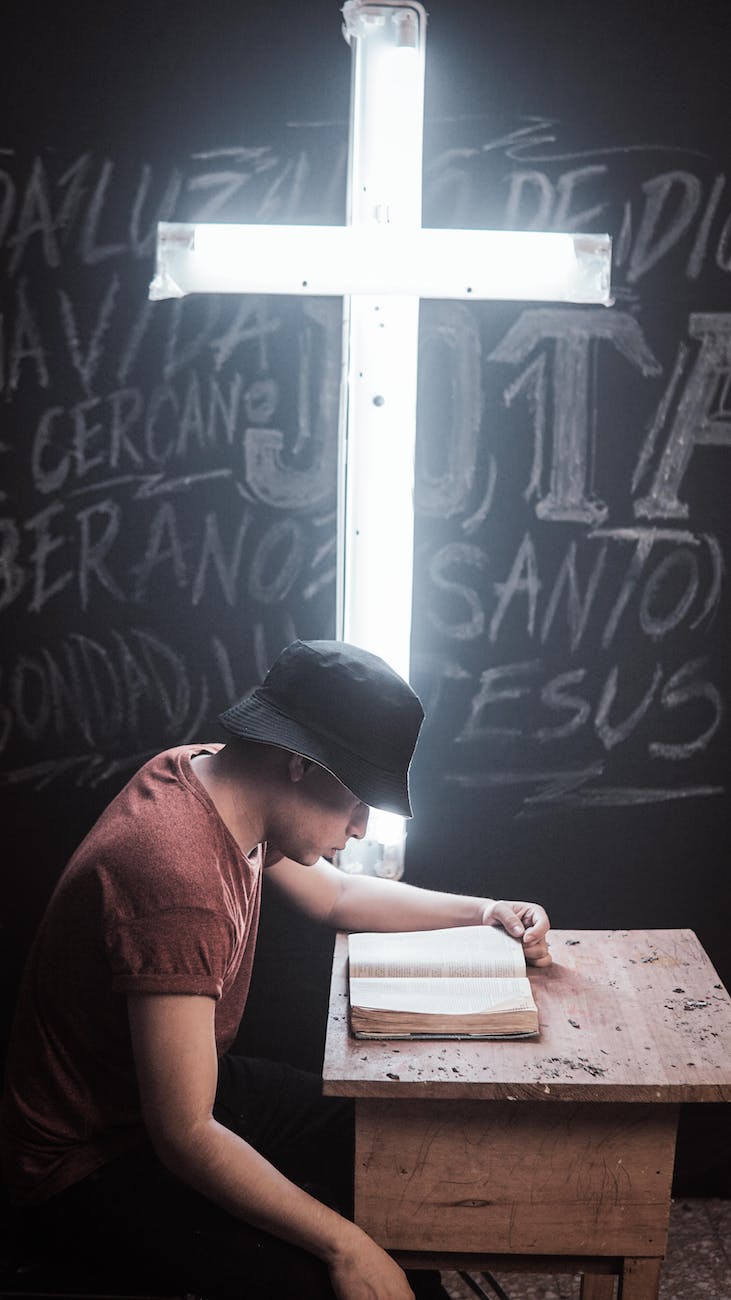
This series of poems (written in the German-inspired style of Elfchen or Elevenie) shares a total of eleven words in each poem, with a sequence by line of one, two, three, four, and one words.

What makes humility so desirable in the marvelous thing it does to us; it creates in us a capacity for the closest possible intimacy with God.
From 1 Peter 5:5-6: “And all of you must clothe yourselves with humility in your dealings with one another, for ‘God opposes the proud but gives grace to the humble.’ Humble yourselves, therefore, under the mighty hand of God, so that He may exalt you in due time.”
Monica Baldwin (1893-1975) was a British writer.

Keep your soul fit to manifest the life of the Son of God. Never live on memories; let the Word of God be always living and active in you.
From 2 Corinthians 4:11: “For we who are living are always being handed over to death for Jesus’s sake, so that the life of Jesus may also be made visible in our mortal flesh.”
Oswald Chambers (1874-1917) was a Scottish evangelist and Christian teacher. Following his death from an illness while in Egypt during World War I, his wife took on the task of transcribing the detailed notes she had written from his lectures and sermons. Gertrude Hobbs Chambers’ efforts resulted in the publication in 1924 of MY UTMOST FOR HIS HIGHEST. I frequently read from this devotional, and it has greatly deepened my faith and understanding of God’s Word.

Photo by Andrea Piacquadio on Pexels.com
Failing once again
Life’s troubles bomb away
Whom shall I turn to?
Failing once again
Darkness moves ever closer
Where is the light?
Failing once again
Shame swallows me up
How can my spirit be restored?
Failing once again
Life’s torments engulf me
Why . . . why?
Failing once again
Loneliness surrounds my heart
What recourse do I have?
Failing once again
Life’s hour glass, now nearly empty
When will I be free?

Photo by samer daboul on Pexels.com
Failing once again . . .
Turning to my Heavenly Father
Never thinking of me as a bother
From a Cross, Salvation’s light sheds hope
Pulled up from the Pit by a Holy rope
Kneeling before the Savior, sins and all
Humbling following Him will be my call
Through a broken body and shed blood
By Grace alone, escaping life’s flash flood

Photo by Pixabay on Pexels.com
The structure of this poem features dual parts. In the beginning verses, the reader is taken to a much darker place. Using themes of sorrow, darkness, and hopelessness presents a challenge to both the reader and the writer. In answering the questions found in the poem, the ending verses are structured around common Christian themes of hope, joy, light, and rebirth.
Originally published May, 2020.

The place where God calls you to is the place where your deep gladness and the world’s deep hunger meet.
From John 15:16: “You did not choose Me, but I chose you. And I appointed you to go and bear fruit, fruit that will last, so that the Father will give you whatever you ask Him in My name.”
Frederick Buechner (1926-2022) was an American pastor, Christian theologian, and author. His writings were published in 39 books, which included several different genres.
From Psalm 111:10: “The fear of the Lord is the beginning of wisdom; all those who practice it have a good understanding. His praise endures forever.

Father filled with compassion
Reaching out with love-filled grace
Delivering eternity’s flame
Marked upon Calvary’s faithful place
Every whole heart giving thanks
Following Messiah’s voice
Blessings endure from His righteous deeds
Marked upon trust in faith’s lasting choice
Knowledge shall strengthen weakness
Resurrecting faith’s highway
Receiving mercy from one Savior
Marked upon covenant’s trusted way
Gospel spreads across nations
Moving every man to hear
Bearing Father’s truth to light each day
Marked upon faithful hearts, cross appears
Body and blood paying price
Sparing man from sin’s true cost
Tendering faithful actions of love
Marked upon new life, no longer lost

The chosen hymn to accompany this poem’s message is “Lord of Glory, You Have Bought Us.” The lyrics were crafted by English poet and hymn writer, Eliza S. Alderson (1818-1889). This video is presented by Mary Munson.
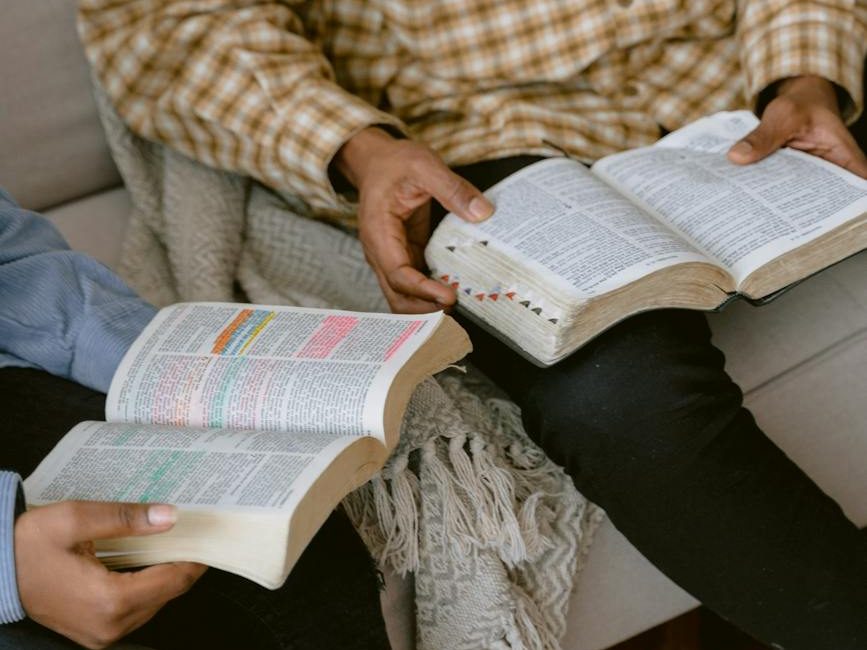
Even as we rest in what God has done on our behalf, let us be on the tiptoe of expectancy–working, serving, giving, loving, keeping the faith and demonstrating that faith to the world of men and woman around us.
From 3 John 1:4: “I have no greater joy than this, to hear that My children are walking in the truth.”

A select few face overwhelming challenges in life. Encouraged by a heart filled with perseverance, these trailblazers adopt an attitude where “Can” outplays “Can’t.”
Facing upheaval in her young life, Phillis Wheatley manages to overcome in a journey few can ever imagine. Born around 1753, she becomes the world’s first African-American author with published works. However, her story needs to be told from the beginning.
Coming to the American colonies in 1761, this young girl enters the slave trade. Leaving her West African home, her tender life is uprooted.
She is purchased as a domestic slave for a New England merchant’s wife. Without realizing it at the time, John and Susanna Wheatley will soon transform Phillis’ life.
Phillis’ name is taken from the slave ship which brought her to America, the Phillis. She later adopts her last name from the Wheatley’s.
The Wheatley’s daughter, Mary, begins teaching Phillis to read and write. Her brother, Nathaniel, also helps to tutor Phillis as well.
Seeing potential in the young Phillis’ eagerness to learn more, John Wheatley offers her an academic journey beyond anything most American slaves will ever experience. Beginning at age 12, she is studying Greek and Latin, learning history and geography, and reading the Bible.
By the age of 14, Phillis writes her first poem, and she continues to write many more. The Wheatley’s free her from domestic duties so that she can further her studies. Following the death of Susanna Wheatley, Phillis will be granted freedom.
Quote from Phillis Wheatley:
“In every human breast, God has implanted a principle, which we call Love of Freedom; it is impatient of oppression, and pants for deliverance.”
In 1773, Phillis journeys to London with Nathaniel. In their search for a publisher of her poems, the two of them find an interested party. Upon publishing her book of poetry, readers in England and the American colonies discover her poetry. Even George Washington reads her poems, and Phillis will later meet him.
In Phillis’ final years, she marries a free black man, John Peters. He toils as an unsuccessful entrepreneur, and his children and wife endure a life filled with poverty. During this time, Phillis continues to write, but none of these works will be published. She dies in 1784.
Phillis Wheatley’s only book of published poetry, Poems on Various Subjects, Religious and Moral, was published in 1873. Before having her poetry published, she needed to provide evidence that she was the writer. After all, slaves in America usually did not know how to read and write, much less write classical poetry.
Here is a sample of her poetry, “On Being Brought from Africa to America” (published 1773):
“Twas mercy brought me from my Pagan land,
Taught my benighted soul to understand
That there’s a God, that there’s a Savior too:
Once I redemption neither sought now knew,
Some view our sable race with scornful eye,
‘Their colour is a diabolic die’
Remember, Christians, Negroes, black as Cain,
May be refin’d, and join ‘th’ angelic train.

Previous editions of other narratives of “Overcoming Life’s Insurmountable” can be found from the links below.
Glenn Cunningham, American athlete
Foreseeing
Insurmountable force
Against all odds
Trusting in God’s promises
Hope
Surrounding
Darkness surfaces
Never feeling forsaken
Heavenly light breaking through
Peace

Encountering
Stormy seas
By faith alone
Grace delivers blue skies
Joy

 Big Sky Buckeye