For the final Saturday of each month, a different and unique feature will be published. Today’s narrative takes a look at the remarkable journey of Montana’s renowned western artist, Charles M. Russell. Saturday’s regular feature, “Trivia’s Facts and More,” will return next week.
One of Montana’s most treasured individuals will always be famed western artist Charles Marion Russell. His lasting footprint has remained on the landscape of the Treasure State for over 100 years.
Born on March 19, 1864 in St. Louis, Missouri, Charles M. Russell grew up in comfortable surroundings with his family. During his childhood, he showed an interest in sketching and molding animals from clay. Living at the gateway to the West, he was fascinated with stories about explorers and fur traders. However, his life was searching for something more.
At the age of 16, Russell left school and headed to Montana. He had a job lined up as a sheepherder on a ranch. By the age of 18, he was experiencing the life of a cowboy as a cowpuncher. The life of the open range was something to behold for this young man, known to many as “Kid” Russell.
Many of Russell’s early years were spent on ranches in the Judith Basin in central Montana. Gradually, he discovered that he possessed greater passion for his artwork than the rough and tumble life of a cowboy. He shared many of his sketches and watercolor paintings with friends and other acquaintances.
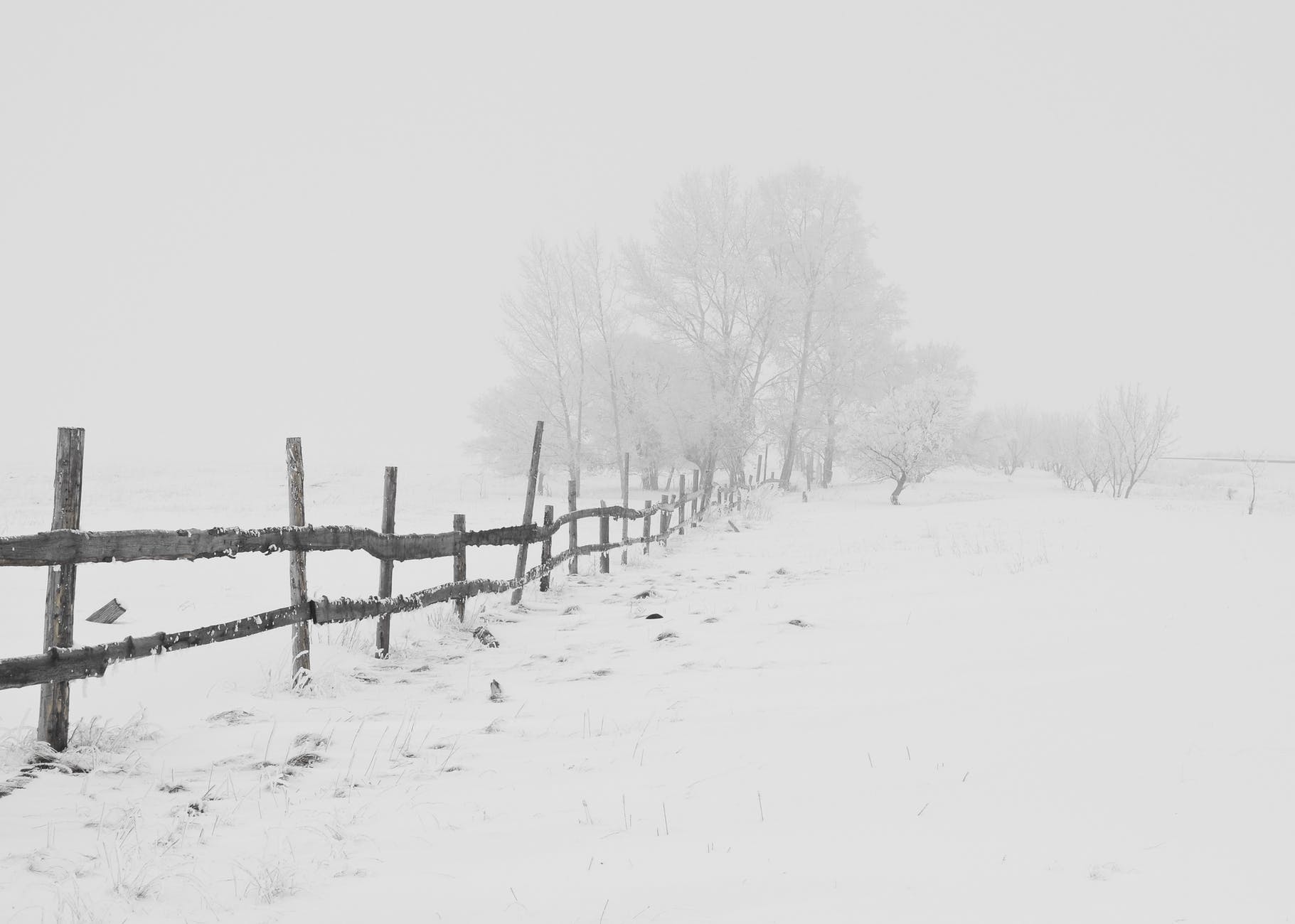
Never in his life could Charlie Russell have ever thought of himself as a bona fide artist. During the devastating winter of 1886-1887, he finally realized where his potential just might take him.
Working on a ranch, he and other cowboys usually had little to do during the wintertime. The cattle were safe wintering on the range, and they seemed well-suited for Montana winters. This time around winter would finally have the upper hand.
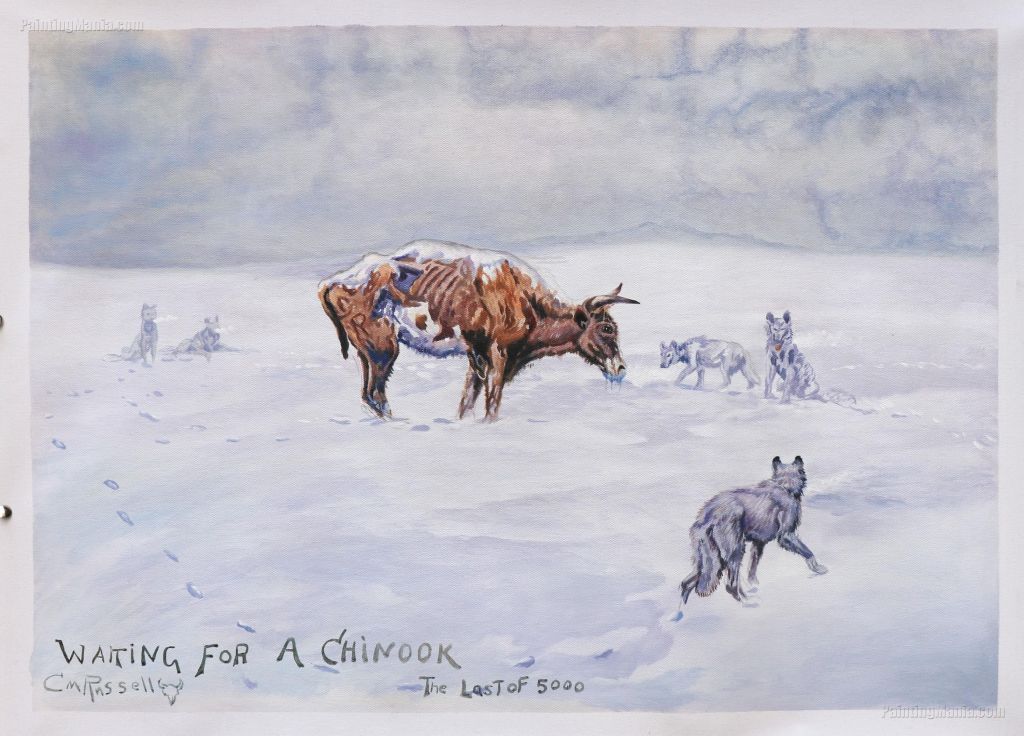
Thousands of cattle perished during an unbelievable blizzard. The absent owner of the O-H Ranch wrote and asked how his cattle were doing. Russell responded as only he could do, with his artwork. On a postcard size watercolor, he described in vivid detail that the herd was decimated. The painting would later be redone and named “Waiting for a Chinook.”
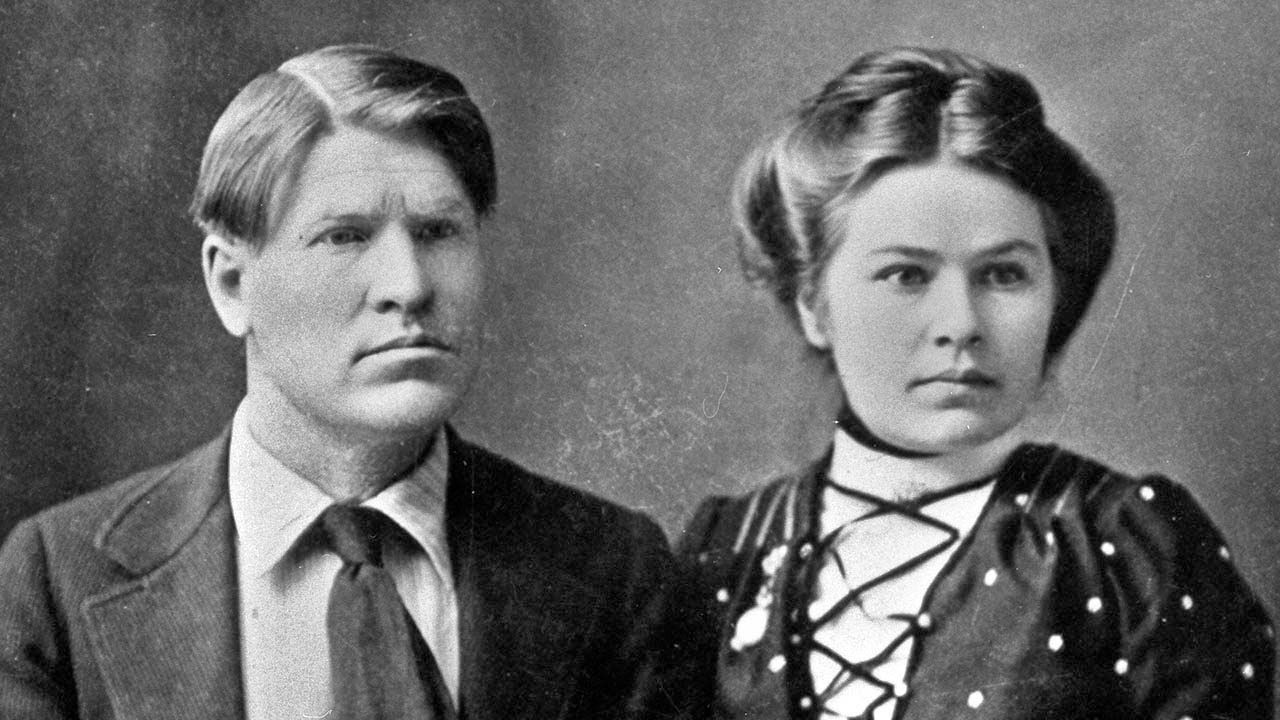
In 1894 at Cascade, Montana, Russell met a woman at a dinner gathering. Many knew of his artistic talent, but his prominence was limited to Montana. The young woman, Nancy Cooper, would later become his wife when they married in 1896.
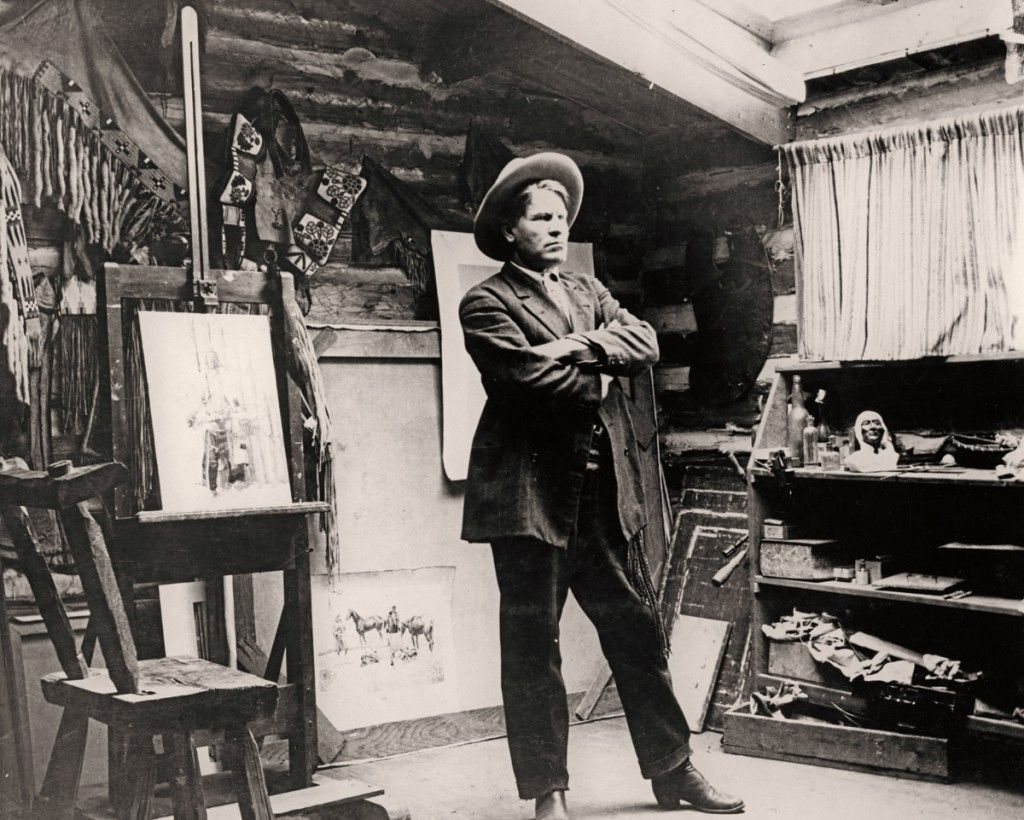
Life was about to change in many positive ways for Russell’s continuing journey as an artist. In 1897, the Russell’s moved to Great Falls where Charles set up a studio in a log cabin.
Nancy Cooper Russell would become her husband’s business manager, and his artwork’s value would begin to be noticed by others outside of Montana.
top left: russell in his log cabin studio in great falls, montana. bottom left: charles with his bride, nancy. right: portrait of charles m. russell. (pictures courtesy of pinterest)
Russell’s talents attracted greater interest, and his works increased in value. During his nearly 30 years of marriage to Nancy, Charles embarked on a remarkable journey with his artwork, and the bond of love between both stayed forever strong.
Russell’s paintings and sculptures brought reverence to Native Americans’ way of life, shared the humor and adventure of the cowboy, and illustrated numerous Montana landscapes. He was a gifted writer and storyteller as well.
When Charles M. Russell passed away on October 26, 1926, the world lost a dynamic western artist. Montana lost one of its most favorite adopted sons.
Author’s note: In January, 2021, I crafted a poem with images of the “Haunting Storm” of the winter of 1886-1887 on Montana’s open range. A copy of Russell’s watercolor was also attached. You are invited to follow this link to the poem: Haunting Storm.


 Big Sky Buckeye