
When the music changes, so must your dance.
The truth is, job titles are temporary. But purpose is infinite.
Elaine Welteroth (born 1986) is an American journalist and author.
When the music changes, so must your dance.
The truth is, job titles are temporary. But purpose is infinite.
Elaine Welteroth (born 1986) is an American journalist and author.

Ever tried. Ever failed. No matter. Try again. Fail again. Fail better.
The creation of the world did not take place once and for all time, but takes place every day.
Samuel Beckett (1906-1989) was an Irish writer who enjoyed crafting short stories, poems, and novels.

You’ve got to continue to grow, or you’re just like last night’s corn bread–stale and dry.
From Proverbs 9:6: “Lay aside immaturity and live, and walk in the way of insight.”
Loretta Lynn (1932-2022) was an American country music singer and songwriter. She was born in Butcher Hollow, Kentucky.

Photo by Pixabay on Pexels.com
There is no friend as loyal as a book.
Courage is grace under pressure.
Ernest Hemingway (1899-1961) was an American novelist, short-story writer, and journalist.

Circumstances may cause interruptions and delays, but never lose sight of your goal.
A goal isn’t something you just arrive at and stop. You have to stay curious and hungry.
Mario Andretti (born 1940) is an American race car driver. Now retired, his career is one of the most success in all of auto racing.
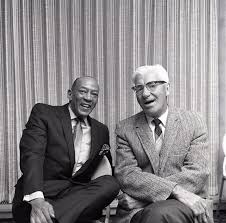
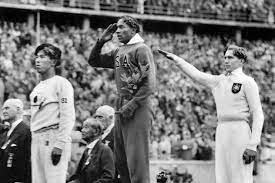
Experiencing personal triumph at the 1936 summer Olympics in Berlin, American Jesse Owens exhibited a resolute attitude and perseverance to overcome many challenges.
Born in Oakville, Alabama in a sharecropper’s cabin in 1913, Owens experienced poverty and racial inequality during his early years. During the Great Migration, his family found a home and better opportunities in Cleveland, Ohio.


Life’s stage was set for Owens to become the first Olympian to ever win four gold medals in a single Olympiad. As the final pieces of his life’s journey began falling into place, the relationships in his life helped to lead him to further greatness.
Track and field offered a unique opportunity to run for freedom in an integrated environment. Inspired by his high school coach, Charles Riley, Owens won all major track events and was an Ohio state champion three years in a row.
In 1933, Owens enrolled at Ohio State University, which was well-known for its tremendous track and field program. Under Larry Snyder’s coaching, Owens continued to mature as a sprinter and jumper.

Meanwhile in Germany, the Nazi regime radically altered the landscape with its Nuremburg Laws, which limited the rights of the Jewish population. Owens and German Fuhrer, Adolf Hitler, were headed on a collision course.
As America contemplated a possible boycott of the 1936 summer Olympics, Owens’ mentors encouraged him to stand tall in his desire to compete in the games. In hindsight, many saw the contrast of German Aryan race superiority and anti-Semitism with America’s own inequality and Jim Crow laws that faced many of the Black population. Owens became a light in the darkness lived by many.
Owens’ journey brought him and America respect internationally. Nazi propaganda failed to experience a victory at every Olympic event, and Owens’ exploits led the way.
He earned four gold medals in a single Olympiad with victories in the 100 meters, 200 meters, long jump, and 4 x 100 meter relay. The long jump competition infused Owens with a final relationship to cultivate.
In the trials of the long jump, each competitor received three jumps in order to qualify for the finals. Owens scratched on his first two attempts, and he faced one final attempt in order to make the final field of jumpers.
His primary German competitor, Luz Long, offered him a tip to move his take-off point well behind the board. Long’s wisdom restored confidence in Owens before he made his final jump, and he easily qualified for the finals.
Despite Long being German and Owens being American, both felt a bond. While Long settled for a silver medal in the long jump, he gained a friend in Owens. Both athletes found a reward far greater than medals and competition. Their relationship exceeded the drama which surrounded the games.


Friendships born on the field of athletic strife are the real gold of competition. Awards become corroded, friends gather no dust.
The battles that count aren’t the ones for gold medals. The struggles within yourself–the invisible, inevitable battles inside all of us–that’s where it’s at.
Jesse Owens (1913-1980) was an American track and field athlete. During the 1936 summer Olympics, he became the first athlete to win four gold medals in a single Olympiad.

Life’s defining moments are usually played under the shadow of doubt.
I must take not take joy from status or power, but from my accomplishments, and the way I choose to accomplish them.
Stephen J. Cannell (1941-2010) was an American television producer, writer, and occasional actor.

Opportunity is missed by most people because it is dressed in overalls and looks like work.
Our greatest weakness lies in giving up. The most certain way to succeed is always to try just one more time.
Thomas Edison (1847-1931) was an American inventor and businessman. His birthplace was Milan, Ohio.

In my weakness, I have learned, like Moses, to lean on God. The weaker I am, the harder I lean on Him. The harder I lean, the stronger I discover Him to be. The stronger I discover God to be, the more resolute I am in this job He’s given me to do.
From Joel 3:16: “The Lord roars from Zion and utters his voice from Jerusalem, and the heavens and the earth shake. But the Lord is a refuge for his people, a stronghold for the people of Israel.”
Joni Eareckson Tada (born 1949) is an American Christian author and radio host. Much of her work has focused on ministry in the disability community. Her life journey is a living testament to this quote.
 Big Sky Buckeye