Trivia’s Facts and More (12/17)

Photo by Pixabay on Pexels.com

This informative post will be posted on Saturday along with my usual writing.  You are invited to participate with the opening question.

Brain Teaser Question

What letter would come next in this sequence?

M,  A,  M,  J,  J,  A,  S,  O,  ___

(answer found at the end of this post)

Featured Facts

James Monroe was the 5th American President (1817-1825).  He became the fourth Virginian to serve as President (George Washington, Thomas Jefferson, and James Madison being the first three). 

Here are a few interesting facts about this two-term President:

  • Occupations:  farmer, lawyer
  • Schooling:  attended College of William and Mary (Williamsburg, VA)
  • Previous political experience:  Governor of Virginia, Secretary of War, State

Two of the most significant accomplishments of the Monroe administration were the passage of the Missouri Compromise in 1820 and the establishment of the Monroe Doctrine.  The Missouri Compromise redefined the division line between slave and free states in the Union.  The Monroe Doctrine stated that no further European colonies would be allowed in the America’s while the United States would remain neutral in European affairs.

Answer to Brain Teaser Question

N–for November
Trivia’s Facts and More (12/10)

Photo by Pixabay on Pexels.com

This informative post will be posted on Saturday along with my usual writing.  You are invited to participate with the opening question.

Brain Teaser Question

What could you put in a 50-pound barrel of oil to make it weigh less than 50 pounds?

(answer found at the end of this post)

Featured Facts

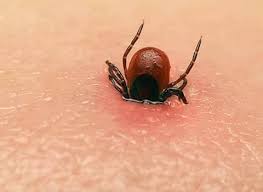
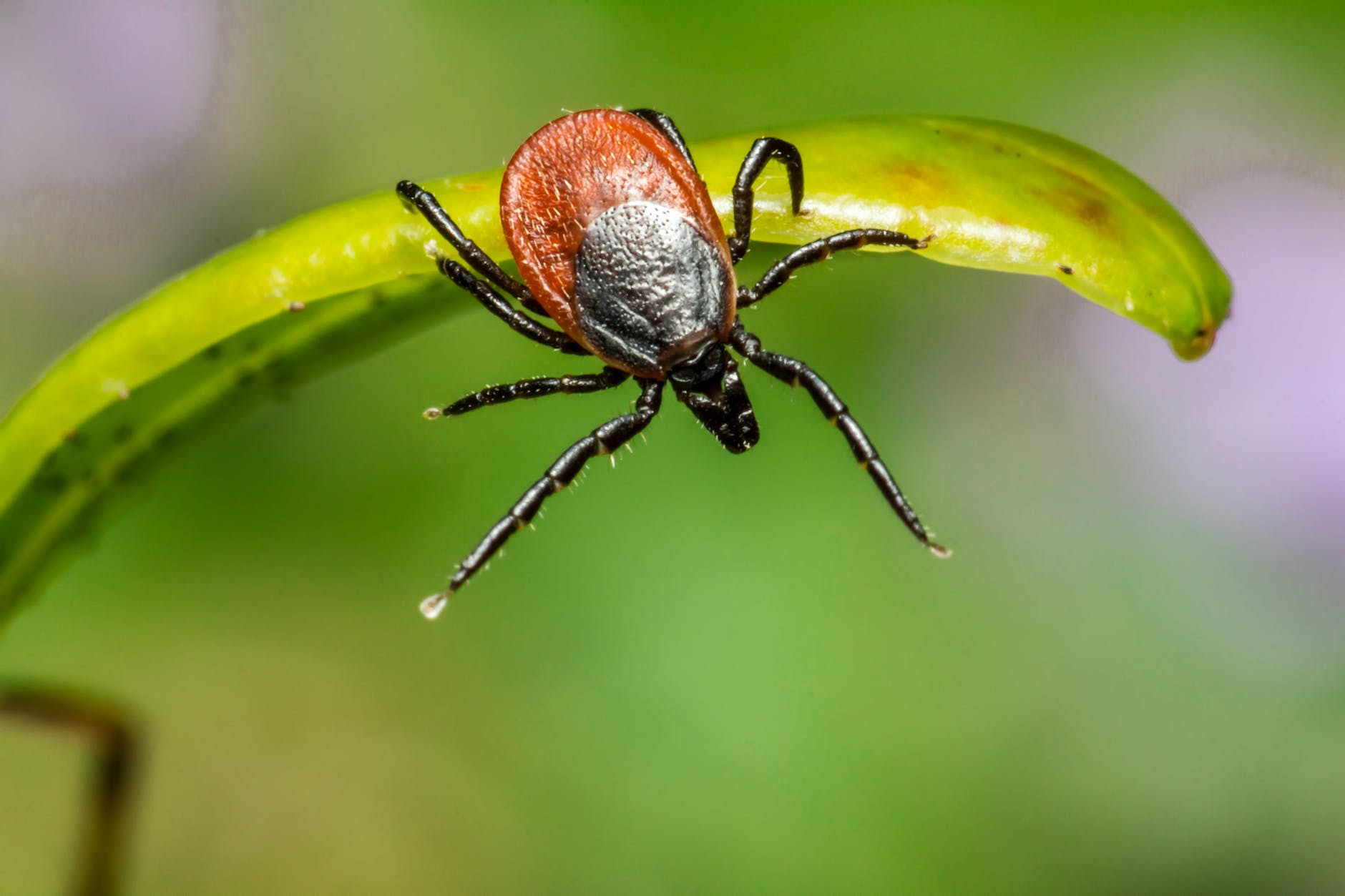
In North America’s animal kingdom, one of the smallest and most dangerous creatures is the tiny tick.  Having eight legs, they are arachnids (related to spiders).

Here are a few interesting facts about the tick:

  • Habitat:  bodies of animals, in fields or woods (awaiting an animal host)
  • Diet:  blood
  • Color:  brown to reddish-brown (with leathery or shell-like covering)

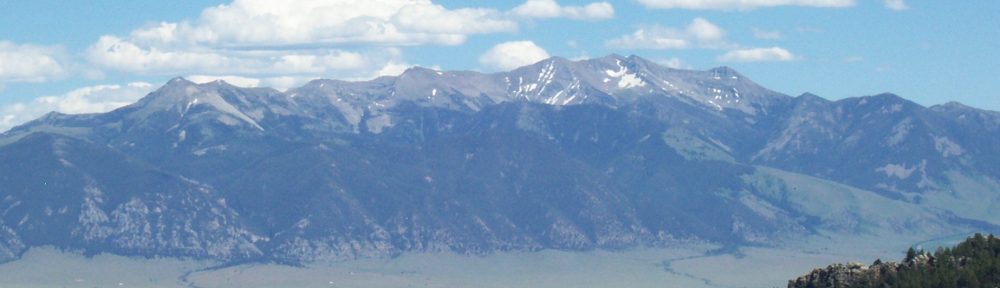
Known as “black measles,” Rocky Mountain Spotted Fever came to the forefront when it cast its dark shadow over the Bitterroot Valley in western Montana.  Early settlers in the valley contracted a mysterious disease.  Scientific research began in the early 1900s and culminated in the beginning of the Rocky Mountain Labs research. The lab would research and refine treatments for the dreaded spotted fever, which scientists had discovered was carried by the tiny tick.

Answer to Brain Teaser Question

A hole.

Trivia’s Facts and More (12/3)

Photo by Pixabay on Pexels.com

This informative post will be posted on Saturday along with my usual writing.  You are invited to participate with the opening question.

Brain Teaser Question

Put these statements in the right order:

(A) The ship stopped to anchor in Commander Bay

(B) A boy awoke and saw a sea lion

(C) A boy went ashore and napped in a meadow

(D) A boy did not tell what he had seen

(E) A boy got a job on a ship

(answer found at the end of this post)

Featured Facts

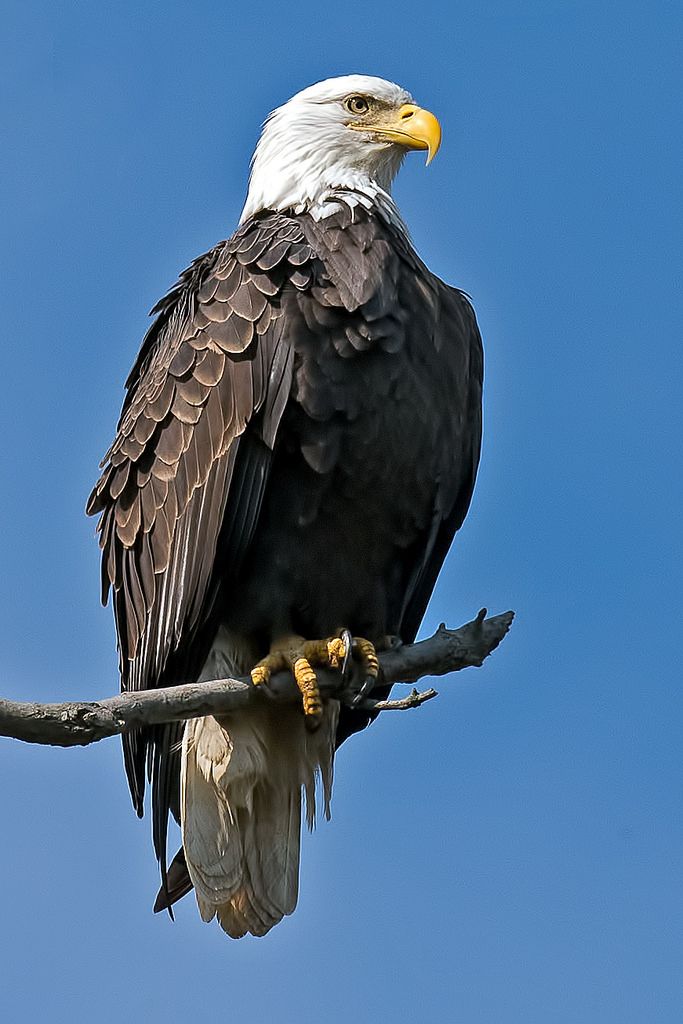
The bald eagle is one of the largest birds in the United States.  It is the only eagle unique to the continent of North America.  Since 1782, the bald eagle has been the National Bird and Emblem of the United States.

Here are a few interesting facts about the bald eagle:

  • Habitat:  coastlines and waterways (U.S. and southern Canada)
  • Wingspan:  up to 8 feet
  • Top speed:  between 40 and 45 miles per hour
  • Congress:  name for a group of eagles
  • Lifespan:  between 25 and 40 years in the wild

Facing near extinction in the 1960s from the use of the pesticide DDT, conservation efforts and federal protection of the eagles has led to a dramatic increase in its numbers.  Estimated known nesting pairs have increased from a low of 417 in 1963 to more than 71,000 in 2020.

Answer to Brain Teaser Question

E, A, C, B, D

Trivia’s Facts and More (11/26)

Photo by Pixabay on Pexels.com

This informative post will be posted on Saturday along with my usual writing.  You are invited to participate with the opening question.

Brain Teaser Question

Complete the analogy:

MOTH is to CLOTHING as . . .

(A) SHEEP is to WOOL

(B) BUTTERFLY is to WOOD

(C) PUNCTURE is to TIRE

(D) TEAR is to SWEATER

(E) TERMITE is to HOUSE

(answer found at the end of this post)

Featured Facts

The Buckeye State of Ohio was admitted to the Union on March 1, 1803.  The state has proudly claimed to be home of eight  American Presidents:  William Henry Harrison, Ulysses S. Grant, Rutherford B. Hayes, James A. Garfield, Benjamin Harrison, William McKinley, William Howard Taft, and Warren G. Harding.

Here are a few interesting facts about the state:

  • Motto:  With God, All Things Are Possible
  • Capital City:  Columbus (named after Christopher Columbus)
  • Lake Erie frames the northern border; the Ohio River marks the southern one

In the early 1900s, the Canton Bulldogs were organized as a professional football team.  While the team no longer exists, Canton became the home of the Pro Football Hall of Fame in 1963.  Two major amusement parks are located in the state:  King’s Island near Cincinnati; Cedar Point along Lake Erie at Sandusky.

Answer to Brain Teaser Question

E

A moth, which is a living thing, destroys clothing–just as termite, which is a living thing, destroys a house.  Choices C or D would be fine if they described living things.

Trivia’s Facts and More (11/19)

Photo by Pixabay on Pexels.com

This informative post will be posted on Saturday along with my usual writing.  You are invited to participate with the opening question.

Brain Teaser Question

A sundial is a timepiece that has the fewest moving parts.  What type of timepiece has the most moving parts?

(answer found at the end of this post)

Featured Facts

On April 24, 1990, NASA space shuttle Discovery was launched with a special object in its payload bay.  Once in space orbit above the earth, the shuttle’s robotic arm gently lifted out a bus-sized telescope, to be called the Hubble Telescope.

Here are some interesting facts about the Hubble Telescope:

  • Dimensions:  44 feet long and 40 feet wide (with solar arrays)
  • Weight:  11 tons
  • Location and Speed:  355 miles above earth and moving at 17,500 mph

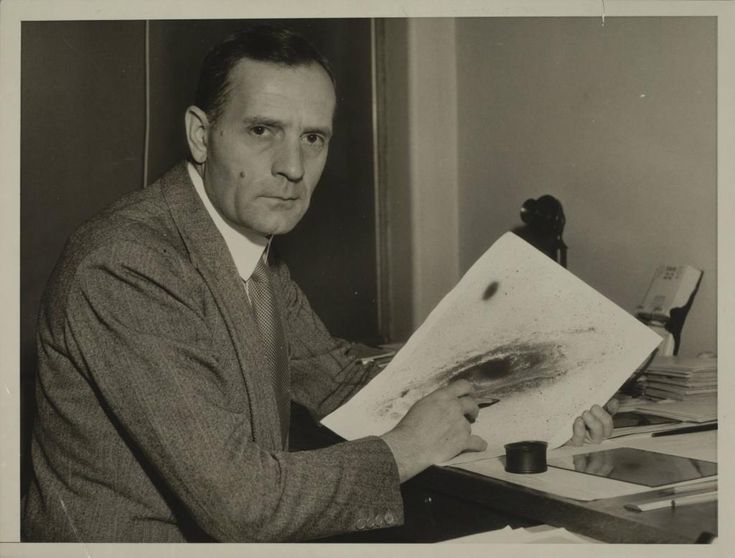
The telescope was named after Edwin Hubble, an American astronomer.  Born in 1889, Hubble would become an authority in establishing many of the dynamics of extragalatic astronomy.  He was a trailblazer in the field of observational cosmology.  He continued his research until his death in 1953.

Answer to Brain Teaser Question

An hourglass

Trivia’s Facts and More (11/12)

Photo by Pixabay on Pexels.com

This informative post will be posted on Saturday along with my usual writing.  You are invited to participate with the opening question.

Brain Teaser Question

You are competing in a linear race and you overtake the last runner.  In which position are you now?

(A) Last

(B) Second to last

(C) Third to last

(D) Cannot be determined unless the number of runners is known

(E) Cannot be determined because this is an ambiguous question

(answer found at the end of this post)

Featured Facts

The American state of Idaho was admitted to the Union on July 3, 1890.  Its unique panhandle shape is easy to find on a map.  It resembles a logger’s boot, which reflects upon the state’s mountainous and forested terrain, which are home to the mining and lumber industries.

  • One of its most famous natural landmarks is Hells Canyon.  The Snake River flows through this nearly bottomless gorge, which is deeper than the Grand Canyon.

Here are a few more interesting facts about Idaho:

  • Nicknamed the “Gem State”
  • Largest city is Boise with population of 235,684 (2020 census)
  • Official Motto is “Esto Perpetua” (It is Forever)
  • Automobile license plates are identified with “Famous Potatoes” tagline

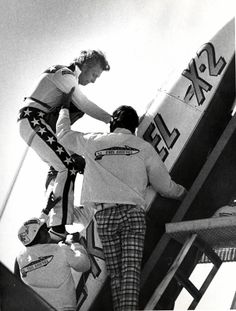
On September 8, 1974, Montana native and motorcycle daredevil Robert “Evil” Knievel attempted to ride his “rocket cycle” over the Snake River Canyon, which is located near the city of Twin Falls.  His craft resembled more rocket than motorcycle, but he was unsuccessful in his ride.  At least, he survived with just minor injuries.


Answer to Brain Teaser Question

E

How can you overtake the person who is last?

Trivia’s Facts and More (11/5)

Photo by Pixabay on Pexels.com

This informative post will be posted on Saturday along with my usual writing.  You are invited to participate with the opening question.

Brain Teaser Question

A knight wants to marry a princess and she wants to marry him.  However, the king demands that the knight draw one of two slips of paper from a box.  The king says one will say “Death” and the other “Marriage.”  The princess whispers to her suitor that both slips say “Death.”  What could the knight do to wed the princess?

(answer found at the end of this post)

Featured Facts

One of the most curious of all insects is the praying mantis.  It’s distinctive shape and color may sometimes be difficult to find because these predatory creatures are experts at ambushing their prey.

Some characteristics about the praying mantis include:

  • Body length of about 1-4 inches.
  • Primary habitat in the foliage of meadows and fields.
  • Diet includes live insects and spiders.

Many know that its name comes from its “prayer-like” stance.  Mantis means “prophet.”  Its name is mistakenly spelled as “preying” mantis because it fiercely preys upon other insects.  Yes, the mantis is a “good” bug to have around.

If one ever has a chance to watch this stealth predator at work, pay close attention.  Staying perfectly motionless and blending in with the green foliage, the praying mantis will suddenly strike and grab its victim.

Images courtesy of Pinterest.

Answer to Brain Teaser Question

Before a crowd of witnesses, the knight could choose a paper, look at it, proclaim that it says “Marriage,” and promptly swallow it.  As proof, he would ask the king to reveal the remaining paper, which would say “Death.”  All would presume that the swallowed paper indeed must have said “Marriage”–thus beating the king at his own game.

Trivia’s Facts and More (10/29)

Photo by Pixabay on Pexels.com

This informative post will be posted on Saturday along with my usual writing.  You are invited to participate with the opening question.

Brain Teaser Question

Find the next letter in the sequence:    a    b    d    g    k    ?

(A) m    (B) n    (C) o    (D) p    (E) q

(answer found at the end of this post)

Featured Facts

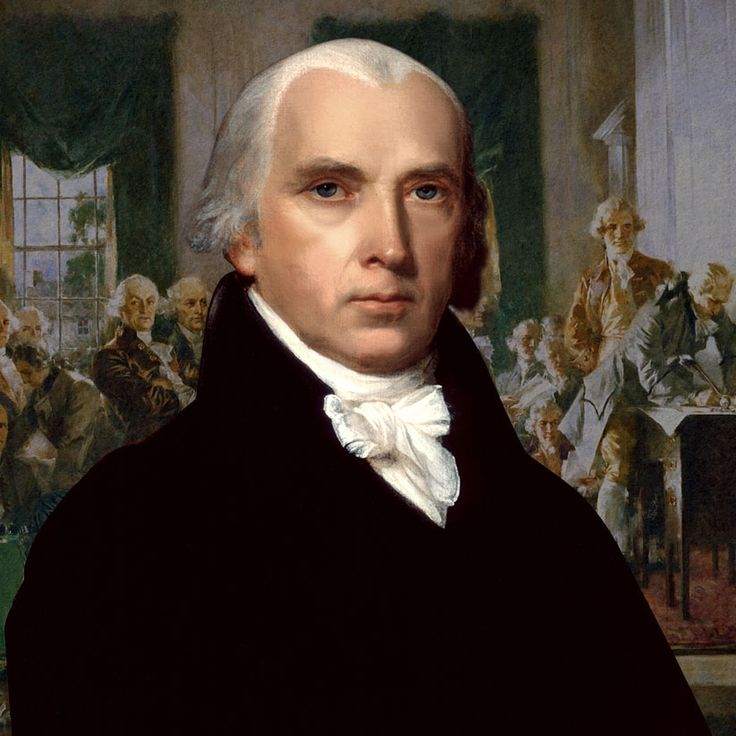
The fourth President of the United States was James Madison (1809-1817).  He has often been referred to as “The Father of the Constitution.”

Born in the Virginia colony in 1751, Madison was destined to be a farmer and later a politician.  He would die at his home at Montpelier, Virginia in 1836.

Here are some interesting facts about Madison:

  • He was the shortest President, standing only 5′ 4″.
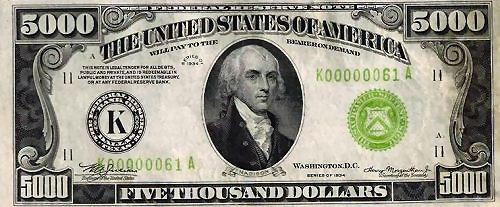
  • His portrait was used on the $5,000 bill, which was only issued during the American Civil War.
  • His spouse, Dolley, was instrumental in saving a portrait of George Washington when the British attempted to burn down the White House during the War of 1812.

During the ratification period of the Constitution in 1787-1788, James Madison was instrumental in writing numerous articles in support of it.  He was joined in this endeavor by Alexander Hamilton and John Jay.  These many writings were called the “Federalist Papers.”

Answer to Brain Teaser Question

(D) p

Between a and b, there are no letters

Between b and d, there is one letter:  c

Between d and g, there are two letters:  e   f

Between g and k, there are three letters:  h  i  j

To continue, skip four letters:  l   m   n   o

Trivia’s Facts and More (10/22)

Photo by Pixabay on Pexels.com

This informative post will be posted on Saturday along with my usual writing.  You are invited to participate with the opening question.

Brain Teaser Question

What’s the answer when you divide 40 by 1/2 and add 20?  Try it without a calculator if you dare!

(answer found at the end of this post)

Featured Facts

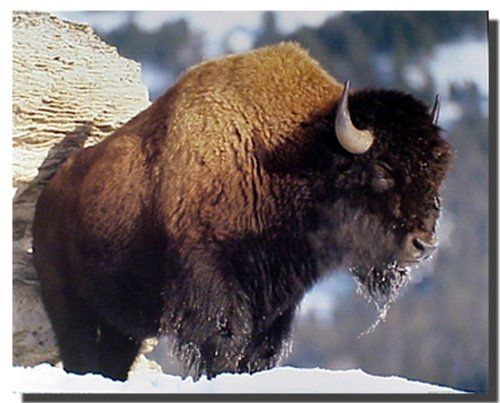
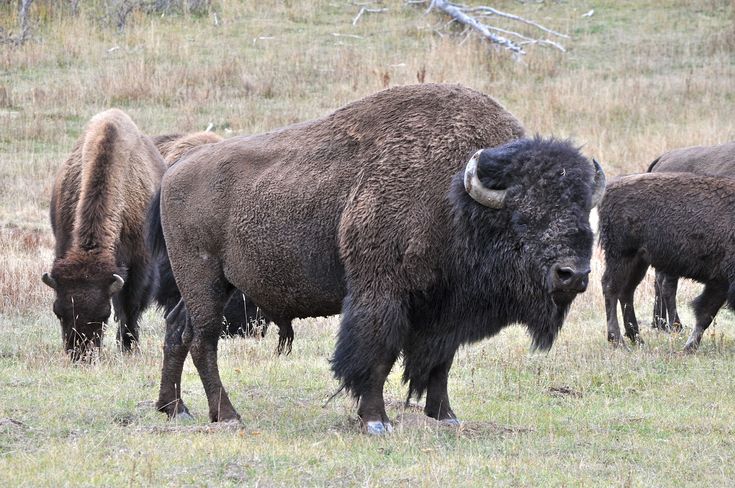
The American bison once roamed the Great Plains and prairies of North America in unbelievable numbers.  Estimates run between 40 and 60 million bison.  Today, approximately 350,000 bison inhabit the region.

Bison are frequently called buffaloes, but this term is meant for bovines inhabiting  Africa and Asia.  With a height of 5-6 feet, length of 7-11 feet, and weight up 2,000 pounds for bulls, they are the largest land mammal in North America.

Here are a few more interesting details about bison:

  • Sheds its thick, shaggy mantle in the spring.
  • Due to nearsightedness, vision is poor, but retains keen senses of smell and hearing.
  • Average life span runs between 12 and 20 years.

Today, nearly 30,000 wild bison are located on national parks and wildlife reserves.  Yellowstone National Park is home to nearly 5,500 in two large, migrating herds.  Ranches contain over 300,000 animals, who are treated more like livestock.

Answer to Brain Teaser Question

100

Watch what you are dividing.  You’re not dividing by 2, you are dividing by 1/2.  Remember your basic skills.  Dividing by 1/2 is like multiplying by 2. 

So the answer is 40 x 2 + 20 = 80 + 20 = 100

Trivia’s Facts and More (10/15)

Photo by Pixabay on Pexels.com

This informative post will be posted on Saturday along with my usual writing.  You are invited to participate with the opening question.

Brain Teaser Question

Complete the analogy:  HELMET is to HEAD as . . .

a) SWORD is to WARRIOR

b) UMBRELLA is to CLOTHING

c) SHOE is to SOCK

d) WATCH is to WRIST

e) THIMBLE is to FINGER

(answer found at the end of this post)

Featured Facts

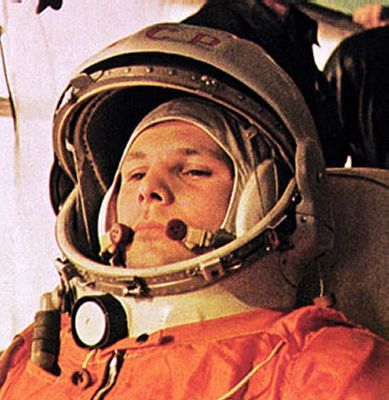
Astronauts have been called the sailors of the stars.  For as long as people have gazed up into the heavens, they have dreamed of traveling in space.  

In 1961, the first people journeyed from Earth’s atmosphere into outer space.  The space race between the United States and the USSR (Union of Soviet Socialist Republics) was on.

The following list offers “firsts” in terms of space travel:

  • First man in space:  Yuri Gagarin (USSR), 1961.
  • First American in space:  Alan Shepard, 1961.
  • First to orbit Earth:  John Glenn (USA), 1962.
  • First woman in space:  Valentina Tereshkova (USSR), 1963.
  • First walk in space:  Alexei Leonov (USSR), 1965.
  • First to orbit the Moon:  Frank Borman, James Lovell, William Anders (USA), 1968.
  • First walk on the Moon:  Neil Armstrong and Edwin “Buzz” Aldrin (USA), 1969.
  • First American woman in space:  Sally Ride, 1983.

Answer to Brain Teaser Question

E

A helmet is worn on the head to protect the head, just as a thimble is worn on a finger to protect the finger.