Retrieving
Taking time to search
Looking for smallest wonders—
Summer’s precious gifts

Responding
Wonder asks questions
Images from deepest space—
Searching for answers

Treasuring
America’s roads
Discovery of wonders—
Travel’s shining gems
Taking time to search
Looking for smallest wonders—
Summer’s precious gifts
Wonder asks questions
Images from deepest space—
Searching for answers
America’s roads
Discovery of wonders—
Travel’s shining gems

Stephen Hawking (1942-2018): English theoretical physicist and cosmologist. His studies concluded that there is likely no border or boundary to the universe.
To confine our attention to terrestrial matters would be to limit the human spirit.
Annie Jump Cannon (1863-1941): American astronomer. She has been called the “census taker of the sky.” She manually classified around 350,000 stars.
Classifying the stars has helped materially in all studies of the structure of the universe.
Johannes Kepler (1571-1630): German astronomer. His research determined that as the planets travel around the Sun, they move in an elliptical orbit.
The treasures hidden in the heavens are so rich that the human mind shall never be lacking in fresh nourishment.

This informative post will be posted on Saturday along with my usual writing. You are invited to participate with the opening question.
Polar bears are finding their food supply to be more and more scarce. Yet, they will not eat penguins. Why not?
(answer found at the end of this post)
One of the most anticipated events in our Solar System is the arrival of a comet. It is sometimes referred to as a dirty snowball with a very long tail.
Here are some quick facts about comets:
One of the most famous comets to travel near Earth has been Halley’s Comet. It is named after English astronomer, Edmund Halley (1656-1742). Halley correctly predicted the orbit of the comet, and also calculated its schedule for future arrivals. Halley’s Comet last appeared near Earth in 1986, and it will not return for approximately 75 years (around 2061).
A much brighter comet than Halley’s is Comet Hale-Bopp. It is nearly 1,000 times brighter. It was discovered independently by two American astronomers, Alan Hale (New Mexico) and Thomas Bopp (Arizona). Comet Hale-Bopp last appeared in 1997, and it is not expected to arrive again for a few thousand years.


Polar bears live in the Arctic. Penguins live in the Southern Hemisphere.
This informative post will be posted on Saturday along with my usual writing. You are invited to participate with the opening question.
What begins with an “E” and only contains one letter?
(answer found at the end of this post)
Our solar system is made up of many celestial bodies, and the planets that lie beyond Earth are the focus of today’s feature.
Here are some interesting facts about three of of these planets:
Mercury
Mercury’s surface is rocky and heavily cratered. It’s solar revolution is the fastest of any of the planets in this solar system.
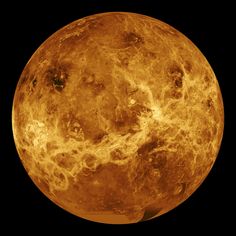
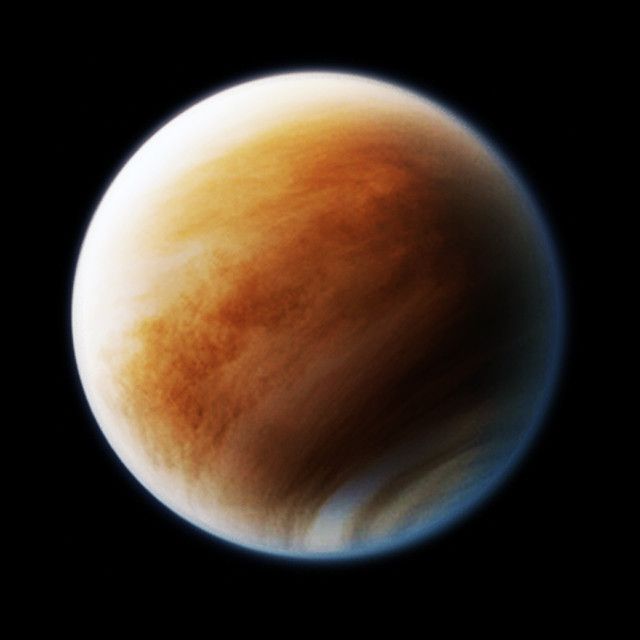
Venus is the brightest planet in the sky, and it is sometimes referred to as the Morning Star.
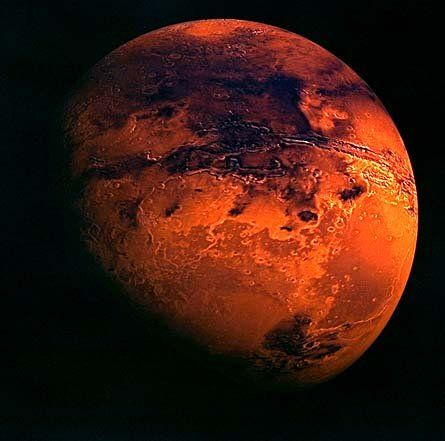
Mars is often called the Red Planet because of its red soil. It has frozen polar caps, which is similar to Earth’s North and South Poles.
An envelope
 Big Sky Buckeye