Trivia’s Facts and More (11/9)

Photo by Pixabay on Pexels.com

This informative post will be published on Saturday in place of my regular one.  You are invited to participate with the opening question.

Brain Teaser Question

In the kitchen, what do you have to break before you can use it?

(answer found at the end of this post)

Featured Facts

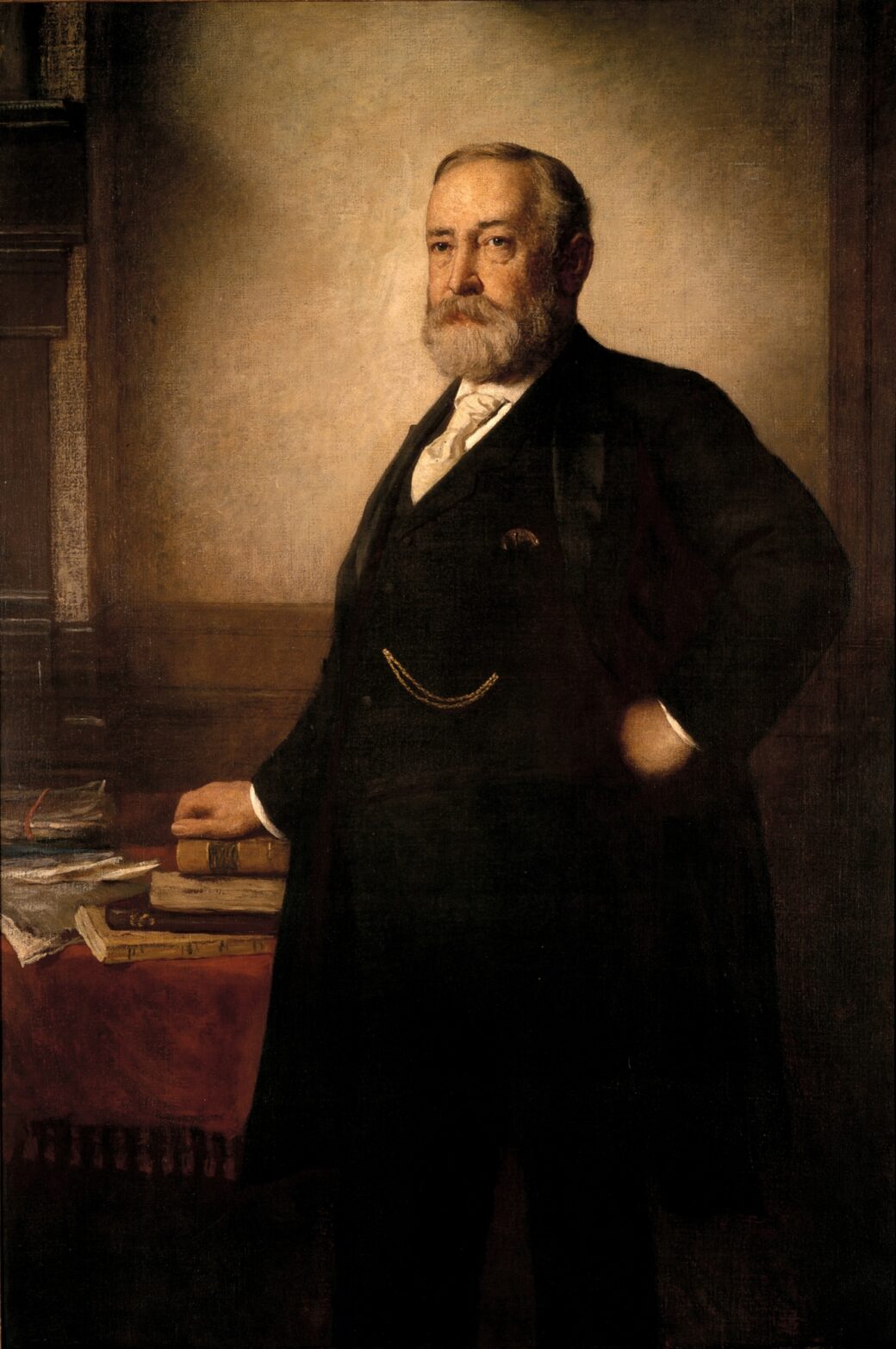
Born in North Bend, Ohio, Benjamin Harrison will become the 23rd President of the United States.  He serves a single term (1889-1893).

Here are a few quick facts about President Harrison:

  • Political party:  Republican
  • State represented:  Indiana
  • Occupations:  lawyer, U.S. Senator
  • LIfespan:  1833-1901
  • College attended:  Miami University (Oxford, Ohio)

Harrison spends much of his early life in Ohio where he attends college, becomes a lawyer, and lives in Cincinnati.  He serves in the Union army during the Civil War, and he rises to the rank of general.  Later, he will move to Indiana to further his law career and is elected to the United States Senate for one term.

Harrison’s family roots run deeply through earlier generations of American history.  He is the great-grandson of Benjamin Harrison, who signs the Declaration of Independence.  He is the grandson of American’s ninth President, William Henry Harrison.

Harrison carries two nicknames, which refer to his family lineage as well as his place in Presidential history.  He is sometimes referred to as “Young Tippecanoe.”  His grandfather, William Henry Harrison, is known as “Old Tippecanoe.”  Some historians have labeled him as “The Centennial President.”  His term of office begins 100 years after America’s first President, George Washington.

As President, Harrison signs two significant pieces of legislation in 1890:  Sherman Antitrust Act and McKinley Tariff Act.  Both bills are named after Ohio Senators, their chief sponsors.  Harrison is an ardent protectionist so his support for tariffs is expected. 

He also supports veterans’ benefits (from the Civil War), forest conservation, expansion of the U.S. Navy, and annexation of Hawaii.  Hawaiian annexation is achieved in 1898 under President McKinley’s administration.  Forest conversation and expansion of the navy will become hallmarks of the Theodore Roosevelt administration in the early 1900s.

In Harrison’s first election for the Presidency in 1888, he defeats Democratic incumbent Grover Cleveland.  Despite losing the popular vote, he comes out on top with a majority of electoral votes.  When running for re-election in 1892, Cleveland challenges Harrison and wins decisively.  

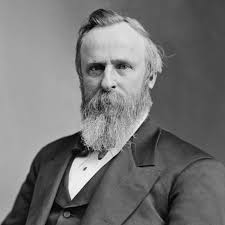
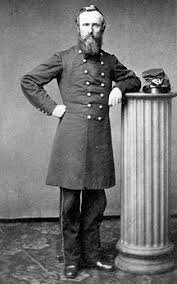
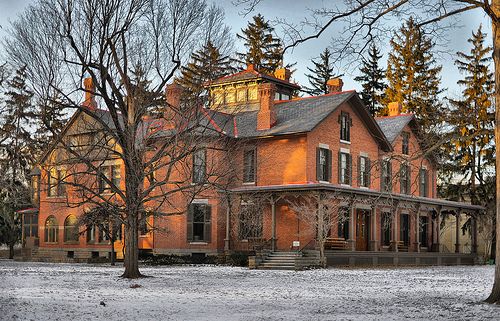
from top left and moving clockwise:  white house portrait of harrison, historical marker of harrison’s birthplace in north bend, his home in indianapolis,  from his later years, and during the CIVIL war.  (Images courtesy of Pinterest)


Answer to Brain Teaser Question

Egg

Trivia’s Facts and More (10/5)

Photo by Pixabay on Pexels.com

This informative post will be published on Saturday in place of my regular one.  You are invited to participate with the opening question.

Brain Teaser Question

How many birthdays does the average person have?

(answer found at the end of this post)

Featured Facts

Grover Cleveland had the distinction of being the only American President elected to this high office for two non-consecutive terms.  He served his country as the 22nd and 24th President.

Here are a few quick facts about President Cleveland:

  • Lifespan:  March 18, 1837 to June 24, 1908
  • Political party:  Democratic
  • Terms of office:  1885-1889, 1893-1897
  • Career outside of politics:  teacher and lawyer

President Cleveland’s full name was Stephen Grover Cleveland, but he dropped the first name in favor of using just his middle name.  Born in the state of New Jersey, Cleveland spent most of his political career in New York state as mayor of Buffalo and governor of New York.

Sometimes nicknamed “The Veto President,” Cleveland earned this distinction during his first term as President.  He used his veto power 414 times, which was more than the combined vetoes of the preceding 21 Presidents.  One significant bill would have provided pensions to Civil War veterans.

Cleveland became known as a political reformer.  He served as the only Democratic President between Abraham Lincoln (elected in 1860) and William Howard Taft (elected in 1908).  Following Cleveland’s two terms as President, the next Democratic occupant of the White House would be Woodrow Wilson, who was elected in 1912..

During Cleveland’s first year of his second term in office, the country faced a severe economic downturn with the Panic of 1893.  Filled with bank failures and railroad bankruptcies, this event would only later be surpassed by the Great Depression era during President Herbert Hoover’s inaugural year of his term in office (elected in 1928).  

Cleveland became the first President to be married in a ceremony held at the White House.  He and his bride, Frances Folsom, were wed in 1886. He also became the first President to father a child (Esther), who was born in the White House.

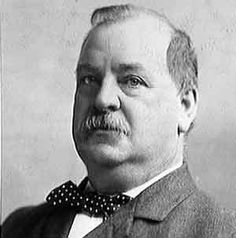
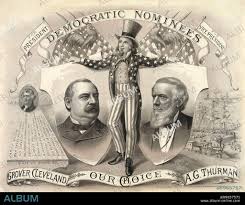
top left and moving clockwise:  Portrait, standing (notice the top hat), wife frances, princeton home at westand in new jersey, campaign poster from 1888 when cleveland was defeated for re-election (with running mate a. g. thurman)  (Images courtesy of Pinterest)


Answer to Brain Teaser Question

One  [Analyze what a birthday is?  Don’t become lured into the word “average.”  It’s a single day when someone is born.]

Trivia’s Facts and More (8/31)

Photo by Pixabay on Pexels.com

This informative post will be published on Saturday in place of my regular one.  You are invited to participate with the opening question.

Brain Teaser Question

What has 13 hearts but no other organs?

(answer found at the end of this post)

Featured Facts

The 21st President of the United States was Chester Alan Arthur.  He assumed the office upon the death of President James Garfield, who was assassinated.

Here are a few quick facts about President Arthur:

  • Native state:  Vermont
  • Term of office:  1881-1885
  • Political party:  Republican
  • Lifespan:  1829-1886

Nicknamed “The Gentleman Boss” because of his duties and service to both the Union army and later the port authority of New York, Arthur’s previous occupations included teacher and lawyer.  During the Civil War, he served as Union quartermaster where it was his duty to organize food and supplies for the New York troops.

The son of a Baptist preacher, Arthur quite frankly never expected to be President.  However, circumstances placed him in the highest office in the land, and he performed his tasks with devotion and diligence.

One of his administration’s most significant tasks was in reforming the federal government’s civil service.  In 1883, Arthur signed the Pendleton Act, which eliminated the “spoils” system in filing jobs with the federal government.  A Civil Service Commission was established, and future federal jobs would be distributed on merit instead of patronage.  

Before Arthur moved into the White House, designer Louis Comfort Tiffany was hired to redecorate its state rooms.  More than 20 wagon loads of furnishings were hauled away to be auctioned off.

As the Election of 1884 loomed ahead, Arthur declined to run for re-election.  He had been hiding a serious illness throughout much of his term of office.  Bright’s disease, a fatal kidney illness, took his life in 1886.

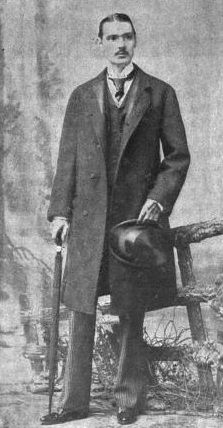
left to right:  portrait of president arthur, photo from younger years, summer home at sag harbor, new york.  (Images courtesy of Pinterest)


Answer to Brain Teaser Question

A deck of cards

James A. Garfield Quotes

Photo by Aaron Kittredge on Pexels.com

Next to importance to freedom and justice is popular education, without which neither freedom nor justice can be permanently maintained.

The chief duty of government is to keep the peace and stand out of the sunshine of the people.

James A. Garfield (1831-1881) was the 20th President of the United States.

Mount Rushmore Presidents Quotes

Photo by Pixabay on Pexels.com

Mount Rushmore National Monument is located in South Dakota’s Black Hills.  The sculptured figures of George Washington, Thomas Jefferson, Theodore Roosevelt, and Abraham Lincoln stand watch.  

George Washington (1789-1797)

Guard against the impostures of pretended patriotism.


Abraham Lincoln (1861-1865)

You cannot build character and courage by taking away people’s initiative and independence.


Trivia’s Facts and More (6/8)

Photo by Pixabay on Pexels.com

This informative post will be published on Saturday in place of my regular one.  You are invited to participate with the opening question.

Brain Teaser Question

What three numbers will always give the same result whether multiplied or added together?

(answer found at the end of this post)

Featured Facts

Ohio Republican Rutherford B. Hayes served as the 19th President of the United States for a single term from 1877-1881.

Here are a few quick facts about President Hayes:

  • LIfespan:  October 4, 1822 to January 17, 1893 (born in Delaware, Ohio)
  • Colleges Attended:  Kenyon College (Gambier, Ohio) and Harvard Law School
  • Spouse:  Lucy Ware Webb Hayes (first First Lady with a college degree)

Hayes gave many years of service to his nation as well as the state of Ohio.  He served in the Civil War for its entire length of time (1861-1865).  He rose to the rank of general of an Ohio-bred regiment.  In 1862, he was seriously wounded at the Battle of South Mountain (Maryland), which occurred three days before the more famous battle at Antietam Creek.

Following the Civil War, he worked hard to establish a successful law practice in Cincinnati.  Later, he served as Governor of the Buckeye state for two terms (1868-1872).  He would again be elected to serve as Governor for a third term (1876-1877) until he was elected President of the United States.

In the Presidential Election of 1876, Hayes faced Democratic candidate, Samuel J. Tilden.  Hayes was considered the underdog as he was a dark horse candidate who was attempting to follow in the steps of Republican President Ulysses S. Grant.  The country’s patience with Reconstruction of the former Confederacy was wearing thin, and many voters were seeking a change in political leadership.

In a highly contested election, Hayes snatched victory away from Tilden in the weeks following the completion of voting.  Votes were disputed in at least four states, and eventually Hayes won the Electoral College final tally 185-184.  Tilden received a majority of the popular vote.

As President, Hayes followed through on his promise to only serve one term as President.  He was the first President assigned Secret Service protection.  He supported the ending of Reconstruction in the South.  He signed a bill which allowed female attorneys to argue cases before the U.S. Supreme Court.

clockwise from top left:  Portrait of president hayes, President hayes and first lady lucy ware webb  hayes, Hayes from the civil war years, hayes’ home at spiegel grove in Fremont, childhood home in DELAWARE.  (Images courtesy of Pinterest)

Answer to Brain Teaser Question

1, 2, and 3   (1 + 2 + 3 = 6 and 1 x 2 x 3 = 6)

Trivia’s Facts and More (5/4)

Photo by Pixabay on Pexels.com

This informative post will be published on Saturday in place of my regular one.  You are invited to participate with the opening question.

Brain Teaser Question

Name three words that end in “dous.”

(answer found at the end of this post)

Featured Facts

The 18th President of the United States was Ulysses S. Grant, who served two terms of office (1869-1877).

Here are a few quick facts about President Grant:

  • Home state:  Ohio (birthplace was Pleasant Point)
  • Lifespan:  April 27, 1822 to July 23, 1885
  • Political party:  Republican
  • College education:  Graduate of U.S. Military Academy (West Point)

Grant was the youngest elected President until John F. Kennedy was elected in 1960.  The election of Grant also continued the Republican Party’s control of the Presidency.  Onward from Abraham Lincoln’s election in 1860, a Republican occupied the White House until the election of Democrat Grover Cleveland in 1884.

Grant resumed his military career when the American Civil War severed the Union into two separate, yet temporary parts.  Following the Mexican-American War (1846-1848), Grant had resigned from the army and returned to several unsuccessful ventures and occupations.  

His leadership as a Union general catapulted him to the top post in the Union army, where he commanded all its forces.  President Lincoln sought a man like Grant to serve because of his aggressive and determined leadership.

Grant’s given name was Hiram Ulysses Grant.  He felt quite uncomfortable with the initials H.U.G., and instead used his middle name as his first name.  When his appointment to West Point came through, his middle name was accidentally changed to Simpson, which was his mother’s maiden name.  Grant decided to leave the middle initial from Simpson, and his name permanently became Ulysses S. Grant.

During the Civil War, Grant’s first major victory as a commanding general occurred at the Battle of Fort Donelson (in Tennessee).  He earned his nickname of “Unconditional Surrender” after this battle as he gave the Confederate general no terms except unconditional and immediate surrender.  It was a coincidence that his name’s initials “U.S.” now had another meaning.

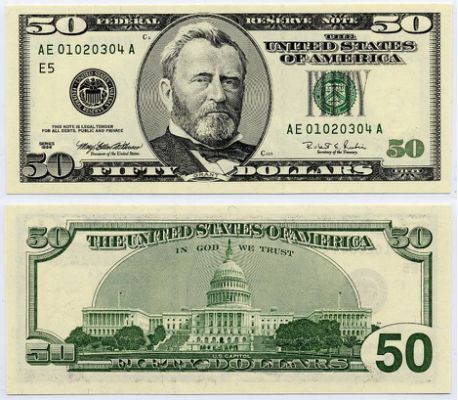
Grant became America’s first four-star general.  His portrait has been printed on the U.S. $50 bill since 1914.  During the final days of his life as he was battling throat cancer, Grant finished his memoirs, which have been widely recognized for their historical accuracy.

left to right:  portrait of President grant, $50 bill with grant’s image, general grant during the civil war, grant’s tomb in upper manhattan in New York City, grant with his wife and son on mediterranean cruise after his presidency.  (Images courtesy of Pinterest)

Answer to Brain Teaser Question

Here are four possible answers: hazardous, horrendous, stupendous, tremendous

Trivia’s Facts and More (3/23)

Photo by Pixabay on Pexels.com

This informative post will be published on Saturday in place of my regular one.  You are invited to participate with the opening question.

Brain Teaser Question

If you multiply this number by any other number, the answer will always be the same.  What number is this?

(answer found at the end of this post)

Featured Facts

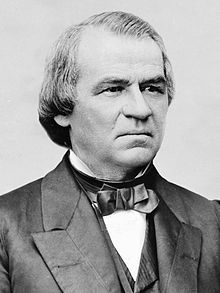
Following Abraham Lincoln’s assassination, Andrew Johnson was sworn in as the 17th President of the United States in April, 1865.  He would serve one term in office until 1869.

Here are a few quick facts about “The Father of the Homestead Act”:

  • State represented:  Tennessee
  • Occupation:  Tailor
  • Life span:  1808-1875
  • Other elected offices:  Governor, U.S. Congress (both in the House and Senate)
  • Notable achievements as President:  in 1867 purchase of Alaska from the Russian Empire; in 1865 ratification by the states of the 13th Amendment to the U.S. Constitution (abolishing slavery)

Like his predecessor, Abraham Lincoln, Johnson was a self-educated man.  He became a highly popular politician in Tennessee.  

Johnson, a southern Democrat, chose to support the Union when the Civil War broke out.  He was the only southern Senator to remain at his post when most of the South, including his home state of Tennessee, seceded from the Union.  

Johnson supported proposed legislation for the Homestead Act in the late 1850s.  While most Democrats were against the bill, he remained a strong advocate.  Eventually the legislation passed Congress and was signed into law by President Lincoln in 1862. 

With the approaching election of 1864, President Lincoln felt that he would need to broaden his support with others outside of his Republican Party.  His party chose Tennessee Democrat Johnson to join the ticket as the candidate for Vice President.  The juggernaut of Lincoln and Johnson easily won election, and Lincoln’s victory insured that he would be the first incumbent to win a second term since Andrew Jackson in 1832.  

Of course, fate intervened in April, 1865.  Upon assuming the Presidency, Johnson attempted to follow Lincoln’s moderate plan for Reconstruction after the Civil War.  Johnson ran into stiff resistance from the Radical Republicans in Congress.  Eventually Johnson faced more and more opposition, which led the U.S. House of Representatives to approve the first impeachment of an American President in 1868.   Fortunately for Johnson, he narrowly escaped conviction in the U.S. Senate by one vote.

OFFICIAL portrait of Johnson as President, election of 1864 poster with Lincoln and Johnson (take note of the party label of “National Union”), Johnson’s home in Greeneville, Tennessee.  (Images courtesy of Pinterest)

Answer to Brain Teaser Question

Zero

Trivia’s Facts and More (2/17)

Photo by Pixabay on Pexels.com

This informative post will be published on Saturday in place of my regular one.  You are invited to participate with the opening question.

Brain Teaser Question

A king, a queen, and two twins all rest in a large room.  How are there no people in the room?

(answer found at the end of this post)

Featured Facts

Many historians consider Abraham Lincoln to be the greatest of all Presidents of the United States.  The 16th President held the Union together during the American Civil War.

Here are a few quick facts about Abraham Lincoln:

  • Political party:  Republican (years earlier with the Whigs)
  • State represented:  Illinois (home in Springfield)
  • LIfespan:  1809-1865
  • Birthplace:  Hodgeville, Kentucky

America’s 16th President was self-educated and practiced law in his adult life.  He was the first President elected to two terms in office since Andrew Jackson was re-elected in 1832.  

Standing at a height of 6 feet, 4 inches, Lincoln was the tallest President.  One of his nicknames was “Honest Abe.”  This name was given to him after he repaid a debt that he owed.

At the height of the Civil War, Lincoln’s vision to end slavery in the United States was brought to fruition when his Emancipation Proclamation was issued on January 1, 1863.  Because of this event, Lincoln was also nicknamed “The Great Emancipator.”

When Lincoln was elected President in 1860, he was still clean-shaven.  Upon receiving a letter from 11-year old Grace Bedell from New York state, he decided to follow her suggestion to lengthen his whiskers.  Lincoln became the first President to wear a full beard.

Lincoln faced numerous setbacks during his life.  These only tempered his attitude and resolve for what would await him when he arrived at the White House in 1861.  Many of the southern states were already seceding from the Union before his inauguration.

A summary of some of Lincoln’s most notable setbacks follows.

1832:  Defeated in election to the Illinois state legislature

1833:  Village store purchased fails (bringing heavy debt to Lincoln and his partner)

1835:  His sweetheart, Ann Rutledge, died unexpectedly.  

1836:  Experienced a nervous breakdown

1843:  Defeated in nomination attempt to the U.S. House of Representatives

1854:  Defeated in election to the United States Senate

1858:  Defeated in election to the United States Senate

It’s ironic that Lincoln defeated his 1858 Senate opponent, Stephen A. Douglas, in the Presidential Election of 1860.

top row:  with full beard, lincoln as president.  clean-shaven lincoln before his election in 1860.  Middle row:  in the field, Lincoln meets with Union general george p. Mcclellan.  lincoln’s log cabin birthplace in Kentucky and Lincoln family home in Springfield, Illinois.  Bottom:  Lincoln’s tomb in Springfield.  (photographs courtesy of pinterest.)


Answer to Brain Teaser Question

They are all beds.

Trivia’s Facts and More (1/13)

Photo by Pixabay on Pexels.com

This informative post will be published on Saturday in place of my regular one.  You are invited to participate with the opening question.

Brain Teaser Question

I have keys but no locks.  You can enter but you can’t go outside.  I have space but no room.  What am I?

(answer found at the end of this post)

Featured Facts

James Buchanan, nicknamed “The Sage of Wheatland,” was the 15th President of the United States.  

Here are a few facts about President Buchanan:

  • Term of office:  1857-1861
  • Home state:  Pennsylvania
  • Lifespan:  April 23, 1791 to June 1, 1868
  • Political party:  Democratic
  • College attended:  Dickinson College in Carlisle, Pennsylvania

As Buchanan’s term of office drew to a close in 1861, the powder keg of emotions between America’s North and South was nearing its implosion point.  Days before Abraham Lincoln’s inauguration, seven southern states seceded from the Union and formed the Confederate States of  America. 

Buchanan was morally opposed to slavery, but he felt it was protected by the U.S. Constitution.  As President, he tried, without success, to maintain peace between the pro-slavery and anti-slavery factions in the country.  His official Cabinet illustrated balance between these two opposing views.  He felt the issue of slavery should best be decided by the states.

Buchanan’s journey toward the Presidency included lengthy terms of office in the U.S. House of Representatives and the U.S. Senate.  He served in diplomatic posts as well as Secretary of State.  

In the election of 1856, Buchanan ran as the “Save the Union” candidate.  Despite this campaign promise, the nation seemed headed toward a bloody conflict.  He did not seek re-election in 1860 because he had promised to only serve only one term (as stated in his Inaugural Address).

Buchanan was unmarried, and he has remained the only bachelor to serve a full-term as President.  Another bachelor, Grover Cleveland, was elected President in 1886, but he was married during his first year in office.

left:  portrait of president buchanan.  Right top:  buchanan and his cabinet.  right bottom:  wheatland, buchanan home in lancaster, pennsylvania.   (photographs courtesy of pinterest.)


Answer to Brain Teaser Question

A keyboard.