
For the final Saturday of each month, a different and unique feature will be published. Today’s narrative takes a look at the achievements of Montana native, Jeannette Rankin. Saturday’s regular feature, “Trivia’s Facts and More,” will return next week.
Growing up near Missoula, Montana, Jeannette Rankin was destined for a life of service to her country as well as other causes dear to her heart.
Born in 1880, Rankin lived on her family’s ranch in western Montana. The Treasure State was still recognized as an American territory, and Statehood would not be attained until 1889. In 1902, she graduated with a degree in Biology from Montana State University (now called University of Montana).
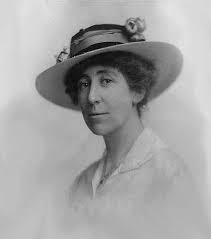

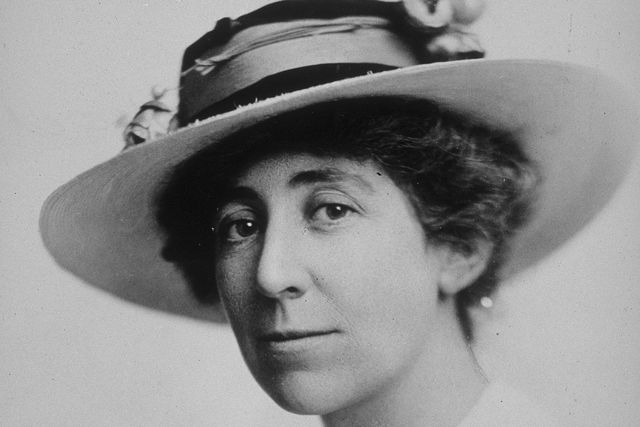
Left: A young Jeannette Rankin. Right: Around 1914-1916. (Photos courtesy of Pinterest.)
As a progressive member of the Republican Party, Rankin became the first American woman elected to a federal office. In 1916, she was victorious in her bid to become a member of the U.S. House of Representatives. She would later be elected to a second term in 1940.
Rankin supported social welfare causes for improving working conditions and health care for women. She also worked tirelessly to help women earn the right to vote in the states of Washington and Montana. Both states granted this right in 1910 and 1914, respectively. Her efforts joined with other women in gaining universal suffrage for all in 1919 with passage of the 19th Amendment to the U.S. Constitution.
While Rankin has remained the only Montana woman ever elected to serve in Congress, she has been most remembered for her unwavering stance on war and peace.
During her first term in Congress, President Woodrow Wilson sent a declaration of war request to both houses of Congress. Joined by 49 other votes against America’s entry into World War I, Rankin cast her vote against the resolution.
Sometimes history will find a way of repeating itself, and this was the case with Rankin in 1941. Following the Japanese attack on Pearl Harbor, President Franklin Roosevelt sent a declaration of war request to Congress. With unbendable political courage, she cast the lone vote against America’s entry into World War II.


left: serving in congress 1941-1943. right top: serving in congress 1917-1919. bottom right: campaign literature from election of 1916. (Photos courtesy of Pinterest.)
A lifelong pacifist, Rankin’s two votes against war demonstrated her resolute belief in preventing it. She became the only member of Congress to vote against America’s entry into both World Wars. Her own words say it best, “As a woman I can’t go to war, and I refuse to send anyone else.”
Rankin’s votes against entry into war terminated her future in politics. She unsuccessfully ran for the U.S. Senate in 1918, and she did not run for re-election to the U.S. House in 1942.
Prior to her death in 1973, Rankin served as a passionate voice for including equality and women’s rights in Montana’s new constitution, which replaced the original one approved in 1889.



 Big Sky Buckeye