This informative post will be published on Saturday along with my usual writing. You are invited to participate with the opening question.
Brain Teaser Question
A butcher in the meat shop is 5′ 10″ tall. What does he weigh?
(answer found at the end of this post)
Featured Facts
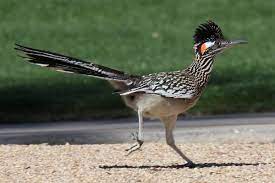
Well-adapted to a desert climate, the Roadrunner lives in the deserts of the American southwest as well as portions of Mexico and Central America.
Here are some interesting facts about the Roadrunner:
Diet: insects, reptiles, small rodents, spiders, scorpions, eggs, fruits, seeds
Average lifespan: 7-8 years
Top speed: 17 mph when running
Roadrunners can fly like any bird, but they prefer to sprint when hunting their prey. They are frequently seen darting across roads.
In a sense, they provide free pest control in the wild. Using their quickness, they easily catch their next meal. Each meal also quenches the bird’s thirst from the fluids found in the captured food.
Both males and females incubate eggs and care for newborn chicks. Each bird’s foot consists of four toes with two pointing forward and two backward.
Over the years, the Roadrunner has found a unique place in American culture. First seen in 1949, “Looney Tunes” and “Merrie Melodies” brought the Roadrunner to viewers in numerous animated features. Automobile manufacturer Plymouth designed a car, named the Roadrunner. In 1971, driver Richard Petty’s famous #43 captured a Grand National Championship. His superbird Roadrunner was designed to compete in NASCAR races.
Left: Roadrunner crossing a road. right top: Animated characters roadrunner and wile. e. coyote. right bottom: richard petty’s 1971 Roadrunner #43. photographs courtesy of pinterest.
Answer to Brain Teaser Question
To solve this tricky brain twister, study what you have to work with in the question. Since it doesn’t give any indication of the butcher’s weight, the word “weigh” must refer to something else. The butcher weighs meat!
This informative post will be posted on Saturday along with my usual writing. You are invited to participate with the opening question.
Brain Teaser Question
All of Mary’s cousins have an Aunt Lucille, but Mary does not. How can that be?
(answer found at the end of this post)
Featured Facts
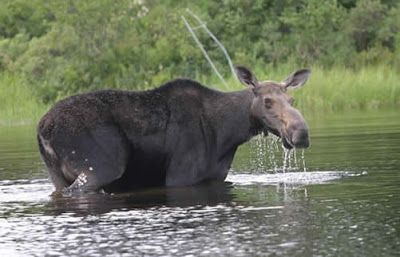
The largest member of the North American deer family is the moose. With a weight of up to 2,000 pounds for a male bull, it is easy to understand that a moose may eat up to 45 pounds of food per day.
Here are some quick facts about the moose:
Habitat: grasslands and waterways of Alaska, Canada, northern U.S., Rocky Mountains
Top speed: 35 mph
Diet: marsh plants, leaves, branches, twigs
Average lifespan: 10-20 years
A bull moose loses its antlers around November, but they will grow back (usually even bigger) during the following spring. These broad antlers can sometimes spread as wide as six feet (two meters).
Moose adapt to waterways’ habitat where there is an ample supply of marsh plants. Being good swimmers, they can stay underwater for up to a minute while searching for something to eat.
Moose generally live in regions where winter snow will cover the ground. They endure snow and cold quite well. Despite poor eyesight, they are still able to track predators because of their excellent sense of smell and hearing.
left: bull with impressive spread of antlers. right: cow feeding in pond. (courtesy of pinterest)
This informative post will be posted on Saturday along with my usual writing. You are invited to participate with the opening question.
Brain Teaser Question
How many outs are in an inning of baseball?
(answer found at the end of this post)
Featured Facts
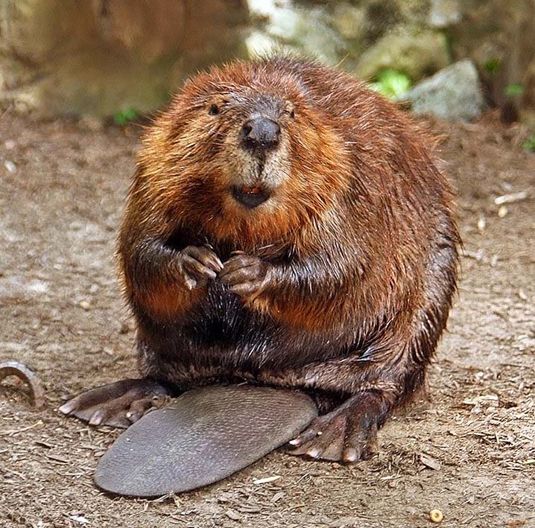
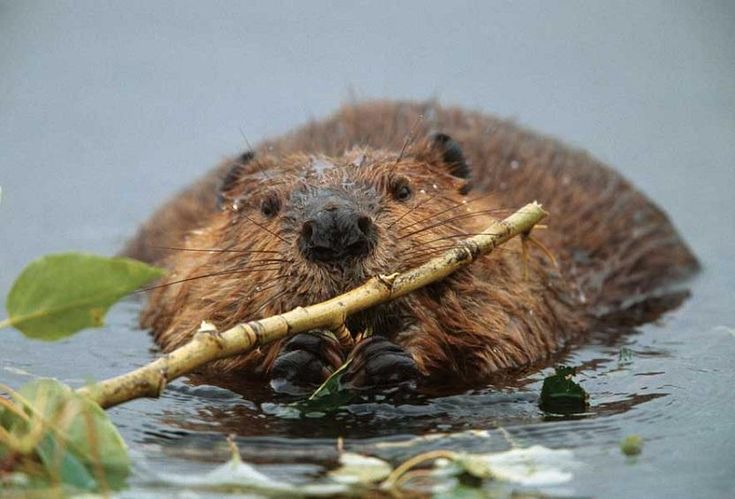
One of the most curious animals to study is the American Beaver. They are the largest member of the North American rodent family.
Here are some quick facts about the beaver:
Habitat: Streams and lakes throughout the U.S. and Canada
Body Length: 2 to 3.5 feet
Tail Length: 10-18 inches
Weight: 25-65 pounds (females are generally a bit bigger than males)
A group of beavers is called a colony, and their offspring are called kits. A beaver’s diet consists of inner bark, twigs, leaves, grasses, and water plants.
Beavers have adapted quite well to their watery habitat. They are excellent swimmers because of webbed feet and a large, flat leathery paddle-like tail. Most can swim about five miles per hour. They are able to remain underwater without breathing for nearly 15 minutes.
Beavers are excellent engineers as evidenced by their precision-built dams and lodges, which become their homes. Equipped with sharp incisor teeth that can easily cut through tree trunks, they build with logs, sticks, and mud.
Photos courtesy of Pinterest.
Answer to Brain Teaser Question
Six
You may have thought there were three outs, but there are two teams that play in an inning. So there are six outs.
This informative post will be posted on Saturday along with my usual writing. You are invited to participate with the opening question.
Brain Teaser Question
HAMLET is to VILLAGE as . . .
(A) STREET is to SIDEWALK
(B) HIGHWAY is to CAR
(C) BUILDING is to SKYSCRAPER
(D) PHOTOGRAPH is to PORTRAIT
(E) COTTAGE is to HOUSE
(answer found at the end of this post)
Featured Facts
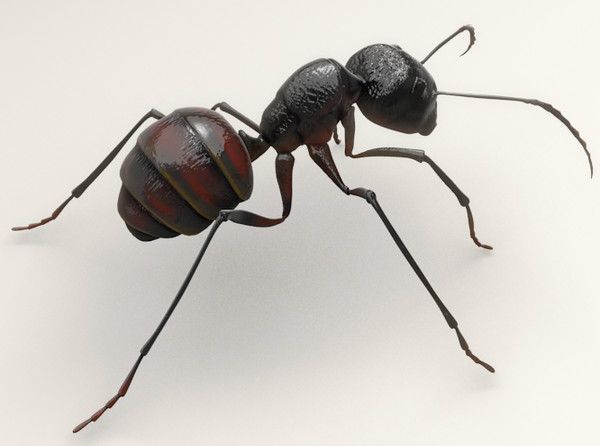
One of nature’s most curious creatures is the ant. Usually found living in large, highly organized colonies, scientists continue to learn more and more about them.
Here are some interesting facts about the ant:
Habitat: every land area with the exception of Polar regions and some islands (such as Hawaii)
Diet: bugs, dead animals, plants, fungus, nectar, sap
Color: commonly black and red, but also green and golden brown
Strength: can support 5,000 times their body weight (comparable to a 200-pound human supporting one million pounds)
Lifespan: workers, 1-3 years; queen, up to 30 years
Scientists believe that there could be approximately 22,000 species of ants. While they may look similar to termites, they are members of different genetic groups. Termites are aligned closer to mantis and crickets while ants are closer to bees and wasps.
The number of estimated ants is equivalent to one million for each living human on the planet. They live and work like little robots. From birth, everything needed is built into each tiny brain.
Ants are sometimes referred to as superorganisms. Living cooperatively, the entire ant colony behaves like one single-minded animal.
images Courtesy of Pinterest.
Answer to Brain Teaser Question
E
Put the analogy in a very specific sentence. HAMLET is a small VILLAGE, just as COTTAGE is a small HOUSE.
This informative post will be posted on Saturday along with my usual writing. You are invited to participate with the opening question.
Brain Teaser Question
What is the longest word in the dictionary?
(answer found at the end of this post)
Featured Facts
The American prairie dog frequently makes sounds like a dog barking, but they are not a member of the dog family. They are related to a ground squirrels, chipmunks, groundhogs, and woodchucks.
Here are some interesting facts about the prairie dog:
Habitat: Prairie lands from Montana and the Dakotas to Texas)
Body length: 11-14 inches (28-36 cm)
Weight: 2-4 pounds
Diet: Grasses and crops
Prairie dogs live as a group (coterie). Each coterie is socially active and contains up to 10-20 members. They construct an extensive system of underground burrows called a town. This subsurface network connects a series of tunnels with chambers. Several coteries may inhabit the same town.
If one ever observes a prairie dog town, he will find that one or two prairie dogs stand as lookouts. Their heads can be seen above the entrance to the tunnel, and they communicate through chattering, which are high-pitched squeaks and barking.
This informative post will be posted on Saturday along with my usual writing. You are invited to participate with the opening question.
Brain Teaser Question
At noon and at midnight, the long and short hands of a clock are together. Between noon and midnight, how many times does the long hand pass the short hand?
(answer found at the end of this post)
Featured Facts
The black bear is the smallest of all North American bears. However, they are probably the most well known.
Here are some interesting facts about the black bear:
Habitat: woodlands and foothills along eastern and western U.S. and Canada.
Diet: vegetations, berries, fish, small mammals, honey, grubs.
Weight: 200-600 pounds.
Top speed: 35 mph.
Average lifespan: 25 years.
From the forests of New Mexico comes a real story about a very famous black bear.
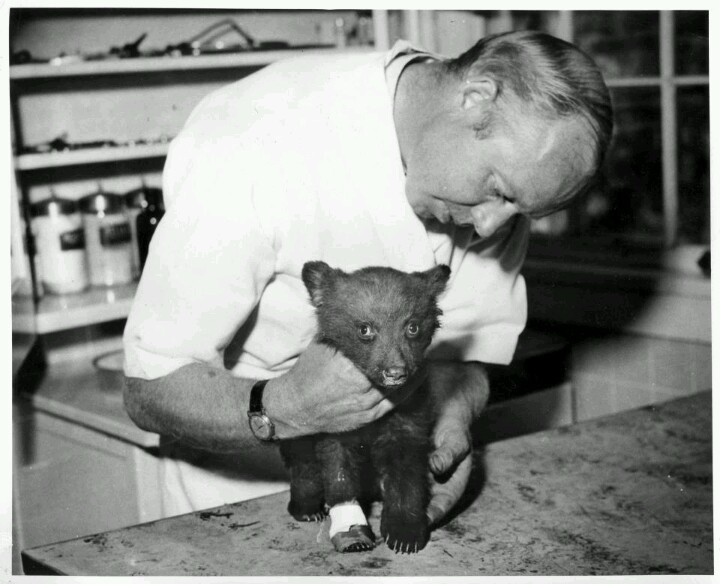
During the spring of 1950, an intense forest fire burned hundreds of acres in the Capitan Mountains. Exhausted firefighters found a young bear cub, who had taken refuge in a tree. He was badly burned, but alive. Moved by his bravery, the firefighters named him Smokey (later to become Smokey Bear).
Later, Smokey Bear was transferred to the National Zoo in Washington, DC, where he remained a living symbol for wildfire prevention. Upon his death in 1976, his remains were transported back to New Mexico for burial.
Left: A vet cares of Smokey Bear’s wounds from the fire. Right: Smokey Bear appears with his namesake poster about preventing forest fires. (courtesy of Pinterest)
Answer to Brain Teaser Question
Only 11 times.
The long hand passes the short hand at 12:00 noon, and between the times of 1 p.m. and 2 p.m., 2 p.m. and 3 p.m., 3 p.m. and 4 p.m., 4 p.m. and 5 p.m., 5 p.m. and 6 p.m., 6 p.m. and 7 p.m., 7 p.m. and 8 p.m., 8 p.m. and 9 p.m., 9 p.m. and 10 p.m., 10 p.m. and 11 p.m. (a total of 11 times). Note that the long hand does not pass the short hand between 11 p.m. and 12 a.m. (it just meets the short hand at 12 a.m.).
This informative post will be posted on Saturday along with my usual writing. You are invited to participate with the opening question.
Brain Teaser Question
What letter would come next in this sequence?
O, T, T, F, F, S, S, E, ___
(answer found at the end of this post)
Featured Facts
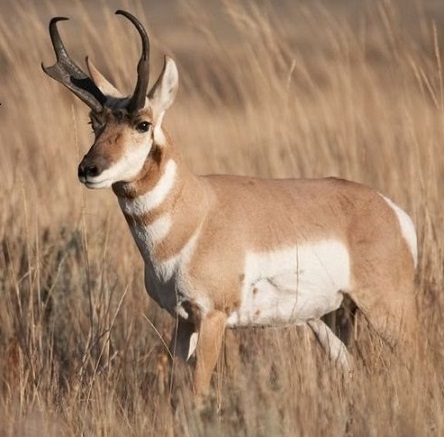
North America is blessed to be home to the second fastest animal in the world. Second only to Africa’s cheetah, the pronghorn has the ability to reach a speed of 60 miles per hour.
Combining outstanding vision with its extraordinary speed, the pronghorn manages to avoid predators most of the time. Both males and females have horns. The male’s horns will grow to a length of 10-12 inches while the female’s remain as small bumps on top of her head.
Here are a few interesting facts about the pronghorn:
Able to survive at least a week without water
Habitat: grasslands and deserts
Diet: grass, low shrubs
Lifespan: 6-10 years
Able to leap up to 15 feet
As herbivores, the pronghorn digests its food twice as it eats, swallows, and then regurgitates the food from its stomach. The animal then chews up the smaller pieces as cud, which allows for greater absorption of the food’s nutrition.
The prairies of Montana, the Dakotas, Wyoming, and Nebraska provide the largest year-round range for the pronghorn in the United States. They will frequently migrate up to 150 miles as they move back and forth between summer and winter feeding grounds.
Left: A young pronghorn buck. Right: Map of pronghorn year-round range in the United States. (Courtesy of Pinterest)
This informative post will be posted on Saturday along with my usual writing. You are invited to participate with the opening question.
Brain Teaser Question
Put these statements in the right order:
(A) The ship stopped to anchor in Commander Bay
(B) A boy awoke and saw a sea lion
(C) A boy went ashore and napped in a meadow
(D) A boy did not tell what he had seen
(E) A boy got a job on a ship
(answer found at the end of this post)
Featured Facts
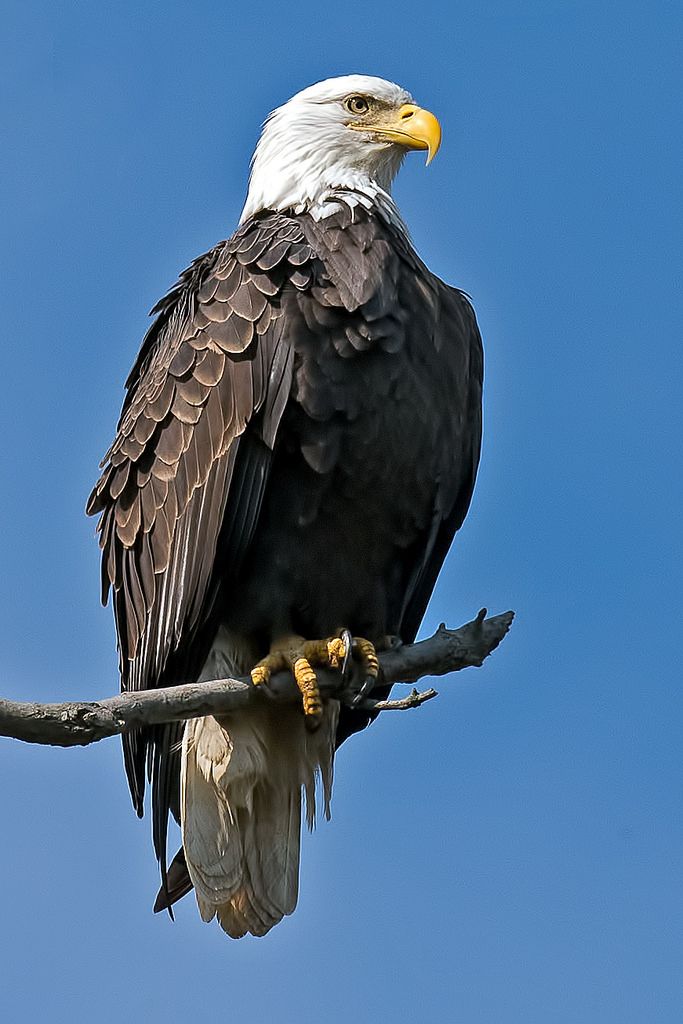
The bald eagle is one of the largest birds in the United States. It is the only eagle unique to the continent of North America. Since 1782, the bald eagle has been the National Bird and Emblem of the United States.
Here are a few interesting facts about the bald eagle:
Habitat: coastlines and waterways (U.S. and southern Canada)
Wingspan: up to 8 feet
Top speed: between 40 and 45 miles per hour
Congress: name for a group of eagles
Lifespan: between 25 and 40 years in the wild
Facing near extinction in the 1960s from the use of the pesticide DDT, conservation efforts and federal protection of the eagles has led to a dramatic increase in its numbers. Estimated known nesting pairs have increased from a low of 417 in 1963 to more than 71,000 in 2020.
This informative post will be posted on Saturday along with my usual writing. Please note that the format has changed, and you are encouraged to participate with the opening question.
Brain Teaser Question
Make one word from these jumbled letters:
o r e n o d w
(answer found at the end of this post)
Featured Facts
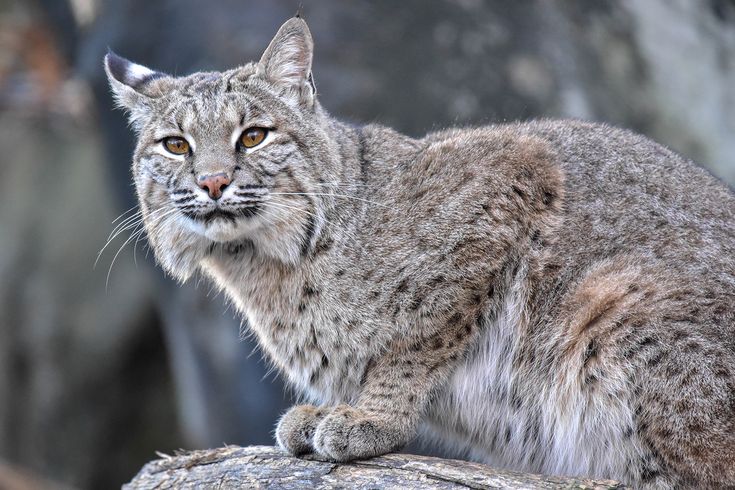
The bobcat is the most abundant and wide-ranging wildcat in the United States. Its name is derived from its stumpy (bobbed) tail. Being primarily a nocturnal animal, males may roam up to 20 miles in a night.
Believe it or not, the alma mater of Big Sky Buckeye is Montana State University where the prized “Bobcat” is the school’s mascot.










 Big Sky Buckeye