

This informative post will be published on Saturday in place of my regular one. You are invited to participate with the opening question.
Brain Teaser Question
Why did the music teacher need a ladder?
(answer found at the end of this post)
Featured Facts
On September 5, 1977, the American space program (NASA) successfully launches Voyager 1. This probe’s mission is designed to study the outer planets of Earth’s solar system.
Here are a few interesting facts about Voyager 1:
- Body size: about the size of a subcompact car
- Launch weight: 1,797 pounds.
- Voyage 2: probe identical to Voyager 1; launches on August 20, 1977
During the 1960s, NASA scientists dream about sending a probe into the outer reaches of the solar system. While both Voyager 1 and 2 complete their primary mission to explore the giant planets of Jupiter, Saturn, Uranus, and Neptune, each has ventured into interstellar space (Voyager 1 in 2012 and Voyager 2 in 2018). Both probes have surveyed the outer planets, numerous moons, unique systems of rings, and magnetic fields.
Interstellar space is defined as beyond the Sun’s magnetic field. Both Voyager 1 and 2 have reached a distance of approximately 15 billions miles from Earth. Any signal between Earth and one of these probes takes about 22.5 hours to arrive.
Both probes have been destined to serve as Earth’s representative as their respective journeys take them deeper into space. They contain images of Earth, sounds of animals, and collections of music. Each carries a greeting if another form of life is encountered.
Each probe’s camera has been silent since 1990 when they were turned off to save power and computer memory space. They now primarily focus on detecting environmental elements. Though both Voyager 1 and 2 have exceeded their the planned years of service, they will probably stay in operation until approximately 2030. With their plutonium-fueled energy supply depleted, these tiny ghost ships will continue to transport hopes and dreams, bearing humanity’s knowledge.
Over the years, NASA engineers have continued to troubleshoot challenges. Recently, they have managed a successful restart of the backup thrusters on Voyager 1. These thrusters have been disabled since 2004, and they have been considered no longer functional. Thrusters are necessary to control the probe’s orientation, which helps to pinpoint its antennae toward Earth. Since the primary thrusters have been wearing out, the time has become critical for bringing the backup ones on line.


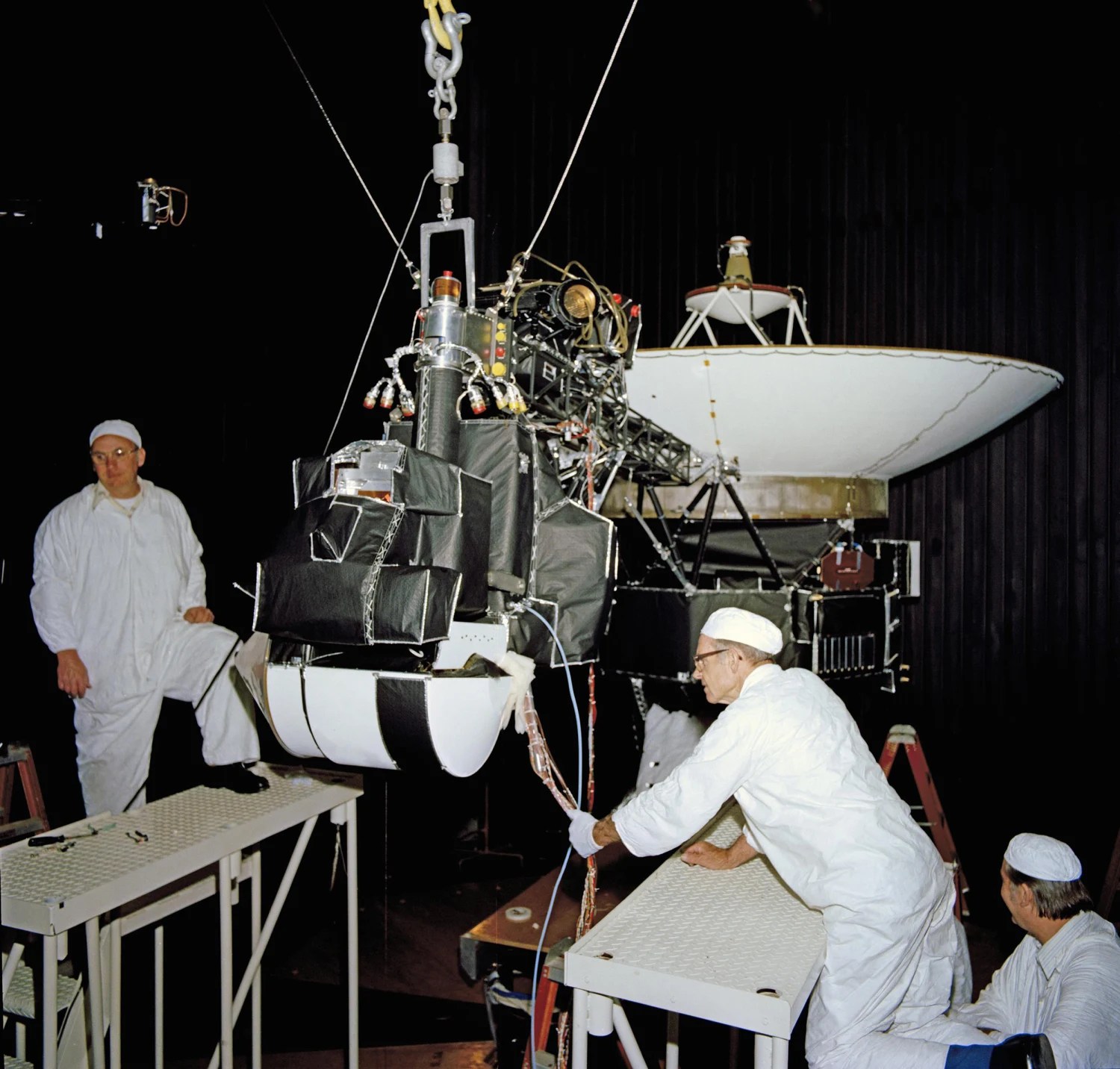
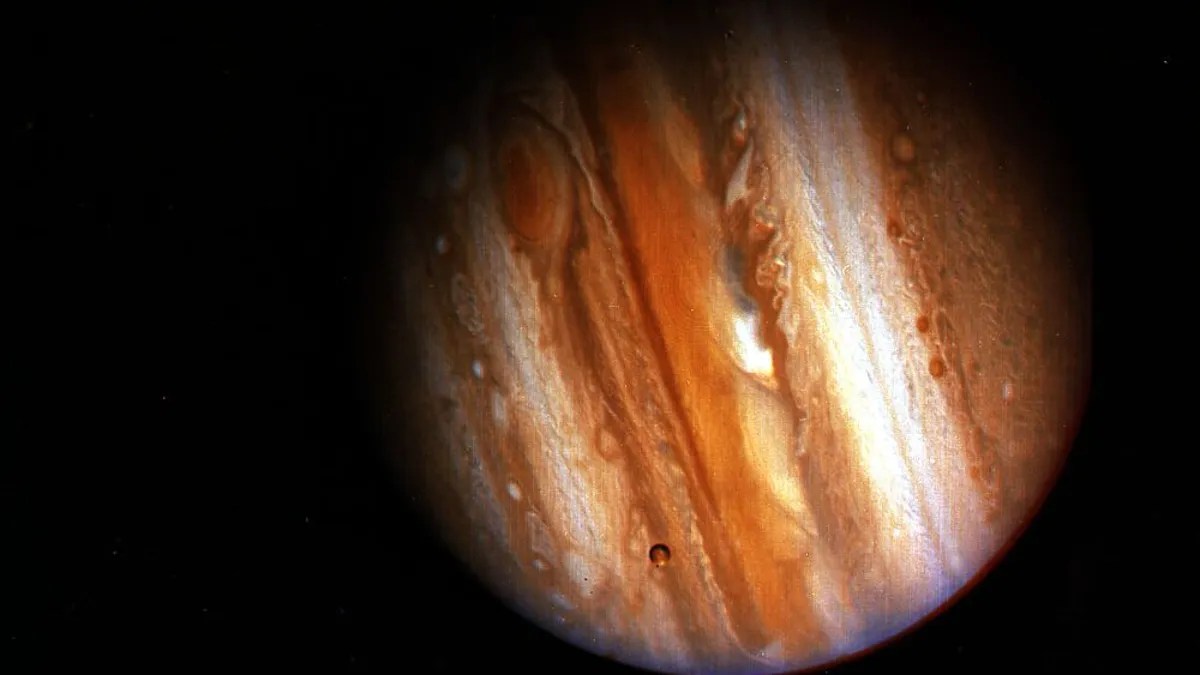

top left and moving clockwise: diagram of various parts of the voyager probes, launch of voyager 1, nasa engineers prepare voyager 1, image of voyager 1 as viewed in space, voyager 1 photo of jupiter, (Courtesy of Pinterest)
Answer to Brain Teaser Question
To reach the high notes.


 Big Sky Buckeye