Trivia’s Facts and More (6/8)

Photo by Pixabay on Pexels.com

This informative post will be published on Saturday in place of my regular one.  You are invited to participate with the opening question.

Brain Teaser Question

What three numbers will always give the same result whether multiplied or added together?

(answer found at the end of this post)

Featured Facts

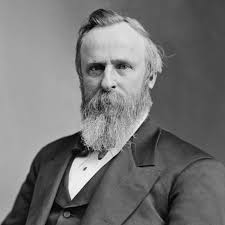
Ohio Republican Rutherford B. Hayes served as the 19th President of the United States for a single term from 1877-1881.

Here are a few quick facts about President Hayes:

  • LIfespan:  October 4, 1822 to January 17, 1893 (born in Delaware, Ohio)
  • Colleges Attended:  Kenyon College (Gambier, Ohio) and Harvard Law School
  • Spouse:  Lucy Ware Webb Hayes (first First Lady with a college degree)

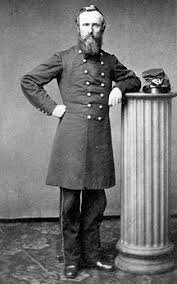
Hayes gave many years of service to his nation as well as the state of Ohio.  He served in the Civil War for its entire length of time (1861-1865).  He rose to the rank of general of an Ohio-bred regiment.  In 1862, he was seriously wounded at the Battle of South Mountain (Maryland), which occurred three days before the more famous battle at Antietam Creek.

Following the Civil War, he worked hard to establish a successful law practice in Cincinnati.  Later, he served as Governor of the Buckeye state for two terms (1868-1872).  He would again be elected to serve as Governor for a third term (1876-1877) until he was elected President of the United States.

In the Presidential Election of 1876, Hayes faced Democratic candidate, Samuel J. Tilden.  Hayes was considered the underdog as he was a dark horse candidate who was attempting to follow in the steps of Republican President Ulysses S. Grant.  The country’s patience with Reconstruction of the former Confederacy was wearing thin, and many voters were seeking a change in political leadership.

In a highly contested election, Hayes snatched victory away from Tilden in the weeks following the completion of voting.  Votes were disputed in at least four states, and eventually Hayes won the Electoral College final tally 185-184.  Tilden received a majority of the popular vote.

As President, Hayes followed through on his promise to only serve one term as President.  He was the first President assigned Secret Service protection.  He supported the ending of Reconstruction in the South.  He signed a bill which allowed female attorneys to argue cases before the U.S. Supreme Court.

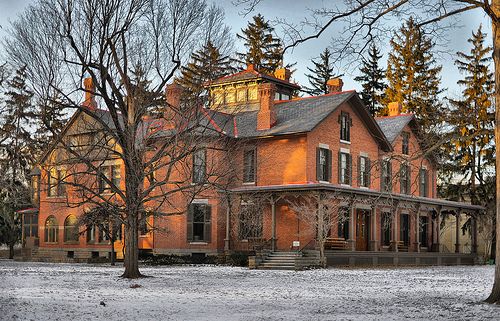
clockwise from top left:  Portrait of president hayes, President hayes and first lady lucy ware webb  hayes, Hayes from the civil war years, hayes’ home at spiegel grove in Fremont, childhood home in DELAWARE.  (Images courtesy of Pinterest)

Answer to Brain Teaser Question

1, 2, and 3   (1 + 2 + 3 = 6 and 1 x 2 x 3 = 6)

Trivia’s Facts and More (6/1)

Photo by Pixabay on Pexels.com

This informative post will be published on Saturday in place of my regular one.  You are invited to participate with the opening question.

Brain Teaser Question

What ancient invention allows people to see through walls?

(answer found at the end of this post)

Featured Facts

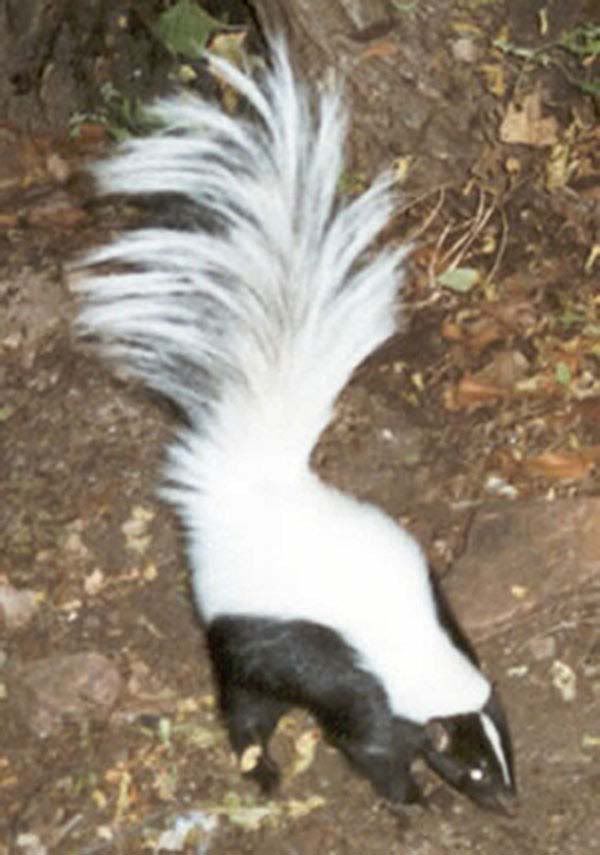
The early morning scent of a skunk reminds anyone nearby to be on the lookout for this black and white scavenger.  The skunk lives throughout the continental United States.

Here are a few quick facts about the skunk:

  • Body length:  for some species, nearly 3 feet (including its bushy tail)
  • Body weight:  as much as 15 pounds
  • Diet:  (omnivores) berries, nuts, eggs, insects, small animals
  • Lifespan:  up to 5 years

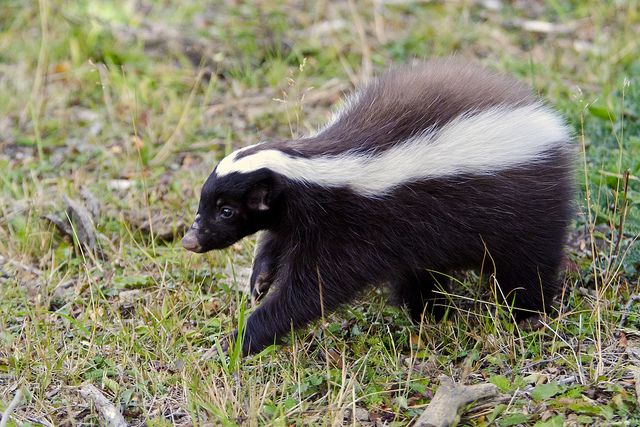
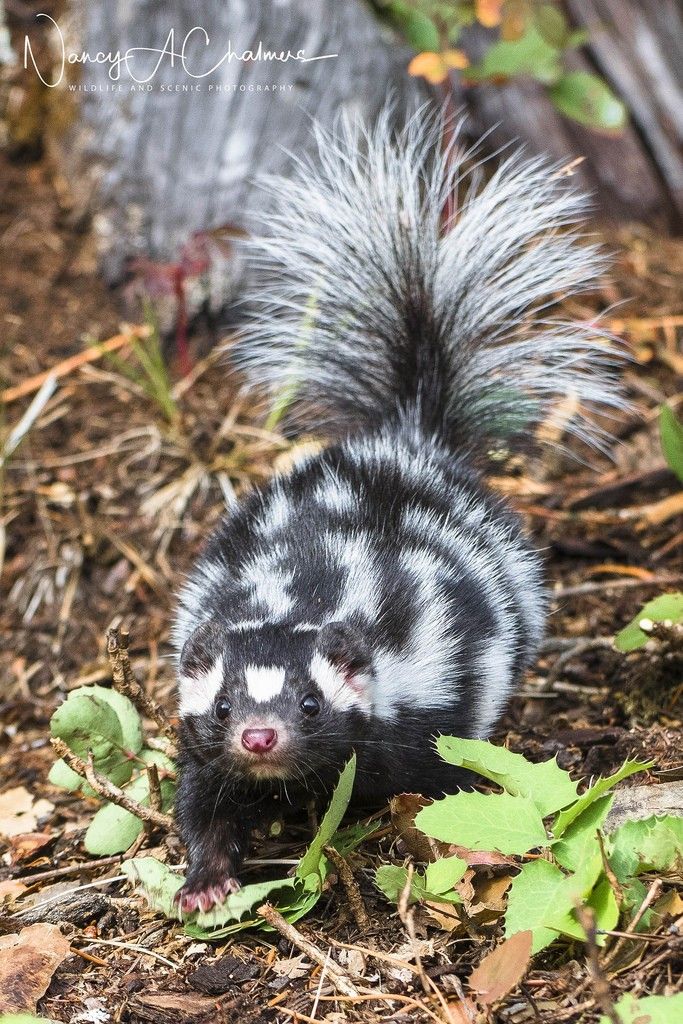
There are several species in the skunk family.  Some of the more common ones include hog-nosed (long, bald snout), hooded (impressive neck ruff), and spotted (much smaller than most).  The most abundant species is the striped skunk, with a black body accented by two white stripes running along the back.

Being nocturnal hunters and food gathers, skunk’s strong sense of smell helps them in their pursuit of food.  However, they possess extremely poor eyesight.

A skunk’s body is designed to assist in the pursuit of another meal.  They possess a stout build with short legs and long bodies.  Their muscular front legs feature long and sharp claws, which allow them to be excellent diggers.

Skunks live in small groups (called surfeits) in underground burrows. and their young are called kits.  Gestation in females usually lasts about two months, though they can delay until more suitable weather for giving birth.  Typically, each liter of kits runs between four and six in number.  Many skunks are carriers of rabies, which is fatal to them.

When threatened, skunks own one of nature’s most effective defense systems.  With scent glands hidden under the tail, a quick elevation of it will spray a victim up to 12 feet away.  A sticky, oily substance with an extreme smell is transmitted as a fine mist.  It immediately causes tearing of eyes and choking.

top left: baby skunk called a kit.  going clockwise, The remaining photos show different species:  hooded, spotted, striped, and hog-nosed.  (Images courtesy of Pinterest)

Answer to Brain Teaser Question

Windows.

Trivia’s Facts and More (5/18)

Photo by Pixabay on Pexels.com

This informative post will be published on Saturday in place of my regular one.  You are invited to participate with the opening question.

Brain Teaser Question

Johnny throws a ball as hard as he can.  It comes back to him, even though nothing touches it.  How does this happen?

(answer found at the end of this post)

Featured Facts

The insect world is filled with an endless variety of fascinating creatures.  The soldier beetle is quite unique with its colorful appearance and shape.

Here are a few quick facts about the soldier beetle:

  • Length:  .5 to 1 inch (12-25 mm)
  • Body shape:  elongated and cylinder-like
  • Diet:  aphids, mites, caterpillars
  • Location:  found throughout the world

The soldier beetle’s appearance resembles leather or a soldier’s uniform.  The red soldier beetle appears to be dressed like a British redcoat from the 1700s.  Other beetles may appear more yellow (goldenrod) or yellowish-orange.  Their body’s bright markings are offset by dark markings on the wings and legs.

Soldier beetles are frequently found in and around flower gardens where they mate, hunt, and eat.  Their graceful flight patterns are distinguished with short bursts of flying, followed by gliding.  Without a need to bite or sting, they are harmless to humans.

They contribute in a positive way to the balance of life in any ecosystem.  They do not damage gardens or crops as they provide pest control and serve as agricultural pollinators.  In turn, they are a source of food for birds.

The life cycle of the soldier beetle begins with a female laying her eggs on leaves of a plant stem.  Later, they will hatch into larvae with a worm-like appearance.  Once the larvae are fully grown, the pupae will form a protective cocoon.  After metamorphosis, they will emerge as a transformed adult.  Adults live for a few weeks to several months.

This post is inspired by the nature photography of Linda’s blog at Lagniappe.  Her camera enjoys sharing nature’s treasures along with her insightful narratives.

clockwise from top left:  The goldenrod (yellow) color is quite common for many of the soldier beetles in the United states, a hungry larvae waits for its next life cycle to begin, and a red soldier beetle (REMINISCENT of the british redcoat’s uniforms).  (Images courtesy of Pinterest)

Answer to Brain Teaser Question

Johnny throws the ball straight up in the air.

Trivia’s Facts and More (5/11)

Photo by Pixabay on Pexels.com

This informative post will be published on Saturday in place of my regular one.  You are invited to participate with the opening question.

Brain Teaser Question

If you are running a race and pass the person in second place, then what place are you in?

(answer found at the end of this post)

Featured Facts

The American state of Kentucky is filled with numerous attractions.  Its rich history as the 15th state of the United States began when it was admitted to the Union on June 1, 1792.

Here are a few quick facts about the Bluegrass State:

  • Capital City:  Frankfort
  • State Bird:  Cardinal
  • State Flower:  Goldenrod
  • State Motto:  United We Stand, Divided We Fall

Kentucky’s name has been traced to the Native American nation of Iroquois.  Their language uses the word “Ken-tah-ten” means “land of tomorrow.”

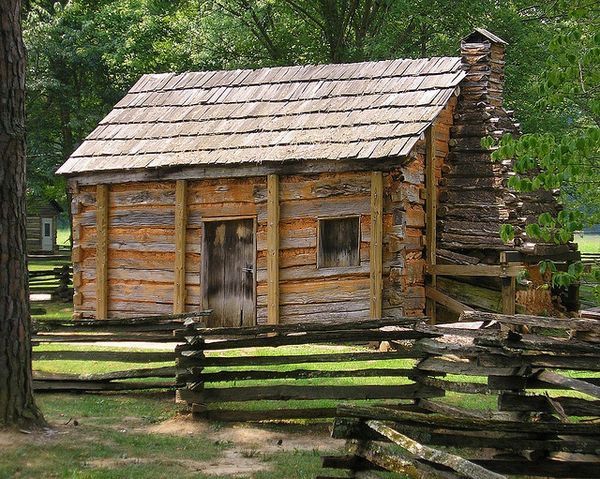
President Abraham Lincoln’s birthplace is located near the town of Hodgenville, Kentucky.  The site is marked, and can be found about three miles south of the community.

One of the most dramatic landscapes to visit is the Cumberland Gap, which is a pass through the Appalachian Mountains.  Located in the tri-state area of Virginia, Kentucky, and Tennessee, the pass has served as a crossroads for the nation’s early migration westward from the original thirteen American states.

Kentucky’s largest city is Louisville.  The city is home to significant points of interest.  Being the birthplace of boxer Muhammad Ali, one is encouraged to visit the Muhammad Ali Center.  Major League Baseball’s famed Louisville Slugger bats are manufactured here as well.  A museum invites baseball fans to see the history behind any slugger’s baseball bat.

There are countless attractions throughout Kentucky.  Following Interstate 65 south from Louisville, one will travel in close proximity to most of these places.

Before leaving Louisville, a visit to Churchill Downs would offer a look at the home of the Kentucky Derby, the oldest continually-running horse race in America.  Founded in 1874, the track hosts thoroughbred horse racing’s opening Triple Crown race each season.

The National Corvette Museum in Bowling Green showcases the venerable Chevrolet Corvette, which has been manufactured since 1953.  For many years, Corvettes have been manufactured at a nearby assembly plant.

Mammoth Cave is recognized as the world’s largest cavern.  The area was established as a national park in 1941.

Fort Knox houses a U.S. military installation, which is located next to the United States Bullion Depository.  Nearly 150 million ounces of gold are kept there.  Visitors are not permitted inside the depository.

clockwise from top left:  national corvette museum, mammoth cave, louisville slugger museum, landscape near cumberland gap, muhammad ali center, churchill downs, fort knox, president lincoln’s birthplace, (Images courtesy of Pinterest)

Answer to Brain Teaser Question

Second place

Trivia’s Facts and More (5/4)

Photo by Pixabay on Pexels.com

This informative post will be published on Saturday in place of my regular one.  You are invited to participate with the opening question.

Brain Teaser Question

Name three words that end in “dous.”

(answer found at the end of this post)

Featured Facts

The 18th President of the United States was Ulysses S. Grant, who served two terms of office (1869-1877).

Here are a few quick facts about President Grant:

  • Home state:  Ohio (birthplace was Pleasant Point)
  • Lifespan:  April 27, 1822 to July 23, 1885
  • Political party:  Republican
  • College education:  Graduate of U.S. Military Academy (West Point)

Grant was the youngest elected President until John F. Kennedy was elected in 1960.  The election of Grant also continued the Republican Party’s control of the Presidency.  Onward from Abraham Lincoln’s election in 1860, a Republican occupied the White House until the election of Democrat Grover Cleveland in 1884.

Grant resumed his military career when the American Civil War severed the Union into two separate, yet temporary parts.  Following the Mexican-American War (1846-1848), Grant had resigned from the army and returned to several unsuccessful ventures and occupations.  

His leadership as a Union general catapulted him to the top post in the Union army, where he commanded all its forces.  President Lincoln sought a man like Grant to serve because of his aggressive and determined leadership.

Grant’s given name was Hiram Ulysses Grant.  He felt quite uncomfortable with the initials H.U.G., and instead used his middle name as his first name.  When his appointment to West Point came through, his middle name was accidentally changed to Simpson, which was his mother’s maiden name.  Grant decided to leave the middle initial from Simpson, and his name permanently became Ulysses S. Grant.

During the Civil War, Grant’s first major victory as a commanding general occurred at the Battle of Fort Donelson (in Tennessee).  He earned his nickname of “Unconditional Surrender” after this battle as he gave the Confederate general no terms except unconditional and immediate surrender.  It was a coincidence that his name’s initials “U.S.” now had another meaning.

Grant became America’s first four-star general.  His portrait has been printed on the U.S. $50 bill since 1914.  During the final days of his life as he was battling throat cancer, Grant finished his memoirs, which have been widely recognized for their historical accuracy.

left to right:  portrait of President grant, $50 bill with grant’s image, general grant during the civil war, grant’s tomb in upper manhattan in New York City, grant with his wife and son on mediterranean cruise after his presidency.  (Images courtesy of Pinterest)

Answer to Brain Teaser Question

Here are four possible answers: hazardous, horrendous, stupendous, tremendous

Trivia’s Facts and More (4/20)

Photo by Pixabay on Pexels.com

This informative post will be published on Saturday in place of my regular one.  You are invited to participate with the opening question.

Brain Teaser Question

If an electric-powered train is traveling south, then which direction is the smoke going?

(answer found at the end of this post)

Featured Facts

One of the world’s most fierce looking insects is the rhinoceros beetle.  However, it is totally harmless to humans.

Here are a few quick facts about the rhinoceros beetle:

  • Size:  ranging from 1-6 inches
  • Color:  depending on species; dark brown to greenish gray
  • Habitat:  damp woody areas
  • Diet:  (herbivorous) adults eat nectar, plant juices, fruit; larvae eat decaying plant matter

The rhinoceros beetle is found on every continent except Antarctica.  The size varies a great deal, depending upon the climate and environmental factors. 

Compared to most beetles, this species (dynastinae) is huge.  Similar to a rhinoceros male (from the mammal world), males have one to three horns on their head, which gives them quite a frightening look.

The life cycle of this beetle begins with a female laying approximately 50 eggs in moist soil.  When the larvae (grubs) hatch, they will stay underground for about one year.  Then they are ready to pupate (transform from immature to mature) into adults.

Because of its strength, the rhinoceros beetle is sometimes called the Hercules beetle.  A mature beetle is capable of lifting up to 30 times his weight without sacrificing any speed.  If a human possesses this level of strength, he would be able to lift a white rhinoceros (over 5,000 pounds) without losing any speed and quickness.  

In some parts of Asia, rhinoceros beetles find their way into homes as children’s pets.  Their exotic appearance makes them quite popular.

top left and moving clockwise:  female, male (notice the three horns), european male, japanese male, costa rican male, male (note the color), larvae.  (Images courtesy of Pinterest)

Answer to Brain Teaser Question

There is no smoke–it’s an electric train.

Trivia’s Facts and More (4/13)

Photo by Pixabay on Pexels.com

This informative post will be published on Saturday in place of my regular one.  You are invited to participate with the opening question.

Brain Teaser Question

Throw away the outside and cook the inside; then eat the outside and throw away the inside.  What is it?  (Hint:  delicious with extra butter)

(answer found at the end of this post)

Featured Facts

The most common of all deer species in the United States is the white-tailed deer.  Sometimes they are referred to as whitetail deer or Virginia deer.

Here are a few quick facts about the white-tailed deer:

  • Height (at shoulder):  2.5 to 3.5 feet
  • Weight:  bucks (males), 200-300 pounds; does (females), 100-200 pounds

  • Average lifespan:  around 10 years

White-tailed deer live throughout the continental United States.  They can be found in a variety of habitats:  open wooded areas, wetlands, meadows, and prairies.  Their diet consists of grasses, leaves, twigs, fruit, flowers, lichen, and legumes (such as alfalfa and clover).  Their four-chamber stomach allows them to eat just about anything.

Throughout most months, white-tailed deer feature a reddish-brown coat.  This changes to grayish-brown during the late fall and winter.  For short distances, they are able to run up to 30 miles per hour, and many can jump fences nearly eight feet tall.

Being one of the smallest deer in the United States, the white-tailed species differs from its larger cousin, the mule deer.  Most mule deer are found in the western United States, and there are slight differences in physical characteristics.  Bucks usually weigh 400 pounds or more.  They also possess larger ears and antlers.

The chief predator of white-tailed deer is man.  However, it is also pursued by natural predators in the wild.  These animals may include the cougar, wolf, bear, mountain lion, and coyote.

Does typically give birth to two or three fawns.  They are easily identified by the spots found on their bodies.  Fawns will usually be nursed for 8-10 weeks.  Young bucks will stay with their mother for about one year while young does will stay for nearly two years.  Most mature bucks live a solitary life, and they will only gather around does during the fall breeding season.

Many people have read Hungarian-born, Austrian writer Felix Salten’s novel from 1922, Bambi, a Life in the Woods.  Salten uses a European setting so the deer in his writings is a roe deer.  This differs from the deer used in the Disney animated film from 1942, “Bambi.”  Here an American white-tailed deer is featured.

top left and moving clockwise:  mature white-tailed buck, white-tailed fawn, white-tailed doe, roe deer buck (European), another white-tailed buck (notice the smaller size and more narrow spread of the antlers), mule deer buck (notice the larger size and wider spread of the antlers), two white-tailed bucks fighting over a female during the autumn breeding season.  (Images courtesy of Pinterest)

Answer to Brain Teaser Question

Corn on the cob.

Trivia’s Facts and More (4/6)

Photo by Pixabay on Pexels.com

This informative post will be published on Saturday in place of my regular one.  You are invited to participate with the opening question.

Brain Teaser Question

Take me out and scratch my head.  I am now black but once was red.  What at I?

(answer found at the end of this post)

Featured Facts

As one of the original 13 American colonies under England’s rule, the American state of Pennsylvania has enjoyed a unique and dynamic history.

Here are a few quick facts about the Keystone State:

  • Capital City:  Harrisburg
  • Statehood:  December 12, 1787 (second state after Delaware to join the Union)
  • State Flower:  Mountain Laurel
  • State Bird:  Ruffed Grouse
  • State Motto:  Virtue, Liberty, and Independence

Pennsylvania was named after founder William Penn’s father, Admiral Sir William Penn.  The state’s name honored (Penn) and the Latin word (Sylvania) which means woodlands.

When the colony of Pennsylvania was founded in 1681 by William Penn, he desired a place that offered a fair form of government as well as religious freedom.  Known as the Keystone State, this nickname recognized the central location of Pennsylvania in relation to the rest of the 13 colonies.

Pennsylvania was the only original colony not bordered by the Atlantic Ocean.  It has provided home for the largest concentration of Amish culture in the United States.  They have accepted a simple way of life which has included plain clothing and a reluctance to use modern technology.  Most of the Amish have lived in the region centered around the city of Lancaster.

In 1900 after selling his Lancaster Caramel Company, businessman Milton Hershey opened his Hershey Chocolate Company in the company town of Hershey, which was located about 30 miles northwest of Lancaster.  

German immigrants arrived in Pennsylvania during the 17th, 18th, and 19th centuries.  They have been commonly called Pennsylvania Dutch.  Most settled before 1800 in order to escape religious persecution.

top left and moving clockwise:  Mountain laurel, ruffed grouse, original hershey chocolate factory, amish buggy,  pennsylvania state flag.  (Images courtesy of Pinterest)

Answer to Brain Teaser Question

A match

Trivia’s Facts and More (3/23)

Photo by Pixabay on Pexels.com

This informative post will be published on Saturday in place of my regular one.  You are invited to participate with the opening question.

Brain Teaser Question

If you multiply this number by any other number, the answer will always be the same.  What number is this?

(answer found at the end of this post)

Featured Facts

Following Abraham Lincoln’s assassination, Andrew Johnson was sworn in as the 17th President of the United States in April, 1865.  He would serve one term in office until 1869.

Here are a few quick facts about “The Father of the Homestead Act”:

  • State represented:  Tennessee
  • Occupation:  Tailor
  • Life span:  1808-1875
  • Other elected offices:  Governor, U.S. Congress (both in the House and Senate)
  • Notable achievements as President:  in 1867 purchase of Alaska from the Russian Empire; in 1865 ratification by the states of the 13th Amendment to the U.S. Constitution (abolishing slavery)

Like his predecessor, Abraham Lincoln, Johnson was a self-educated man.  He became a highly popular politician in Tennessee.  

Johnson, a southern Democrat, chose to support the Union when the Civil War broke out.  He was the only southern Senator to remain at his post when most of the South, including his home state of Tennessee, seceded from the Union.  

Johnson supported proposed legislation for the Homestead Act in the late 1850s.  While most Democrats were against the bill, he remained a strong advocate.  Eventually the legislation passed Congress and was signed into law by President Lincoln in 1862. 

With the approaching election of 1864, President Lincoln felt that he would need to broaden his support with others outside of his Republican Party.  His party chose Tennessee Democrat Johnson to join the ticket as the candidate for Vice President.  The juggernaut of Lincoln and Johnson easily won election, and Lincoln’s victory insured that he would be the first incumbent to win a second term since Andrew Jackson in 1832.  

Of course, fate intervened in April, 1865.  Upon assuming the Presidency, Johnson attempted to follow Lincoln’s moderate plan for Reconstruction after the Civil War.  Johnson ran into stiff resistance from the Radical Republicans in Congress.  Eventually Johnson faced more and more opposition, which led the U.S. House of Representatives to approve the first impeachment of an American President in 1868.   Fortunately for Johnson, he narrowly escaped conviction in the U.S. Senate by one vote.

OFFICIAL portrait of Johnson as President, election of 1864 poster with Lincoln and Johnson (take note of the party label of “National Union”), Johnson’s home in Greeneville, Tennessee.  (Images courtesy of Pinterest)

Answer to Brain Teaser Question

Zero

Trivia’s Facts and More (3/16)

Photo by Pixabay on Pexels.com

This informative post will be published on Saturday in place of my regular one.  You are invited to participate with the opening question.

Brain Teaser Question

I am an odd number.  Take away one letter, and I become even.  What number am I?

(answer found at the end of this post)

Featured Facts

One of the most dangerous of all arachnids (spiders) in the United States is the black widow.  The female black widow is well known for her poisonous venom, nimbleness when moving, and ability to remain solitary and secretive.

Here are a few quick facts about the black widow spider:

  • Diet:  Carnivore (eating other insects caught in its web)
  • Size:  Females (1 inch) are about twice the size of males (.5 inch)
  • Habitat:  Wooded, shaded areas; fallen logs; crawl spaces and basements

Female black widow spiders possess a body that has a distinct, shiny appearance.  The abdomen is almost round in its shape.  Males have white and red marks on their abdomen, and their legs are longer than those of females.

The life cycle of the black widow begins with the female laying between 100-400 eggs, which are stored in a brown, papery sac.  She will guard the eggs for about 20-30 days until hatching begins.  Spiderlings will transition from orange, brown, and white in color to more and more black with each molting.  They will need about three to four months to fully mature.

The female black widow’s red hourglass mark on her underside serves as a warning to other insects, birds, and humans that she is dangerous.  While her bite is venomous, only humans who are very young or old are most at risk of more serious complications or even death.  The male black widow presents no danger at all.

The venom found in a female black widow is about 15 times stronger than a rattlesnake’s.  Swelling may occur around the wound with other symptoms of cramping, sweating, and chills.  Since the spider is considerably smaller than the rattlesnake, the volume of released venom is much less.  A close relative of the black widow, the Australian redback spider, has more potent venom.

Cannibalistic behavior is sometimes observed with black widow spiders.  After mating, the female may sometimes eat the male, but this doesn’t occur as often as most people think.  Of course, the name “black widow” refers to this phenomenon.  Some spiderlings may consume smaller siblings–especially right after birth.

Top left and moving clockwise:  enlarged view of female’s shape, contrast with the male’s size and shape, female’s distinctive red hourglass mark, papery sac filled with eggs, spiderlings after hatching.  (courtesy of Pinterest)


Answer to Brain Teaser Question

Seven