Trivia’s Facts and More (9/21)

Photo by Pixabay on Pexels.com

This informative post will be published on Saturday in place of my regular one.  You are invited to participate with the opening question.

Brain Teaser Question

I am nature’s event of early morning light, which sketches another greeting card.  What am I?

(answer found at the end of this post)

Featured Facts

As one of the 13 original English colonies in North America, Connecticut becomes the fifth state in the American Union when it is granted statehood on January 9, 1788.

Here are a few quick facts about Connecticut:

  • Capital city:  Hartford
  • Nickname:  Constitution State
  • Bird:  Robin
  • Flower:  Mountain laurel
  • Motto:  Qui Transtulit Sustinet (He Who Transplanted Still Sustains)

Connecticut offers a variety of places and historical events of interest.  One of the oldest universities in the United States is Yale University, which is located in New Haven.  Founded in 1701, Yale is several years younger than its fellow Ivy League school, Harvard University (founded in 1636).

Connecticut’s namesake is derived from the Native American “Quinnehtukqut,” which means “beside the long tidal river.”  This has long been a reference to the Connecticut River, which flows through the middle of the state from the Canadian border to Long Island Sound (at Old Saybrook).  

The oldest American newspaper in continuous circulation is the Hartford Courant, which is founded in 1764.  In 1878, the citizens of New Haven become the world’s first subscribers to a telephone exchange service.

Connecticut offers plenty of charming locations as epitomized by the seaside village of Mystic.  Along Long Island Sound, Hammonasset Beach State Park occupies a sandy two-mile stretch near the town of Madison.

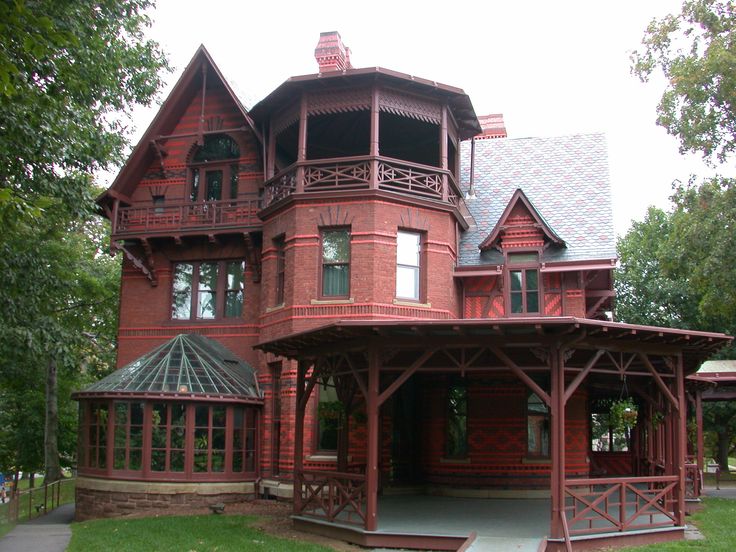
Two famous American writers reside as neighbors in the Nook Farm area of Hartford.  Connecticut native, Harriet Beecher Stowe, lives there from 1873-1896.  Missouri native, Samuel Clemons, who is better known as Mark Twain, lives next door from 1874-1891.  

top left and moving clockwise:  current state capitol building (built in 1878), home of harriet Beecher Stowe, hammonasset beach state park, former state capitol building (built in 1796), Home of mark Twain, state flower mountain laurel.  (Images courtesy of Pinterest)


Answer to Brain Teaser Question

A sunrise

Trivia’s Facts and More (9/14)

Photo by Pixabay on Pexels.com

This informative post will be published on Saturday in place of my regular one.  You are invited to participate with the opening question.

Brain Teaser Question

My attitude seems to change daily, sometimes in the very next hour.  Please pardon my windy breath, cold touch, hot temperament, and moist fingers.  Who am I?

(answer found at the end of this post)

Featured Facts

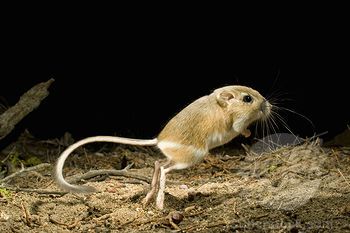
One of North America’s most curious creatures is the diminutive kangaroo rat, which lives in the dry and semi-arid deserts and grasslands.

Here are a few quick facts about the kangaroo rat:

  • Body length:  about 4-6 inches
  • Tail length:  about 7-8 inches
  • Weight:  about 5 ounces
  • Diet:  seeds, leaves, stems, grains, fruit (herbivores)
  • Lifespan:  averages 3-5 years

As one of the smallest of rodents, the kangaroo rat is related to mice and rats.  It is sometimes called the desert rat.  It possesses a large head with big eyes and small ears.  Usually its color is a sandy brown.

Being called a “kangaroo” rat, the nearly 20 different species borrow some characteristics from the Australian kangaroo.  Equipped with long rear limbs with four toes, they are able to hop like tiny kangaroos.  They also use their muscular hind legs to drum the ground.  

Being most active at night, the kangaroo rat benefits from the cooler temperature as well as using the darkness to avoid interactions with predators, such as owls, snakes, bobcats, foxes, badgers, and coyotes.  Its ability to hop up to 9 feet proves to be another asset in its necessary defense from predators.

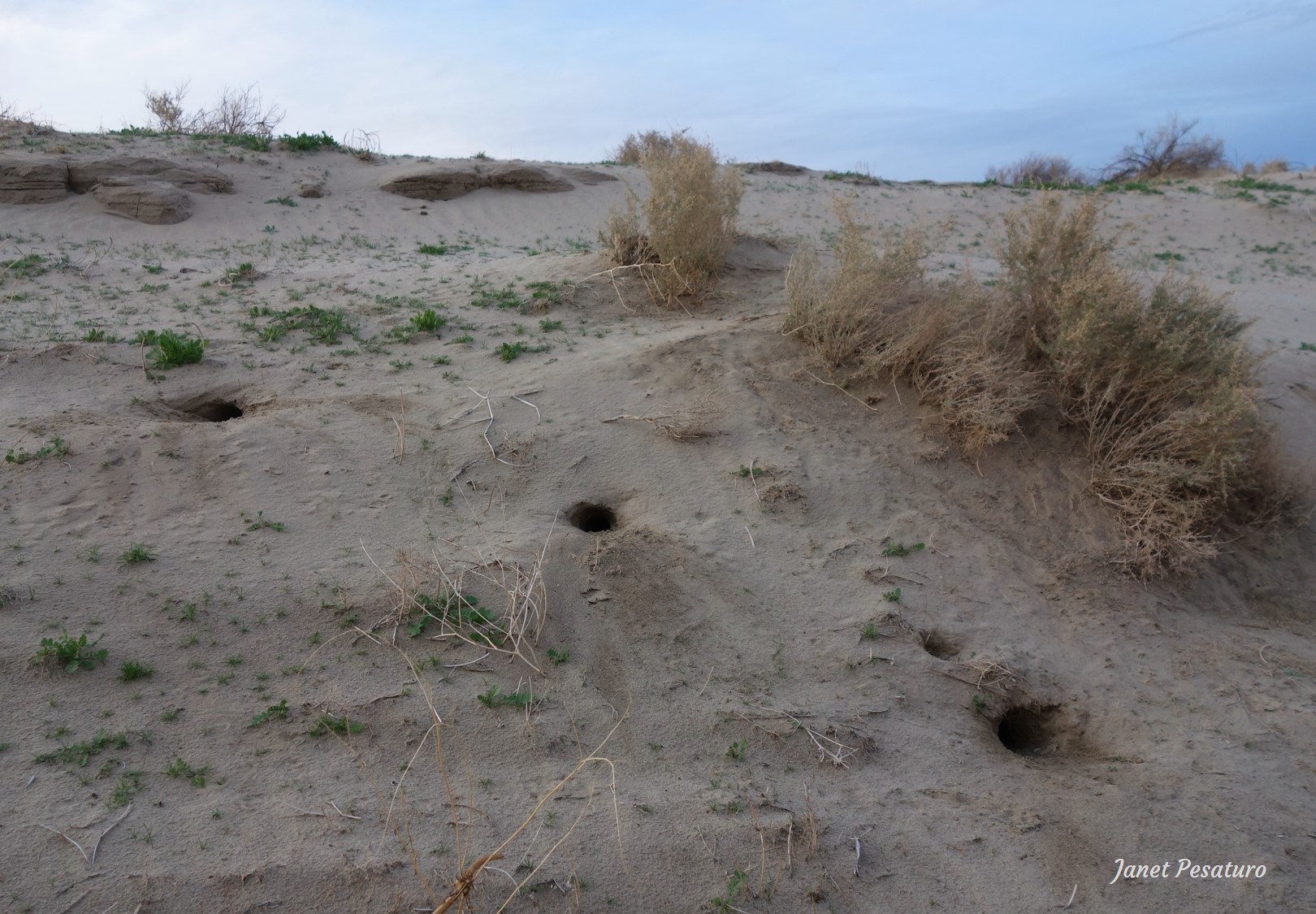
Males and females remain separate except during during the breeding season.  Each kangaroo rat acts quite territorial as it protects its burrows and food storage.  The underground burrows provide an escape from the heat of the sun, and its kangaroo-like pouches in its large checks act as an efficient way to carry food back to store.

The life cycle of the kangaroo rat allows for breeding once or twice each year.  The gestation period lasts for 3-4 weeks.  Litters of pups average about five in number.  Pups are weaned after 2-3 weeks, and they reach sexual maturity in about 2-3 months.

top left and moving clockwise:  close-up of mature kangaroo rat, a series of underground burrows are nestled in the hillside’s sandy-like soil, a kangaroo rat entering a burrow, notice the length of the tail in contrast with the body size of the kangaroo rat, and a kangaroo rat preparing to hop.  (Images courtesy of Pinterest)


Answer to Brain Teaser Question

The weather

Trivia’s Facts and More (9/7)

Photo by Pixabay on Pexels.com

This informative post will be published on Saturday in place of my regular one.  You are invited to participate with the opening question.

Brain Teaser Question

You measure my life in hours, and I serve you by expiring.  I’m quick when I’m thin, and slow when I’m fat.  The wind is my enemy.

(answer found at the end of this post)

Featured Facts

Nocturnal and related to the cricket, the katydid is a fascinating insect to discover.

Here are a few quick facts about the katydid:

  • Size:  maturing to about 3 inches in length
  • Color:  “leaf” green, brown, pink, tan
  • Habitat:  wooded or shrub areas
  • Diet:  leaves, nectar, and fruit

Sometimes confused with a grasshopper, the katydid’s body features large hind legs and a long, thread-like antennae.  A grasshopper’s antennae is smaller in length.  It’s leaf-like appearance offers camouflage when surrounded by leaves and other plants.  Related to the cricket, they are frequently referred to as bush crickets.

The katydid is found on every continent, except for Antarctica.  They are known for their singing at night where one might hear a trilling, chirping sound of “katy-did-katy-didn’t.”

The life cycle of the katydid begins with the insertion of eggs into plant stems during the fall season.  Over the winter, the eggs wait patiently for late spring when they hatch into nymphs.  After several molts, the nymphs will mature into adults.

Despite its ability to hide among lush vegetation, the katydid is hunted by several predators:  birds, lizards, frogs, bats, and other insects.

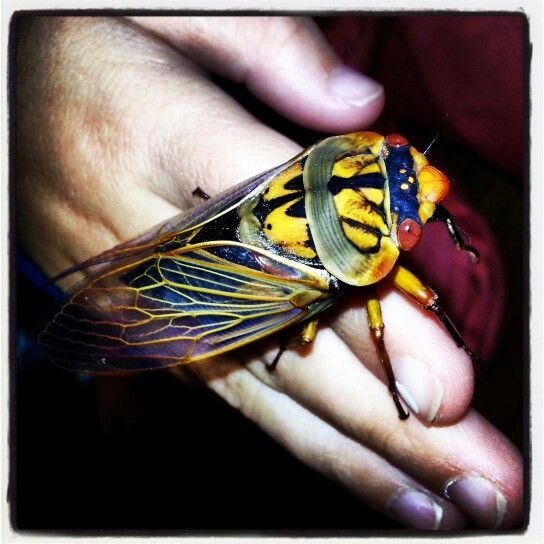
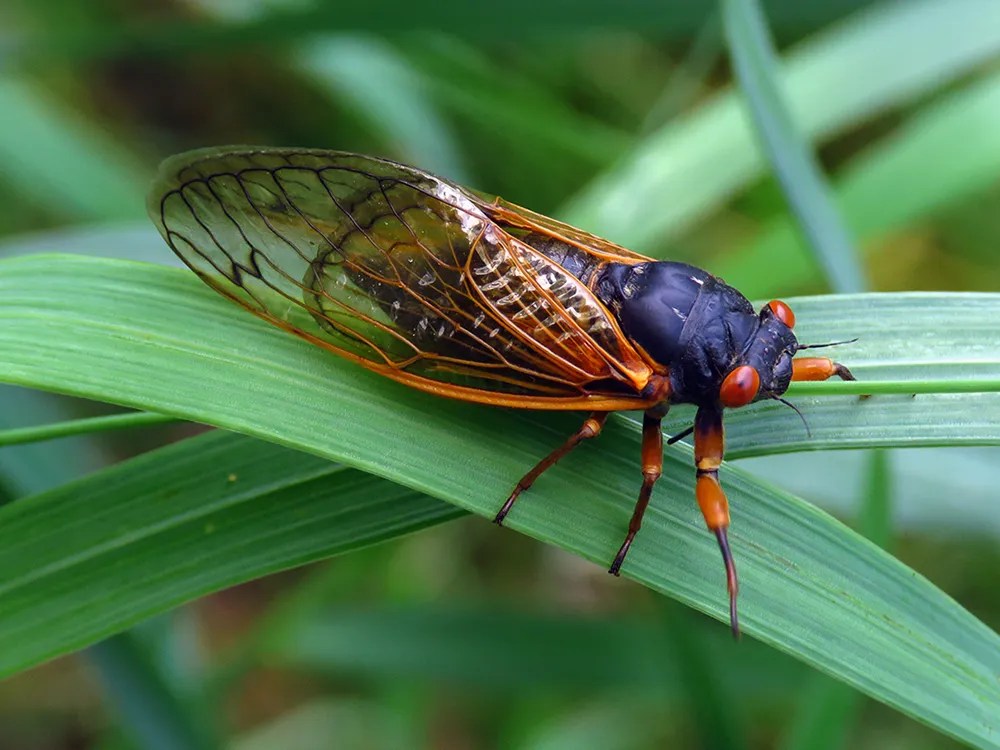
worldwide, there are thousands of katydid species.  Here is a sample (note the differences in color).  (Images courtesy of Pinterest)


Answer to Brain Teaser Question

A candle

Trivia’s Facts and More (8/31)

Photo by Pixabay on Pexels.com

This informative post will be published on Saturday in place of my regular one.  You are invited to participate with the opening question.

Brain Teaser Question

What has 13 hearts but no other organs?

(answer found at the end of this post)

Featured Facts

The 21st President of the United States was Chester Alan Arthur.  He assumed the office upon the death of President James Garfield, who was assassinated.

Here are a few quick facts about President Arthur:

  • Native state:  Vermont
  • Term of office:  1881-1885
  • Political party:  Republican
  • Lifespan:  1829-1886

Nicknamed “The Gentleman Boss” because of his duties and service to both the Union army and later the port authority of New York, Arthur’s previous occupations included teacher and lawyer.  During the Civil War, he served as Union quartermaster where it was his duty to organize food and supplies for the New York troops.

The son of a Baptist preacher, Arthur quite frankly never expected to be President.  However, circumstances placed him in the highest office in the land, and he performed his tasks with devotion and diligence.

One of his administration’s most significant tasks was in reforming the federal government’s civil service.  In 1883, Arthur signed the Pendleton Act, which eliminated the “spoils” system in filing jobs with the federal government.  A Civil Service Commission was established, and future federal jobs would be distributed on merit instead of patronage.  

Before Arthur moved into the White House, designer Louis Comfort Tiffany was hired to redecorate its state rooms.  More than 20 wagon loads of furnishings were hauled away to be auctioned off.

As the Election of 1884 loomed ahead, Arthur declined to run for re-election.  He had been hiding a serious illness throughout much of his term of office.  Bright’s disease, a fatal kidney illness, took his life in 1886.

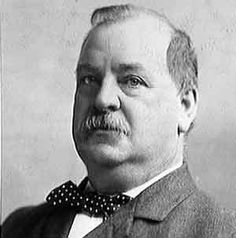
left to right:  portrait of president arthur, photo from younger years, summer home at sag harbor, new york.  (Images courtesy of Pinterest)


Answer to Brain Teaser Question

A deck of cards

Trivia’s Facts and More (8/17)

Photo by Pixabay on Pexels.com

This informative post will be published on Saturday in place of my regular one.  You are invited to participate with the opening question.

Brain Teaser Question

You walk into a room that contains a match, a kerosene lamp, a candle, and a fireplace.  What would you light first?

(answer found at the end of this post)

Featured Facts

The Hawkeye state of Iowa becomes the 29th state admitted to the American union on December 28, 1846.

Here are a few quick facts about Iowa:

  • Capital City:  Des Moines (also most populated city)
  • State Bird:  Eastern goldfinch
  • State Flower:  Wild prairie rose
  • State Motto:  Our Liberties We Prize and Our Rights We Will Maintain 

One of Iowa’s most recognized citizens is Carrie Chapman Catt (1859-1947).  She is honored for her efforts as a women’s suffrage leader.  In 1920, passage of the 19th Amendment to the U.S. Constitution grants women the right to vote.  Catt also founded the League of Women Voters in 1920.

When one drives along any highway through the state, it is easy to understand that Iowa is America’s leading corn producer.  Iowa is the only American state bordered by two navigable rivers:  Missouri on the west and Mississippi on the east.

Sioux City is located along the northwestern border of the state.  While most of the city is located in Iowa, parts of the city are also found in Nebraska and South Dakota. 

The television show of M*A*S*H features one character with an Iowa address.  Walter “Radar” O’Reilly hails from Ottumwa.  Gary Burghoff, who portrays this unforgettable character, is a native of Bristol, Connecticut.

clockwise from top left: Carrie chapman catt, Albert the bull in audubon, world’s largest coffee pot in stanton, President herbert hoover’s birthplace in west branch, orange city tulip festival (since 1933).   (Images courtesy of Pinterest)


Answer to Brain Teaser Question

The match

Trivia’s Facts and More (7/13)

Photo by Pixabay on Pexels.com

This informative post will be published on Saturday in place of my regular one.  You are invited to participate with the opening question.

Brain Teaser Question

What runs around the whole yard without moving?

BONUS TEASER:  What flowers are kissable?

(answer found at the end of this post)

Featured Facts

Peccaries or javelinas are one of America’s least-known animals.  With a range found in the southwestern desserts and foothills, these creatures are also found in Central and South America.

Here are a few quick facts about peccaries:

  • Length:  3-4 feet
  • Weight:  35-60 pounds, but some species may approach 90 pounds
  • Sprinting Speed:  25 mph
  • Diet:  (considered omnivores) roots, seeds, grasses, fruits, small animals
  • Lifespan:  8-10 years in the wild (up to 24 years in captivity)

Peccaries resemble domesticated pigs in certain ways with their snorting, woofing, and grunting noises.  They possess a pig-like snout, small eyes, small ears along with a robust body with short legs.  However, their coarse body hair is in contrast to a pig’s exterior, and they are extremely aggressive in the wild.  

Peccaries spend much of their time resting and eating.  They typically forage for food during evenings and early morning hours.  Their poor eyesight (extremely nearsighted) is offset by good hearing.

Their sharp, straight tusks are razor-sharp, and these allow peccaries to rip into roots and aid in their defense against predators.  Common predators include coyotes, mountain lions, and humans.

Peccaries are very social in their structure within each herd.  Some herds may contain up to 100 members, but the usual size is closer to 6 to 12.  In southern Arizona, small herds of peccaries will sometimes cross through front yards.

clockwise from top left:  collared species, white-lipped species, female with piglets, immature duo, herd roaming in arizona.  (Images courtesy of Pinterest)


Answer to Brain Teaser Question

Fence

BONUS:  Tulips

Trivia’s Facts and More (6/22)

Photo by Pixabay on Pexels.com

This informative post will be published on Saturday in place of my regular one.  You are invited to participate with the opening question.

Brain Teaser Question

A plane crashed between the border of France and Belgium.  Where were the survivors buried?

(answer found at the end of this post)

Featured Facts

The wild turkey of North America is a wary and magnificent bird.  While domestic turkeys fulfill America’s demand for Thanksgiving dinners, the wild turkey freely intermingles with deer as they frequently share the same habitat.

Here are a few quick facts about the wild turkey:

  • Habitat:  woodlands, grasslands, swamps (prefer mixture of woodlands and open clearings)
  • Wingspan:  4-5 feet
  • Weight:  male, up to 24 pounds; female, up to 12 pounds
  • Diet:  nuts, seeds, fruit, insects, small lizards (omnivorous)
  • Lifespan:  3-5 years

One of the American Founding Fathers, Benjamin Franklin, is said to have preferred the turkey over the bald eagle as the nation’s choice of national bird.  Of course, the eagle’s fortunes have soared while the turkey’s have stayed closer to home.

Turkeys are found in nearly every region of the the lower 48 states of the United States.  Conservation efforts have allowed the turkey population to recover from reduced numbers because of hunting and loss of habitat.  In the early 1900s, roughly 200,000 turkeys roamed America’s woodlands and grasslands.  Today, their number has ballooned to 6-7 million.

Sometimes nicknamed the “bird of courage,” the turkey is a related species to the ring-necked pheasant.  There are five subspecies of turkeys in North America:  Eastern, Osceola, Rio Grande, Merriam’s, and Gould’s.

Turkeys are not migratory, but they may wander during the autumn season.  They are most active in foraging during the early morning and evening.  Their nests consist of shallow dirt depressions, surrounded by vegetation.  Natural predators of the turkey include coyotes, bobcats, mountain lions, Golden Eagles, and Great Horned Owls.  Turkeys must defend their nests from other predators, including raccoons, opossums, skunks, snakes, foxes, and woodchucks.

A male turkey features more colorful and distinctive features than a female.  Their distinctive red wattle hangs from the beak, and a dark tuft of feathers covers the breast.  A female’s colors are more muted, subtle, and duller. 

Turkeys will roost overnight in trees, which provide greater protection from predators.  Mature turkeys are capable to running up to 20-25 miles per hour, and they can fly short distances at speeds of 50-55 miles per hour. 

clockwise from top left:  mature male in his colorful attire, female hen (note smaller size and more subtle colors), flock gathering, in flight to escape predator or seek SAFETY in tree, comfortable among deer’s presence, female with her brood.  (Images courtesy of Pinterest)

Answer to Brain Teaser Question

They weren’t buried because survivors don’t need to be buried.

Trivia’s Facts and More (6/15)

Photo by Pixabay on Pexels.com

This informative post will be published on Saturday in place of my regular one.  You are invited to participate with the opening question.

Brain Teaser Question

A mother and father have four daughters, and each daughter has one brother.  How many people are in the family?

(answer found at the end of this post)

Featured Facts

The Commonwealth of Massachusetts became the sixth state to join the American Union on February 6, 1788.  Its roots have been traced back to the earliest of the English colonies in North America.

Here are a few quick facts about Massachusetts:

  • Capital City:  Boston (which is also the largest city)
  • Nickname:  Bay State (also known as the Old Colony State, the Codfish State, the Baked Bean State)
  • State Flower:  Mayflower
  • State Bird:  Chickadee, Wild Turkey
  • Motto:  Ense Petit Placidam Sub Libertate Quietem (By the Sword We Seek Peace, but Peace Only Under Liberty)

Being one of the original 13 English colonies, Massachusetts played a prominent role in the founding of the United States.  On December 21, 1620, the Pilgrims arrived at Plymouth Rock after crossing the Atlantic Ocean aboard the Mayflower.  On March 4, 1628, English King Charles I granted a royal charter for the Massachusetts Bay Colony.

On September 7, 1630, the city of Boston was founded.  The Boston harbor would later be the site of the infamous Boston Tea Party on December 16, 1773.  A couple of years later just up the road in April, 1775, the first battles of the Revolutionary War were fought at Lexington and Concord as Massachusetts minutemen militia fired the “Shot Heard Round the World.”

Athletics made an impression in the late 1800s in Massachusetts.  In 1891, James Naismith invented the game of basketball, and the first game was played at the YMCA in Springfield.  In 1895, William G. Morgan invented the game of volleyball.  The game was designed to be less strenuous than basketball, and the first matches were played in Holyoke.

Numerous firsts have been recorded during the course of history in the Commonwealth.  Here is a brief sample:

  • The Boston Common became America’s first public park in 1634.
  • Harvard University founded as the first college in North American in 1636 at Cambridge.
  • The Little Brewster Island Lighthouse became America’s first lighthouse when it began operations on September 14, 1716 in the Boston harbor.
  • The first American subway was opened in Boston on September 1, 1897.  It was known as the Tremont Street Line.
  • America’s first chocolate chip cookies were invented by Ruth Wakefield in 1939.  She began to experiment with adding semi-sweet chocolate pieces to her cookie recipe.  They became a huge hit at her Toll House restaurant in Whitman.

clockwise from top left:  James Naismith holding a basketball with a peach basket (used as a basketball hoop in the early years of the game), modern look of the Little brewster island lighthouse at boston harbor, ruth wakefield (inventor of the chocolate chip cookie), aerial view of the boston common, harvard university campus.  (Images courtesy of Pinterest)

Answer to Brain Teaser Question

Seven (The daughters share their “one” brother)

Trivia’s Facts and More (6/8)

Photo by Pixabay on Pexels.com

This informative post will be published on Saturday in place of my regular one.  You are invited to participate with the opening question.

Brain Teaser Question

What three numbers will always give the same result whether multiplied or added together?

(answer found at the end of this post)

Featured Facts

Ohio Republican Rutherford B. Hayes served as the 19th President of the United States for a single term from 1877-1881.

Here are a few quick facts about President Hayes:

  • LIfespan:  October 4, 1822 to January 17, 1893 (born in Delaware, Ohio)
  • Colleges Attended:  Kenyon College (Gambier, Ohio) and Harvard Law School
  • Spouse:  Lucy Ware Webb Hayes (first First Lady with a college degree)

Hayes gave many years of service to his nation as well as the state of Ohio.  He served in the Civil War for its entire length of time (1861-1865).  He rose to the rank of general of an Ohio-bred regiment.  In 1862, he was seriously wounded at the Battle of South Mountain (Maryland), which occurred three days before the more famous battle at Antietam Creek.

Following the Civil War, he worked hard to establish a successful law practice in Cincinnati.  Later, he served as Governor of the Buckeye state for two terms (1868-1872).  He would again be elected to serve as Governor for a third term (1876-1877) until he was elected President of the United States.

In the Presidential Election of 1876, Hayes faced Democratic candidate, Samuel J. Tilden.  Hayes was considered the underdog as he was a dark horse candidate who was attempting to follow in the steps of Republican President Ulysses S. Grant.  The country’s patience with Reconstruction of the former Confederacy was wearing thin, and many voters were seeking a change in political leadership.

In a highly contested election, Hayes snatched victory away from Tilden in the weeks following the completion of voting.  Votes were disputed in at least four states, and eventually Hayes won the Electoral College final tally 185-184.  Tilden received a majority of the popular vote.

As President, Hayes followed through on his promise to only serve one term as President.  He was the first President assigned Secret Service protection.  He supported the ending of Reconstruction in the South.  He signed a bill which allowed female attorneys to argue cases before the U.S. Supreme Court.

clockwise from top left:  Portrait of president hayes, President hayes and first lady lucy ware webb  hayes, Hayes from the civil war years, hayes’ home at spiegel grove in Fremont, childhood home in DELAWARE.  (Images courtesy of Pinterest)

Answer to Brain Teaser Question

1, 2, and 3   (1 + 2 + 3 = 6 and 1 x 2 x 3 = 6)

Trivia’s Facts and More (6/1)

Photo by Pixabay on Pexels.com

This informative post will be published on Saturday in place of my regular one.  You are invited to participate with the opening question.

Brain Teaser Question

What ancient invention allows people to see through walls?

(answer found at the end of this post)

Featured Facts

The early morning scent of a skunk reminds anyone nearby to be on the lookout for this black and white scavenger.  The skunk lives throughout the continental United States.

Here are a few quick facts about the skunk:

  • Body length:  for some species, nearly 3 feet (including its bushy tail)
  • Body weight:  as much as 15 pounds
  • Diet:  (omnivores) berries, nuts, eggs, insects, small animals
  • Lifespan:  up to 5 years

There are several species in the skunk family.  Some of the more common ones include hog-nosed (long, bald snout), hooded (impressive neck ruff), and spotted (much smaller than most).  The most abundant species is the striped skunk, with a black body accented by two white stripes running along the back.

Being nocturnal hunters and food gathers, skunk’s strong sense of smell helps them in their pursuit of food.  However, they possess extremely poor eyesight.

A skunk’s body is designed to assist in the pursuit of another meal.  They possess a stout build with short legs and long bodies.  Their muscular front legs feature long and sharp claws, which allow them to be excellent diggers.

Skunks live in small groups (called surfeits) in underground burrows. and their young are called kits.  Gestation in females usually lasts about two months, though they can delay until more suitable weather for giving birth.  Typically, each liter of kits runs between four and six in number.  Many skunks are carriers of rabies, which is fatal to them.

When threatened, skunks own one of nature’s most effective defense systems.  With scent glands hidden under the tail, a quick elevation of it will spray a victim up to 12 feet away.  A sticky, oily substance with an extreme smell is transmitted as a fine mist.  It immediately causes tearing of eyes and choking.

top left: baby skunk called a kit.  going clockwise, The remaining photos show different species:  hooded, spotted, striped, and hog-nosed.  (Images courtesy of Pinterest)
Answer to Brain Teaser Question

Windows.