Trivia’s Facts and More (3/22)

Photo by Pixabay on Pexels.com

This informative post will be published on Saturday in place of my regular one.  You are invited to participate with the opening question.

Brain Teaser Question

George, Helen, and Steve are drinking coffee.  Bert, Karen, and Dave are drinking Pepsi.  Following this pattern, is Elizabeth drinking coffee or Pepsi?

(answer found at the end of this post)

Featured Facts

The Oklahoma Territory of the United States gains statehood on November 16, 1907, as it becomes the 46th state.

Here are a few interesting facts about Oklahoma:

  • Capital City:  Oklahoma City (also the largest city)
  • Nickname:  Sooner State
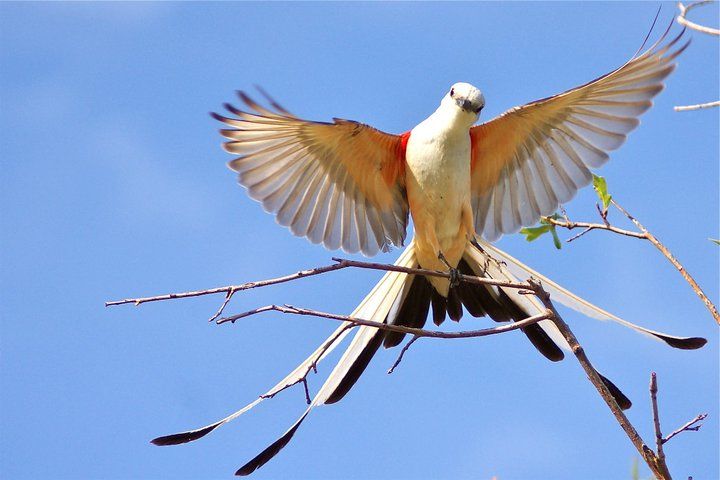
  • State Bird:  Scissor-tailed Flycatcher
  • State Animal:  American Bison
  • State Motto:  Labor Omnia Vincit (Labor Conquers All Things)

The story of Oklahoma’s progression to statehood begins long before 1907.  During the administration of President Andrew Jackson, Congress passes the Indian Removal Act of 1830.  This legislation designates the Oklahoma Territory as Indian Territory, and it authorizes the President to move Native Americans from the lands east of the Mississippi River to those found west of it.

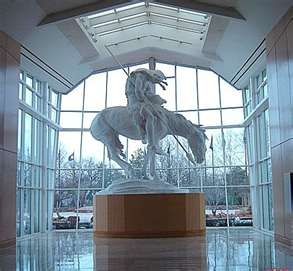
As thousands of Native tribes are displaced from their territorial homes, a “trail of tears” follows their forced migration to lands in the future state of Oklahoma.  These Native Americans include Cherokee, Choctaw, Creek, Chickasaw, and Seminole tribes, along with many others.  These five tribal nations are often called the “Five Civilized Tribes” by historians and others. 

The Dawes Act of 1887 allows further disruption in the Native Americans’ way of life.  Later on March 3, 1889, President Benjamin Harrison opens the unassigned lands of the Indian Territory to white settlement.  On April 22, 1889, the infamous Oklahoma Land Rush begins at 12:00 Noon.  Before the legitimate settlers make any claims, others designated as “Sooners” cross into the territory early.

A total of 38 Native American tribes reside in modern-day Oklahoma.  Only the states of Alaska and California have more.  About 13 percent of the present-day population of the Sooner State is Native American.

One of Oklahoma’s most famous citizens is Will Rogers.  Born on a large ranch in Cherokee Nation territory near the present-day community of Oologah, he goes on to become a cowboy, Broadway star, actor, writer, and humorist.

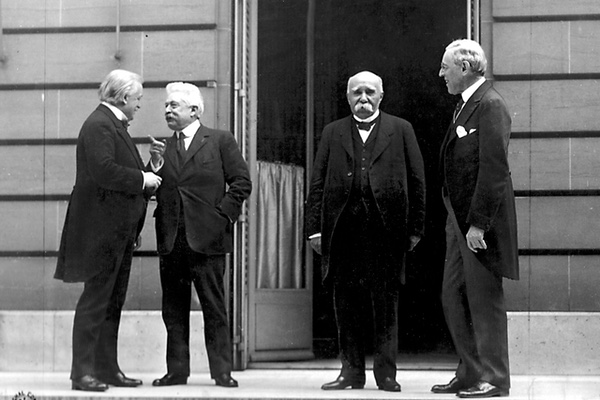
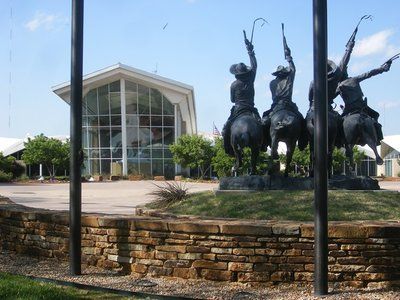
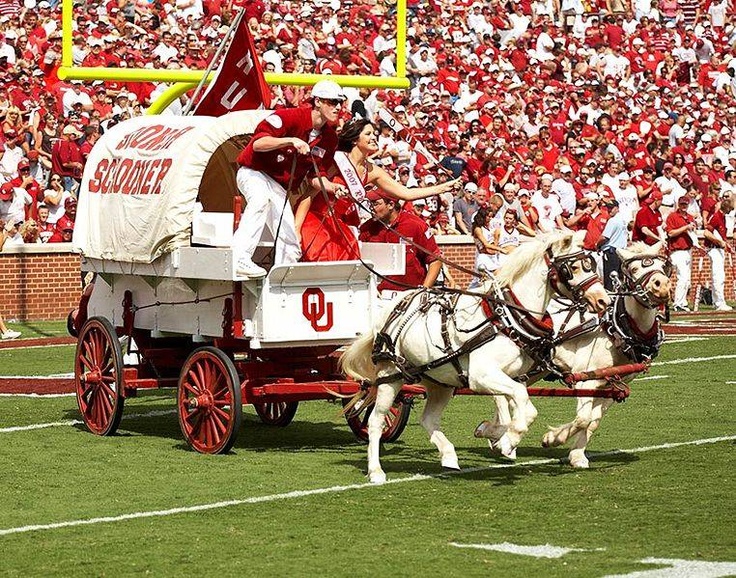
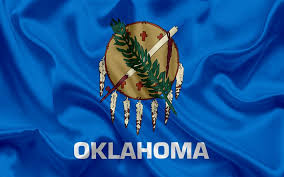
row 1:  state capitol building in oklahoma city, two more photos from Oklahoma city include the national cowboy hall of fame and oklahoma city skyline.  Row 2: “sooner schooner” mascot of the University of Oklahoma football team, scissor-tailed flycatcher, “trail of tears” statue inside the national cowboy hall of fame.  Row 3:  oklahoma state flag and will rogers.   (all images courtesy of PINTEREST)

Answer to Brain Teaser Question

Coffee, just like the other names with two “E’s”.  Those with one “E” drink Pepsi.

Trivia’s Facts and More (3/15)

Photo by Pixabay on Pexels.com

This informative post will be published on Saturday in place of my regular one.  You are invited to participate with the opening question.

Brain Teaser Question

When my dad was 31, I was just 8 years old.  Now his age is twice as old as my age.  What is my current age?

(answer found at the end of this post)

Featured Facts

The United States is home to three types of vultures.  These carnivorous birds of pray live a life of consuming carrion, which is decaying flesh of dead animals.

Here are the types of vultures and their territorial range:

  • Turkey Vulture:  virtually every region of the country
  • Black Vulture:  predominately in southeastern region of the country
  • California Condor:  selected areas of California and Arizona

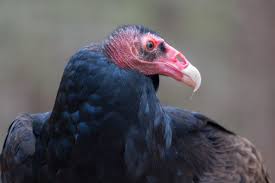
The Turkey Vulture is the most common species in the United States.  Its appearance features an all black body, bald head, and pinkish bill.  They possess a highly developed sense of smell, which allows for easier detection of carrion up to eight miles away.  Lacking vocal cords, these birds can only make a “hissing” sound.

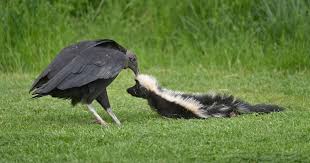
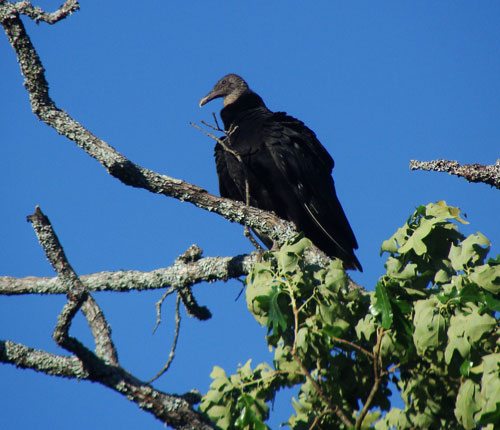
The Black Vulture is covered in black feathers, bald head with black skin, and wings with silver feathers on the underside.  They possess excellent vision, and they prefer killing small animals (skunks, opossums, baby pigs, calves, and lambs) for food instead of carrion.  They follow a habit of staying close to Turkey Vultures, who have a better sense of small.  Since Black Vultures are more aggressive, they frequently chase their competition away.

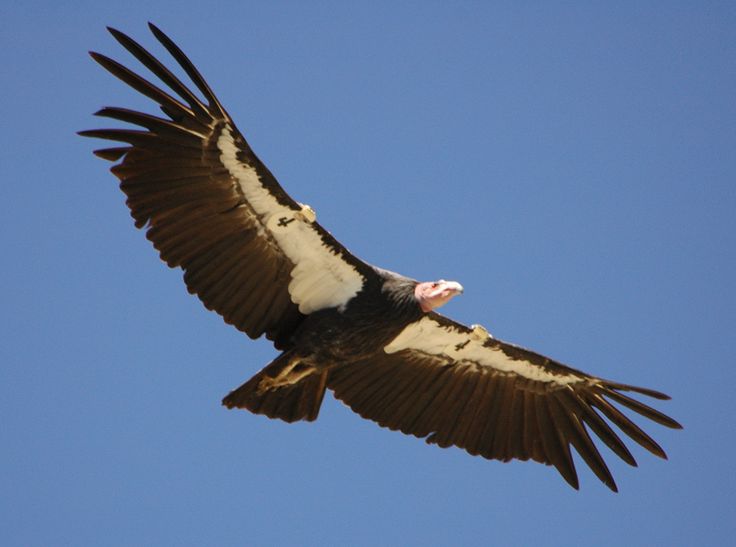
The California Condor is the largest bird in the United States.  With a predominately black body and wings, the underside of the wings is usually white.  The bald heads range in color from yellow to orange to pink to purple to blue to red.  

In 1987, the Condor is declared extinct in the wild.  The few remaining birds live in captivity.  Because of a very successful breeding program, Condors are released back into the wild in California (1991) and Arizona (1996).  The Condor has excellent gliding skills when in flight, and they can soar as high as 15,000 feet.  

All three of these raptors feature featherless heads and necks.  This helps to keep the birds clean while consuming carrion.  A powerful stomach acid protects each bird of prey from exposure to rabies, Black Plaque, botulism, distemper, and anthrax.  
row 1:  black vultures feasting, in flight, and looking for prey.  Row 2:  Turkey Vultures on left column, along with baby chick.  on the right column, california condor with handler (notice the size contrast).  row 3:  california condor in flight.  (all images courtesy of PINTEREST)

Answer to Brain Teaser Question

23 years old.

Trivia’s Facts and More (3/8)

Photo by Pixabay on Pexels.com

This informative post will be published on Saturday in place of my regular one.  You are invited to participate with the opening question.

Brain Teaser Question

Why is the continent of Europe like a frying pan?

(answer found at the end of this post)

Featured Facts

Ohio-born William Howard Taft becomes the 27th President of the United States following the election of 1908.  He serves one term in office, from 1909-1913.

Here are some interesting facts about William Howard Taft:

  • Political Party:  Republican
  • Birthplace:  Cincinnati, Ohio
  • Colleges Attended:  Yale University, Cincinnati Law School
  • LIfespan:  September 15, 1857 to March 8, 1930

Much of Taft’s pre-Presidency life focuses on being involved in the Ohio courts as a judge.  He serves in the Ohio court system before ascending to the U.S. Court of Appeals.  He becomes the only President to serve as Chief Justice of the United States Supreme Court (1921-1930).

Taft’s other roles embrace being a lawyer as well as a college professor.  From 1900-1903, he serves as the first civilian governor of the Philippines.  This appointment by President William McKinley follows the American acquisition of the Philippines following the Spanish-American War of 1898.

When Theodore Roosevelt is President, Taft serves as his Secretary of War from 1904-1908.  This position serves as a steppingstone for Taft when he runs for President in 1908.  Roosevelt steps aside as President after two terms as he decides to forego a third term.

Taft’s time as President is relatively undistinguished.  He proves to be more conservative than Roosevelt’s expansive view of Presidential power.  In the election of 1912, Roosevelt attempts take the Republican nomination away from Taft, but he is unsuccessful.

Roosevelt bolts away from the Republican Party to lead the Progressive Party, which is nicknamed the “Bull Moose.”  With the Republican Party split, Democratic Party candidate Woodrow Wilson easily wins the election, and he will go on to serve as President for two terms.

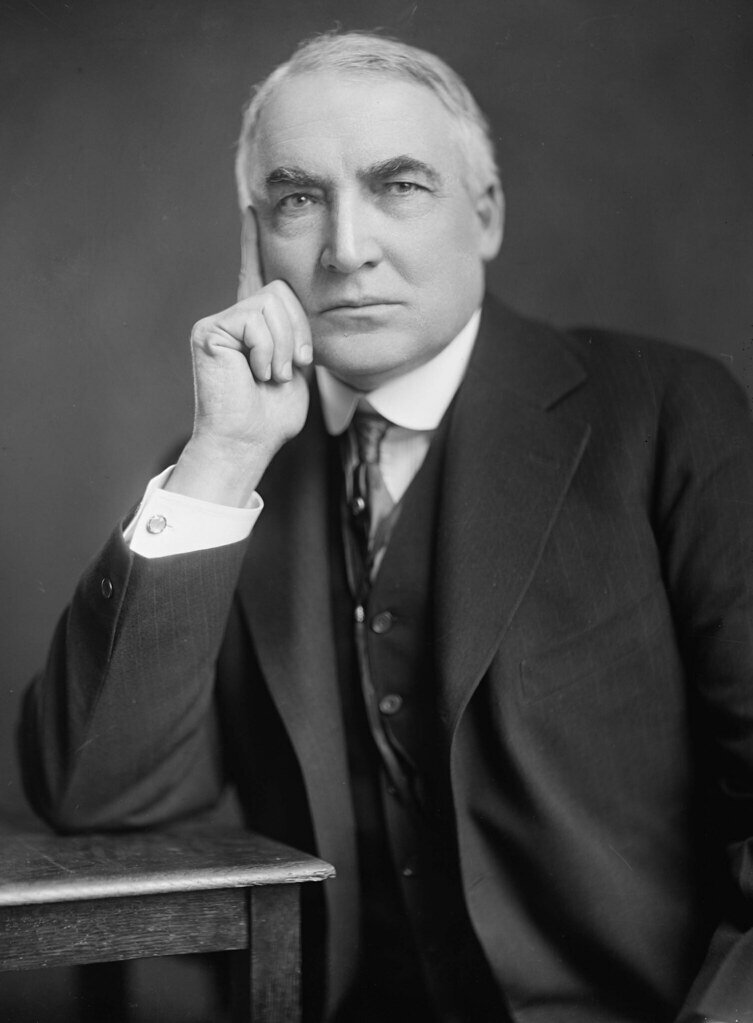
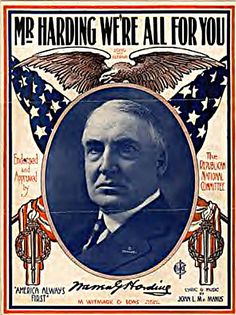
In 1921, Taft fulfills a lifetime dream of serving on the United States Supreme Court.  Ohio-born President Warren Harding taps him to serve as Chief Justice, and Taft serves until his death in 1930.

Because of his large size, Taft earns the nickname of “Big Bill.”  His weight of nearly 300 pounds makes him the largest person to ever serve as President.

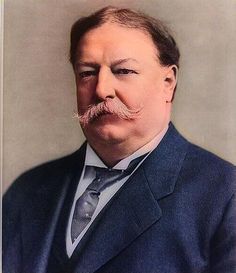
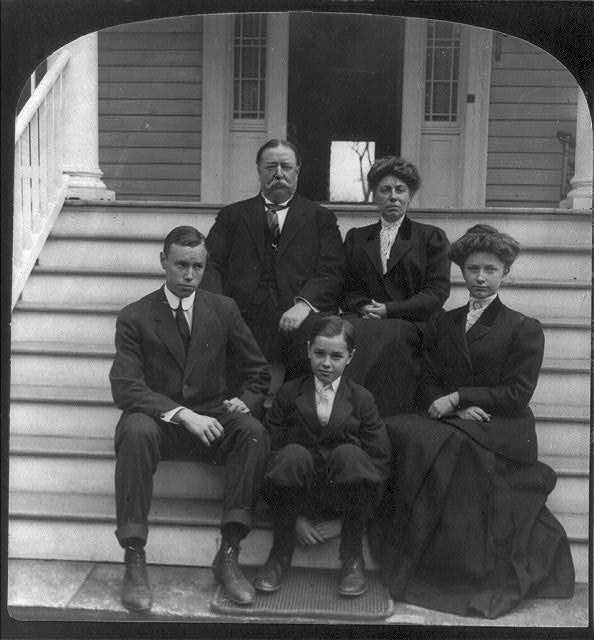
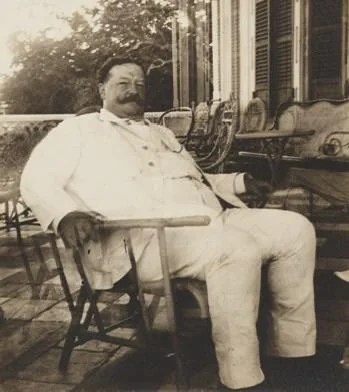
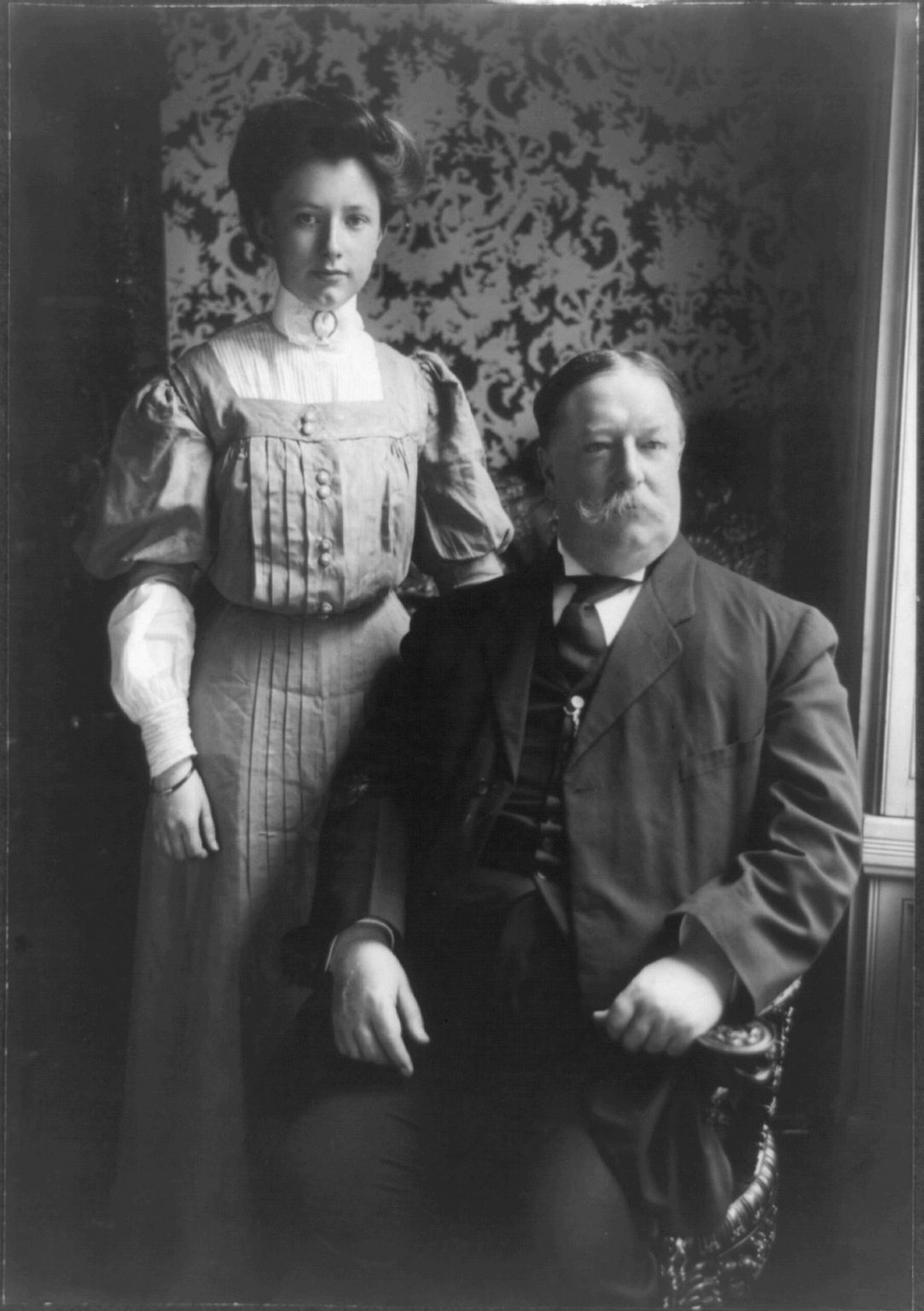
From top left and moving clockwise: portrait of PRESIDENT taft, portrait of chief justice taft, with theodore roosevelt, taft family home in cincinnati, portrait with Helen taft (his wife), governor-general of the philippines, family portrait with helen and children.  (all images courtesy of PINTEREST)

Answer to Brain Teaser Question

Because it has Greece at the bottom.

Trivia’s Facts and More (2/22)

Photo by Pixabay on Pexels.com

This informative post will be published on Saturday in place of my regular one.  You are invited to participate with the opening question.

Brain Teaser Question

Every night I’m told what to do, and each morning I do what I’m told.  But I still don’t escape your scold.  What am I?

(answer found at the end of this post)

Featured Facts

Illinois becomes the 21st state in the American Union on December 3, 1818.  Nicknamed the “Prairie State,” it is also known as the “Land of Lincoln.”

Here are some interesting facts about Illinois:

  • State Capital:  Springfield
  • State Bird:  Cardinal
  • State Flower:  Illinois Violet
  • State Motto:  State Sovereignty, National Union

Much of Illinois’ history is wrapped around the state capital of Springfield where the 16th American President, Abraham Lincoln, spends most of his adult life.  Born in Kentucky, Lincoln arrives from Indiana in 1829.  The birthplace of Ronald Reagan, 40th President, brings interested visitors to Tampico.

Being the third most populated city in the United States, Chicago is home to the first metal-frame design skyscraper in America.  The Home Insurance Building is built in 1885, and it features 10 stories within its height of 138 feet.  Demolished in 1931, the building’s history can be found in numerous photographs.

The city of Ottawa marks the location of the first Lincoln-Douglas debate on August 21, 1858.  Abraham Lincoln and Stephen Douglas conduct a series of seven debates as they duel for one of the U.S. Senate seats from Illinois.    Over 10,000 spectators attend this outdoor event, and Douglas will later be victorious in the election.

The name “Illinois” is derived from the French translation of a Native American word which means warriors.  Three major rivers form much of the state boundary of Illinois:  Wabash, Ohio, and Mississippi.

Chicago becomes the eastern anchor of the famous Route 66 Highway as it journeys toward Los Angeles to the west.  The total distance traveled equals 2,448 miles.

Three-fourths of the state’s territory is farmed.  The rich, black soil is well-suited for corn and soybeans.  The area around the village of Morton is called the “Pumpkin Capital of the World.”  About 85% of the world’s canned pumpkin is harvested and processed at the Nestles/Libby’s plant.

From top left and moving clockwise: capitol building in springfield, abraham Lincoln’s home in springfield, Mcdonald’s first franchise opened in des plaines in 1955, home insurance building in chicago, morton welcomes visitors to its canned pumpkin industry, map with route 66 highway layout from chicago to Los Angeles, Carl Sandburg’s birthplace in galesburg, tampico wall mural celebrates the life of ronald reagan, tomb for abraham lincoln in springfield.  (all images courtesy of PINTEREST)

Answer to Brain Teaser Question

An alarm clock.

Trivia’s Facts and More (2/15)

Photo by Pixabay on Pexels.com

This informative post will be published on Saturday in place of my regular one.  You are invited to participate with the opening question.

Brain Teaser Question

Why did the spider get a job in I.T.?

(answer found at the end of this post)

Featured Facts

One of the largest species of deer in North America is the mule deer.  Its range runs from the Yukon in the north to northern Mexico in the south.

Here are some interesting facts about mule deer:

  • Size:  large bucks weigh on the average 200 pounds, but some have been found as large as 300 pounds (female does are smaller)
  • Defining physical characteristic:  large ears which resemble those of a mule
  • Diet:  (herbivores) dry leaves, buds, fruit, flowers, sprouting grasses, small twigs, lichens
  • Lifespan:  about ten years

Mule deer closely resemble white-tailed deer, yet there are significant differences.  Mule deer’s larger ear size and body size separate them from white-tailed deer.  Their antlers feature a forked structure, with a much wider spread between them.  Many hunters prize the antlers of a mule deer buck.

Habitat is essential for a mule deer’s survival needs.  Bucks seek areas rich in nutrients that will stimulate body and antler growth.  In searching for these types of food, they become more vulnerable to attacks from predators (primarily wolves and coyotes).  Does prefer more secure locations that will provide safety for themselves and their young fawns.

Mule deer possess outstanding vision, hearing, and smell.  All of these senses provide their best defense against predators.  They prefer open, rugged landscapes when they migrate away from the protection of the forest.  Being incredibly agile, they can flee with the use of stotting.  This technique describes how deer hop along and land on all four feet.  

The rut season for mule deer usually runs from October into December.  During this mating season, bucks compete for supremacy.  Many are wounded several times from their battles with fellow bucks.  Following the rut, they retreat into hiding in order to recover from exhaustion and injuries.

Following a seven-month long gestation period, does give birth usually with twin fawns in late spring and early summer.  This time period allows for a greater abundance of nutritious food.  Following birth, fawns remain hidden and protected for several days. 

In some locations, mule deer numbers are declining.  Interbreeding with white-tailed deer makes them more at risk to predators because a hybrid deer can neither run nor jump as well as a purebred.  Forestry, drought, and growing predator populations also affect mule deer population figures.  

From top left and moving clockwise:  trio of bucks jump a fence, buck with wide spread antlers, doe with pair of fawns, buck and doe during rut season, and two large bucks in combat during the rut.  (all images courtesy of PINTEREST)

Answer to Brain Teaser Question

Because he excels in web design.

Trivia’s Facts and More (2/8)

Photo by Pixabay on Pexels.com

This informative post will be published on Saturday in place of my regular one.  You are invited to participate with the opening question.

Brain Teaser Question

What’s always found on the ground, but it never becomes dirty?

(answer found at the end of this post)

Featured Facts

One of the insect world’s most destructive forces can be termites.  Yet, few people really know much about their characteristics and culture.

Here are some interesting facts about termites:

  • Size:  1/4 inch (queens are 4-6 inches in length)
  • Color:  usually white (some may be orange)
  • Diet:  wood, decaying leaf litter
  • Location:  every continent except Antarctica

Termites seek a habitat that will allow their colony to grow and expand.  Some of the best places to discover them will be wooded areas where rotting stumps and fallen trees provide protection as well as food.  Some homeowners discover the presence of termites who have reached the wood framing of the house through mud tunnels.  These tunnels begin underground and continue upward into the foundation of the home and beyond.

Because of their usual white color, termites are sometimes called white ants.  They possess small, yet soft bodies with the ability to bite.  They are wingless except for reproductive males and females.  These members of the colony will emerge in swarms during mating times.  Queens may live up to 10 years.

The life cycle of termites begins when the queen lays thousands of fertilized eggs.  The eggs are tended by worker termites.  These attendants feed hatched nymphs for the first two weeks of their lives.  Their destiny will include being workers, soldiers, fertile males, and females.

Within a colony of termites, their way of life is similar to that of ants.  Termites perform a variety of jobs much like ants do.  Within a colony with its queen, there could be anywhere from 100 to a million workers in a vast network of underground tunnels.  Many of the workers will be white in color due to living far under the ground where they avoid contact with most sunlight.

Termites are important ecosystem engineers, and their decomposing skills are good for soil condition.  They digest cellulose with the help of microorganisms in their gut.  They feed on each other’s feces, and males help raise the young.  Workers and soldiers are nearly blind, and soldiers are slightly larger than workers.  Soldiers are capable lookouts for predators such as mammals, birds, insects, scorpions, lizards, and spiders.

row 1: various members of termite colony, workers building mud tunnels of tubes, queen.   row 2: soldiers, workers.  Row 3:  termite-damaged wood.  row 4:  diagram of colony beneath an unsuspecting house, queen  surrounded by WORKERS.  (all images courtesy of PINTEREST)

Answer to Brain Teaser Question

A shadow.

Trivia’s Facts and More (1/25)

Photo by Pixabay on Pexels.com

This informative post will be published on Saturday in place of my regular one.  You are invited to participate with the opening question.

Brain Teaser Question

I have four wheels and invite plenty of flies (insects).  What am I?

(answer found at the end of this post)

Featured Facts

Admitted to the American Union on May 29, 1790, Rhode Island is destined to be labeled as the smallest state in terms of land size.  It becomes the final of the original thirteen colonies to enter the United States.

Here are some interesting facts about Rhode Island:

  • Capital city:  Providence (largest city, population of 179,207)
  • Nickname:  Ocean State
  • State bird:  Rhode Island Red Hen
  • State flower:  Violet
  • State Motto:  Hope

With its small land area, Rhode Island is the second most-densely populated American state after New Jersey.  Within its 1,033 square miles of territory, New Jersey provides space for over 1,098,080 inhabitants.  In contrast, the state of Montana houses 1,142,750 people in a land area of 147,040 square miles.  

Tracing its roots back to 1636 as an English colony, Rhode Island is founded by Puritan leader, Roger Williams.  Banished from Massachusetts, he seeks religious freedom for his followers.  He nicknames the Rhode Island colony “Providence Plantations.”

In 1793, America’s first successful cotton mill begins operations.  Founded by Samuel Slater, Slater Mill is located along the Blackstone River in Pawtucket.  The site remains preserved as a living museum.

The city of Newport is known for its sailing history, and it provides a home for the U.S. Navy War College (founded in 1884).  Rhode Island is well-known for its 21 lighthouses, and several are located at Newport.  One of the most famous is the Ida Lewis Rock Lighthouse.

The state capitol in Providence features the world’s fourth largest self-supported marble dome.  Newport is know as the home for “summer cottages” of the rich and famous from years past.  Some of America’s richest families spend fortunes in building mansions of unforgettable splendor.

row 1:  one of rhode island’s many lighthouses, u.s. Navy war college, nighttime in providence,  Row 2:  state flag, state bird red hen, summer cottage at newport.  Row 3:  slater mill, state capitol.  (all images courtesy of pinterest)

Answer to Brain Teaser Question

A garbage truck.

Trivia’s Facts and More (1/18)

Photo by Pixabay on Pexels.com

This informative post will be published on Saturday in place of my regular one.  You are invited to participate with the opening question.

Brain Teaser Question

What kind of ship has two mates but no captain?

(answer found at the end of this post)

Featured Facts

At times seeming bigger than life, Theodore Roosevelt ascended to the American Presidency in 1901.  Upon William McKinley’s assassination, Roosevelt became the 26th President of the United States.

Here are some interesting facts about President Roosevelt:

  • Political party:  Republican
  • Home state:  New York
  • Lifespan:  1858-1919
  • Term of office:  1901-1909
  • Notable occupations:  rancher, soldier, author

Roosevelt’s transition into politics was stimulated by personal family loss.  In 1884, he lost both his wife, Alice, as well as his mother, Martha.  Both died on the same night.  A devastated Roosevelt spent two years away from his home state while living on and operating a cattle ranch in the western Badlands of the Dakota Territory, near present-day Medora, North Dakota.  

Upon his return from the West, T. R. (as many called him) followed fresh stepping stones, which would eventually lead him to the White House.  Prior to being elected New York’s Governor in 1898, he also served as President McKinley’s Assistant Secretary of the Navy.  During his tenure with the naval department, the United States entered the Spanish-American War of 1898.

During the Spanish-American War, Roosevelt organized and lead a volunteer cavalry unit, better known as the “Rough Riders.”  Roosevelt and his men served gallantly in the short-lived war’s action in Cuba.  Roosevelt earned another nickname which would follow him for the rest of his life, “The Rough Rider.”

As President, Roosevelt served out McKinley’s term of office as well being elected in his own right in 1904.  A major theme of his domestic agenda revolved around the “Square Deal.”  He supported progressive reforms and promised to battle large industrial combinations (also called trusts).  His foreign policy was built around a philosophy of “speak softly and carry a big stick.”  He modernized and enlarged the American navy.

Roosevelt’s final years as President brought new challenges and achievements.  Known as the conservation President, he doubled the number of America’s national parks.  His administration oversaw construction of the Panama Canal in 1904 (the canal would open in 1914).  In 1906, Roosevelt would receive the Nobel Peace Prize for his help in ending the Russo-Japanese War.

left column:  dual images of older and younger roosevelt, on african safari following his presidency, at the panama canal during construction.  right column:  roosevelt the conservationist traveling out west, on the campaign trail, family home at sagamore hill, lieutenant colonel of the rough riders.

Answer to Brain Teaser Question

A relationship.

Trivia’s Facts and More (1/11)

Photo by Pixabay on Pexels.com

This informative post will be published on Saturday in place of my regular one.  You are invited to participate with the opening question.

Brain Teaser Question

It may be shorter than much of the rest of your hand, but when you are happy, you lift it up like it is the best.  What is it?

(answer found at the end of this post)

Featured Facts

Found in the foothills and mountains of different regions in North America, the elk is the most advanced subspecies of the red deer.  In the overall deer species, only the moose is larger in size.

Here are some interesting facts about the elk:

  • Weight:  bulls, 700-1,000 pounds; cows, 450-650 pounds
  • Native American name:  wapiti (in Shawnee, means white deer)
  • Habitat:  forests and woodlands in mountainous regions, some may migrate to to grasslands
  • Diet:  grass, leaves, tree bark (herbivores)

In Native American culture, the elk served as a vital source of food, hides for clothing and shelter, and bones for tools.  Before European colonists and explorers arrived on the continent, the natural territory of the elk was vast compared to today’s territories.  Today, most reside in the foothills and mountains of the western Rocky Mountains and isolated, smaller mountain ranges.  Some still venture onto prairies and grasslands, especially during the winter season when food may become more scarce.

The elk has proven to be a vary adaptable animal.  They survive the long, cold winters of the mountain west.  They have proven to be fast runners with outstanding endurance.  During the colder months, their light hide color darkens, and a well-developed dark neck mane thickens.  

Their chief protection from natural predators is to assemble in large groups, usually single-gender except during the autumn rut season.  Elk serve as a food source for wolves, mountain lions, coyotes, bobcats, and grizzly bears.  

During the rut season, the strongest bulls will lead groups of cows.  Heard over several miles, bulls use a high-pitched bugling call to attract cows to their group, and they will defend their harem (as it is called) against any other bulls. 

Calves will be born in May to June.  They feature spotted hides, and they are scentless.  Each calve will stay with mother for about a year.  Usually the autumn season encourages these maturing calves to leave their mothers.  

When conditions are ideal for food, a mature elk will eat approximately 20 pounds of plant matter.  Bulls will shed their antlers after the autumn rut, but they will reappear in spring.

photo gallery:  moving from top left and clockwise.  Bull elk on a cold, frosty morning.  bull and cow together.  cow with a recently born calf.  bull with a harem of at least two cows.  bull walking in yellowstone national park at mammoth hot springs.  elk herd at the national elf refuge outside of jackson hole, wyoming.  Bugling bull.  during autumn rut, two bulls dueling for supremacy.

All images courtesy of Pinterest.

Answer to Brain Teaser Question

Thumb.

Trivia’s Facts and More (12/28)

Photo by Pixabay on Pexels.com

This informative post will be published on Saturday in place of my regular one.  You are invited to participate with the opening question.

Brain Teaser Question

How can a person go 25 days without sleep?

(answer found at the end of this post)

Featured Facts

One of nature’s most colorful insects is the dragonfly.  Here are some quick facts about this species:

  • Size:  3/4 to 5 inches in length
  • Color:  Varies, but many are blue, green, or brown with clear wings
  • Habitat:  near ponds and slow-moving streams
  • Diet:  insects, including mosquitoes

As a flying insect, the dragonfly’s body is long and thin.  Two sets of clear, veined wings work together as the dragonfly is constantly in flight. 

The four wings move independently of each other, and this enables the dragonfly to fly forward or backward.  It has the ability to hover much like a helicopter, and it can travel at speeds of up to 35 mph. 

With its large eyes, the dragonfly experiences a nearly 360-degree field of vision.  Its long legs are not designed for walking, but they become useful in holding its captured prey while in flight.

A dragonfly can consumer large numbers of mosquitoes, easily between 30 and 100 per day.  It’s no wonder that dragonfly has been nicknamed the “mosquito hawk.”

The life cycle of the dragonfly begins with a female inserting eggs one-by-one into a cut slit in the stem of a waterplant.  By spring or summer, fully-grown naiads will crawl out of the water habitat to mature as adults.

All images courtesy of Pinterest.

Answer to Brain Teaser Question

By sleeping at night.