Overcoming Life’s Insurmountable: Ida Lewis

Photo by Brett Jordan on Pexels.com

For the final Saturday of each month, a different and unique feature will be published.  Today’s narrative takes a look at the accomplishments of American lighthouse keeper, Ida Lewis.  Saturday’s regular feature, “Trivia’s Facts and More,” will return next week. 

A select few face overwhelming challenges in life.  Encouraged by a heart filled with perseverance, these trailblazers adopt an attitude where “Can” outplays “Can’t.”

Renowned American lighthouse keeper, Ida Lewis, is recognized as one of the nation’s true heroes.  Her dedication to her service as well as rescuing many forlorn boaters in the waters around Newport, Rhode Island, is well-documented.

Idawalley Zorada Lewis begins her life journey on February 25, 1842.  Born to parents, Hosea and Zoradia, she becomes a vital, working member of the family by the age of 12.

Her father is appointed as the lighthouse keeper in 1854 at the Lime Rock Light Station.  The tiny postage-stamp sized island of Lime Rock is inaccessible by land.  In the first few months of Hosea Lewis’ tenure as the keeper, he suffers a stroke.  Unable to complete his duties, his wife Zoradia takes over his responsibilities.

Because her mother must also care for her husband’s needs, Ida is called upon to assist with the tending and caring of the lighthouse.  Eventually, she will inherit the official position as the lighthouse keeper.  These daily duties include:

  • Climb the tower and fill the lamp with oil at dusk and at midnight.
  • Trim the wick and polish carbon off the reflectors.
  • At dawn, put out the light.

Ida becomes an accomplished swimmer and rower.  Each day, she pilots the family’s wooden skiff across the harbor in taking her siblings to school.  She also brings back provisions from town.

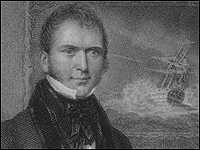
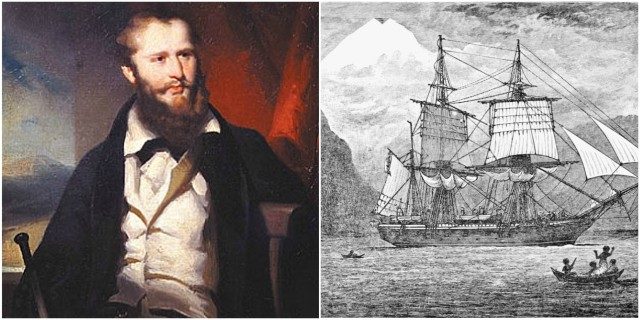
left to right:  lime rock light station at newport, rhode island; early portrait of lewis.  (courtesy of pinterest)

In the fall of 1958 at age 16, Ida completes her first rescue.  Four young men are clinging to their capsized sailboat, and she rows out to bring them safely back to land.

One of Ida’s best known rescues happens on March 29, 1869.  A vicious snowstorm covers the Newport harbor, and two soldiers are rowing toward Fort Adams.  A 14-year old boy is acting as their guide.  The surging waters become too much, and the boat capsizes.  The boy disappears in the stormy seas while the two men cling to their sinking boat.  Ida and her younger brother row out to the scene and rescue the two men.

Ida’s exploits are reported in newspapers, and one even hails her as the “bravest woman in America.”  She meets many famous people, including President Ulysses S. Grant.

In July, 1881, Ida receives the Gold Lifesaving Medal from the U.S. Coast Guard for her heroism in this rescue.  Her likeness appears on the cover of Harper’s Weekly, and her photograph is reproduced on postcards.

The Secretary of the U.S. Lighthouse Board, William Windom, offers gratitude and praise for Ida’s courage.  Here are some of his words:

“. . . it is peculiarly appropriate that you should receive the national life-saving medal in commemoration of your brave acts as a life-saver, while it is an occasion for added satisfaction that such a memorial of unquestionable heroism should have been won by a woman.”

During her many years of service, Ida is credited with 18 official rescues (and numerous unofficial ones).   She completes her last rescue when she is in her mid-60s.  On October 24, 1911, Ida dies from a stroke. 

In her final years of service, Ida earns an annual salary of $750, which is the highest paid to any lighthouse keeper in the United States.  No doubt, her many acts of heroism earn her this high level of compensation.

left to right:  painting depicting one of lewis’ rescues, later portrait of lewis, and an image contrasting lewis the woman with the oar of a rescuer.  (courtesy of pinterest)

In 1924, the U.S. Coast Guard renames the Lime Rock Light Station.  It becomes the Ida Lewis Lighthouse, and it is the only American lighthouse ever named after a keeper. 

Ida Lewis becomes a strong role model for future generations of American girls.  Her own words proclaim her sustaining faith:  God always gives me the strength to help others in need.”

Previous editions of other narratives of “Overcoming Life’s Insurmountable” can be found from the links below.  

Glenn Cunningham, American athlete

Wilma Rudolph, American athlete

James Holman, English adventurer

Phillis Wheatley, American poet

Overcoming Life’s Insurmountable: Phillis Wheatley

Photo by Brett Jordan on Pexels.com

For the final Saturday of each month, a different and unique feature will be published.  Today’s narrative takes a look at the accomplishments of American poet Phillis Wheatley.  Saturday’s regular feature, “Trivia’s Facts and More,” will return next week. 

A select few face overwhelming challenges in life.  Encouraged by a heart filled with perseverance, these trailblazers adopt an attitude where “Can” outplays “Can’t.”

Facing upheaval in her young life, Phillis Wheatley manages to overcome in a journey few can ever imagine.  Born around 1753, she becomes the world’s first African-American author with published works.  However, her story needs to be told from the beginning.

Coming to the American colonies in 1761, this young girl enters the slave trade.  Leaving her West African home, her tender life is uprooted.

She is purchased as a domestic slave for a New England merchant’s wife.  Without realizing it at the time, John and Susanna Wheatley will soon transform Phillis’ life.

Phillis’ name is taken from the slave ship which brought her to America, the Phillis.  She later adopts her last name from the Wheatley’s.

The Wheatley’s daughter, Mary, begins teaching Phillis to read and write.  Her brother, Nathaniel, also helps to tutor Phillis as well.

Seeing potential in the young Phillis’ eagerness to learn more, John Wheatley offers her an academic journey beyond anything most American slaves will ever experience.  Beginning at age 12, she is studying Greek and Latin, learning history and geography, and reading the Bible.

By the age of 14, Phillis writes her first poem, and she continues to write many more.  The Wheatley’s free her from domestic duties so that she can further her studies.  Following the death of Susanna Wheatley, Phillis will be granted freedom.

Quote from Phillis Wheatley:

“In every human breast, God has implanted a principle, which we call Love of Freedom; it is impatient of oppression, and pants for deliverance.”

In 1773, Phillis journeys to London with Nathaniel.  In their search for a publisher of her poems, the two of them find an interested party.  Upon publishing her book of poetry, readers in England and the American colonies discover her poetry.  Even George Washington reads her poems, and Phillis will later meet him.

In Phillis’ final years, she marries a free black man, John Peters.  He toils as an unsuccessful entrepreneur, and his children and wife endure a life filled with poverty.  During this time, Phillis continues to write, but none of these works will be published.  She dies in 1784.

Phillis Wheatley’s only book of published poetry, Poems on Various Subjects, Religious and Moral, was published in 1873.  Before having her poetry published, she needed to provide evidence that she was the writer.  After all, slaves in America usually did not know how to read and write, much less write classical poetry.  

Here is a sample of her poetry, “On Being Brought from Africa to America” (published 1773):

“Twas mercy brought me from my Pagan land,

Taught my benighted soul to understand

That there’s a God, that there’s a Savior too:

Once I redemption neither sought now knew,

Some view our sable race with scornful eye,

‘Their colour is a diabolic die’

Remember, Christians, Negroes, black as Cain,

May be refin’d, and join ‘th’ angelic train.

Courtesy of Pinterest.

Previous editions of other narratives of “Overcoming Life’s Insurmountable” can be found from the links below.  

Glenn Cunningham, American athlete

Wilma Rudolph, American athlete

James Holman, English adventurer

Overcoming Life’s Insurmountable: James Holman

Photo by Brett Jordan on Pexels.com

A select few face overwhelming challenges in life.  Encouraged by a heart filled with perseverance, these trailblazers adopt an attitude where “Can” outplays “Can’t.”

Born in 1786, young James Holman joined the British navy at age 12 during Europe’s Napoleonic Wars.  He became an accomplished sailor and rose to the rank of lieutenant.

When he reached the age of 25, his life faced the insurmountable.  Serving with the navy during the War of 1812 (British-American conflict), he contracted severe rheumatism.  Unable to overcome the pain in his legs, ankles, and feet, Holman could barely walk.  Eventually, the illness caused him to lose his eyesight.

Due to his blindness, he was awarded an act of royal charity.  Joining the Knights of Windsor, he received a pension and residence at Windsor Castle.  He was expected to live quietly there until his eventual death.

Holman was never content to sit idly and watch his life decline year by year.  He refused to live as an isolated invalid, and he moved to Edinburgh, Scotland to attend medical school.

Queen Victoria’s own doctor backed up Holman’s need to be free from the confines of Windsor Castle.  His painful rheumatism responded well to healing sunshine from continuous travel’s change of scenery and climate.

Holman’s time at Edinburgh motivated him to travel the world and fill his days with curiosity and fun.  In 1819, he began his first journey to Europe, and he continued this quest over the next four decades.  Traveling unaccompanied, he always traveled solo. 

His first foreign travels took him to France.  With little money, unable to speak the native language, and blind, Holman found his life’s purpose.  His own words described his initial travels:  “Behold me, then, in France!  Surrounded by a people, to me, strange, invisible, and incomprehensible.”

By 1832, he had completed circumnavigation of the globe.  By 1846, he had visited every inhabited continent.  It was calculated that he traveled an estimated 400,000 kilometers.  His metal-tipped walking stick was a constant companion.

Many adventures awaited Holman over the years.  In Russia, he was imprisoned and later exiled as a spy.  In Africa, he was involved in actions against the slave trade.

In his later years, Holman compiled memoirs of his travels.  Five volumes would eventually be published, but most were not widely read.

Following his death in 1857, Holman’s life moved to obscurity.  His adventures were long forgotten, but this would change.

In 2006, author James Roberts published a biography of Holman’s life and travels in A Sense of the World:  How a Blind Man Became History’s Greatest Traveler.

People once again discovered the man known as the “Time Traveler.”

For more details about Holman’s extraordinary life, here is a link to more:  Explorers Web.

Overcoming Life’s Insurmountable: Wilma Rudolph

Photo by Brett Jordan on Pexels.com

A select few face overwhelming challenges in life.  Encouraged by a heart filled with perseverance, these trailblazers adopt an attitude where “Can” outplays “Can’t.”

Olympics track star Wilma Rudolph overcame many obstacles in her life to achieve ultimate adoration for her speed and grace.

From the words of Wilma Rudolph:  “Never underestimate the power of dreams and the influence of the human spirit.”

Born in 1940, Wilma was born in St. Bethlehem, Tennessee.  She was part of a large family with 21 siblings.  Facing a challenging life in the segregated South, she found athletics to be her path forward in life.

However, before Wilma pursued basketball and later track, she faced major hurdles because of health issues.  Born prematurely, she endured bouts with double pneumonia, scarlet fever, and polio.  Her weakened left leg required her to wear a brace, and some doctors didn’t expect her to ever be able to run.

Wilma remembered her childhood journey with these words:  “My doctors told me I would never walk again.  My mother told me I would.  I believed my mother.”

Eventually, her leg grew stronger, and the brace thankfully disappeared.  She became active in sports during her high school years.  She was recruited by the legendary track coach at Tennessee State University in Nashville, Ed Temple.

While still in high school, Wilma qualified for the 1956 Summer Olympics in Melbourne, Australia.  At age 16, she was the youngest athlete on the U.S. team.  As a member of the 4 x 100 meter relay, she earned a bronze medal.

After high school graduation, Wilma moved on to Tennessee State.  This natural, gifted runner prepared and trained to return to the Olympics in 1960 at Rome, Italy.  Nicknamed “Skeeter” by her teammates, Wilma was more than ready to compete.

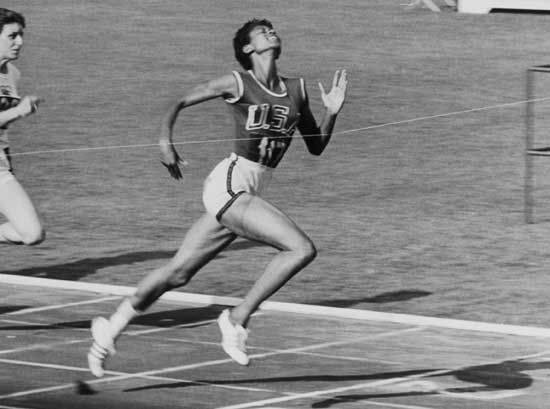
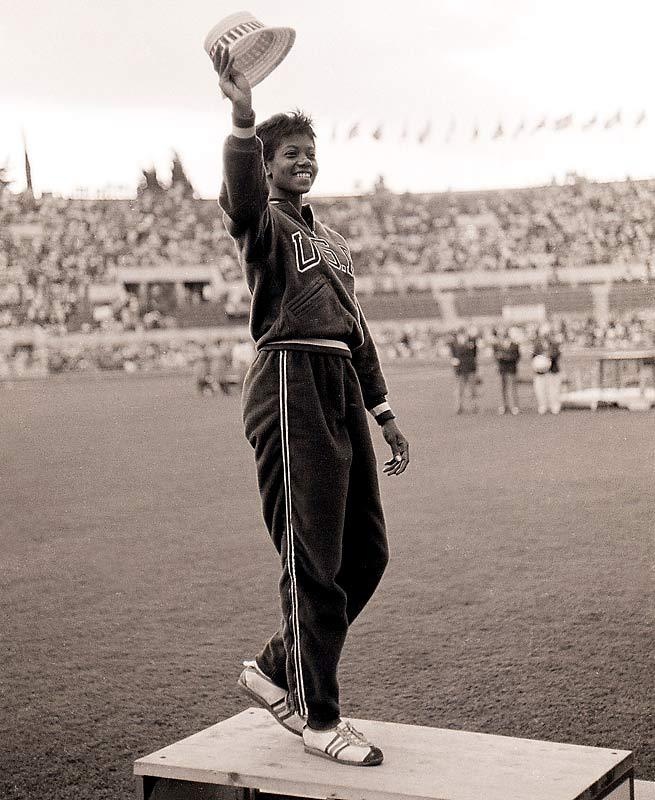
At the Rome Olympics, Wilma became the first American woman to win three gold medals in track and field at a single Olympics.  Competing individually in the 100 and 200 meters, she overwhelmed the other competitors for two gold medals.  Wanting her teammates to also earn a cherished gold medal, Wilma anchored the winning 4 x 100 meter relay.

Accolades for Wilma continued to pour in following her Olympics’ exploits.  Because of her speed, beauty, and grace, the Italian press nicknamed her “The Black Gazelle.”  The Associated Press awarded her Female Athlete of the Year in 1960 and 1961. 

Wilma retired from competition in 1962.  She fulfilled her dream of earning a college degree.  For a few years, her post-athlete life included teaching, coaching, and working with underprivileged children.

The story of this African-American girl overcoming polio, poverty, and racism became a film, “Wilma,” which was released in 1977. 

The following video shares a few highlights of Wilma Rudolph’s life and Olympic career.

Overcoming Life’s Insurmountable: Glenn Cunningham

Photo by Brett Jordan on Pexels.com

A select few face overwhelming challenges in life.  Encouraged by a heart filled with perseverance, these trailblazers adopt an attitude where “Can” outplays “Can’t.”

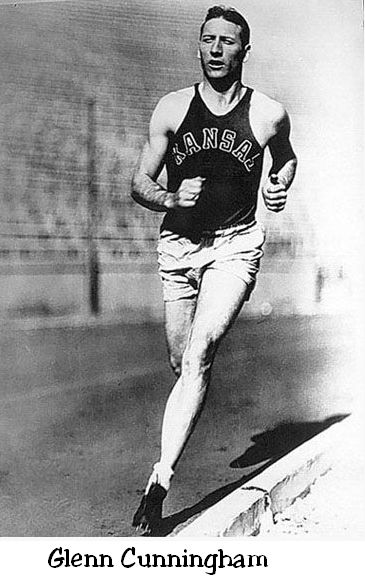
Born in 1909, American Glenn Cunningham transformed into one of the world’s best middle distance runners.  However, there was much more to this man’s personal story.

Born in Kansas, seven year-old Glenn endured burns suffered from a gasoline explosion at school.  The lower part of his body was substantially burned.  Doctors said that the young boy would never walk again.

Hopelessly crippled by the burns to his legs, young Glenn proved many people wrong about his future.  Not only would he walk, but he ran right into the record books.

Nicknamed the “Kansas Ironman” and “Kansas Flyer,” Glenn’s perseverance and dedicated training brought him into a setting that few could ever have imagined.  He emerged as one of the world’s premiere track athletes in the 1930s.  The mile run became his specialty, and he went on to win numerous races and championships. 

In 1934, he established a world record in the mile run (4:06:08), and his performance would not be bettered for three years.  After his world record run, Glenn was quoted, “I always believed that I could walk normally, and that was the truth.  Now I will run, and run faster than anyone else.”

Glenn’s amazing willpower and faith carried him onto the world stage.   Running the 1500 meter run in two different summer Olympics, he proved his greatness.  He placed fourth in the 1932 Olympics at Los Angeles, but he saved his best for 1936 at Berlin when he earned a silver medal. 

Glenn’s Christian faith was visible in his actions and words.  One of his favorite Scripture verses came from Isaiah 40:31:  “But those who wait for the Lord shall renew their strength; they shall mount up with wings like eagles; they shall run and not be weary; they shall walk and not faint.”

Throughout his distinguished running career, Glenn endured frequent leg pain.  Few could imagine how he needed to overcome so much with a faith-filled, inner strength.

As Glenn’s running career wrapped up, the country needed his service in World War II.  He served in the U.S. Navy, and he developed new physical training programs.  Later he taught athletics and physical education at Cornell College in Iowa. 

One of his most noted ventures exhibited his desire to care for underprivileged children.  He and his wife established the Glenn Cunningham Youth Ranch, which offered a temporary home for over 10,000 foster children.

These closing words from Glenn epitomized his approach to his life:  “In running it is man against himself, the cruelest of opponents.  The other runners are not the real enemies.  His adversary lies within him, in his ability with brain and heart to master himself and his emotions.”