
This informative post will be published on Saturday in place of my regular one. You are invited to participate with the opening question.
Brain Teaser Question
What begins with an “e” and only contains one letter?
(answer found at the end of this post)
Featured Facts
Sometimes referred to as one of the titans of the American prairie, the American bison is the largest land mammal in North America.
Here are a few interesting facts about the American bison:
- Common name: buffalo
- Weight: male (up to 2,000 pounds), female (up to 1,000 pounds)
- Lifespan: 10 to 20 years
- Diet: grass and herbs (sometimes will eat twigs and leaves)
As an ox-like grazing animal, the bison still remains as history’s master of the American plains. Before the arrival of Europeans, numbers of bison probably total over 50 million. Today, bison numbers provide only a whisper of its former presence.
Other than a size difference, bulls and cows present a similar appearance. Both males and females bear short, upcurved horns. A broad, heavy head is carried low, and it is unable to rise to shoulder level. A distinctly visible shoulder hump allows the bison to swing the head from side to side, which is highly useful in clearing a path through winter snow. With heavy forequarters and coarse, shaggy fur, the bison serves as an inviting photo opportunity.
However, people should be very careful to not approach a bison. These powerful and large animals exhibit an unpredictable nature. While each has to deal with poor eyesight, the bison possesses excellent senses of smell and hearing.
Bison prefer to live in small groups or bands. Each is centered around one or more females, along with several generations of offspring. Males live outside of the band, and they may form their own small groups.
Mating season peaks around August, and bulls engage in head-butting to determine who is most dominant. Each cow bears one calf, weighing 30 to 70 pounds at birth. Calves are often referred to as “red dogs” because of their orange-red color. As they mature, the color will transition to a dark brown.
Native American culture has always treated bison with reverence. Tribes on the plains followed their seasonal migration patterns as they traveled southward in winter and northward in summer. In hunting the bison, the animal provided for the tribe’s basic needs of food, clothing, shelter, and tools. Nothing from the animal was ever wasted.
Today, about 500,000 bison live in the United States. Most are raised as livestock, with much smaller numbers scattered around the American West as small herds on conservation preserves. Numbering approximately 5,000, the largest group of bison on public lands is found in Yellowstone National Park. These bands of bison remain as pure descendants of the earliest of the species.

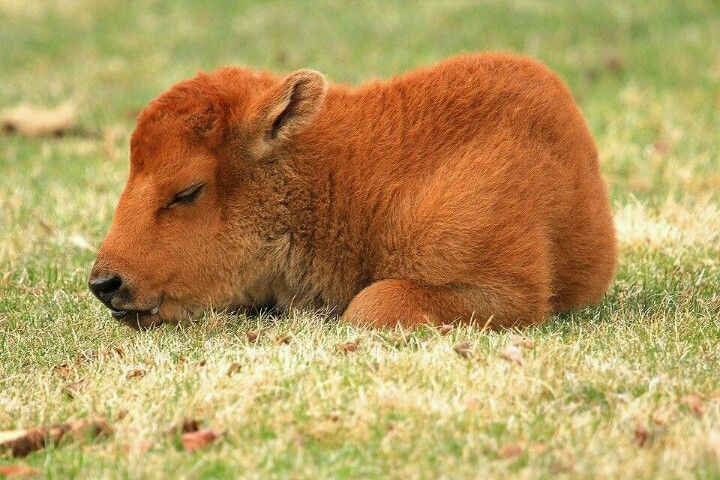


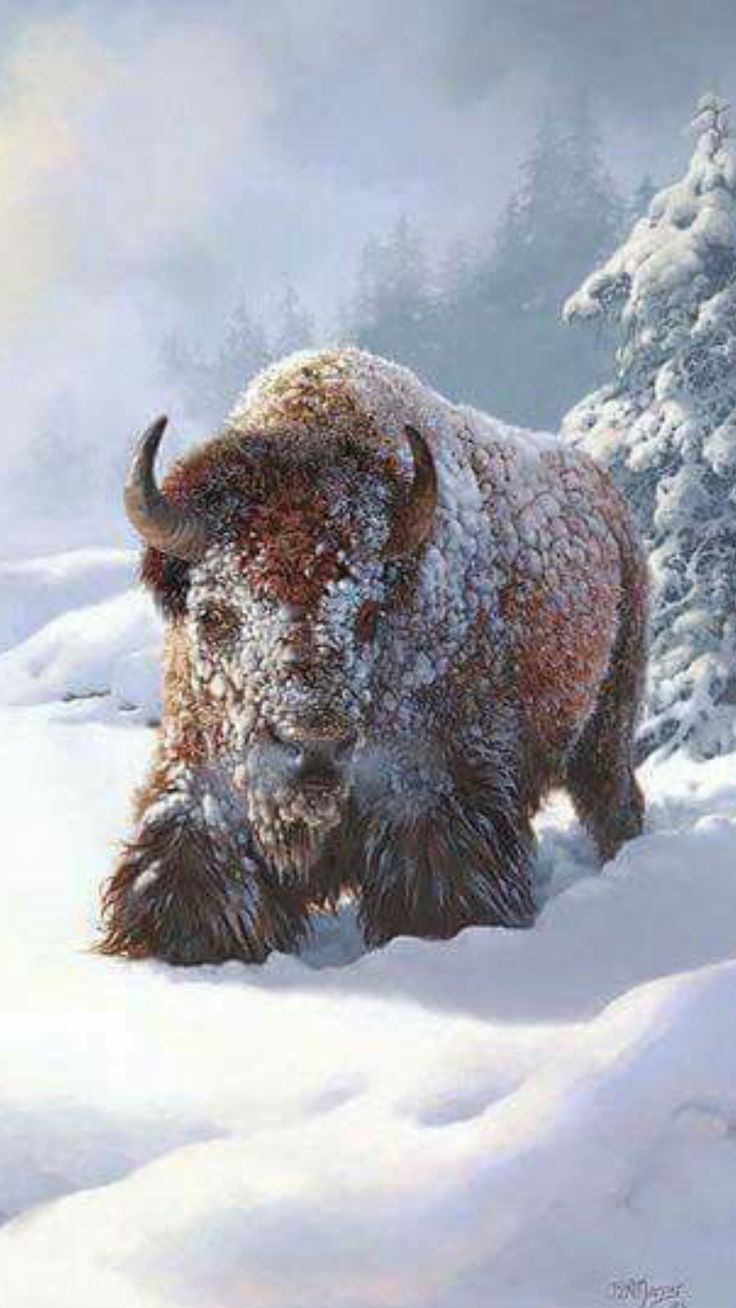

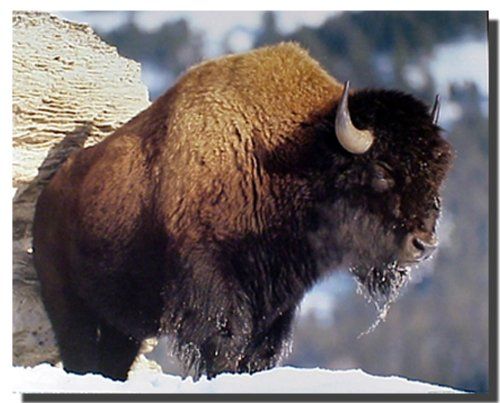
top left and MOVING clockwise: excellent photo op of a bull, distinctive orange-red color of a calf, cow with calf, white-covered bull in deep winter snow, bull stands out in winter’s cold, bulls dueling for supremacy during breeding season, band from grand teton national park, sacred white bison male, (Courtesy of Pinterest)
Answer to Brain Teaser Question
An envelope.
 Big Sky Buckeye
I got the brain teaser and really enjoyed the info about the buffalo. Amazing photos! I especially liked the white one and the baby buffalo.
LikeLiked by 1 person
Vickie, well done on the brain teaser. The white bison is highly sacred in the eyes of Native culture.
LikeLiked by 1 person
‘Envelope’ would be right, and I got that — except that most of the envelopes I got from my mother contained a lot more, including newspaper clippings, stray throughts on other pieces of paper, and even occasional second or third letters that she’d forgotten to send!
One of my souvenirs from a trip to the tallgrass prairie in Kansas is a substantial hank of buffalo hair, pulled from a creature standing outside a feed truck driven by a ranger — through the window of the truck! It was such a great experience; I ought to repost the story.
LikeLiked by 1 person
Linda, congratulations on solving the brain teaser. I may have used it in the past, but I don’t really keep track. Thanks so much for including the link to your story about the bison. Countless people stepped in at crucial moments to save the bison from extinction.
LikeLiked by 1 person
This was some kind of rehash for me as I’ve read up on these beautiful creatures back then. Lovely photos, too!
LikeLiked by 1 person
Diana, thank for your for reading and sharing back. I need to get back into reading your blog and others. After being away for three weeks with travel to see family and friends, I just beginning to get myself better organized. I hope all is well with you.
LikeLiked by 1 person
Take your time. I, too, need to get back into the rhythm of things, but it’d take time and I’ll explain soon on the blog. All’s well for now. Hope all’s well with you, too.
LikeLiked by 1 person
Diana, thank you for your encouraging words. My writing schedule is staying full, and my blogging time is picking up as well. I am thankful for everyone’s patience.
LikeLiked by 1 person
Thank you for your informative post about this amazing animal. 🙂
LikeLiked by 1 person
Nancy, I appreciate your words of affirmation. There is so much about the American bison that needed to be edited out because of the length of this post. I could devote an entire post to the demise of the bison and its effect on Native American culture.
LikeLike