Trivia’s Facts and More (5/6)

Photo by Pixabay on Pexels.com

This informative post will be posted on Saturday along with my usual writing.  You are invited to participate with the opening question.

Brain Teaser Question

How many outs are in an inning of baseball?

(answer found at the end of this post)

Featured Facts

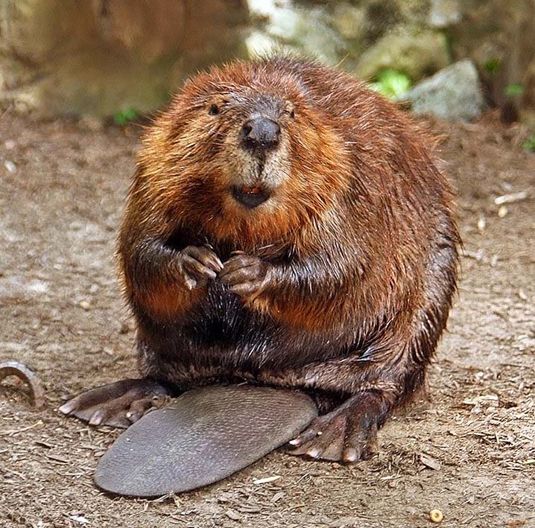
One of the most curious animals to study is the American Beaver.  They are the largest member of the North American rodent family.

Here are some quick facts about the beaver:

  • Habitat:  Streams and lakes throughout the U.S. and Canada
  • Body Length:  2 to 3.5 feet
  • Tail Length:  10-18 inches
  • Weight:  25-65 pounds (females are generally a bit bigger than males)

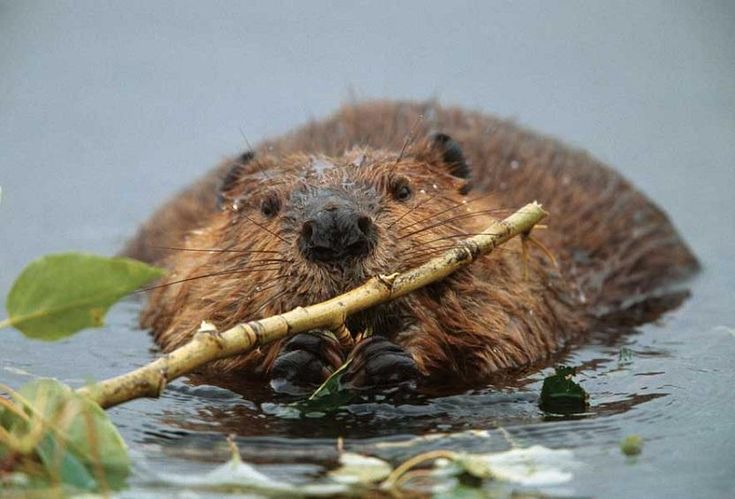
A group of beavers is called a colony, and their offspring are called kits.  A beaver’s diet consists of inner bark, twigs, leaves, grasses, and water plants.

Beavers have adapted quite well to their watery habitat.  They are excellent swimmers because of webbed feet and a large, flat leathery paddle-like tail.  Most can swim about five miles per hour.  They are able to remain underwater without breathing for nearly 15 minutes.

Beavers are excellent engineers as evidenced by their precision-built dams and lodges, which become their homes.  Equipped with sharp incisor teeth that can easily cut through tree trunks, they build with logs, sticks, and mud.

Photos courtesy of Pinterest.

Answer to Brain Teaser Question

Six

You may have thought there were three outs, but there are two teams that play in an inning.  So there are six outs.

Trivia’s Facts and More (4/29)

Photo by Pixabay on Pexels.com

This informative post will be posted on Saturday along with my usual writing.  You are invited to participate with the opening question.

Brain Teaser Question

How many two-cent stamps are there in a dozen?

(answer found at the end of this post)

Featured Facts

The “Volunteer State” of Tennessee was the 16th state admitted to the American Union on June 1, 1796.

Here are some quick facts about this dynamic state:

  • Capital City:  Nashville
  • Bird:  Mockingbird
  • Motto:  Agriculture and Commerce

One of Tennessee’s most famous citizens was Davy Crockett, the famous frontiersman and Congressman.  He was born in 1786, and he was well-known for his exploits at the Battle of the Alamo during the Texan march toward independence from Mexico in 1836.

The most visited national park in the United States has been the Great Smoky Mountains.  The park’s name was derived from the smoke-like bluish haze that was often seen above its mountains.

The city of Nashville has been America’s country music epicenter for many years.  Since 1925, the Grand Ole Opry has been the longest, continually-running live radio program in the land.  A visit to the the historic Ryman Auditorium will create  a memorable visit for any country music fan.

Top Photos:  Great Smoky Mountains National Park, Nashville’s Music Row, Tennessee River Gorge.  Bottom Photo:  Interior of the Ryman Auditorium.  (courtesy of Pinterest)

Answer to Brain Teaser Question

12 stamps

You may have multiplied 2 x 12 to get 24.  But a dozen stamps is 12 stamps, no matter how much each is stamp is worth.

Trivia’s Facts and More (4/22)

Photo by Pixabay on Pexels.com

This informative post will be posted on Saturday along with my usual writing.  You are invited to participate with the opening question.

Brain Teaser Question

If I have 3 dimes, 3 nickels, and 3 quarters, how many ways can I make change for $1.00?

(answer found at the end of this post)

Featured Facts

Martin Van Buren served as America’s 8th President from 1837-1841.  Nicknamed “The Little Magician,” his political savvy was legendary.

Here are some interesting facts about Martin Van Buren:

  • Life Span:  Born December 5, 1782, died July 24, 1862
  • Occupation:  Lawyer
  • Home State:  New York
  • Political Party:  Democratic (played a significant role in its founding)

Before ascending to the highest political office in the land, Van Buren’s career was filled with numerous posts:  U.S. Senator, Governor, Secretary of State, and Vice President.  He was the first President born in the independent United States, and the only one to have learned English as a second language (he grew up speaking Dutch).

Downturn in the American economy spelled doom for Van Buren.  The Panic of 1837 was the first significant depression of the young republic.  It would become a major reason for his failure to secure a second term in the election of 1840, which was won by Whig candidate William Henry Harrison.

Portrait of President van buren and interior photo of his lindenwald mansion in new york state.


Answer to Brain Teaser Question

Only 2 ways:

3 quarters, 2 dimes, 1 nickel

3 quarters, 1 dime, 3 nickels

Trivia’s Facts and More (4/15)

Photo by Pixabay on Pexels.com

This informative post will be posted on Saturday along with my usual writing.  You are invited to participate with the opening question.

Brain Teaser Question

What begins with an “E” and only contains one letter?

(answer found at the end of this post)

Featured Facts

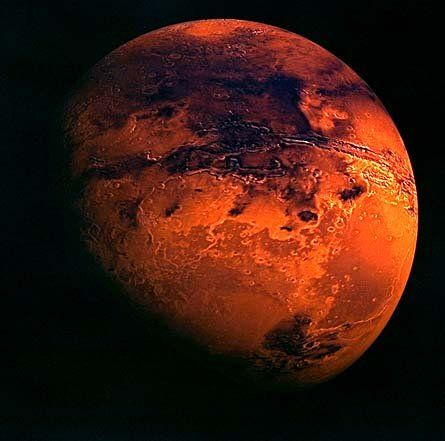
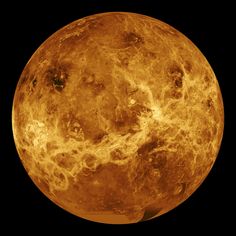
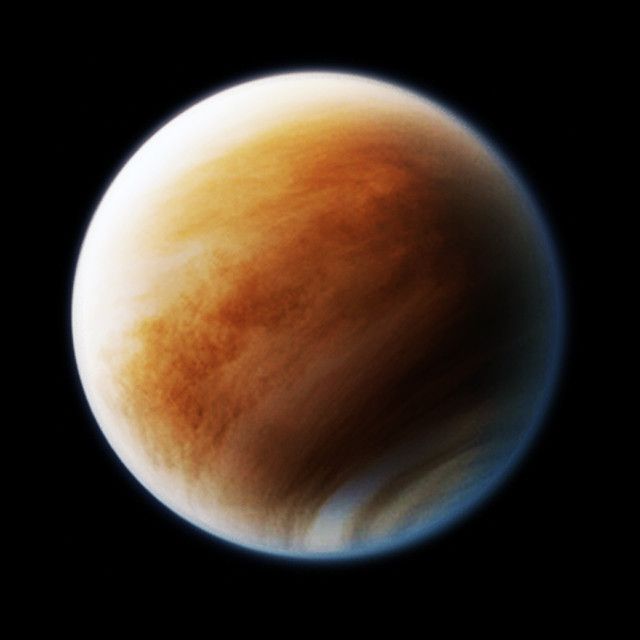
Our solar system is made up of many celestial bodies, and the planets that lie beyond Earth are the focus of today’s feature.

Here are some interesting facts about three of of these planets:

Mercury

  • Named after the Roman messenger of the gods.
  • Smallest planet in our solar system.
  • Solar revolution:  88 (earth) days
  • Average day length:  59 (earth) days

Mercury’s surface is rocky and heavily cratered.  It’s solar revolution is the fastest of any of the planets in this solar system.

Venus

  • Named after the Roman goddess of love.
  • Sixth largest planet in our solar system.
  • Solar revolution:  225 (earth) days
  • Average day length:  243 (earth) days

Venus is the brightest planet in the sky, and it is sometimes referred to as the Morning Star.

Mars

  • Named after the Roman god of war.
  • Second smallest planet in our solar system.
  • Solar revolution:  687 (earth) days
  • Average day length:  24.6 hours (nearly identical to Earth)

Mars is often called the Red Planet because of its red soil.  It has frozen polar caps, which is similar to Earth’s North and South Poles.

Mars, mercury, and venus (courtesy of pinterst)


Answer to Brain Teaser Question

An envelope

Trivia’s Facts and More (4/8)

Photo by Pixabay on Pexels.com

This informative post will be posted on Saturday along with my usual writing.  You are invited to participate with the opening question.

Brain Teaser Question

HAMLET is to VILLAGE as . . .

(A)  STREET is to SIDEWALK

(B)  HIGHWAY is to CAR

(C)  BUILDING is to SKYSCRAPER

(D)  PHOTOGRAPH is to PORTRAIT

(E)  COTTAGE is to HOUSE

(answer found at the end of this post)

Featured Facts

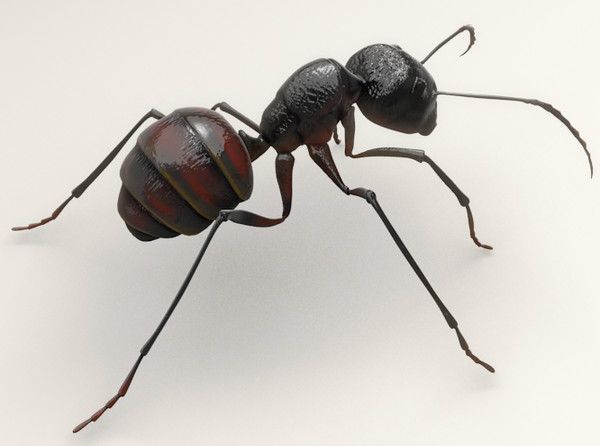
One of nature’s most curious creatures is the ant.  Usually found living in large, highly organized colonies, scientists continue to learn more and more about them.

Here are some interesting facts about the ant:

  • Habitat:  every land area with the exception of Polar regions and some islands (such as Hawaii)
  • Diet:  bugs, dead animals, plants, fungus, nectar, sap
  • Color:  commonly black and red, but also green and golden brown
  • Strength:  can support 5,000 times their body weight (comparable to a 200-pound human supporting one million pounds)
  • Lifespan:  workers, 1-3 years; queen, up to 30 years

Scientists believe that there could be approximately 22,000 species of ants.  While they may look similar to termites, they are members of different genetic groups.  Termites are aligned closer to mantis and crickets while ants are closer to bees and wasps.

The number of estimated ants is equivalent to one million for each living human on the planet.  They live and work like little robots.  From birth, everything needed is built into each tiny brain.  

Ants are sometimes referred to as superorganisms.  Living cooperatively, the entire ant colony behaves like one single-minded animal.

images Courtesy of Pinterest.

Answer to Brain Teaser Question

E

Put the analogy in a very specific sentence.  HAMLET is a small VILLAGE, just as COTTAGE is a small HOUSE.

Trivia’s Facts and More (4/1)

Photo by Pixabay on Pexels.com

This informative post will be posted on Saturday along with my usual writing.  You are invited to participate with the opening question.

Brain Teaser Question

What is the longest word in the dictionary?

(answer found at the end of this post)

Featured Facts

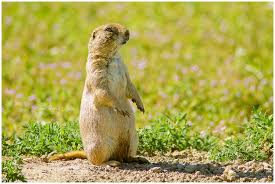
The American prairie dog frequently makes sounds like a dog barking, but they are not a member of the dog family.  They are related to a ground squirrels, chipmunks, groundhogs, and woodchucks.

Here are some interesting facts about the prairie dog:

  • Habitat:  Prairie lands from Montana and the Dakotas to Texas)
  • Body length:  11-14 inches (28-36 cm)
  • Weight:  2-4 pounds
  • Diet:  Grasses and crops

Prairie dogs live as a group (coterie).  Each coterie is socially active and contains up to 10-20 members.  They construct an extensive system of underground burrows called a town.  This subsurface network connects a series of tunnels with chambers.  Several coteries may inhabit the same town.

If one ever observes a prairie dog town, he will find that one or two prairie dogs stand as lookouts.  Their heads can be seen above the entrance to the tunnel, and they communicate through chattering, which are high-pitched squeaks and barking.

Photos courtesy of pinterest.


Answer to Brain Teaser Question

“Smiles” because there is a mile between each S.

Trivia’s Facts and More (3/25)

Photo by Pixabay on Pexels.com

This informative post will be posted on Saturday along with my usual writing.  You are invited to participate with the opening question.

Brain Teaser Question

Four cars come to a four-way stop, each coming from a different direction.  They can’t decide who got there first, so they all go forward at the same time.  All four cars go, but none crash into each other.  How is this possible? 

(answer found at the end of this post)

Featured Facts

Admitted to the American Union on January 3, 1959, the state of Alaska is the largest in terms of land size.  Its 663,268 square miles exceed the combined land size of the next three states (Texas, California, and Montana).

Here are some interesting facts about Alaska (nicknamed The Last Frontier):

  • Capital:  Juneau
  • Motto:  North to the Future
  • Bird:  Willow ptarmigan
  • Flower:  Forget-me-not

In 1867, the Alaskan Territory was purchased from Russia by Secretary of State William Seward.  For many Americans, the purchase price of $7.2 million stirred up negative comments about “Seward’s Folly.”

On Good Friday in 1964, Alaska experienced one of the most powerful earthquakes ever recorded.  With a magnitude of 9.2, the quake destroyed countless villages and coast communities in addition to the 133 fatalities.

Left:  State capitol in juneau.  right:  scene in anchorage following the earthquake in 1964.  (courtesy of pinterest)


Answer to Brain Teaser Question

All of the cars make right-hand turns.

Trivia’s Facts and More (3/18)

Photo by Pixabay on Pexels.com

This informative post will be posted on Saturday along with my usual writing.  You are invited to participate with the opening question.

Brain Teaser Question

Unscramble each group of letters to form words having to do with film making.

SGITHL,   AEMRAC,   CTONIA

(answer found at the end of this post)

Featured Facts

Andrew Jackson (nicknamed “Old Hickory”) served the United States as its 7th President.  His two terms in office ran from 1829-1837.

Here are some interesting facts about Andrew Jackson:

  • Born:  March 15, 1767 in South Carolina
  • Died:  June 8, 1845 in Tennessee
  • Founder of the Democratic Party
  • Occupations of lawyer and soldier

Jackson was a war hero during the War of 1812.  His leadership insured American victory over the British in the Battle of New Orleans in 1815.  He was elected as Tennessee’s first U.S. Representative in 1796.

Located about 10 miles outside of Nashville, Tennessee was Jackson’s estate called The Hermitage.  It served as his home from 1804 until his death in 1845.  One of its main characteristics was its Greek Revival architecture.

President Andrew Jackson portrait, front view of The Hermitage.  (courtesy of Pinterest)


Answer to Brain Teaser Question

LIGHTS,   CAMERA,   ACTION

Trivia’s Facts and More (3/11)

Photo by Pixabay on Pexels.com

This informative post will be posted on Saturday along with my usual writing.  You are invited to participate with the opening question.

Brain Teaser Question

What English word contains all the vowels in alphabetical order?

(answer found at the end of this post)

Featured Facts

The most familiar asterism (small group of stars within a constellation) is the Big Dipper.  These seven stars are the brightest ones found in the constellation Ursa Major (Great Bear).

The Big Dipper is known by many names, including:

  • Starry Plow (England and Ireland)
  • Great Wagon or Cart (Germany)
  • Octava or Salmon Net (Finland)
  • Casserole or Saucepan (France)
  • Big Mother Bear (Russia)
  • Seven Great Wise Ones (Hindu cultures)
  • Northern Dipper (Eastern Asia)

In Canada and the northern United States, the Big Dipper is visible throughout the year.  During each season of the year, this group of stars appears to move in its location.  

  • Autumn:  Lower on the horizon, with the ladle facing upward.
  • Winter:  Resting on its handle, with the ladle above it.
  • Spring:  Higher on the horizon, with position reversed from autumn as the ladle is facing downward.
  • Summer:  Resting on ladle, with the ladle facing opposite of winter’s position.

Photos courtesy of Pinterest.


Answer to Brain Teaser Question

FACETIOUS

Trivia’s Facts and More (3/4)

Photo by Pixabay on Pexels.com

This informative post will be posted on Saturday along with my usual writing.  You are invited to participate with the opening question.

Brain Teaser Question

Which of these does not belong in a group with the others?

(A)  Spider

(B)  Tick

(C)  Flea

(D)  Scorpion

(answer found at the end of this post)

Featured Facts

One of nature’s biggest menaces in the insect world is the blood-sucking mosquito.

Here are some interesting facts about the mosquito:

  • Color:  Brown, golden-brown, or black.
  • Habitat:  Quiet bodies of water, from fluid-filled leaves to stagnant ponds.
  • Diet:  Plant nectar, honeydew, and blood.

The life cycle of a mosquito begins when a female lays eggs in water.  Larvae grow to half an inch, feeding on algae and bacteria.  They mature and emerge as hungry adults.

The female mosquito is a quick eater.  She lands on a animal (such as a human), stabs her needle-sharp proboscis into the skin, and draws out blood.  She spits back up a small bit into the wound, causing it to itch.

There are approximately 200 species of mosquitoes in the United States.  Only about 12 actually carry germs and make people sick.  Most species are more of a bother than anything else, and are labeled as nuisance mosquitoes.  

One species of mosquito may actually do more good than harm.  The Elephant Mosquito has a sapphire-blue and silver-stripped body.  It pollinates flowers at night, and its larvae feed on other dangerous species.

Answer to Brain Teaser Question

(C)  Flea

A flea is an insect, and the other three are arachnids.