Trivia’s Facts and More (7/15)

Photo by Pixabay on Pexels.com

This informative post will be posted on Saturday along with my usual writing.  You are invited to participate with the opening question.

Brain Teaser Question

“We’ve yet to receive a complaint about our Vulcan vacuum cleaner.”  This sales pitch would seem foolish if the customer knew that the Vulcan cleaner:

(A) is a very good machine

(B) is a new model that just came out

(C) has been sold to more homeowners than any other vacuum cleaner

(D) may be used on all different types of carpet

(E) is the end product of six years of research and development

(answer found at the end of this post)

Featured Facts

Much-aligned is the common flea.  This blood-feeding parasite thrives in humid environments, and it is capable to carrying and spreading disease.

Here are some interesting facts about the flea:

  • Color:  Reddish-brown to dark brown
  • Size:  Smaller than a grain of rice
  • Habitat:  Among hairs or feathers of “host” mammals and birds
  • Diet:  Larvae:  organic matter; adults:  blood

Females are generally larger than males, and they are capable to laying up to 50 eggs per day.  Over a lifetime, many will lay up to 2,000 eggs.

The bodily characteristics for this small, wingless insect include:  long back legs, flat abdomen with spines and bristles, and a touch outer skin (makes it more difficult to kill).  

Fleas have been a major carrier of diseases when they transfer from a host to humans.  Many can jump up to 13 inches (33 cm), which allows each to transfer easily to infect another host.  Fortunately, modern antibiotics and sound sanitation practices have minimized the fleas’ impact in today’s world.

As history has shown, this has not always been the case.  During the Middle Ages the European continent was devastated by the bubonic plague (also called the black death).  Fleas fed on infected rats, the rats died, and the fleas spread sickness to humans.  Many communities were totally devastated.

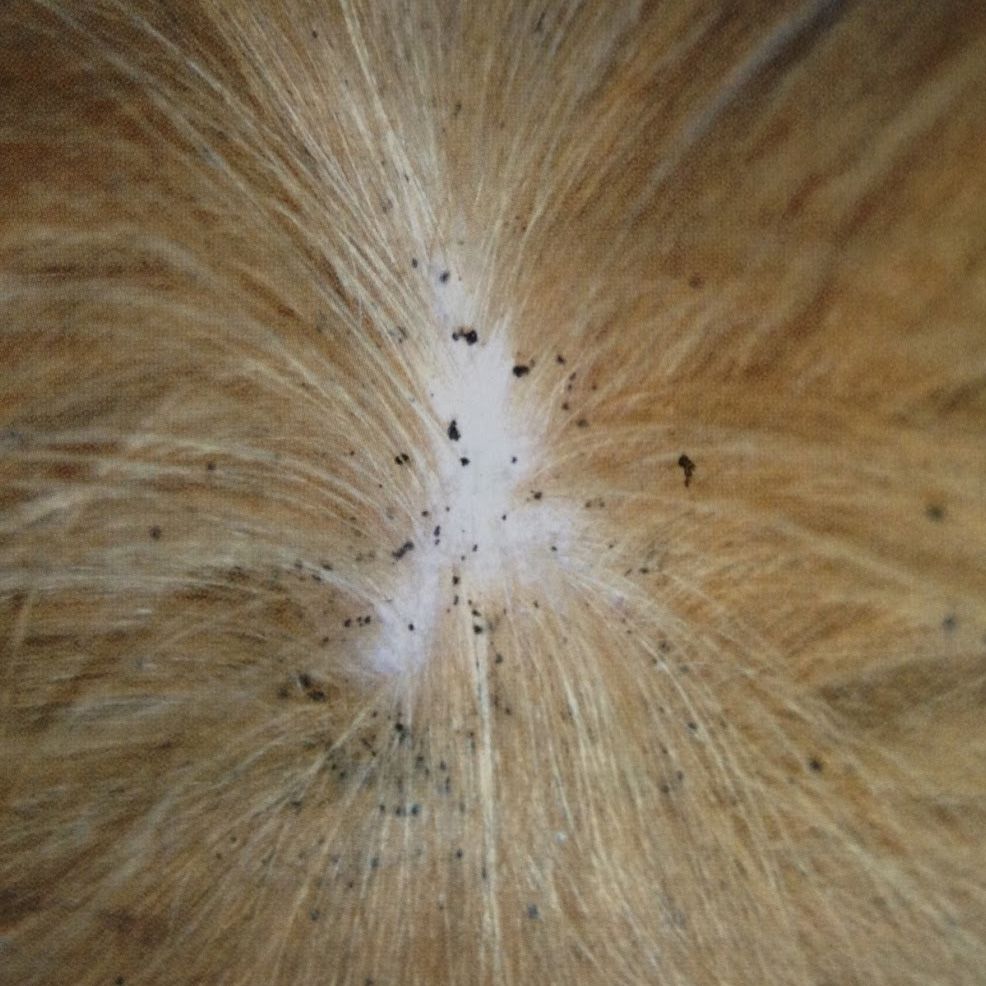
left:  adult flea.  right:  flea infestation on a dog.  (Courtesy of pinterest)

Answer to Brain Teaser Question

Answer “B”

Trivia’s Facts and More (7/8)

Photo by Pixabay on Pexels.com

This informative post will be posted on Saturday along with my usual writing.  You are invited to participate with the opening question.

Brain Teaser Question

A cowboy rides into town on Friday.  He stays five days, then rides out of town on Friday.  How can this be?

(answer found at the end of this post)

Featured Facts

Minnesota offers a interesting diversity in its natural landscape of prairies, forests, and lakes.

Here are some interesting facts about America’s 32nd state:

  • Statehood:  May 11, 1958
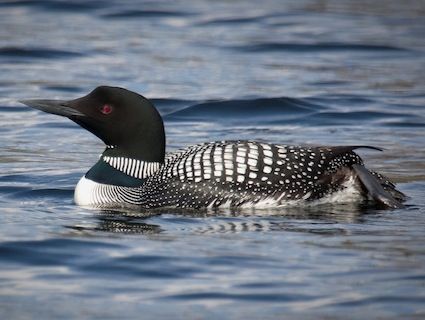
  • State Bird:  Common Loon (also called Great Northern Diver)
  • Motto:  L”Etoile du Nord (The Star of the North)

Minnesota is home to the headwaters of the Mississippi River.  The river divides the largest urban area in the state.  Often referred to as the Twin Cities, Minneapolis is the most populated city, and St. Paul is the state capital.

Bloomington is a neighboring community just south of the Twin Cities.  The former site of Metropolitan Stadium (home of baseball’s Twins and football’s Vikings) now is the address of the Mall of America, which opened in 1992.  It remains the largest mall in the United States.

Often promoted as the  “Land of 10,000 Lakes,” Minnesota’s nickname celebrates the over 90,000 miles of shoreline found in the state.  This is more miles than California, Florida, and Hawaii combined.  Anyone who is a NBA basketball fan has heard of the Los Angeles Lakers, which is one of its more successful franchises.  Interestingly, few lakes are found around Los Angeles, but it makes sense because the Lakers’ original home was in Minneapolis.

left:  common loon, state bird.  right:  state capitol building in st. paul.  (courtesy of pinterest)


Answer to Brain Teaser Question

His horse named Friday.

Trivia’s Facts and More (7/1)

Photo by Pixabay on Pexels.com

This informative post will be posted on Saturday along with my usual writing.  You are invited to participate with the opening question.

Brain Teaser Question

Two fathers and two sons are in a car, yet there are only three people in the car.  How can this be?

(answer found at the end of this post)

Featured Facts

Virginian John Tyler was the 10th President of the United States.  Upon the untimely death of President William Henry Harrison, Vice President Tyler assumed the office of President.

Here are some interesting facts about John Tyler:

  • Occupation:   Lawyer
  • Political Party:  Whig
  • Previous federal government high offices:  Vice President, Virginia Governor, and U.S. Senator

Tyler was the first American Vice President to become President following the death of his predecessor.  He was nicknamed by his detractors as “His Accidency.”

As a single-term President, Tyler served from 1841-1845.  He became the first President to have a veto overridden by Congress.

Tyler was the first President to marry while in office.  Following the death of his first wife, he remarried.  He fathered a total of 15 children, which has remained the most of any President.

Born in 1790, Tyler grew up during the early years of the American republic.  Prior to his death in 1862, he worked behind the scenes to preserve the Union before the start of the Civil War.  He was very much against secession, but his loyalty to Virginia caused him to side with the Confederacy.  

President john tyler in his official portrait.  (courtesy of pinterest)


Answer to Brain Teaser Question

They are grandfather, father, and son.

Trivia’s Facts and More (6/24)

Photo by Pixabay on Pexels.com

This informative post will be posted on Saturday along with my usual writing.  You are invited to participate with the opening question.

Brain Teaser Question

Are there any math wizards out there?  In 30 seconds, with or without a calculator, solve the value of this equation:

2/3  x  3/4  x  4/5  x  5/6  x  6/7

(answer found at the end of this post)

Featured Facts

One of nature’s most magnificent creatures is the Monarch butterfly.  Before one sees this beautiful creation, there is time to appreciate the Monarch caterpillar.

Here are some characteristics of the Monarch caterpillar:

  • Color:  Bands of yellow, black, and white
  • Habitat:  Milkweed plants (feeding on their leaves)
  • Description:  Plump caterpillar with bold stripes and a rear “fake antennae”

The life cycle of a Monarch caterpillar begins when a female adult butterfly lays single eggs on the underside of milkweed leaves.  Eggs will later hatch into tiny larvae who will feed on the leaves of the milkweed plant.  Eventually the mature caterpillar finds a spot from which to hang head-down in a J-shape.  It later molts and forms a jade-green chrysalis around itself.

Many people plant milkweed in their gardens to attract Monarch butterflies.  Milkweed is the only food the caterpillar will eat.  The toxins from the milkweed plant make the caterpillar and adult butterfly poisonous to birds and other predators.

left to right:  monarch caterpillar feeding on a leaf and monarch butterfly gingerly landing on a leaf. (courtesy of pinterest)


Answer to Brain Teaser Question

2/7

This is one problem that can be done faster without a calculator.  Cross out any common numerators and denominators:  That is, cross out the 3s, 4s, 5s, and 6s.  You are left with 2/7.

Trivia’s Facts and More (6/17)

Photo by Pixabay on Pexels.com

This informative post will be posted on Saturday along with my usual writing.  You are invited to participate with the opening question.

Brain Teaser Question

You driving a bus.  Four people get on, three people get off, then eight people get on and ten people get off, then six people get on and two more people get off.  Do you have enough information to know what color the bus driver’s eyes are?

(answer found at the end of this post)

Featured Facts

British writer H. G. (Herbert George) Wells produced many gems found in science-fiction literature.  During his lifetime (1866-1946), he wrote countless books that earned him recognition as the “father of science fiction.”

Among his most popular novels is THE WAR OF THE WORLDS, which was published in 1898.  This franchise has spawned three adaptations of Wells’ classic story. 

These include:

  • Radio drama in 1938
  • Film from 1953, starring Gene Barry and Ann Robinson
  • Film from 2005, starring Tom Cruise, Dakota Fanning, and Tim Robbins 

On October 30, 1938, Orson Welles and his team produced a radio drama that went over the top in its dramatic presentation.  Claiming that aliens from Mars had invaded New Jersey,  this fake news bulletin was aired with stunning effect, and it created mass panic.  Many of the listeners who tuned in late missed the disclaimer at the beginning of the broadcast that stated the drama was not real.

The first film screenplay adapted from Wells’ novel was “The War of the Worlds.”  A small town was attacked by Martians who were intent on beginning their global conquest.  By today’s standards, the special effects seemed crude and not authentic.  However, the film performed well as one of several with a science-fiction theme that were filmed in the 1950s.

The final adaptation of Wells’ screenplay came in the second film, “War of the Worlds.”  Directed by Steven Spielberg, the script presented the horrific events as seen through the eyes of an American family, as they witnessed an alien invasion that attempted to overwhelm the planet.

left to right:  cover of h. G. wells’ novel, orson welles and news headline following his broadcast, movie poster from 1953 film version, and movie poster from 2005 film adaptation.


Answer to Brain Teaser Question

Yes.  They are the color of your eyes–you are driving the bus.

Trivia’s Facts and More (6/10)

Photo by Pixabay on Pexels.com

This informative post will be posted on Saturday along with my usual writing.  You are invited to participate with the opening question.

Brain Teaser Question

All of Mary’s cousins have an Aunt Lucille, but Mary does not.  How can that be?

(answer found at the end of this post)

Featured Facts

The largest member of the North American deer family is the moose.  With a weight of up to 2,000 pounds for a male bull, it is easy to understand that a moose may eat up to 45 pounds of food per day.

Here are some quick facts about the moose: 

  • Habitat:  grasslands and waterways of Alaska, Canada, northern U.S., Rocky Mountains
  • Top speed:  35 mph
  • Diet:  marsh plants, leaves, branches, twigs
  • Average lifespan:  10-20 years

A bull moose loses its antlers around November, but they will grow back (usually even bigger) during the following spring.  These broad antlers can sometimes spread as wide as six feet (two meters).  

Moose adapt to waterways’ habitat where there is an ample supply of marsh plants.  Being good swimmers, they can stay underwater for up to a minute while searching for something to eat.

Moose generally live in regions where winter snow will cover the ground.  They endure snow and cold quite well.  Despite poor eyesight, they are still able to track predators because of their excellent sense of smell and hearing.

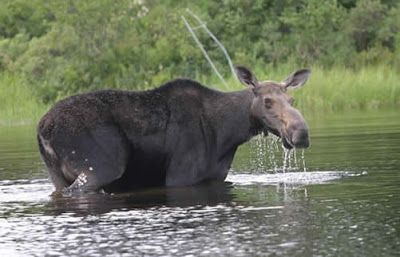
left:  bull with impressive spread of antlers.  right:  cow feeding in pond.  (courtesy of pinterest)


Answer to Brain Teaser Question

Lucille is Mary’s mother.

Trivia’s Facts and More (6/3)

Photo by Pixabay on Pexels.com

This informative post will be posted on Saturday along with my usual writing.  You are invited to participate with the opening question.

Brain Teaser Question

You see a boat filled with people.  You look away and then look back, and the boat is still afloat.  However, you don’t see a single person on the boat?  Why?

(answer found at the end of this post)

Featured Facts

Totally located within the Appalachian Mountains, the American state of West Virginia is famous for its rolling hills and mountains.  

Here are some quick facts about West Virginia: 

  • Capital City:  Charleston (most populated city with 51,400)
  • State Flower:  Rhododendron
  • Nickname:  Mountain State
  • Motto:  Montani Semper Liberi (Mountaineers Are Always Free)

During the American Civil War, the state of West Virginia was carved out of the Confederate state of Virginia.  It was admitted to the Union on June 20, 1863 (just days before the famous battle at Gettysburg).  

In 1905, the Golden Delicious Apple originated in Clay County.  The oldest five and dime store in the United States is Berdine’s Five and Dime in Harrisville.  It opened its doors in 1908.

Visitors to the community of Moundsville have enjoyed the Grave Creek Mound.  It has remained the largest conical-type of prehistoric burial mound in the country.

top left:  grave creek mound site.  bottom left:  Berdine’s five and dime.  right:  Traditional rhododendron flowers.  (courtesy of pinterest)


Answer to Brain Teaser Question

All the people on board are married.

Trivia’s Facts and More (5/27)

Photo by Pixabay on Pexels.com

This informative post will be posted on Saturday along with my usual writing.  You are invited to participate with the opening question.

Brain Teaser Question

Do they have a 4th of July in England?

(answer found at the end of this post)

Featured Facts

William Henry Harrison served as America’s ninth President.  His nickname “Old Tippecanoe” came from his military career.

Here are some quick facts about President Harrison: 

  • Served the shortest term of office ever for a President (one month).
  • He was the grandfather of the nation’s 23rd President, Benjamin Harrison.
  • First elected President from the Whig Party.
  • His father, Benjamin Harrison, was a famous patriot during the American Revolutionary War.

In the Election of 1840, Harrison and his running mate, John Tyler, used a catchy campaign slogan:  “Tippecanoe and Tyler, too.”  Harrison intended to become a doctor and enrolled in medical school.  However, due to lack of funds he dropped out and entered the military.

Despite a wet, wintry day, Harrison delivered an outside, two-hour Inaugural Address.  This may have led to his death a month later from suspected pneumonia.

An interesting coincidence followed the death of Harrison, who was elected in 1840.  Every 20 years thereafter, the President elected would die in office.  The streak would continue until the Election of 1980 when Ronald Reagan narrowly escaped death after being shot.

Here are the Presidents who were elected in the 20-year intervals following 1840:

1860:  Abraham Lincoln, 1880:  James A. Garfield, 1900:  James McKinley, 1920:  Warren G. Harding, 1940:  Franklin D. Roosevelt, and 1960:  John F. Kennedy.

Answer to Brain Teaser Question

Yes

England may not celebrate the Fourth of July as a holiday, but they do have a 4th of July (July 4) on their calendar.

Trivia’s Facts and More (5/20)

Photo by Pixabay on Pexels.com

This informative post will be posted on Saturday along with my usual writing.  You are invited to participate with the opening question.

Brain Teaser Question

Polar bears are finding their food supply to be more and more scarce.  Yet, they will not eat penguins.  Why not?

(answer found at the end of this post)

Featured Facts

One of the most anticipated events in our Solar System is the arrival of a comet.  It is sometimes referred to as a dirty snowball with a very long tail.

Here are some quick facts about comets: 

  • Comets are made up of large chunks of ice, rocks, dust, and gas.
  • As a comet passes near the Sun, its nucleus heats up an sends out a gaseous flare.  This creates the distinctive tail that is seen from Earth.
  • A comet’s tail can be up to six million miles long.

One of the most famous comets to travel near Earth has been Halley’s Comet.  It is named after English astronomer, Edmund Halley (1656-1742).  Halley correctly predicted the orbit of the comet, and also calculated its schedule for future arrivals.  Halley’s Comet last appeared near Earth in 1986, and it will not return for approximately 75 years (around 2061).  

A much brighter comet than Halley’s is Comet Hale-Bopp.  It is nearly 1,000 times brighter.  It was discovered independently by two American astronomers, Alan Hale (New Mexico) and Thomas Bopp (Arizona).   Comet Hale-Bopp last appeared in 1997, and it is not expected to arrive again for a few thousand years.

Left:  halley’s comet as captured on film in 1910.  right:  comet hale-bopp from 1997.  (courtesy of pinterest)

Answer to Brain Teaser Question

Polar bears live in the Arctic.  Penguins live in the Southern Hemisphere.

Trivia’s Facts and More (5/13)

Photo by Pixabay on Pexels.com

This informative post will be posted on Saturday along with my usual writing.  You are invited to participate with the opening question.

Brain Teaser Question

You’ll find one in Mercury, Earth, Mars, Jupiter, Saturn, and Uranus.  But never in Neptune or Venus.  Who am I?

(answer found at the end of this post)

Featured Facts

One of nature’s most delicate and intriguing insects is the firefly.  These small, flying insects with their leathery wings are an annual summer treat.

Here are some quick facts about the firefly, which is a soft-bodied beetle with wings:

  • Habitat:  Some live in moist places under debris on the ground.  Others live beneath bark and decaying vegetation.
  • Diet:  Larvae feed on insects, snails, and slugs.  Adults may feed on pollen or nectar, or may not eat at all.
  • Color:  Brown or black.

Fireflies are also called “lightning bugs.”  At dusk during the summer, they will fly up from grass and blink their green or yellow light organs to attract mates.

The light is called bioluminescence, which is a cold light (no heat) with 96% energy efficiency.  In comparison, ordinary light bulbs have an approximate 10% efficiency.  Of course, newer technology (LED) has increased the efficiency. 

The life cycle of fireflies begins when females lay eggs in damp soil.  In 3-4 weeks, these eggs hatch into larvae.  The larvae feed until the end of summer, then burrow into soil or behind bark.  They emerge in spring, and become adults.

Left:  Close-up view of a firefly.  right:  Glow-in-the-dark scene of fireflies.  (courtesy of Pinterest)

Answer to Brain Teaser Question

The letter “R”.