Trivia’s Facts and More (1/6)

Photo by Pixabay on Pexels.com

This informative post will be published on Saturday in place of my regular one.  You are invited to participate with the opening question.

Brain Teaser Question

What is special about these words:  job, polish, herb?  (Hint:  Each word has at least another pronunciation.)

(answer found at the end of this post)

Featured Facts

A member of the beetle family, the venerable ladybugs are colorful and harmless.  Gardeners love them because they enjoy eating aphids.

Here are a few unique details about ladybugs:

  • Color:  Most commonly in the U.S. with shiny red body with black spots.
  • Description:  Small, round, winged beetle with black legs and antennae
  • Habitat:  Meadows, fields, and gardens
  • Diet:  Both larvae and adults eat aphids and other small insects

There are approximately 5,000 species of ladybugs worldwide.  Their Latin scientific name of Coccinellidae means little red sphere.  The seven-spotted ladybug is native to Europe, and it was brought to the United States in the mid-1900s to help farmers control aphid populations.

The life cycle of ladybugs begins with a female laying a cluster of 20-300 eggs on the underside of a leaf near an aphid colony.  Within a week, the eggs will hatch into larvae.  During the next 10-15 days, the larvae feed on aphids before moving into the pupal stage and later adulthood.

In many cultures, ladybugs are considered good luck.  In the Middle Ages, these beetles rid grapevines of insect pests.  To show their appreciation, farmers called them the “Beetle of Our Lady” in a reference to the Virgin Mary.  They are sometimes called ladybirds, lady beetles, and lucky bugs.

The usual lifespan for ladybugs is 2-3 years, and they must survive against numerous predators.  Birds are the number one foe, but they also must contend with frogs, wasps, spiders, and dragonflies.  In the winter, they hibernate in rotting logs and under rocks, as colonies numbering in the thousands.  

top row:  enlarged look at a ladybug, ladybug preparing for flight.  bottom row:  colony of ladybugs on a leaf, single ladybug feasting on an aphid, small insect at the top of a plant seems unaware of the hunter below.  (photographs courtesy of pinterest.)


Answer to Brain Teaser Question

They are pronounced differently when the first letter is capitalized:  Job, Polish, Herb.

Trivia’s Facts and More (11/18)

Photo by Pixabay on Pexels.com

This informative post will be published on Saturday in place of my regular one.  You are invited to participate with the opening question.

Brain Teaser Question

A man stands on one side of a river, his dog on the other side.  The man calls his dog, who immediately crosses the river without getting wet and without using a bridge of a boat.  How did the dog do it?

(answer found at the end of this post)

Featured Facts

Classified in the same class as spiders and ticks, scorpions are a member of the arachnid family.  

Here are some interesting facts about the scorpion:

  • Size:  1.5-5 inches (4-13 cm)
  • Color:  dark brown, pale orange, tan, black
  • Habitat:  dark crevices under bark and stones
  • Diet:  insects and other bugs (nocturnal hunter)

Scorpions resemble miniature lobsters with their long pincers.  Fed from venom glands, a poisonous stinger is found at the end of its long curved-up tail.  Multiple eyes are found at the center and sides of its cephalothorax (fused head and body).  Humans should avoid touching a scorpion as a bite will certainly cause pain and possible swelling.  Very few scorpions are deadly.  

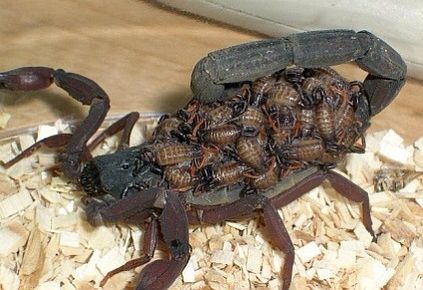
The life cycle of a scorpion follows the female as she carries eggs inside of her.  Scorpions are born live, and the female will carry this brood on her back until they fully mature.

There are nearly 2,000 species of scorpions, and their lifespan runs from 4 to 25 years.  These champions of survival can live without food for up to a year, and they grow quite slowly until reaching maturity (up to five years with some).  

In various cultures, scorpions represent and symbolize different meanings.

  • Ancient Egypt:  guardianship and control
  • Native Americans:  danger and change
  • Some African civilizations:  healing and rebirth
  • Greek mythology:  transformation and rebirth

left:  mature female scorpion with brood on her back.  right:  tiny scorpion on a human finger.    (photographs courtesy of pinterest.)


Answer to Brain Teaser Question

The river was frozen.

Trivia’s Facts and More (10/14)

Photo by Pixabay on Pexels.com

This informative post will be published on Saturday in place of my regular one.  You are invited to participate with the opening question.

Brain Teaser Question

Why is it against the law for a man living in North Dakota to be buried in South Dakota?

(answer found at the end of this post)

Featured Facts

A curious little insect is the boxelder bug.  Related to the stinkbug, this harmless pest can become quite a nuisance.

Here are a few quick facts about the boxelder bug:

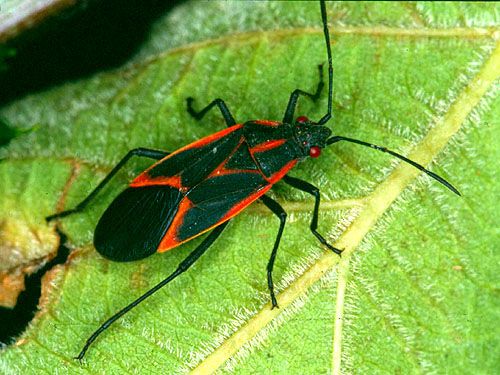
  • Color:  black with reddish or orange markings
  • Size:  1/2 inch (11-14 mm)
  • Predators:  rodents, spiders, birds
  • Territory:  native to western United States (but can be found in eastern U.S. and Canada)

Their name is derived from the fact that they are frequently found around boxelder trees (as well as maple).  Their favorite summer home is in trees.

Boxelder bugs are very mobile, and they can easily move from trees to man-made structures.  One of their most annoying traits is to leave feces that may stain light-colored surfaces.  

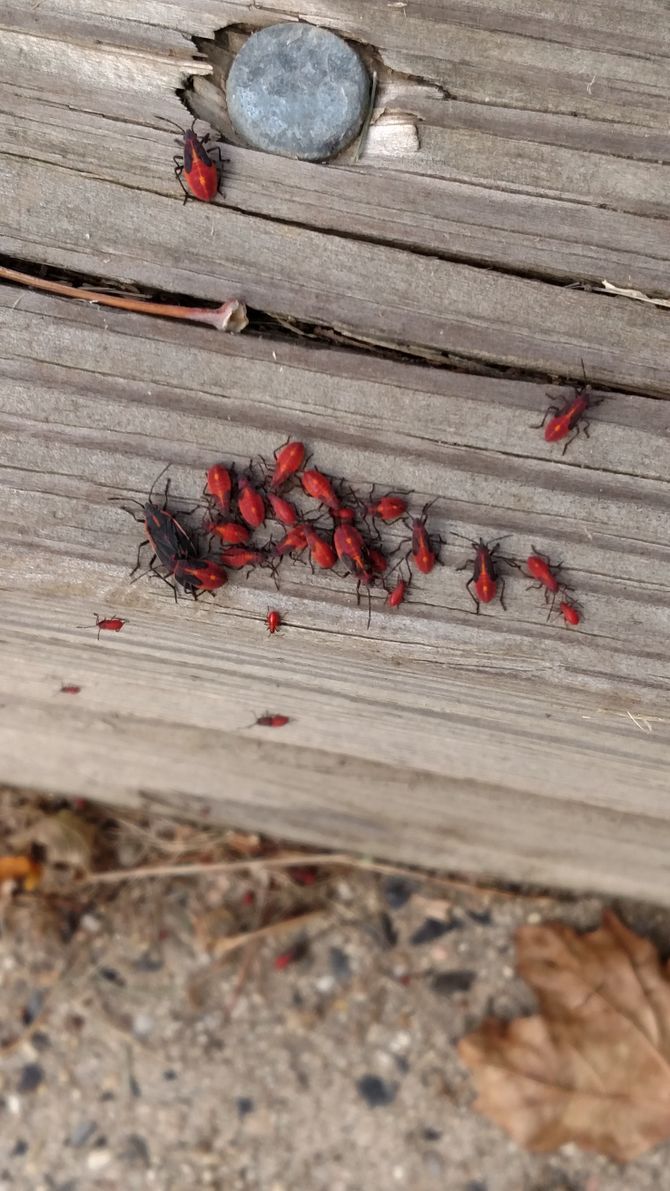
In autumn, these pesky bugs congregate around south-facing surfaces on rocks, buildings, and trees.  They appreciate the warmth and sun.  At this same time, they will seek winter shelter in homes, sheds, and garages.  After hibernating in their cozy winter confines, they will emerge in March and April in order to journey back to the trees.

Since boxelder bugs are eager to enter houses, homeowners are wise to take time to seal around windows and doors.  This will help to prevent these bugs from entering inside to find a winter home.  They also dislike the smell of herbs such as sage, whole cloves, and lavender.

left:  close-up of an adult boxelder bug  right:  a group of boxelder bugs congregating on the side of a building in the warm sun.  (photographs courtesy of pinterest.)


Answer to Brain Teaser Question

Because he’s still alive.

Trivia’s Facts and More (9/9)

Photo by Pixabay on Pexels.com

This informative post will be published on Saturday along with my usual writing.  You are invited to participate with the opening question.

Brain Teaser Question

Where might you find someone who’s a real keeper?

(answer found at the end of this post)

Featured Facts

One of the insect world’s most interesting members is the hornet.  There is much more to this creature than one might think.

Here are some interesting facts about the hornet:

  • Description:  Related to bees with small waist, amber veined wings, and stinger at end of abdomen.
  • Habitat:  Forests, towns, suburbs with nests attached to trees or buildings.
  • Diet:  Insects such as flies and caterpillars.

The life cycle of the hornet is fascinating.  As the autumn frosts kill the workers in the nest, a fertilized female hibernates in a sheltered place.  In the spring she emerges and starts up a new nest, which is usually built in a hollow tree or protected area of a building.  

As spring continues, the first generation of offspring will all be female workers.  By late summer, males are produced from unfertilized eggs with one purpose.  They mate and then die.

Hornets hate the smell of mint.  By planting a plant mint around one’s house or keeping a pot of mint near the areas where these pests are usually found, hornets will likely keep away.   The use of peppermint oil has the same effect.

It is very important to be extra careful around a hornet nest.  The workers defend it fiercely and will string repeatedly.  As summer moves into autumn and killer frosts show up, the hornets will abandon the nest, and the life cycle will begin again in the spring.

Left:  contrast in size between a hornet and the human hand.  right:  Hornet nest in tree–keep a safe distance!  photographs courtesy of pinterest.


Answer to Brain Teaser Question

At the zoo

Trivia’s Facts and More (7/15)

Photo by Pixabay on Pexels.com

This informative post will be posted on Saturday along with my usual writing.  You are invited to participate with the opening question.

Brain Teaser Question

“We’ve yet to receive a complaint about our Vulcan vacuum cleaner.”  This sales pitch would seem foolish if the customer knew that the Vulcan cleaner:

(A) is a very good machine

(B) is a new model that just came out

(C) has been sold to more homeowners than any other vacuum cleaner

(D) may be used on all different types of carpet

(E) is the end product of six years of research and development

(answer found at the end of this post)

Featured Facts

Much-aligned is the common flea.  This blood-feeding parasite thrives in humid environments, and it is capable to carrying and spreading disease.

Here are some interesting facts about the flea:

  • Color:  Reddish-brown to dark brown
  • Size:  Smaller than a grain of rice
  • Habitat:  Among hairs or feathers of “host” mammals and birds
  • Diet:  Larvae:  organic matter; adults:  blood

Females are generally larger than males, and they are capable to laying up to 50 eggs per day.  Over a lifetime, many will lay up to 2,000 eggs.

The bodily characteristics for this small, wingless insect include:  long back legs, flat abdomen with spines and bristles, and a touch outer skin (makes it more difficult to kill).  

Fleas have been a major carrier of diseases when they transfer from a host to humans.  Many can jump up to 13 inches (33 cm), which allows each to transfer easily to infect another host.  Fortunately, modern antibiotics and sound sanitation practices have minimized the fleas’ impact in today’s world.

As history has shown, this has not always been the case.  During the Middle Ages the European continent was devastated by the bubonic plague (also called the black death).  Fleas fed on infected rats, the rats died, and the fleas spread sickness to humans.  Many communities were totally devastated.

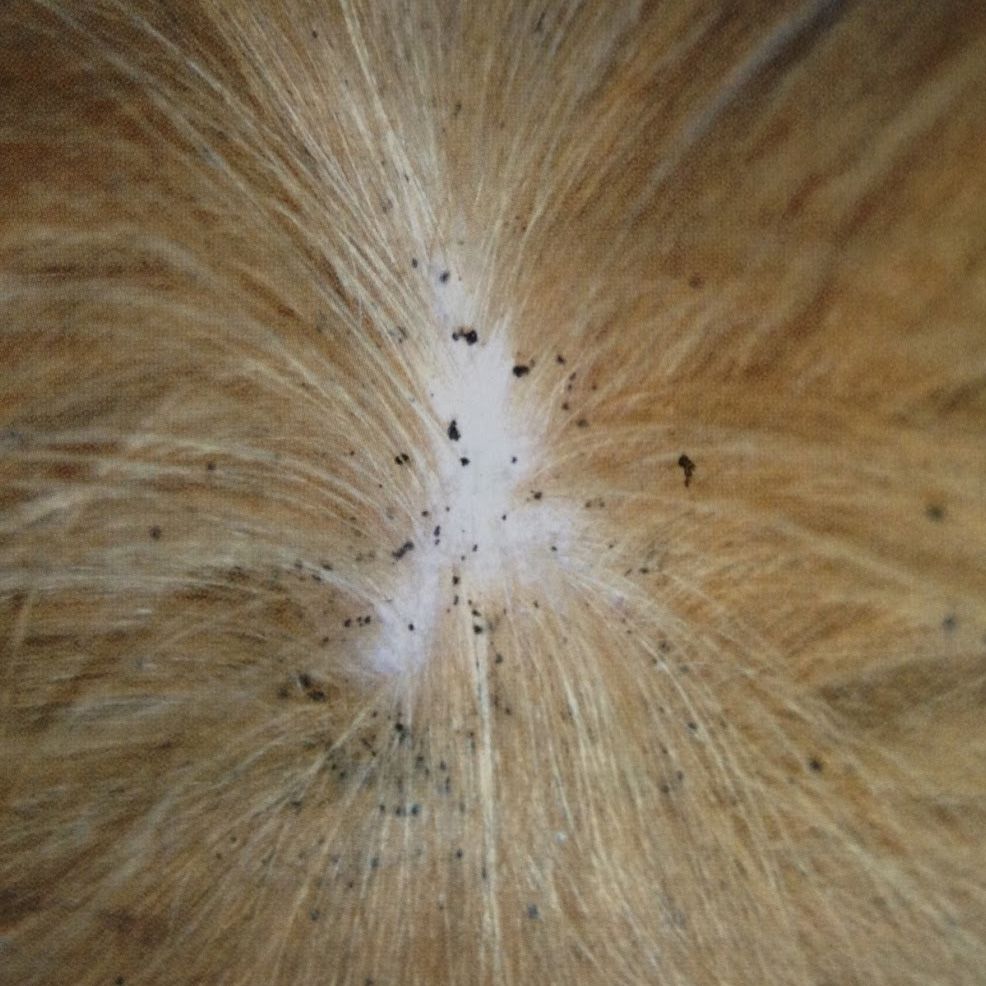
left:  adult flea.  right:  flea infestation on a dog.  (Courtesy of pinterest)

Answer to Brain Teaser Question

Answer “B”

Trivia’s Facts and More (6/24)

Photo by Pixabay on Pexels.com

This informative post will be posted on Saturday along with my usual writing.  You are invited to participate with the opening question.

Brain Teaser Question

Are there any math wizards out there?  In 30 seconds, with or without a calculator, solve the value of this equation:

2/3  x  3/4  x  4/5  x  5/6  x  6/7

(answer found at the end of this post)

Featured Facts

One of nature’s most magnificent creatures is the Monarch butterfly.  Before one sees this beautiful creation, there is time to appreciate the Monarch caterpillar.

Here are some characteristics of the Monarch caterpillar:

  • Color:  Bands of yellow, black, and white
  • Habitat:  Milkweed plants (feeding on their leaves)
  • Description:  Plump caterpillar with bold stripes and a rear “fake antennae”

The life cycle of a Monarch caterpillar begins when a female adult butterfly lays single eggs on the underside of milkweed leaves.  Eggs will later hatch into tiny larvae who will feed on the leaves of the milkweed plant.  Eventually the mature caterpillar finds a spot from which to hang head-down in a J-shape.  It later molts and forms a jade-green chrysalis around itself.

Many people plant milkweed in their gardens to attract Monarch butterflies.  Milkweed is the only food the caterpillar will eat.  The toxins from the milkweed plant make the caterpillar and adult butterfly poisonous to birds and other predators.

left to right:  monarch caterpillar feeding on a leaf and monarch butterfly gingerly landing on a leaf. (courtesy of pinterest)


Answer to Brain Teaser Question

2/7

This is one problem that can be done faster without a calculator.  Cross out any common numerators and denominators:  That is, cross out the 3s, 4s, 5s, and 6s.  You are left with 2/7.

Trivia’s Facts and More (5/13)

Photo by Pixabay on Pexels.com

This informative post will be posted on Saturday along with my usual writing.  You are invited to participate with the opening question.

Brain Teaser Question

You’ll find one in Mercury, Earth, Mars, Jupiter, Saturn, and Uranus.  But never in Neptune or Venus.  Who am I?

(answer found at the end of this post)

Featured Facts

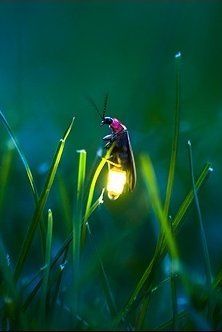
One of nature’s most delicate and intriguing insects is the firefly.  These small, flying insects with their leathery wings are an annual summer treat.

Here are some quick facts about the firefly, which is a soft-bodied beetle with wings:

  • Habitat:  Some live in moist places under debris on the ground.  Others live beneath bark and decaying vegetation.
  • Diet:  Larvae feed on insects, snails, and slugs.  Adults may feed on pollen or nectar, or may not eat at all.
  • Color:  Brown or black.

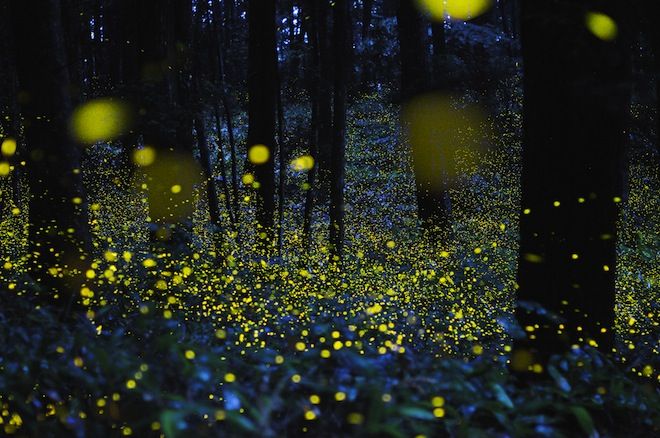
Fireflies are also called “lightning bugs.”  At dusk during the summer, they will fly up from grass and blink their green or yellow light organs to attract mates.

The light is called bioluminescence, which is a cold light (no heat) with 96% energy efficiency.  In comparison, ordinary light bulbs have an approximate 10% efficiency.  Of course, newer technology (LED) has increased the efficiency. 

The life cycle of fireflies begins when females lay eggs in damp soil.  In 3-4 weeks, these eggs hatch into larvae.  The larvae feed until the end of summer, then burrow into soil or behind bark.  They emerge in spring, and become adults.

Left:  Close-up view of a firefly.  right:  Glow-in-the-dark scene of fireflies.  (courtesy of Pinterest)

Answer to Brain Teaser Question

The letter “R”.

Trivia’s Facts and More (3/4)

Photo by Pixabay on Pexels.com

This informative post will be posted on Saturday along with my usual writing.  You are invited to participate with the opening question.

Brain Teaser Question

Which of these does not belong in a group with the others?

(A)  Spider

(B)  Tick

(C)  Flea

(D)  Scorpion

(answer found at the end of this post)

Featured Facts

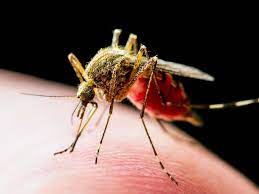
One of nature’s biggest menaces in the insect world is the blood-sucking mosquito.

Here are some interesting facts about the mosquito:

  • Color:  Brown, golden-brown, or black.
  • Habitat:  Quiet bodies of water, from fluid-filled leaves to stagnant ponds.
  • Diet:  Plant nectar, honeydew, and blood.

The life cycle of a mosquito begins when a female lays eggs in water.  Larvae grow to half an inch, feeding on algae and bacteria.  They mature and emerge as hungry adults.

The female mosquito is a quick eater.  She lands on a animal (such as a human), stabs her needle-sharp proboscis into the skin, and draws out blood.  She spits back up a small bit into the wound, causing it to itch.

There are approximately 200 species of mosquitoes in the United States.  Only about 12 actually carry germs and make people sick.  Most species are more of a bother than anything else, and are labeled as nuisance mosquitoes.  

One species of mosquito may actually do more good than harm.  The Elephant Mosquito has a sapphire-blue and silver-stripped body.  It pollinates flowers at night, and its larvae feed on other dangerous species.

Answer to Brain Teaser Question

(C)  Flea

A flea is an insect, and the other three are arachnids.

Trivia’s Facts and More (1/21)

Photo by Pixabay on Pexels.com

This informative post will be posted on Saturday along with my usual writing.  You are invited to participate with the opening question.

Brain Teaser Question

Using the root meanings, define the word MANUMIT.

(A)  to manufacture

(B)  to be masculine

(C)  to set free

(answer found at the end of this post)

Featured Facts

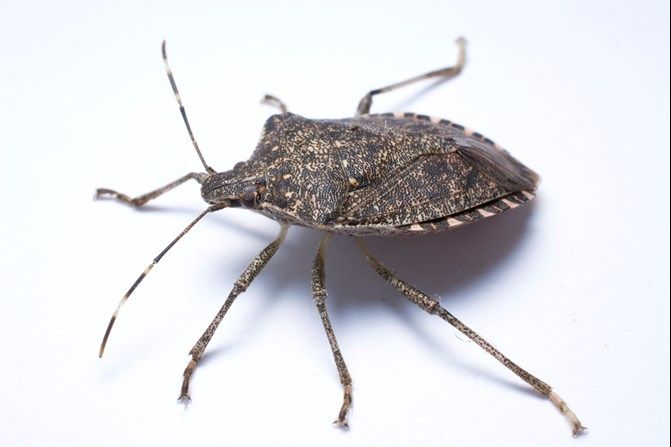
One of nature’s most annoying insects is the stink bug.  Known to emit a smell that may resemble moist, mildewed laundry or stinky socks, these insects are quite active from springtime into autumn.

Here are a few interesting facts about the stink bug:

  • Color:  bright green, brown to gray, shiny blue-black, or red.
  • Habitat:  crop fields, orchards, and meadows.
  • Diet:  plant juices and sap.

The life cycle of the stink bug starts with a mature female who will usually lay eggs on the undersurface of foliage before winter arrives.  The eggs hatch in the spring.  Then the wingless nymphs grow into adults after several molts.

The stink bug is blessed with natural defenses.  Their awful smell discourages birds and other predators from snacking on them.  They come in many colors, which may offer the benefit of being well-camouflaged to match the color of a green leaf or even brown tree bark.

Answer to Brain Teaser Question

C

The root word MAN means hand.  The root MIT means send.  MANUMIT means “to send” by “hand”–or set free.

Trivia’s Facts and More (11/5)

Photo by Pixabay on Pexels.com

This informative post will be posted on Saturday along with my usual writing.  You are invited to participate with the opening question.

Brain Teaser Question

A knight wants to marry a princess and she wants to marry him.  However, the king demands that the knight draw one of two slips of paper from a box.  The king says one will say “Death” and the other “Marriage.”  The princess whispers to her suitor that both slips say “Death.”  What could the knight do to wed the princess?

(answer found at the end of this post)

Featured Facts

One of the most curious of all insects is the praying mantis.  It’s distinctive shape and color may sometimes be difficult to find because these predatory creatures are experts at ambushing their prey.

Some characteristics about the praying mantis include:

  • Body length of about 1-4 inches.
  • Primary habitat in the foliage of meadows and fields.
  • Diet includes live insects and spiders.

Many know that its name comes from its “prayer-like” stance.  Mantis means “prophet.”  Its name is mistakenly spelled as “preying” mantis because it fiercely preys upon other insects.  Yes, the mantis is a “good” bug to have around.

If one ever has a chance to watch this stealth predator at work, pay close attention.  Staying perfectly motionless and blending in with the green foliage, the praying mantis will suddenly strike and grab its victim.

Images courtesy of Pinterest.

Answer to Brain Teaser Question

Before a crowd of witnesses, the knight could choose a paper, look at it, proclaim that it says “Marriage,” and promptly swallow it.  As proof, he would ask the king to reveal the remaining paper, which would say “Death.”  All would presume that the swallowed paper indeed must have said “Marriage”–thus beating the king at his own game.