Trivia’s Facts and More (2/8)

Photo by Pixabay on Pexels.com

This informative post will be published on Saturday in place of my regular one.  You are invited to participate with the opening question.

Brain Teaser Question

What’s always found on the ground, but it never becomes dirty?

(answer found at the end of this post)

Featured Facts

One of the insect world’s most destructive forces can be termites.  Yet, few people really know much about their characteristics and culture.

Here are some interesting facts about termites:

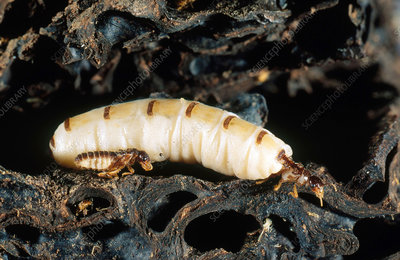
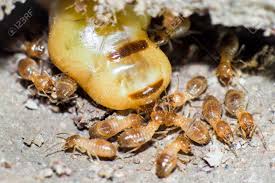
  • Size:  1/4 inch (queens are 4-6 inches in length)
  • Color:  usually white (some may be orange)
  • Diet:  wood, decaying leaf litter
  • Location:  every continent except Antarctica

Termites seek a habitat that will allow their colony to grow and expand.  Some of the best places to discover them will be wooded areas where rotting stumps and fallen trees provide protection as well as food.  Some homeowners discover the presence of termites who have reached the wood framing of the house through mud tunnels.  These tunnels begin underground and continue upward into the foundation of the home and beyond.

Because of their usual white color, termites are sometimes called white ants.  They possess small, yet soft bodies with the ability to bite.  They are wingless except for reproductive males and females.  These members of the colony will emerge in swarms during mating times.  Queens may live up to 10 years.

The life cycle of termites begins when the queen lays thousands of fertilized eggs.  The eggs are tended by worker termites.  These attendants feed hatched nymphs for the first two weeks of their lives.  Their destiny will include being workers, soldiers, fertile males, and females.

Within a colony of termites, their way of life is similar to that of ants.  Termites perform a variety of jobs much like ants do.  Within a colony with its queen, there could be anywhere from 100 to a million workers in a vast network of underground tunnels.  Many of the workers will be white in color due to living far under the ground where they avoid contact with most sunlight.

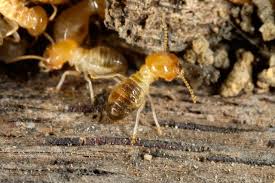
Termites are important ecosystem engineers, and their decomposing skills are good for soil condition.  They digest cellulose with the help of microorganisms in their gut.  They feed on each other’s feces, and males help raise the young.  Workers and soldiers are nearly blind, and soldiers are slightly larger than workers.  Soldiers are capable lookouts for predators such as mammals, birds, insects, scorpions, lizards, and spiders.

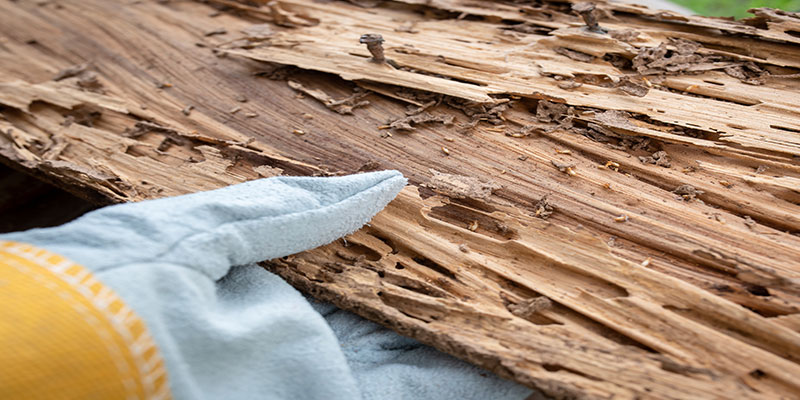
row 1: various members of termite colony, workers building mud tunnels of tubes, queen.   row 2: soldiers, workers.  Row 3:  termite-damaged wood.  row 4:  diagram of colony beneath an unsuspecting house, queen  surrounded by WORKERS.  (all images courtesy of PINTEREST)

Answer to Brain Teaser Question

A shadow.

Trivia’s Facts and More (1/25)

Photo by Pixabay on Pexels.com

This informative post will be published on Saturday in place of my regular one.  You are invited to participate with the opening question.

Brain Teaser Question

I have four wheels and invite plenty of flies (insects).  What am I?

(answer found at the end of this post)

Featured Facts

Admitted to the American Union on May 29, 1790, Rhode Island is destined to be labeled as the smallest state in terms of land size.  It becomes the final of the original thirteen colonies to enter the United States.

Here are some interesting facts about Rhode Island:

  • Capital city:  Providence (largest city, population of 179,207)
  • Nickname:  Ocean State
  • State bird:  Rhode Island Red Hen
  • State flower:  Violet
  • State Motto:  Hope

With its small land area, Rhode Island is the second most-densely populated American state after New Jersey.  Within its 1,033 square miles of territory, New Jersey provides space for over 1,098,080 inhabitants.  In contrast, the state of Montana houses 1,142,750 people in a land area of 147,040 square miles.  

Tracing its roots back to 1636 as an English colony, Rhode Island is founded by Puritan leader, Roger Williams.  Banished from Massachusetts, he seeks religious freedom for his followers.  He nicknames the Rhode Island colony “Providence Plantations.”

In 1793, America’s first successful cotton mill begins operations.  Founded by Samuel Slater, Slater Mill is located along the Blackstone River in Pawtucket.  The site remains preserved as a living museum.

The city of Newport is known for its sailing history, and it provides a home for the U.S. Navy War College (founded in 1884).  Rhode Island is well-known for its 21 lighthouses, and several are located at Newport.  One of the most famous is the Ida Lewis Rock Lighthouse.

The state capitol in Providence features the world’s fourth largest self-supported marble dome.  Newport is know as the home for “summer cottages” of the rich and famous from years past.  Some of America’s richest families spend fortunes in building mansions of unforgettable splendor.

row 1:  one of rhode island’s many lighthouses, u.s. Navy war college, nighttime in providence,  Row 2:  state flag, state bird red hen, summer cottage at newport.  Row 3:  slater mill, state capitol.  (all images courtesy of pinterest)

Answer to Brain Teaser Question

A garbage truck.

Trivia’s Facts and More (1/18)

Photo by Pixabay on Pexels.com

This informative post will be published on Saturday in place of my regular one.  You are invited to participate with the opening question.

Brain Teaser Question

What kind of ship has two mates but no captain?

(answer found at the end of this post)

Featured Facts

At times seeming bigger than life, Theodore Roosevelt ascended to the American Presidency in 1901.  Upon William McKinley’s assassination, Roosevelt became the 26th President of the United States.

Here are some interesting facts about President Roosevelt:

  • Political party:  Republican
  • Home state:  New York
  • Lifespan:  1858-1919
  • Term of office:  1901-1909
  • Notable occupations:  rancher, soldier, author

Roosevelt’s transition into politics was stimulated by personal family loss.  In 1884, he lost both his wife, Alice, as well as his mother, Martha.  Both died on the same night.  A devastated Roosevelt spent two years away from his home state while living on and operating a cattle ranch in the western Badlands of the Dakota Territory, near present-day Medora, North Dakota.  

Upon his return from the West, T. R. (as many called him) followed fresh stepping stones, which would eventually lead him to the White House.  Prior to being elected New York’s Governor in 1898, he also served as President McKinley’s Assistant Secretary of the Navy.  During his tenure with the naval department, the United States entered the Spanish-American War of 1898.

During the Spanish-American War, Roosevelt organized and lead a volunteer cavalry unit, better known as the “Rough Riders.”  Roosevelt and his men served gallantly in the short-lived war’s action in Cuba.  Roosevelt earned another nickname which would follow him for the rest of his life, “The Rough Rider.”

As President, Roosevelt served out McKinley’s term of office as well being elected in his own right in 1904.  A major theme of his domestic agenda revolved around the “Square Deal.”  He supported progressive reforms and promised to battle large industrial combinations (also called trusts).  His foreign policy was built around a philosophy of “speak softly and carry a big stick.”  He modernized and enlarged the American navy.

Roosevelt’s final years as President brought new challenges and achievements.  Known as the conservation President, he doubled the number of America’s national parks.  His administration oversaw construction of the Panama Canal in 1904 (the canal would open in 1914).  In 1906, Roosevelt would receive the Nobel Peace Prize for his help in ending the Russo-Japanese War.

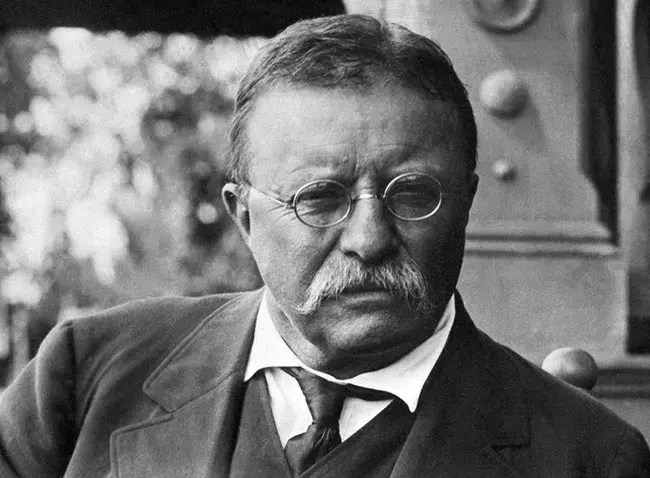
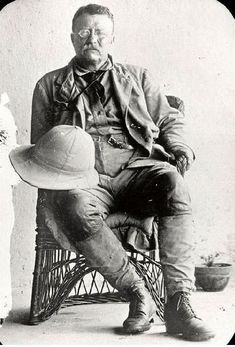
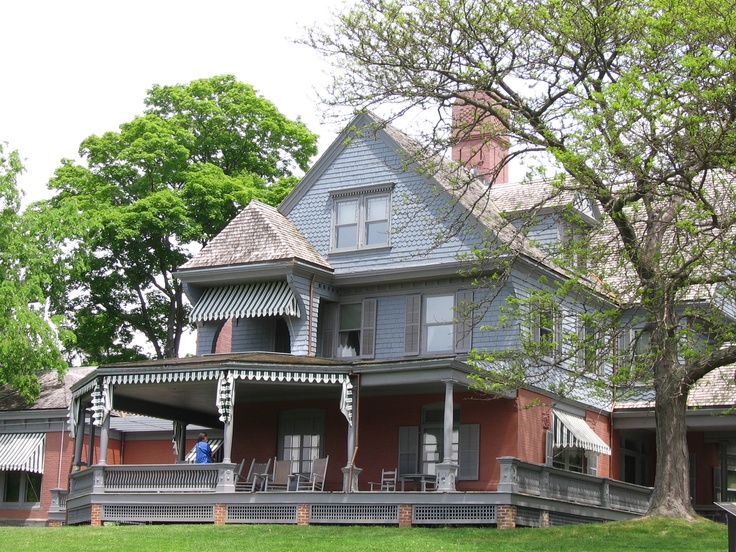
left column:  dual images of older and younger roosevelt, on african safari following his presidency, at the panama canal during construction.  right column:  roosevelt the conservationist traveling out west, on the campaign trail, family home at sagamore hill, lieutenant colonel of the rough riders.

Answer to Brain Teaser Question

A relationship.

Trivia’s Facts and More (1/11)

Photo by Pixabay on Pexels.com

This informative post will be published on Saturday in place of my regular one.  You are invited to participate with the opening question.

Brain Teaser Question

It may be shorter than much of the rest of your hand, but when you are happy, you lift it up like it is the best.  What is it?

(answer found at the end of this post)

Featured Facts

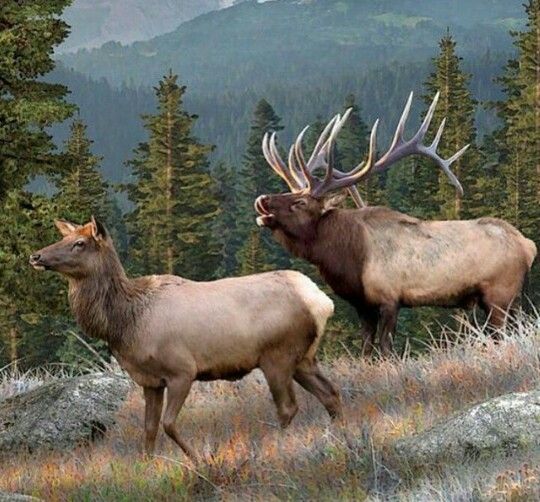
Found in the foothills and mountains of different regions in North America, the elk is the most advanced subspecies of the red deer.  In the overall deer species, only the moose is larger in size.

Here are some interesting facts about the elk:

  • Weight:  bulls, 700-1,000 pounds; cows, 450-650 pounds
  • Native American name:  wapiti (in Shawnee, means white deer)
  • Habitat:  forests and woodlands in mountainous regions, some may migrate to to grasslands
  • Diet:  grass, leaves, tree bark (herbivores)

In Native American culture, the elk served as a vital source of food, hides for clothing and shelter, and bones for tools.  Before European colonists and explorers arrived on the continent, the natural territory of the elk was vast compared to today’s territories.  Today, most reside in the foothills and mountains of the western Rocky Mountains and isolated, smaller mountain ranges.  Some still venture onto prairies and grasslands, especially during the winter season when food may become more scarce.

The elk has proven to be a vary adaptable animal.  They survive the long, cold winters of the mountain west.  They have proven to be fast runners with outstanding endurance.  During the colder months, their light hide color darkens, and a well-developed dark neck mane thickens.  

Their chief protection from natural predators is to assemble in large groups, usually single-gender except during the autumn rut season.  Elk serve as a food source for wolves, mountain lions, coyotes, bobcats, and grizzly bears.  

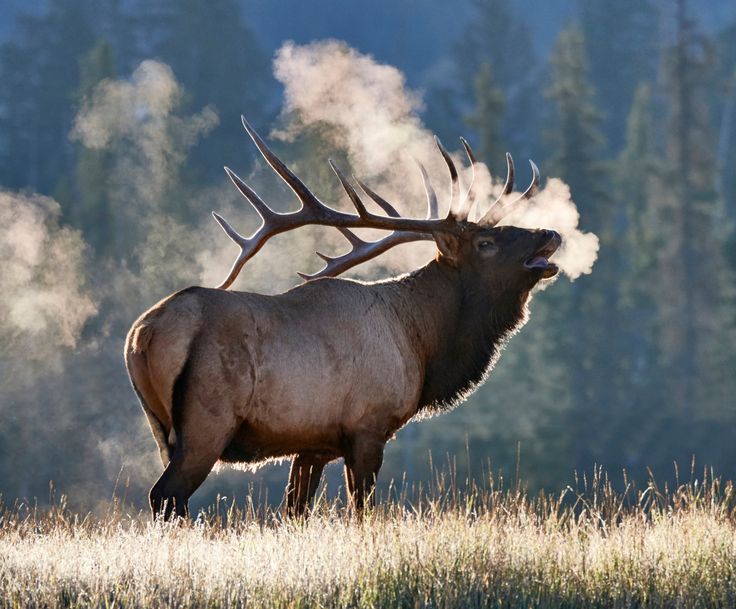
During the rut season, the strongest bulls will lead groups of cows.  Heard over several miles, bulls use a high-pitched bugling call to attract cows to their group, and they will defend their harem (as it is called) against any other bulls. 

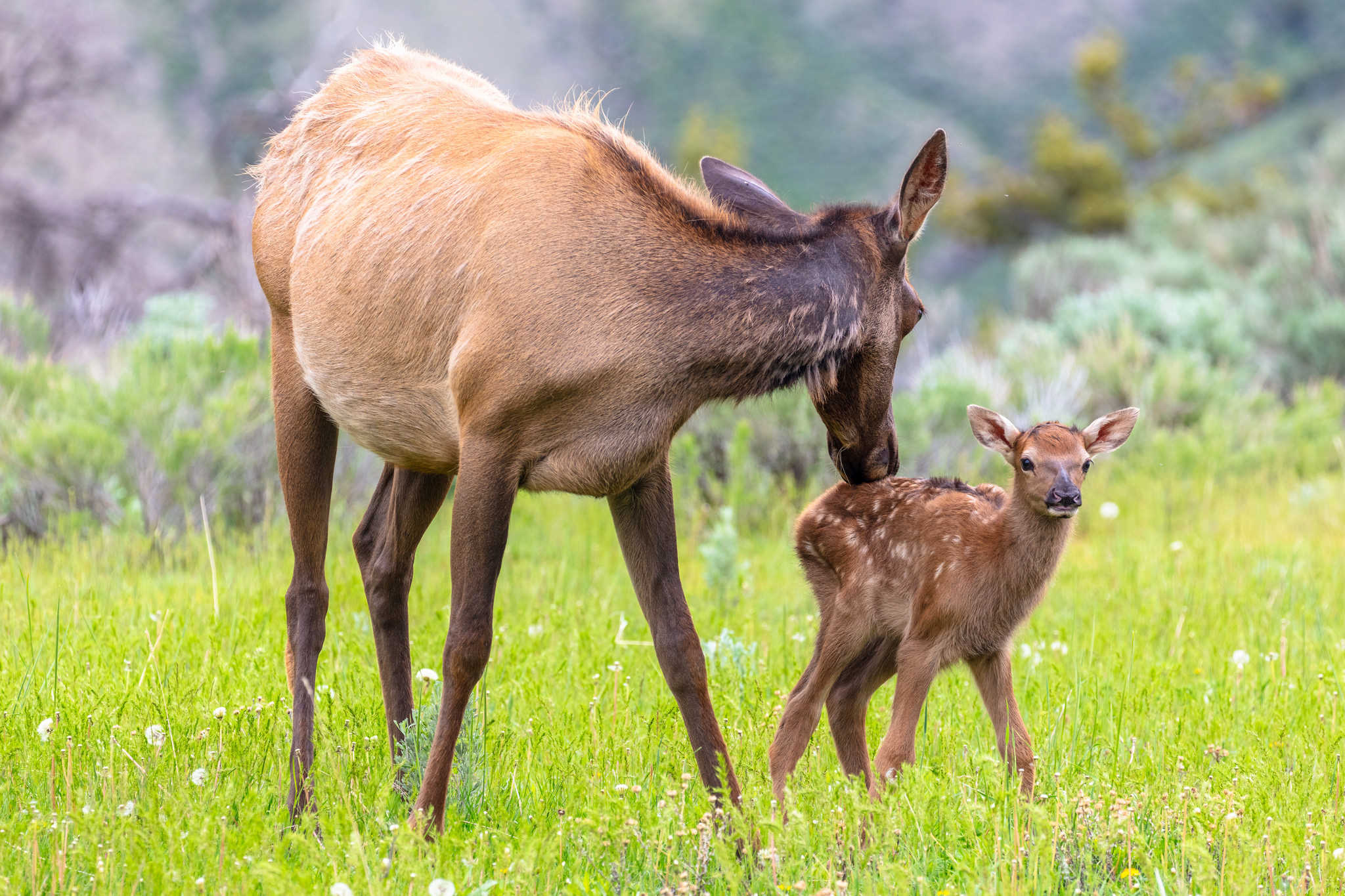
Calves will be born in May to June.  They feature spotted hides, and they are scentless.  Each calve will stay with mother for about a year.  Usually the autumn season encourages these maturing calves to leave their mothers.  

When conditions are ideal for food, a mature elk will eat approximately 20 pounds of plant matter.  Bulls will shed their antlers after the autumn rut, but they will reappear in spring.

photo gallery:  moving from top left and clockwise.  Bull elk on a cold, frosty morning.  bull and cow together.  cow with a recently born calf.  bull with a harem of at least two cows.  bull walking in yellowstone national park at mammoth hot springs.  elk herd at the national elf refuge outside of jackson hole, wyoming.  Bugling bull.  during autumn rut, two bulls dueling for supremacy.

All images courtesy of Pinterest.

Answer to Brain Teaser Question

Thumb.

Trivia’s Facts and More (12/28)

Photo by Pixabay on Pexels.com

This informative post will be published on Saturday in place of my regular one.  You are invited to participate with the opening question.

Brain Teaser Question

How can a person go 25 days without sleep?

(answer found at the end of this post)

Featured Facts

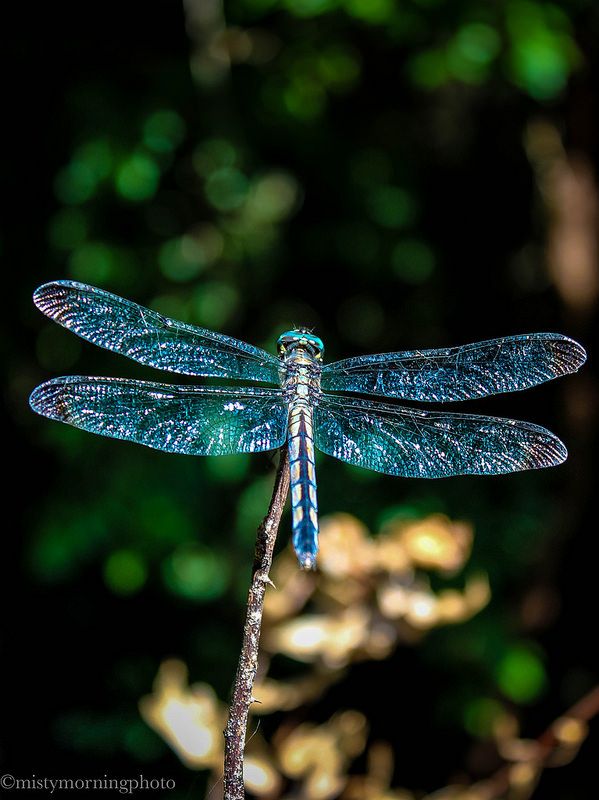
One of nature’s most colorful insects is the dragonfly.  Here are some quick facts about this species:

  • Size:  3/4 to 5 inches in length
  • Color:  Varies, but many are blue, green, or brown with clear wings
  • Habitat:  near ponds and slow-moving streams
  • Diet:  insects, including mosquitoes

As a flying insect, the dragonfly’s body is long and thin.  Two sets of clear, veined wings work together as the dragonfly is constantly in flight. 

The four wings move independently of each other, and this enables the dragonfly to fly forward or backward.  It has the ability to hover much like a helicopter, and it can travel at speeds of up to 35 mph. 

With its large eyes, the dragonfly experiences a nearly 360-degree field of vision.  Its long legs are not designed for walking, but they become useful in holding its captured prey while in flight.

A dragonfly can consumer large numbers of mosquitoes, easily between 30 and 100 per day.  It’s no wonder that dragonfly has been nicknamed the “mosquito hawk.”

The life cycle of the dragonfly begins with a female inserting eggs one-by-one into a cut slit in the stem of a waterplant.  By spring or summer, fully-grown naiads will crawl out of the water habitat to mature as adults.

All images courtesy of Pinterest.

Answer to Brain Teaser Question

By sleeping at night.

Trivia’s Facts and More (12/21)

Photo by Pixabay on Pexels.com

This informative post will be published on Saturday in place of my regular one.  You are invited to participate with the opening question.

Brain Teaser Question

Besides the most famous reindeer of all, Rudolph, can you name Santa’s eight remaining reindeer?

(answer found at the end of this post)

Featured Facts

One of the most popular songs at Christmas is “Rudolph the Red-Nose Reindeer.”  People know bits and pieces about the history behind the song; but, here is the rest the story.

In the late 1930s, American retailer Montgomery Ward was looking to create a nationwide marketing campaign for the month of December.  They looked for help from their talented copywriter, Robert L. May.  

As May crafted poetry to share the story of his newly invented character, Rudolph, he enlisted the help of Denver Gillen.  Gillen worked in Montgomery Ward’s art department, and his illustrations would be featured in the short publication.

While Gillen envisoned Rudolph as a young deer with his big, red nose, May crafted rhyming couplets (a sample follows).

Twas the day before Christmas, and all through the hills

The reindeer were playing, enjoying the spills

Of skating and coasting, and climbing the willows

And hopscotch and leapfrog (protected by pillows)

Over 800 Montgomery Ward stores opted in to participate in the December promotion.  Nearly two and a half million copies were ordered (at at cost of 1.5 cents apiece).  The copies were given freely to children who visited each participating store.

Following World War II in 1949, Montgomery Ward decided to bring back their highly successful Christmas promotion, which again featured “Rudolph the Red-Nosed Reindeer.”  Over three and a half million copies were printed.

Eventually Montgomery Ward granted May the copyright privileges to “Rudolph the Red-Nosed Reindeer.”  He shared his poetry story with his brother-in-law, Johnny Marks.  Marks just happened to be a songwriter.  With May’s approval, he adapted the story to lyrics of a Christmas song of the same name.

Actor and singing cowboy, Gene Autry, was signed to record the song, and it became a top hit in 1946.  The lyrics featured an updated story about this famous reindeer.  Later in 1964, television’s classic animated feature, “Rudolph the Red-Nosed Reindeer,” was produced by Rankin/Bass.  

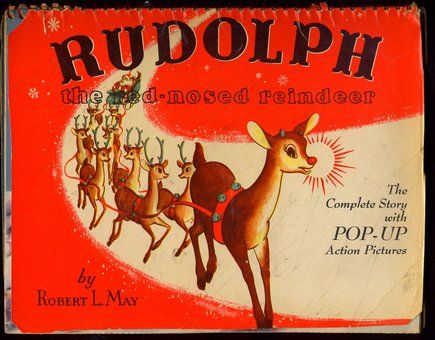
Moving from top left and clockwise:  cover of one version of Robert L. May’s book, Robert L. May, Gene Autry, scene from television’s 1964 feature, gene autry’s album cover.  (Images courtesy of Pinterest)


Answer to Brain Teaser Question

Dasher, Dancer, Prancer, Vixen, Comet, Cupid, Donner, Blitzen

Trivia’s Facts and More (12/14)

Photo by Pixabay on Pexels.com

This informative post will be published on Saturday in place of my regular one.  You are invited to participate with the opening question.

Brain Teaser Question

How do you know that Jupiter, Saturn, Uranus, and Neptune are about to get married?

(answer found at the end of this post)

Featured Facts

The 25th President of the United States was William McKinley, who hailed from the state of Ohio.

Here are a few quick facts about President McKinley:

  • Political party:  Republican
  • Birthplace:  Niles, Ohio (January 29, 1843)
  • Death:  September 14, 1901 (Buffalo, New York)
  • Nickname:  “The Idol of Ohio”
  • Colleges attended:  Allegheny College (Salem, Ohio), Mount Union College (Alliance, Ohio)
  • Occupations:  School teacher, soldier, lawyer

McKinley spent his entire political career in the Buckeye state of Ohio.  Elected to seven terms in the U.S. House of Representatives and two terms as Governor, he was well-positioned to become President of the American Union.

McKinley’s earlier years found him serving in the Union army during the American Civil War, where he led a group of volunteers from his home state.  Later, he practiced law in the city of Canton, which was not far from his childhood roots in Niles.  

McKinley was elected to two terms as President.  In both the elections of 1896 and 1900, his Democratic challenger was William Jennings Bryant.  Unfortunately, he became the third President to be assassinated during the early months of his second term.  

McKinley was attending the Pan-American Exposition in Buffalo, New York when he was murdered.  His Vice President, Theodore Roosevelt, succeeded him as President.

As President, McKinley was a strong supporter of protective tariffs.  During his first term, the United States successfully defended itself in the Spanish-American War of 1898.  In the treaty that ended the hostilities, the United States gained the Spanish territories of Puerto Rico, Guam, and the Philippines.

McKinley’s namesake has been used as the portrait on the United States’ $500 bill.  His name was designated for the highest mountain peak in North America, Mount McKinley.  In 2015 the Alaskan peak was renamed Denali, its traditional native name.

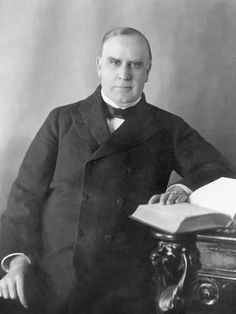
Moving from top left and clockwise:  presidential portrait, canton home, mckinley national memorial (in canton), civil war portrait, his assassination in the cleveland newspaper.  (Images courtesy of Pinterest)


Answer to Brain Teaser Question

They all have rings.

Trivia’s Facts and More (11/30)

Photo by Pixabay on Pexels.com

This informative post will be published on Saturday in place of my regular one.  You are invited to participate with the opening question.

Brain Teaser Question

Simon has scored 14, 20, 22, and 16 points in four basketball games.  If his final average will reach 20 points per game, how many points must he score in a fifth game?

(answer found at the end of this post)

Featured Facts

Admitted to the American Union on February 14, 1859, Oregon is the 33rd state of the United States.

Here are a few quick facts about Oregon:

  • Capital city:  Salem
  • Largest city:  Portland (population:  630,498)
  • Nickname:  Beaver State
  • State bird:  Western meadowlark
  • State tree:  Douglas fir
  • State motto:  Alis Volat Propiis (She Flies With Her Own Wings)

Oregon is well-known for its diverse landscape.  The western coastal region features rainforests, mountains, and fertile valleys.  The eastern side of the state offers a more arid and harsh environment with grasslands and deserts.

Oregon’s coastal mountain range is filled with an array of volcanic peaks.  From their ancient activity, numerous lava flows have created volcanic rock formations, which resemble a moon-like terrain.  During the 1960s, America’s space agency, NASA, utilizes this region to prepare Apollo astronauts for eventual travel to the Moon.

Another prominent holdover from these past volcanic times is Crater Lake, which is part of a national park (established in 1902).  America’s fifth oldest national park is home to the deepest lake in the United States, reaching 1,949 feet.  The crater’s basin is all that remains from a collapsed, ancient caldera.

Oregon leads the nation in growing a variety of crops:  peppermint, blackberries, boysenberries, longberries, black raspberries, and hazelnuts.  Wild mushroom hunting is legal, and a harvest of one gallon per day is allowed.  The state is the nation’s leading source of Christmas trees.

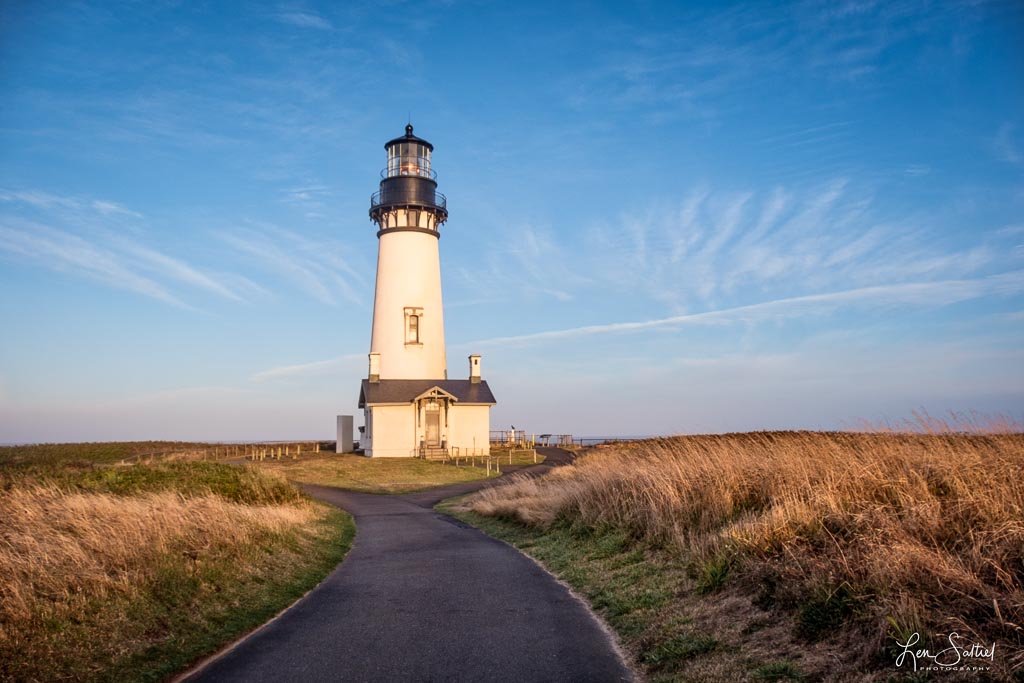
Oregon is one of five American states that do not levy a general sales tax (joining with Alaska, Montana, Delaware, and New Hampshire).  Eleven lighthouses provide safety for boats traveling along the state’s Pacific coastline.  

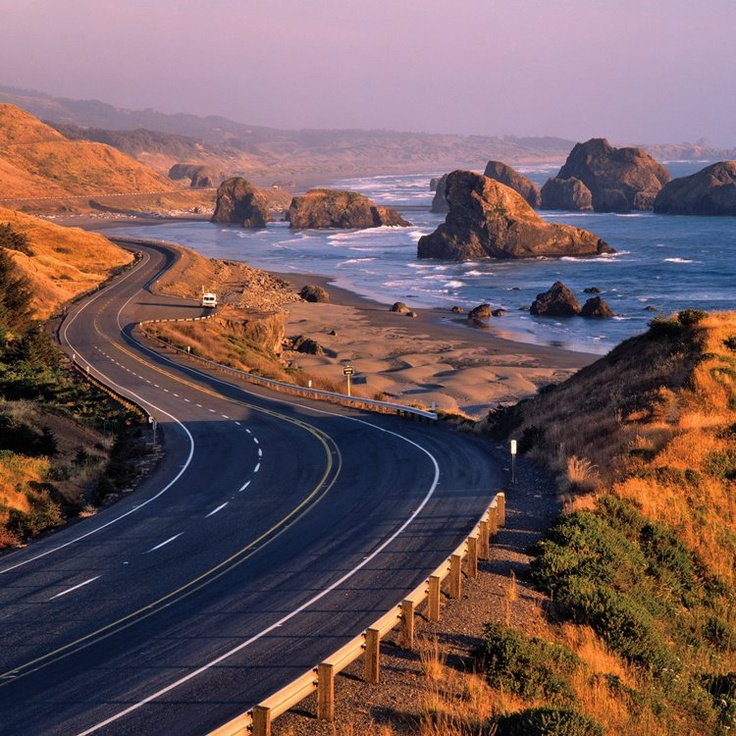
Moving from top left and clockwise:  pacific coast highway runs along the entire oregon coastline,  crater lake, state capitol building in salem, inside sea lion caves near florence, 1960’s nasa’s apollo training in central oregon’s moon country, Yaquina lighthouse near newport.  (Images courtesy of Pinterest)


Answer to Brain Teaser Question

28.  He has currently scored a total of 72 points.  An average of 20 points per game for five games equals 100 total points.  

Trivia’s Facts and More (11/23)

Photo by Pixabay on Pexels.com

This informative post will be published on Saturday in place of my regular one.  You are invited to participate with the opening question.

Brain Teaser Question

A bus driver goes the wrong way along a one-way street.  A police officer passes him, yet he does not stop the bus driver.  Why?

(answer found at the end of this post)

Featured Facts

Found throughout the continental United States, red foxes are known for their clever and cunning intelligence.  They have been characterized as one of nature’s original artful dodgers.

Here are a few quick facts about red foxes:

  • Body length:  18-34 inches
  • Tail length:  12-22 inches
  • Weight:  6-20 pounds
  • Top speed:  30 mph
  • Lifespan:  2-4 years

Because of their ability to adapt, foxes live in a diversity of habitats:  forests, grasslands, deserts, marshes, and mountains.  Featuring a rusty, reddish brown fur, foxes are larger than their cousins, the grey fox and Arctic fox.

Being an omnivore, foxes enjoy a variety of food sources:  insects, crayfish, fruits, reptiles, rodents, birds, eggs, and rabbits.  They are members of the dog family (canidae), but they lack necessary facial muscles to bare their teeth.

During the daytime, most foxes remain hidden in burrows or dens.  Their acute sense of hearing greatly aids their search for prey.  They have the ability to jump high in the air before pouncing upon their next meal.  Being nocturnal hunters, they usually hunt alone.  If they have surplus food, they will likely bury it.  

With the arrival of autumn, foxes’ fur thickens for the coming winter season.  Seeking warmth on a cold night, foxes enjoy being curled up within their long, bushy tails.  For mating purposes, males and females frequently pair up during the winter months of December through February.  

Moving from top left and clockwise:  adult foxes.  final two images:  pairs from the younger generation.  (Images courtesy of Pinterest)


Answer to Brain Teaser Question

The bus driver is walking.

Trivia’s Facts and More (11/16)

Photo by Pixabay on Pexels.com

This informative post will be published on Saturday in place of my regular one.  You are invited to participate with the opening question.

Brain Teaser Question

Which of the following must will result in a positive answer.

(A)  The product of 2 positive numbers

(B)  The product of a positive and a negative number

(C)  The sum of 2 negative numbers

(D)  The product of 2 negative numbers

(answer found at the end of this post)

Featured Facts

In many parts of North America as well as the rest of the world, the mating sounds of the cicadas fill the air during late spring and early summer.  

Here are a few quick facts about the cicadas in the United States:

  • Body size:  approximately 2 inches
  • Wing span:  approximately 2-3 inches
  • Color:  brown, green, or black body with dark head; clear wings with orange or black veins
  • Habitat:  wooded areas, pastures, suburban areas

Two major groups of cicadas are found in the United States.  The annual species is found in much of the world while the periodical species live in the eastern region of the country and parts of the Midwest.

Cicadas resemble beetle-like creatures with very short antennae.  Being herbivores, the nymphs suck on tree-root sap while the adults do not eat.  

Adult cicadas are large, flying insects with bulging eyes and veined wings.  Nymphs appear as stocky and grublike with legs.  After reaching adulthood, the average lifespan of a cicada is 3-4 weeks.

The life cycle of a cicada begins when a female makes a slit in a tree branch.  She wedges her eggs inside the branch.  Hatched nymphs drop from the branch to the ground where they burrow into soil to reach the juicy, nutritious tree roots.

In late spring and early summer, adult cicadas emerge from the warming soil, which has sustained them as nymphs.  They scale a nearby tree to finish their final transformation.  During the molting stage, they will acquire wings.  Depending upon the species, they may emerge every three years (“dogday” cicadas) or after 13-17 years (periodical cicadas). 

As the mature adults begin their short lifespan, males begin their mating ritual with their loud clacking or buzzing songs.  The life cycle begins all over once again.

top three photos:  adult cicadas.  Bottom two photos:  cicada nymphs.  (Images courtesy of Pinterest)


Answer to Brain Teaser Question

A and D