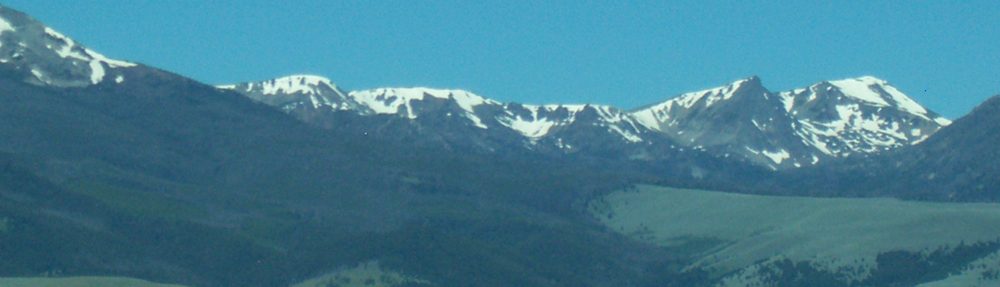

This informative post will be published on Saturday in place of my regular one. You are invited to participate with the opening question.
Brain Teaser Question
What has 13 hearts, but no other organs?
(answer found at the end of this post)
Featured Facts
In North America, the largest member of the weasel family is the large and ferocious wolverine.
Here are a few interesting facts about the wolverine:
- Habitat: cold northern latitudes, high altitude timberland
- Length: 26-40 inches (bushy tail adds another 5-10 inches)
- Weight: 18-40 pounds (males are larger than females)
- Longevity: 7-10 years in the wild (up to 17 years in captivity)
The North American range of the wolverine extends from the Sierra Nevada Mountains into the northern Cascade Range of Washington, as well as the northern and southern Rocky Mountains of Montana, Idaho, Wyoming, Colorado, and New Mexico. The species is dependent on winter habitat in areas with deep snowpack. This leads to more food sources as the wolverine lives and survives in these harsh conditions.
A mature male resembles a small bear with a bushy tail. With a coarse-hair coat and blackish brown color, it is easy to see how many people view a wolverine with a mistaken identity. A wolverine’s appearance features a brown stripe, which extends from the neck to the base of the tail. These unique animals are sometimes called skunk bear, woods devil, and nasty cat.
A wolverine is a solitary, nocturnal hunter. Each preys upon smaller mammals such as porcupines, rabbits, rodents, and squirrels. Some may invite themselves to a dinner of carrion (dead animal flesh) from moose, deer, and domesticated animals. Common predators of wolverines include pumas, bears, wolves and humans. Golden eagles will sometimes pursue young kits.
The life cycle of wolverines begins with male and female courtship during May to August. Males are polygamous so they will mate with several females. Females will give birth to a litter of one to five kits, and they will raise them without any help from males. A common birthing den is usually dug into and hidden under winter’s deep snow.
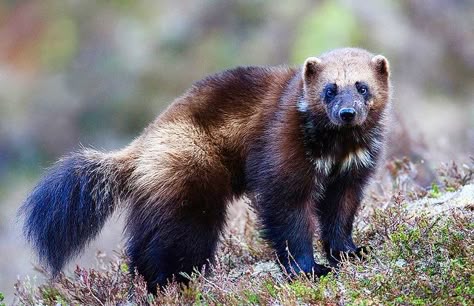
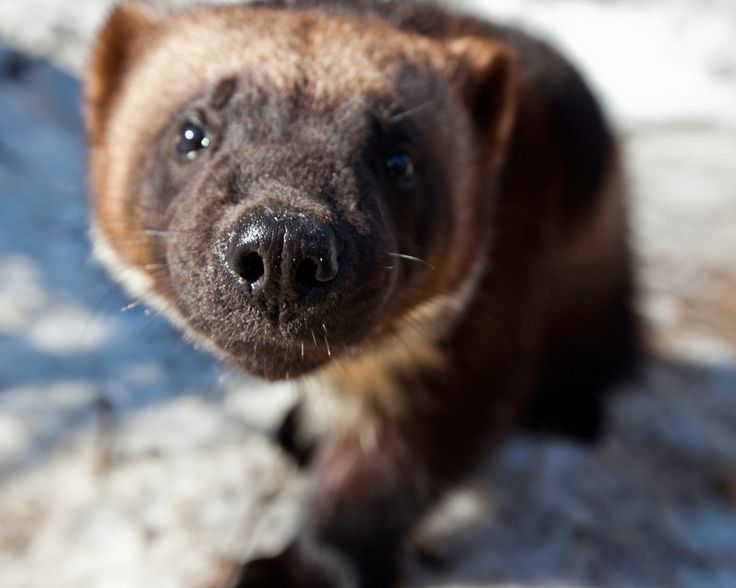
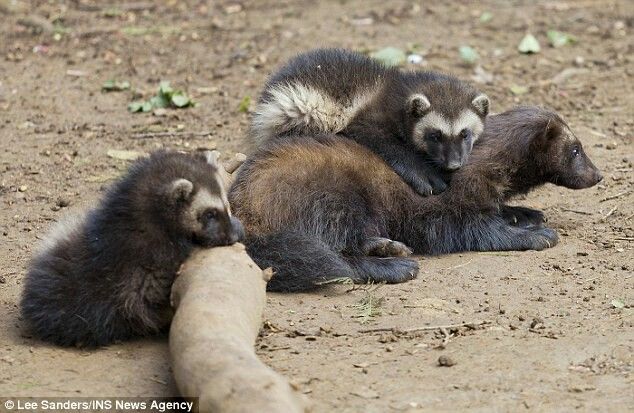
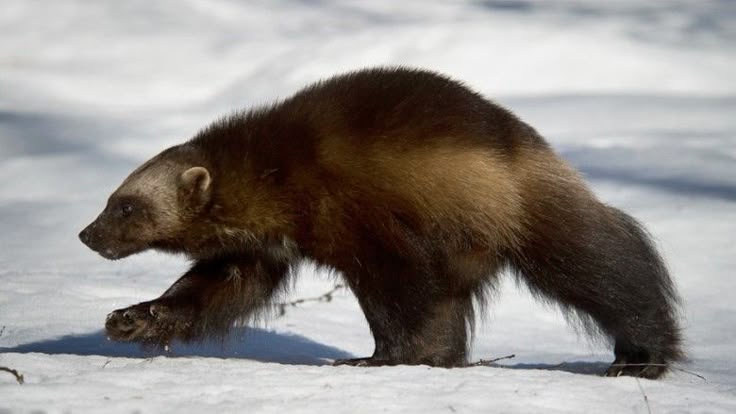
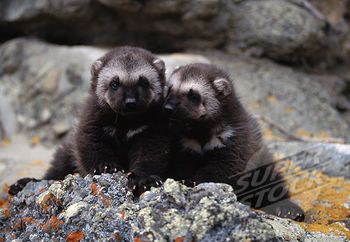

top row: showing off its bushy tail, close-up of one innocent face, female with pair of kits. bottom row: on the move during winter, pair of young kits, how ferocious can I look. (Courtesy of Pinterest)
Answer to Brain Teaser Question
A deck of cards.
 Big Sky Buckeye
I always tickle myself when I get a teaser answer in a flash, as I did today. My brain must have awakened early! I had to do an online search to figure out why “Michigan wolverine” seemed so familiar. It turned out to be the mascot of University of Michigan athlete teams. It seems a good choice, especially if you want to communicate ferocity.
LikeLiked by 1 person
Well done Linda. There’s a bit of irony in the University of Michigan’s mascot. For about 200 years there hasn’t been a significant presence of wolverines in a natural state. Of course, the campus in Ann Arbor might disagree.
LikeLiked by 1 person
My brain is totally asleep today. I started going through all the creatures I knew instead of going for the right answer. Thanks for the brain exercise!
LikeLiked by 1 person
Each of us needs to embrace daily exercise with our minds. Blessings Vickie.
LikeLiked by 1 person