
This informative post will be published on Saturday in place of my regular one. You are invited to participate with the opening question.
Brain Teaser Question
What’s always found on the ground, but it never becomes dirty?
(answer found at the end of this post)
Featured Facts
One of the insect world’s most destructive forces can be termites. Yet, few people really know much about their characteristics and culture.
Here are some interesting facts about termites:
- Size: 1/4 inch (queens are 4-6 inches in length)
- Color: usually white (some may be orange)
- Diet: wood, decaying leaf litter
- Location: every continent except Antarctica
Termites seek a habitat that will allow their colony to grow and expand. Some of the best places to discover them will be wooded areas where rotting stumps and fallen trees provide protection as well as food. Some homeowners discover the presence of termites who have reached the wood framing of the house through mud tunnels. These tunnels begin underground and continue upward into the foundation of the home and beyond.
Because of their usual white color, termites are sometimes called white ants. They possess small, yet soft bodies with the ability to bite. They are wingless except for reproductive males and females. These members of the colony will emerge in swarms during mating times. Queens may live up to 10 years.
The life cycle of termites begins when the queen lays thousands of fertilized eggs. The eggs are tended by worker termites. These attendants feed hatched nymphs for the first two weeks of their lives. Their destiny will include being workers, soldiers, fertile males, and females.
Within a colony of termites, their way of life is similar to that of ants. Termites perform a variety of jobs much like ants do. Within a colony with its queen, there could be anywhere from 100 to a million workers in a vast network of underground tunnels. Many of the workers will be white in color due to living far under the ground where they avoid contact with most sunlight.
Termites are important ecosystem engineers, and their decomposing skills are good for soil condition. They digest cellulose with the help of microorganisms in their gut. They feed on each other’s feces, and males help raise the young. Workers and soldiers are nearly blind, and soldiers are slightly larger than workers. Soldiers are capable lookouts for predators such as mammals, birds, insects, scorpions, lizards, and spiders.


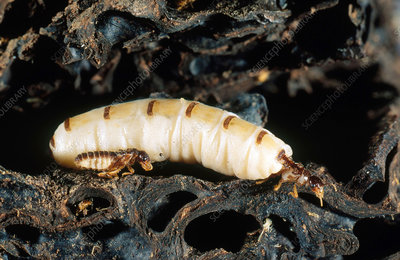

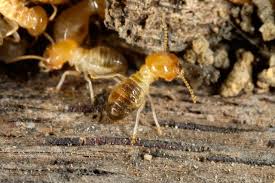
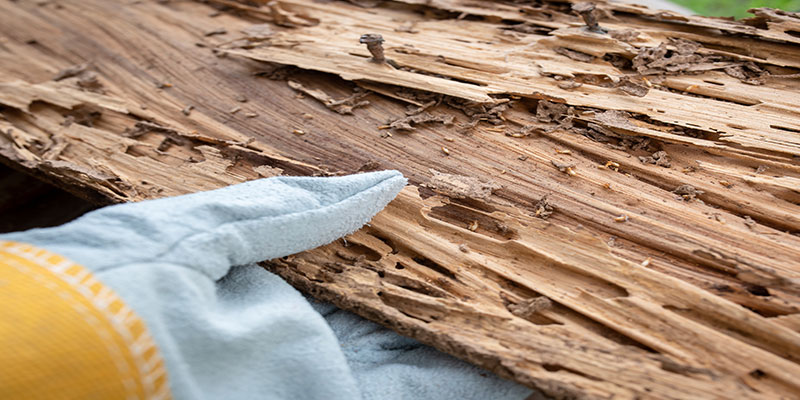

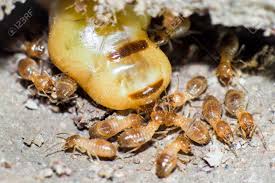
row 1: various members of termite colony, workers building mud tunnels of tubes, queen. row 2: soldiers, workers. Row 3: termite-damaged wood. row 4: diagram of colony beneath an unsuspecting house, queen surrounded by WORKERS. (all images courtesy of PINTEREST)
Answer to Brain Teaser Question
A shadow.
 Big Sky Buckeye