Trivia’s Facts and More (4/26)

Photo by Pixabay on Pexels.com

This informative post will be published on Saturday in place of my regular one.  You are invited to participate with the opening question.

Brain Teaser Question

Mr. and Mrs. Johnson have five daughters.  Each of their daughters has one brother.  How many children do Mr and Mrs. Johnson have.

(answer found at the end of this post)

Featured Facts

Nicknamed the Centennial State, Colorado is admitted to the American Union as the 38th state on August, 1, 1876, one hundred years after the signing of the Declaration of Independence.

Here are a few interesting facts about Colorado:

  • Capital City: Denver (also most populous city)
  • State Bird:  Lark Bunting
  • State Flower:  Rocky Mountain Columbine
  • Motto:  Nil Sine Numine (Nothing Without Providence)

Of America’s 50 states, Colorado is the 8th largest by land size.  Anchored by the Rocky Mountains, its dynamic landscape offers countless landmarks, both natural land man-made. 

Compared to the rest of the country, Colorado contains the most peaks over 14,000 feet (there are 58).  The state offers the highest average elevation of any in the United States.  Nearly 75 percent of Colorado is over 10,000 feet above sea level.

Nicknamed the “Mile High City”, Denver’s elevation is exactly 5,280 feet (one mile) above sea level.  The city enjoys approximately 300 days of sunshine each year.

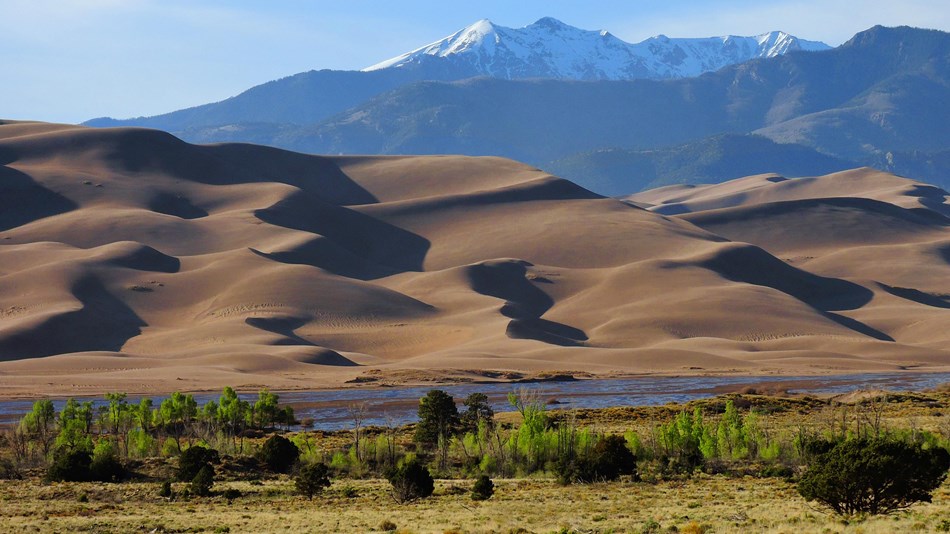
Established in 1932, the Great Sand Dunes National Park recognizes the tallest sand dune formations in the United States.  Star Dune, the highest in the park, stands nearly 700 feet tall.

Located in Colorado Springs, the United States Air Force Academy has been open since 1954.  It remains one of the top learning institutions for the American military along with those of the Army (West Point), Navy (Annapolis, Maryland), and Coast Guard (London, Connecticut).  

Here are some final notes of interest:

  • At his request, William F. Cody (Buffalo Bill) is buried near the community of Golden, atop Lookout Mountain.
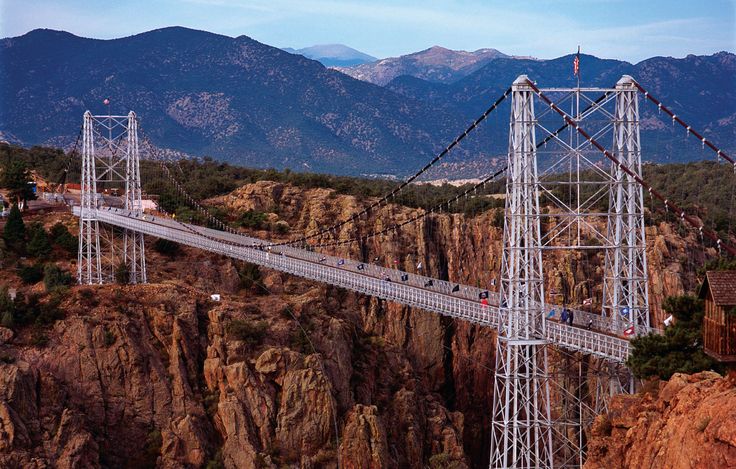
  • Completed in 1929, the Royal Gorge Bridge spans the Arkansas River.  It is one of world’s highest suspension bridges.  Used mostly for pedestrian traffic, the bridge is 1,260 feet long.
  • Denver’s Union Station dates back to 1881.  With recent renovations, it has become one of America’s most modern transportation hubs.

top left and clockwise: State capitol building; state flower, Rocky mountain columbine; state bird, lark bunting; chapel at air force academy; lookout mountain GRAVESITE of buffalo bill; royal gorge bridge; denver’s union station; great sand dunes national park.   (Courtesy of Pinterest)


Answer to Brain Teaser Question

Six children (five daughters and one son).

Trivia’s Facts and More (4/19)

Photo by Pixabay on Pexels.com

This informative post will be published on Saturday in place of my regular one.  You are invited to participate with the opening question.

Brain Teaser Question

What can go through a window without breaking the glass?

(answer found at the end of this post)

Featured Facts

One of the most interesting and important insects in the world is the honeybee.  These dynamic creatures can be found on all continents with the exception of Antarctica.

Here are a few interesting facts about the honeybee:

  • Size:  about one half inch in length
  • Color:  usually black with yellow rings on abdomen (some may appear reddish-brown with orange rings)
  • Diet:  adults, nectar, pollen, honey; larvae, beebread (honey/pollen mixture)
  • Habitat:  hive in hollow tree or man-made beehive; worker bees visit endless flowers in meadows, open woods, and gardens

The honeybee is classified as an eusocial insect.  This social, flying insect features a black-colored head, antennae, and stinger.  Short, pale hair covers the three-segmented thorax and the six-segmented abdomen.  Other characteristics include clear, veined wings and pollen baskets on hind legs.

Farmers, gardeners, and others appreciate the service that honeybees provide for agriculture, gardens, and other flowering regions.  They are prolific pollinators, and many people love the sweetness of their honey.  At the same time, honeybees face increasing peril from climate change, loss of habitat, parasites, invasive plants and bees.

The life cycle of a honeybee colony centers around the queen who rules the hive.  She will generally live for 2-5 years.  In her lifetime, she will produce a colony of 60,000 to 80,000 inhabitants.  Besides laying eggs, she produces chemicals to guide and unify the behavior of the other bees.

Following the queen in the hierarchy of the colony come the female workers.  They are essential to the survival of the hive as they maintain it, collect pollen and nectar, and feed the larvae.  They also clean and circulate the air within the hive with their constantly beating wings.  They generally live about 4-6 weeks during spring and summer, but they will usually survive during the winter months.

The lowest classification of bees in the colony are the males or drones.  They serve only one purpose:  to mate with the queen.  Following this act, they will die.  Remaining drones will be kicked out the colony before winter arrives.

Around the world, honeybees’ behavior varies.  Some are more docile while others can become quite defensive.  When more than one queen resides in a colony, only the strongest one will carry on to guide life in the hive.  The remaining queen will take approximately half of the female workers as they gather in a swarm to travel in order to build a new colony.

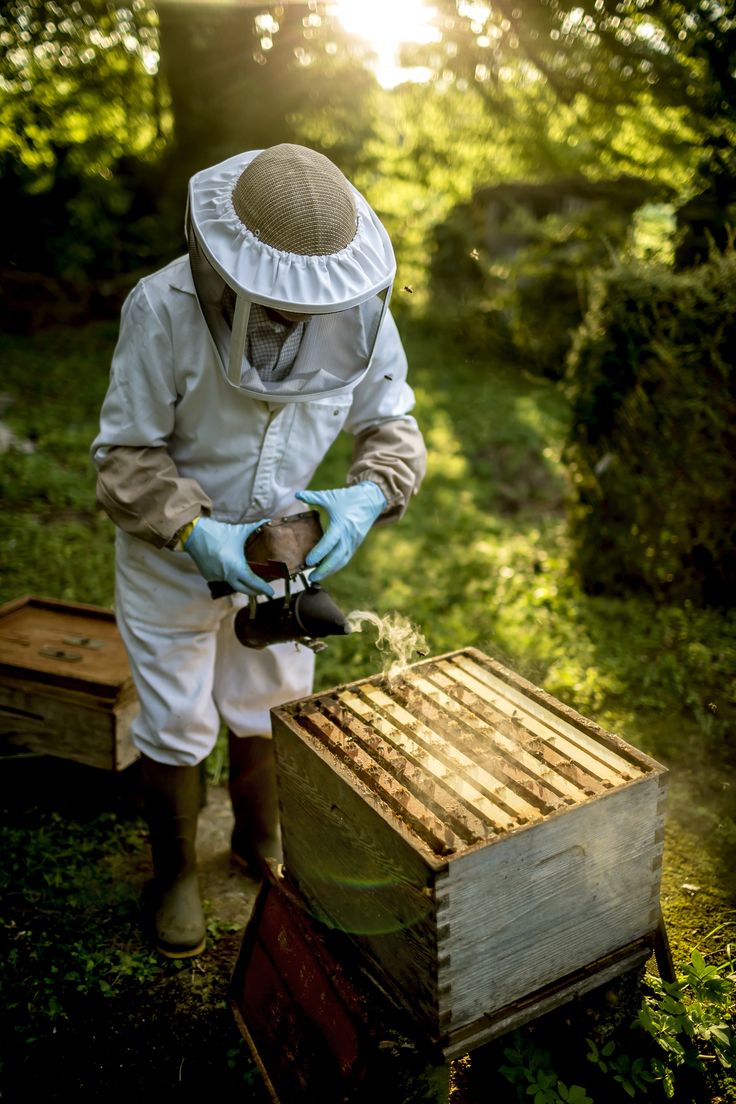
top left and clockwise: bee pollinating flower, bees and honeycomb, types of bees (drone, queen, worker), beekeeper at work, beehive in hollow tree.  (Courtesy of Pinterest)

Answer to Brain Teaser Question

Light.