

This informative post will be published on Saturday in place of my regular one. You are invited to participate with the opening question.
Brain Teaser Question
What do Oscar the Grouch, Alexander the Great, and Winnie the Pooh have in common?
(answer found at the end of this post)
Featured Facts
A subspecies of the brown bear, the grizzly bear is one of the largest and most dangerous bears in the United States.
Here are a few quick facts about the grizzly bear:
- Standing Height: 6-8 feet (1.8-2.4 m)
- Weight: Mature male, 700-800 pounds; mature female, 300-400 pounds
- Top Speed: Approximately 30 mph
- Average Lifespan: 25 years
- Color: Light tan to dark brown
Predominately living in mountainous and forested areas of the northwest U.S., western Canada, and Alaska, the grizzly bear is more dangerous to humans than sharks. Since they are labeled as apex predators, they reside at the top of the food chain with no natural enemies.
Grizzly bears are omnivores, so their diet consists of plants and animals. They eat a variety of berries, roots, fruits, and nuts. They also feast on grubs, fish, small mammals, and even larger mammals such as bison and deer.
While males are solitary, females will stay with their cubs for 2-3 years. The young cubs will learn much from their mother: what berries to eat, how to hunt fish, and how to hunt prey. Grizzly bears are one of the world’s most intelligent animals with an exceptional memory.
Mature males are easy to distinguish from other bears by their over-sized hump shoulder. This mass of muscles is attached to the backbone, which gives grizzly bears superior strength for digging. The strong front legs allow for amazing speed, which allows for catching prey, digging, and foraging. Powerful front paws can bring down a large mammal with a single swat.
Grizzly bears spend the winter months in hibernation. This time usually begins in October of November and runs for 4-6 months. During hibernation, up to 30 percent of weight may be lost, and females will give birth to their cubs at this time. Prior to hibernation, each adult’s appetite is characterized as a feeding frenzy (called hyperphagia). During the 2-4 months before hibernation begins, mature bears will add three pounds of weight per day as they gain anywhere from 200-300 pounds.


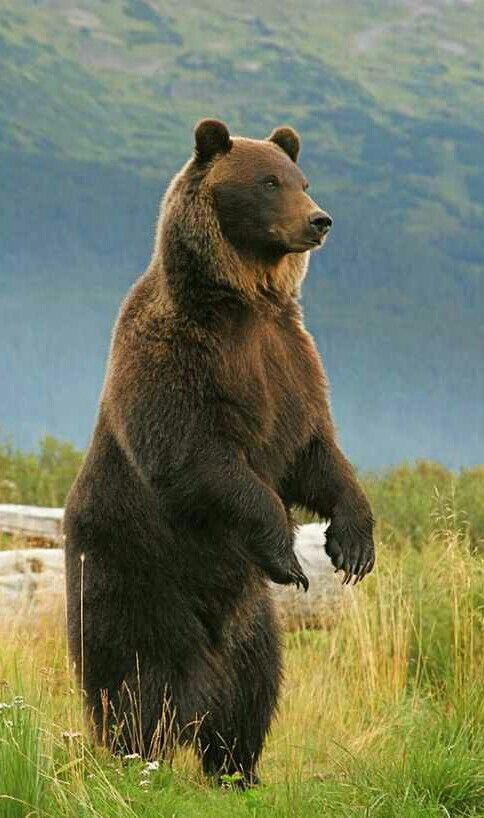
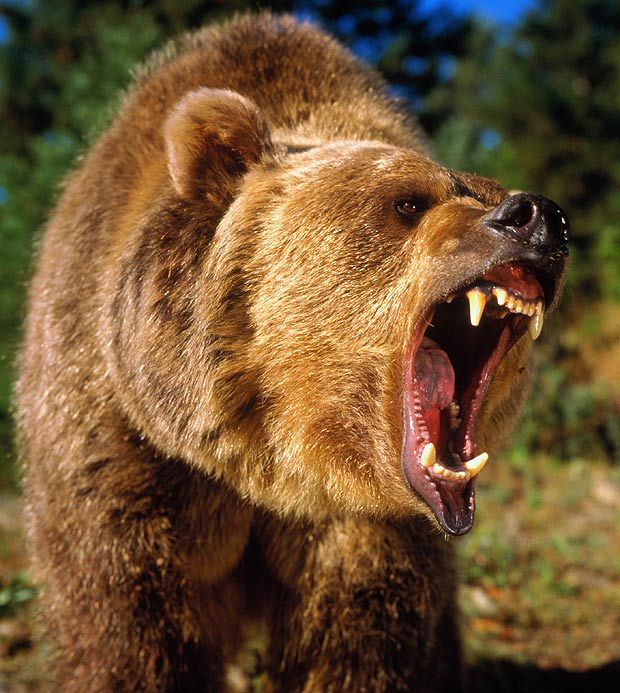
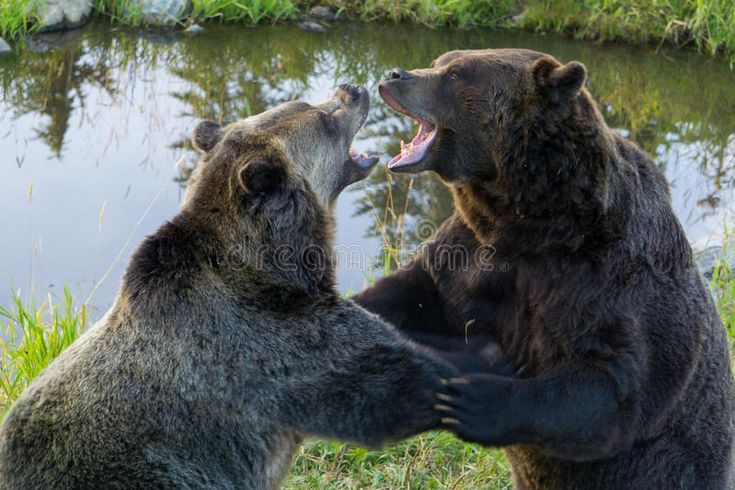
top row: male (notice the shoulder hump, mother with cubs, male standing. Bottom row: ferocious male, pair of males in combat. (courtesy of pinterest)
Answer to Brain Teaser Question
Their middle names . . . THE
 Big Sky Buckeye