Trivia’s Facts and More (3/16)

Photo by Pixabay on Pexels.com

This informative post will be published on Saturday in place of my regular one.  You are invited to participate with the opening question.

Brain Teaser Question

I am an odd number.  Take away one letter, and I become even.  What number am I?

(answer found at the end of this post)

Featured Facts

One of the most dangerous of all arachnids (spiders) in the United States is the black widow.  The female black widow is well known for her poisonous venom, nimbleness when moving, and ability to remain solitary and secretive.

Here are a few quick facts about the black widow spider:

  • Diet:  Carnivore (eating other insects caught in its web)
  • Size:  Females (1 inch) are about twice the size of males (.5 inch)
  • Habitat:  Wooded, shaded areas; fallen logs; crawl spaces and basements

Female black widow spiders possess a body that has a distinct, shiny appearance.  The abdomen is almost round in its shape.  Males have white and red marks on their abdomen, and their legs are longer than those of females.

The life cycle of the black widow begins with the female laying between 100-400 eggs, which are stored in a brown, papery sac.  She will guard the eggs for about 20-30 days until hatching begins.  Spiderlings will transition from orange, brown, and white in color to more and more black with each molting.  They will need about three to four months to fully mature.

The female black widow’s red hourglass mark on her underside serves as a warning to other insects, birds, and humans that she is dangerous.  While her bite is venomous, only humans who are very young or old are most at risk of more serious complications or even death.  The male black widow presents no danger at all.

The venom found in a female black widow is about 15 times stronger than a rattlesnake’s.  Swelling may occur around the wound with other symptoms of cramping, sweating, and chills.  Since the spider is considerably smaller than the rattlesnake, the volume of released venom is much less.  A close relative of the black widow, the Australian redback spider, has more potent venom.

Cannibalistic behavior is sometimes observed with black widow spiders.  After mating, the female may sometimes eat the male, but this doesn’t occur as often as most people think.  Of course, the name “black widow” refers to this phenomenon.  Some spiderlings may consume smaller siblings–especially right after birth.

Top left and moving clockwise:  enlarged view of female’s shape, contrast with the male’s size and shape, female’s distinctive red hourglass mark, papery sac filled with eggs, spiderlings after hatching.  (courtesy of Pinterest)


Answer to Brain Teaser Question

Seven
Trivia’s Facts and More (11/18)

Photo by Pixabay on Pexels.com

This informative post will be published on Saturday in place of my regular one.  You are invited to participate with the opening question.

Brain Teaser Question

A man stands on one side of a river, his dog on the other side.  The man calls his dog, who immediately crosses the river without getting wet and without using a bridge of a boat.  How did the dog do it?

(answer found at the end of this post)

Featured Facts

Classified in the same class as spiders and ticks, scorpions are a member of the arachnid family.  

Here are some interesting facts about the scorpion:

  • Size:  1.5-5 inches (4-13 cm)
  • Color:  dark brown, pale orange, tan, black
  • Habitat:  dark crevices under bark and stones
  • Diet:  insects and other bugs (nocturnal hunter)

Scorpions resemble miniature lobsters with their long pincers.  Fed from venom glands, a poisonous stinger is found at the end of its long curved-up tail.  Multiple eyes are found at the center and sides of its cephalothorax (fused head and body).  Humans should avoid touching a scorpion as a bite will certainly cause pain and possible swelling.  Very few scorpions are deadly.  

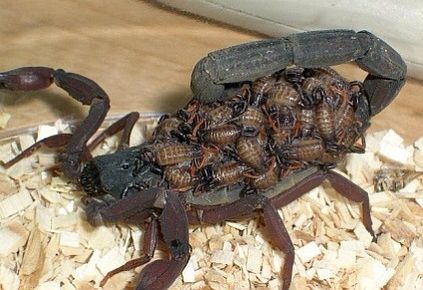
The life cycle of a scorpion follows the female as she carries eggs inside of her.  Scorpions are born live, and the female will carry this brood on her back until they fully mature.

There are nearly 2,000 species of scorpions, and their lifespan runs from 4 to 25 years.  These champions of survival can live without food for up to a year, and they grow quite slowly until reaching maturity (up to five years with some).  

In various cultures, scorpions represent and symbolize different meanings.

  • Ancient Egypt:  guardianship and control
  • Native Americans:  danger and change
  • Some African civilizations:  healing and rebirth
  • Greek mythology:  transformation and rebirth

left:  mature female scorpion with brood on her back.  right:  tiny scorpion on a human finger.    (photographs courtesy of pinterest.)


Answer to Brain Teaser Question

The river was frozen.

Trivia’s Facts and More (12/10)

Photo by Pixabay on Pexels.com

This informative post will be posted on Saturday along with my usual writing.  You are invited to participate with the opening question.

Brain Teaser Question

What could you put in a 50-pound barrel of oil to make it weigh less than 50 pounds?

(answer found at the end of this post)

Featured Facts

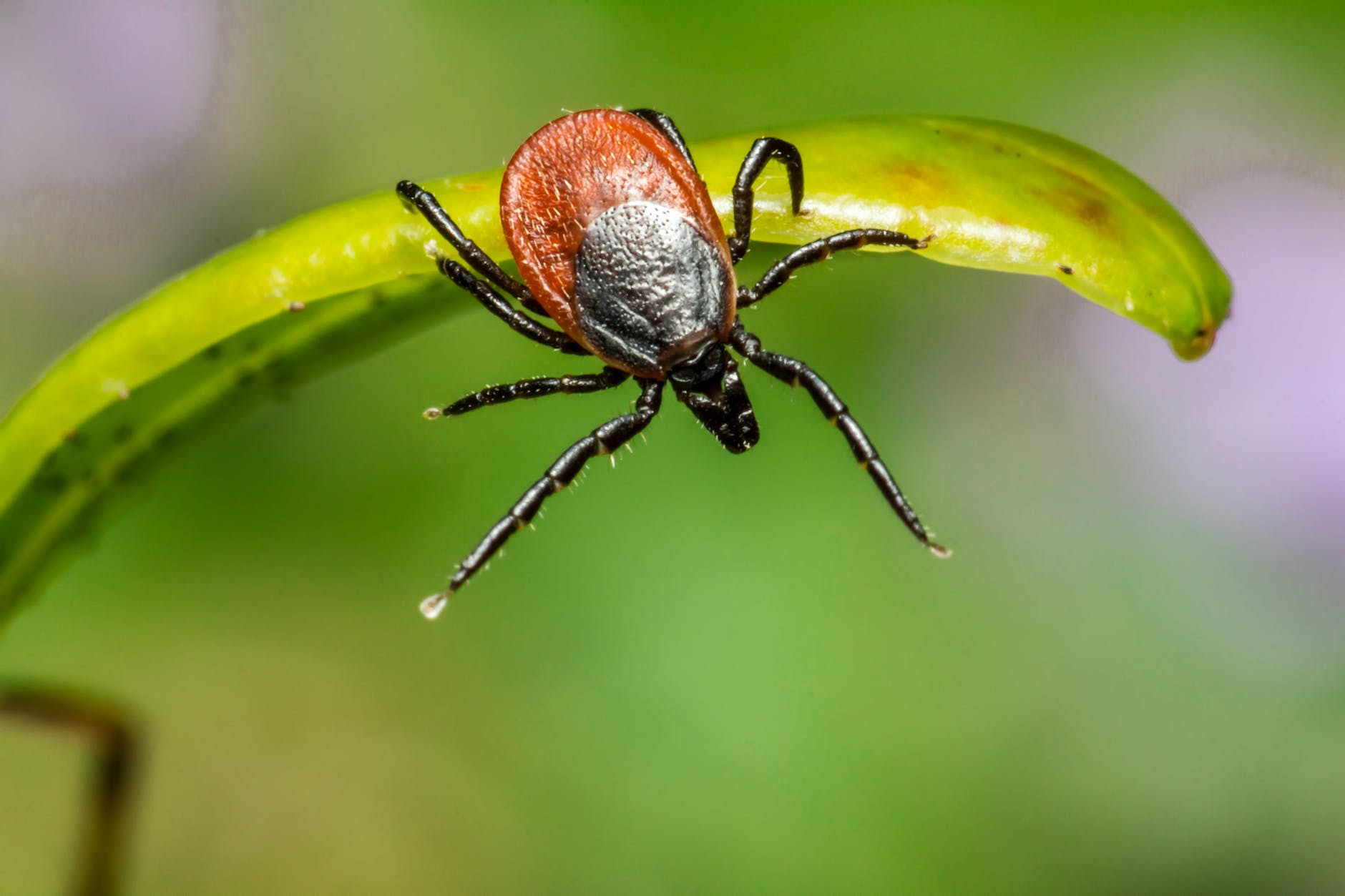
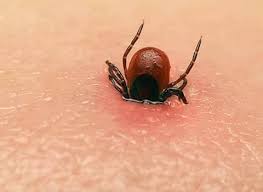
In North America’s animal kingdom, one of the smallest and most dangerous creatures is the tiny tick.  Having eight legs, they are arachnids (related to spiders).

Here are a few interesting facts about the tick:

  • Habitat:  bodies of animals, in fields or woods (awaiting an animal host)
  • Diet:  blood
  • Color:  brown to reddish-brown (with leathery or shell-like covering)

Known as “black measles,” Rocky Mountain Spotted Fever came to the forefront when it cast its dark shadow over the Bitterroot Valley in western Montana.  Early settlers in the valley contracted a mysterious disease.  Scientific research began in the early 1900s and culminated in the beginning of the Rocky Mountain Labs research. The lab would research and refine treatments for the dreaded spotted fever, which scientists had discovered was carried by the tiny tick.

Answer to Brain Teaser Question

A hole.

Trivia’s Facts and More (9/24)

Photo by Pixabay on Pexels.com

This informative post will be posted on Saturday along with my usual writing.  You are invited to participate with the opening question.

Brain Teaser Question

What three letters can be rearranged to make 3 three-letter words?

(answer found at the end of this post)

Featured Facts

One of most misunderstood arachnids of the wild kingdom is the tarantula.   Arachnids include spiders, mites, ticks, scorpions, and a few other species.  Their bodies consist of two parts:  the cephalothorax in front and the abdomen behind.  All have eight legs.

Here are some unique characteristics of the tarantula:

  • Color:  Gray to dark brown, some with red or orange markings.
  • Description:  Large, hairy spider with stout body and eight closely grouped eyes.
  • Habitat:  Hot deserts, grasslands, and rainforests.
  • Diet:  Insects and other bugs.  Larger species eat lizards, birds, and mice.

Tarantulas are primarily active at night, and females may live up to 20 years.  Some tarantulas live on the ground in burrows lined with silk, while others are arboreal (tree-dwelling).   Despite what some of Hollywood’s older films depict, the bite of a tarantula is rarely fatal to humans.

Believe it or not:  Tarantulas found in Central America and other rainforest areas have been known to hitch a ride with a bunch of bananas.  Some even arriving in the United States and Europe, only to be discovered at wholesale produce distribution centers.

Photo by Rejean Bisson on Pexels.com

Answer to Brain Teaser Question

Several answes:

AET makes EAT, TEA, ATE

ATR makes ART, RAT, TAR

OTP makes OPT, TOP, POT

APT makes APT, PAT, TAP

REA makes EAR, ARE, ERA

AMR makes ARM, MAR, RAM

ONW makes WON, NOW, OWN