Trivia’s Facts and More (7/26)

Photo by Pixabay on Pexels.com

This informative post will be published on Saturday in place of my regular one.  You are invited to participate with the opening question.

Brain Teaser Question

What begins with an “e” and only contains one letter?

(answer found at the end of this post)

Featured Facts

Sometimes referred to as one of the titans of the American prairie, the American bison is the largest land mammal in North America.  

Here are a few interesting facts about the American bison:

  • Common name:  buffalo
  • Weight:  male (up to 2,000 pounds), female (up to 1,000 pounds)
  • Lifespan:  10 to 20 years
  • Diet:  grass and herbs (sometimes will eat twigs and leaves)

As an ox-like grazing animal, the bison still remains as history’s master of the American plains.  Before the arrival of Europeans, numbers of bison probably total over 50 million.  Today, bison numbers provide only a whisper of its former presence.

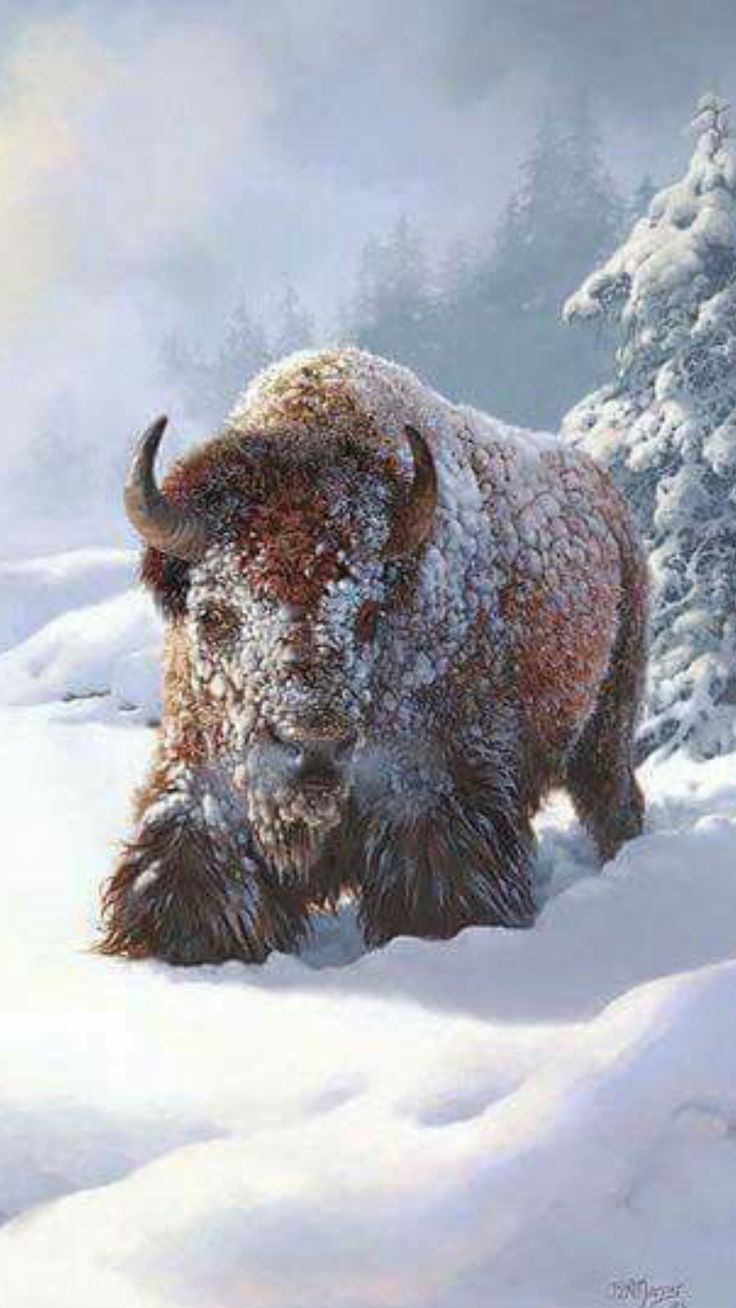
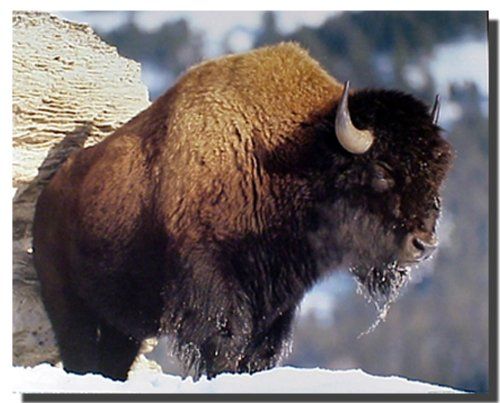
Other than a size difference, bulls and cows present a similar appearance.  Both males and females bear short, upcurved horns.  A broad, heavy head is carried low, and it is unable to rise to shoulder level.  A distinctly visible shoulder hump allows the bison to swing the head from side to side, which is highly useful in clearing a path through winter snow.  With heavy forequarters and coarse, shaggy fur, the bison serves as an inviting photo opportunity.

However, people should be very careful to not approach a bison.  These powerful and large animals exhibit an unpredictable nature.  While each has to deal with poor eyesight, the bison possesses excellent senses of smell and hearing.

Bison prefer to live in small groups or bands.  Each is centered around one or more females, along with several generations of offspring.  Males live outside of the band, and they may form their own small groups.

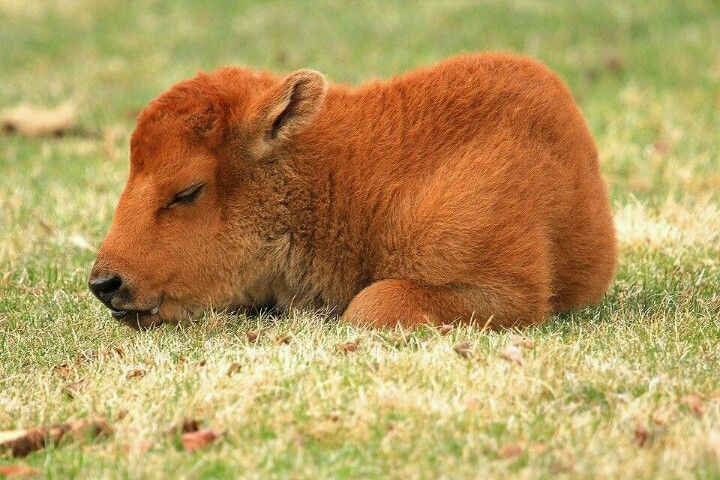
Mating season peaks around August, and bulls engage in head-butting to determine who is most dominant.  Each cow bears one calf, weighing 30 to 70 pounds at birth.  Calves are often referred to as “red dogs” because of their orange-red color.  As they mature, the color will transition to a dark brown.

Native American culture has always treated bison with reverence.  Tribes on the plains followed their seasonal migration patterns as they traveled southward in winter and northward in summer.  In hunting the bison, the animal provided for the tribe’s basic needs of food, clothing, shelter, and tools.  Nothing from the animal was ever wasted.

Today, about 500,000 bison live in the United States.  Most are raised as livestock, with much smaller numbers scattered around the American West as small herds on conservation preserves.  Numbering approximately 5,000, the largest group of bison on public lands is found in Yellowstone National Park.  These bands of bison remain as pure descendants of the earliest of the species.

top left and MOVING clockwise: excellent photo op of a bull, distinctive orange-red color of a calf, cow with calf, white-covered bull in deep winter snow, bull stands out in winter’s cold, bulls dueling for supremacy during breeding season, band from grand teton national park, sacred white bison male,  (Courtesy of Pinterest)


Answer to Brain Teaser Question

An envelope.

Trivia’s Facts and More (6/14)

Photo by Pixabay on Pexels.com

This informative post will be published on Saturday in place of my regular one.  You are invited to participate with the opening question.

Brain Teaser Question

What has 13 hearts, but no other organs?

(answer found at the end of this post)

Featured Facts

In North America, the largest member of the weasel family is the large and ferocious wolverine.

Here are a few interesting facts about the wolverine:

  • Habitat:  cold northern latitudes, high altitude timberland
  • Length:  26-40 inches (bushy tail adds another 5-10 inches)
  • Weight:  18-40 pounds (males are larger than females)
  • Longevity:  7-10 years in the wild (up to 17 years in captivity)

The North American range of the wolverine extends from the Sierra Nevada Mountains into the northern Cascade Range of Washington, as well as the northern and southern Rocky Mountains of Montana, Idaho, Wyoming, Colorado, and New Mexico.  The species is dependent on winter habitat in areas with deep snowpack.  This leads to more food sources as the wolverine lives and survives in these harsh conditions.

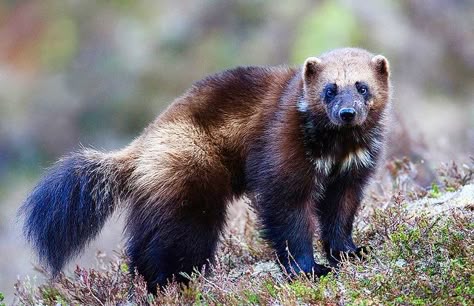
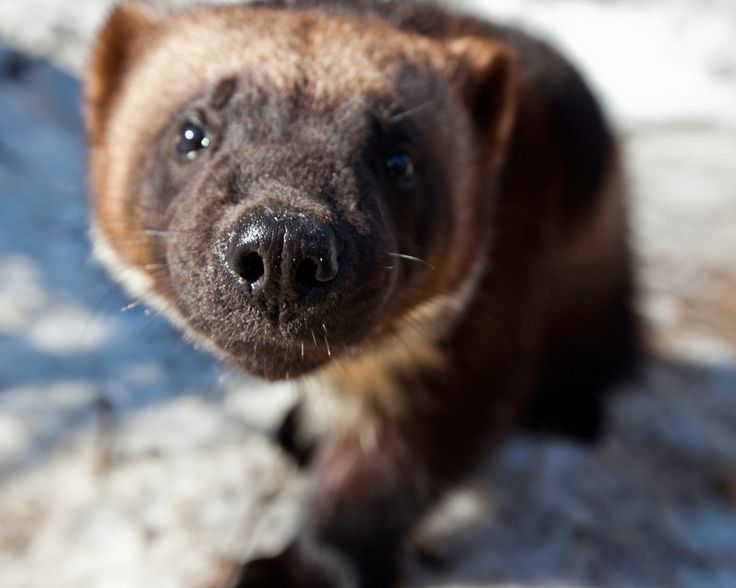
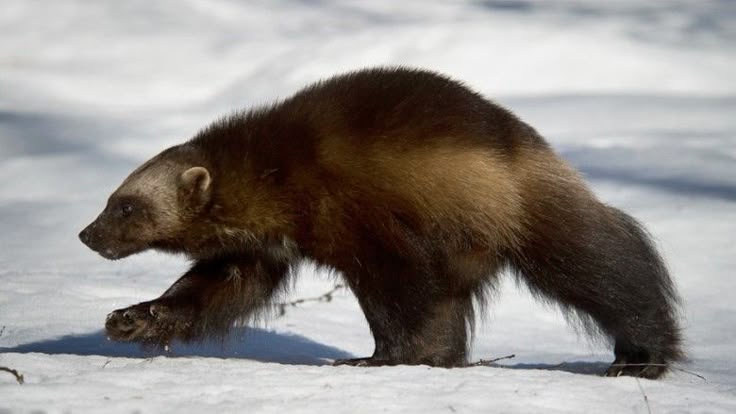
A mature male resembles a small bear with a bushy tail.  With a coarse-hair coat and blackish brown color, it is easy to see how many people view a wolverine with a mistaken identity.  A wolverine’s appearance features a brown stripe, which extends from the neck to the base of the tail.  These unique animals are sometimes called skunk bear, woods devil, and nasty cat.  

A wolverine is a solitary, nocturnal hunter.  Each preys upon smaller mammals such as porcupines, rabbits, rodents, and squirrels.  Some may invite themselves to a dinner of carrion (dead animal flesh) from moose, deer, and domesticated animals.  Common predators of wolverines include pumas, bears, wolves and humans.  Golden eagles will sometimes pursue young kits.  

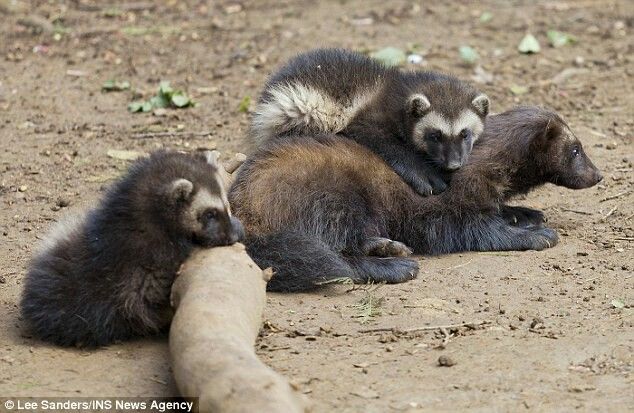
The life cycle of wolverines begins with male and female courtship during May to August.  Males are polygamous so they will mate with several females.  Females will give birth to a litter of one to five kits, and they will raise them without any help from males.  A common birthing den is usually dug into and hidden under winter’s deep snow.

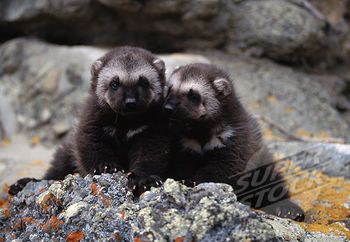
top row: showing off its bushy tail, close-up of one innocent face, female with pair of kits.  bottom row: on the move during winter, pair of young kits, how ferocious can I look.  (Courtesy of Pinterest)


Answer to Brain Teaser Question

A deck of cards.

Trivia’s Facts and More (5/10)

Photo by Pixabay on Pexels.com

This informative post will be published on Saturday in place of my regular one.  You are invited to participate with the opening question.

Brain Teaser Question

What has keys but cannot open locks?

(answer found at the end of this post)

Featured Facts

Related to the squirrel, one of America’s smallest mammals is the diminutive chipmunk.  Its chipper and speedy presence can be found in many neighborhoods, woodlands, and shrubby deserts.

Here are a few interesting facts about chipmunks:

  • Body length:  4-7 inches
  • Tail length:  3-5 inches
  • Diet:  (omnivorous) insects, nuts, berries, grains, seeds
  • Lifespan:  2-3 years

Chipmunks are terrestrial, which means they generally live on the ground.  However, they are agile tree climbers.   Their quick, chirping sounds call out warnings to other chipmunks.

Chipmunks are easily distinguished from squirrels by their varying black and white strips, which run down their backs and on their faces.  Their body is colored gray or brown, and it is accented with a slightly bushy tail.

Being quite adaptable to a variety of habitats, chipmunks prefer areas with an undergrowth of vegetation cover.  Their homes include underground burrows, hidden nests beneath vegetation, or in fallen logs.

Much of a chipmunk’s daylight time is spent finding and storing food for their long winter’s semi-hibernation.  Their cheek pouches can expand to three times their head size, and this enables them to carry and store the food they find. 

Chipmunks are most active in the cooler hours during the warmer months–especially in the early morning and late afternoon.  During the winter, they may hibernate intermittently, but they are much less active than normal. 

Both males and females work together in raising their pups.  The most common time of year for another life cycle to begin is the spring.  Litters generally consist of 2-8 pups.  

Chipmunks have to be on the lookout for several predators.  These include carnivorous mammals such as weasels and foxes.  Large snakes and birds of prey also hunt chipmunks.

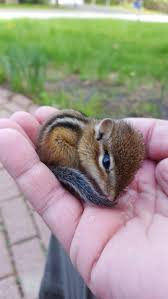
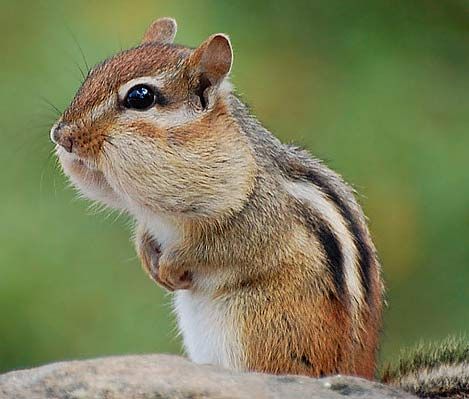
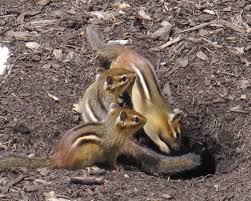
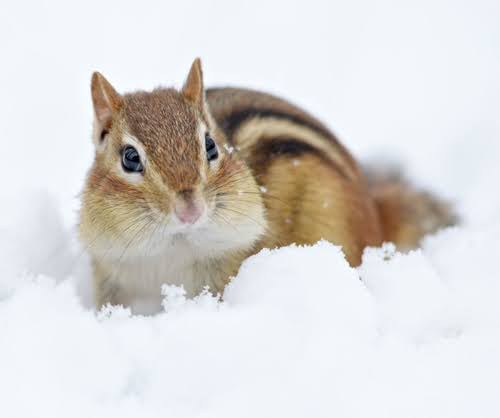
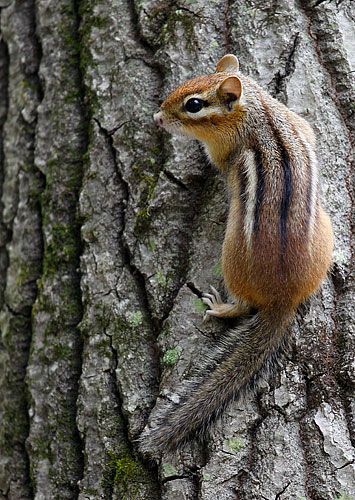
various photographs of chipmunks (in the top row, note the baby pups held in human hands).  (Courtesy of Pinterest)


Answer to Brain Teaser Question

A piano.

Trivia’s Facts and More (3/29)

Photo by Pixabay on Pexels.com

This informative post will be published on Saturday in place of my regular one.  You are invited to participate with the opening question.

Brain Teaser Question

I have two coins that add up to 30 cents (in U.S. money), and one of them isn’t a nickel.  What are the two coins?

(answer found at the end of this post)

Featured Facts

One of nature’s most intriguing creatures is the diminutive salamander.  In the state of Ohio, there are 24 different species.   

Here are a few interesting facts about the salamanders found in the Buckeye State:

  • Classification:  Amphibian
  • Physical features:  Smooth, moist skin without scales or claws; delicate and small; variety of colors
  • Habitat:  Many prefer inland bodies of water (ponds and streams) while others are more suited to moist conditions on land (terrestrial)

These long-tailed amphibians are cousins of frogs and toads.  Their main sources of food include invertebrates:  insects, slugs, worms, leeches, and snails.  They are preyed upon by fish, birds, otters, snakes, turtles, muskrats, raccoons, and skunks.  A salamander’s body coloration helps it hide from those seeking to prey upon it.

Salamanders also face threats from disease, pollution, loss of habitat, and non-native invasive species.  The human handling of any salamander in Ohio is prohibited by law.  From spring to mid-summer during breeding season, they are quite active at night.

One of the largest salamanders found in Ohio is the Eastern Hellbender.  Its average length runs between 12-24 inches.  Their territory is located in the southern and eastern regions of the state.  Its preferred habitat is a swift-flowing stream where they can hide under rocks during the daytime.

Eastern Hellbender Salamander (courtesy of Pinterest)

One of Ohio’s most common salamanders is the Northern Dusky.  It lives everywhere in the state except for the northeastern region.  Its average length is 3-5 inches.  A light line extends from the back of the eyes to the back of the mouth.

Northern Dusky Salamander (courtesy of Pinterest)

One of the smallest salamanders in Ohio is the Blue Spotted species.  It is found in most areas of the Buckeye State.  Being about 2 inches in length, its body shows off a distinct pattern of contrasting spots.

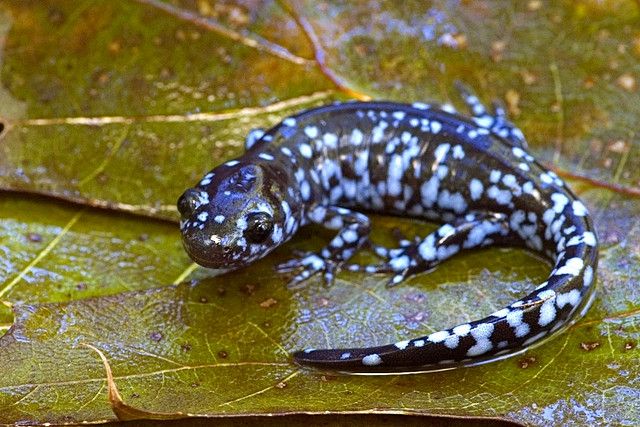
Blue Spotted Salamander (courtesy of Pinterest)

The final species to present is one of Ohio’s terrestrial salamanders.  The Redback spends much of its life on land.  With a length of 2-4 inches, it is found throughout the state.  During breeding season, eggs are placed under moist rocks and under logs.  During the arrival of early spring, people may discover a Redback peeking out beneath rocks and logs.

Redback Salamander (courtesy of Pinterest)

Answer to Brain Teaser Question

A quarter and a nickel (the quarter isn’t a nickel).

Trivia’s Facts and More (3/15)

Photo by Pixabay on Pexels.com

This informative post will be published on Saturday in place of my regular one.  You are invited to participate with the opening question.

Brain Teaser Question

When my dad was 31, I was just 8 years old.  Now his age is twice as old as my age.  What is my current age?

(answer found at the end of this post)

Featured Facts

The United States is home to three types of vultures.  These carnivorous birds of pray live a life of consuming carrion, which is decaying flesh of dead animals.

Here are the types of vultures and their territorial range:

  • Turkey Vulture:  virtually every region of the country
  • Black Vulture:  predominately in southeastern region of the country
  • California Condor:  selected areas of California and Arizona

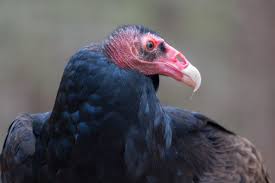
The Turkey Vulture is the most common species in the United States.  Its appearance features an all black body, bald head, and pinkish bill.  They possess a highly developed sense of smell, which allows for easier detection of carrion up to eight miles away.  Lacking vocal cords, these birds can only make a “hissing” sound.

The Black Vulture is covered in black feathers, bald head with black skin, and wings with silver feathers on the underside.  They possess excellent vision, and they prefer killing small animals (skunks, opossums, baby pigs, calves, and lambs) for food instead of carrion.  They follow a habit of staying close to Turkey Vultures, who have a better sense of small.  Since Black Vultures are more aggressive, they frequently chase their competition away.

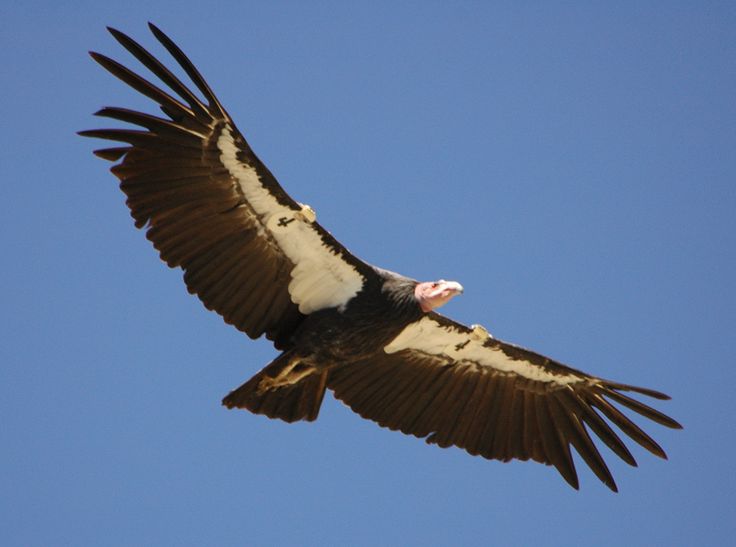
The California Condor is the largest bird in the United States.  With a predominately black body and wings, the underside of the wings is usually white.  The bald heads range in color from yellow to orange to pink to purple to blue to red.  

In 1987, the Condor is declared extinct in the wild.  The few remaining birds live in captivity.  Because of a very successful breeding program, Condors are released back into the wild in California (1991) and Arizona (1996).  The Condor has excellent gliding skills when in flight, and they can soar as high as 15,000 feet.  

All three of these raptors feature featherless heads and necks.  This helps to keep the birds clean while consuming carrion.  A powerful stomach acid protects each bird of prey from exposure to rabies, Black Plaque, botulism, distemper, and anthrax.  

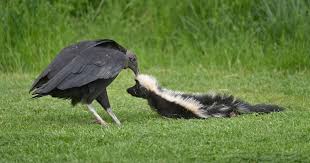
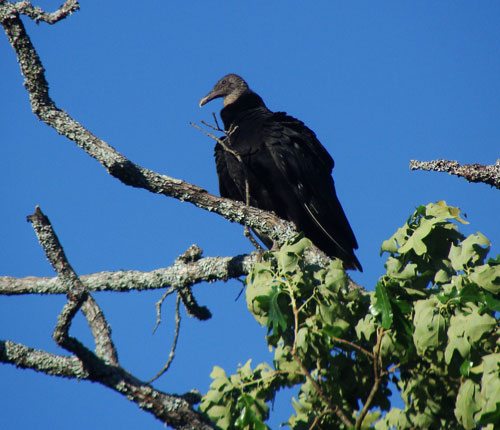
row 1:  black vultures feasting, in flight, and looking for prey.  Row 2:  Turkey Vultures on left column, along with baby chick.  on the right column, california condor with handler (notice the size contrast).  row 3:  california condor in flight.  (all images courtesy of PINTEREST)
Answer to Brain Teaser Question

23 years old.

Trivia’s Facts and More (2/15)

Photo by Pixabay on Pexels.com

This informative post will be published on Saturday in place of my regular one.  You are invited to participate with the opening question.

Brain Teaser Question

Why did the spider get a job in I.T.?

(answer found at the end of this post)

Featured Facts

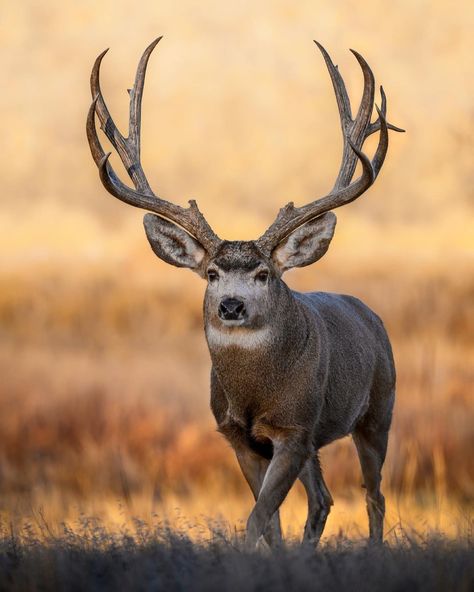
One of the largest species of deer in North America is the mule deer.  Its range runs from the Yukon in the north to northern Mexico in the south.

Here are some interesting facts about mule deer:

  • Size:  large bucks weigh on the average 200 pounds, but some have been found as large as 300 pounds (female does are smaller)
  • Defining physical characteristic:  large ears which resemble those of a mule
  • Diet:  (herbivores) dry leaves, buds, fruit, flowers, sprouting grasses, small twigs, lichens
  • Lifespan:  about ten years

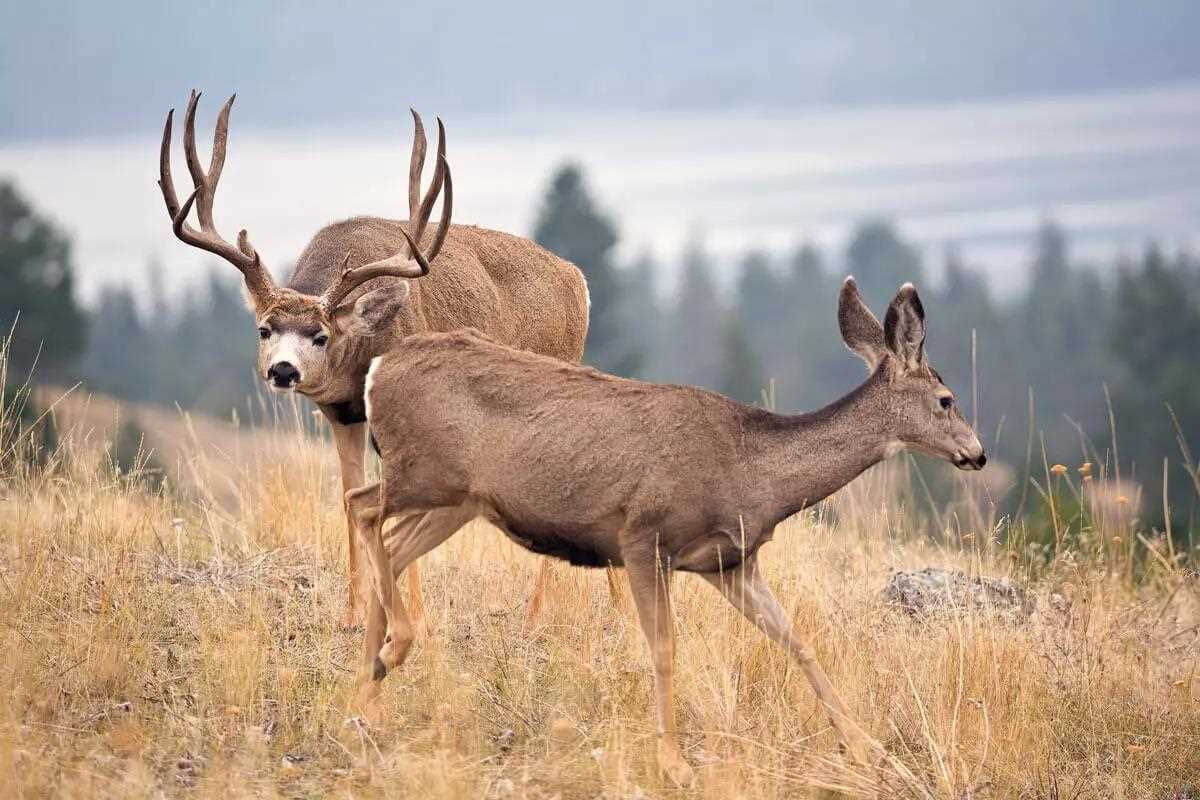
Mule deer closely resemble white-tailed deer, yet there are significant differences.  Mule deer’s larger ear size and body size separate them from white-tailed deer.  Their antlers feature a forked structure, with a much wider spread between them.  Many hunters prize the antlers of a mule deer buck.

Habitat is essential for a mule deer’s survival needs.  Bucks seek areas rich in nutrients that will stimulate body and antler growth.  In searching for these types of food, they become more vulnerable to attacks from predators (primarily wolves and coyotes).  Does prefer more secure locations that will provide safety for themselves and their young fawns.

Mule deer possess outstanding vision, hearing, and smell.  All of these senses provide their best defense against predators.  They prefer open, rugged landscapes when they migrate away from the protection of the forest.  Being incredibly agile, they can flee with the use of stotting.  This technique describes how deer hop along and land on all four feet.  

The rut season for mule deer usually runs from October into December.  During this mating season, bucks compete for supremacy.  Many are wounded several times from their battles with fellow bucks.  Following the rut, they retreat into hiding in order to recover from exhaustion and injuries.

Following a seven-month long gestation period, does give birth usually with twin fawns in late spring and early summer.  This time period allows for a greater abundance of nutritious food.  Following birth, fawns remain hidden and protected for several days. 

In some locations, mule deer numbers are declining.  Interbreeding with white-tailed deer makes them more at risk to predators because a hybrid deer can neither run nor jump as well as a purebred.  Forestry, drought, and growing predator populations also affect mule deer population figures.  

From top left and moving clockwise:  trio of bucks jump a fence, buck with wide spread antlers, doe with pair of fawns, buck and doe during rut season, and two large bucks in combat during the rut.  (all images courtesy of PINTEREST)

Answer to Brain Teaser Question

Because he excels in web design.

Trivia’s Facts and More (1/11)

Photo by Pixabay on Pexels.com

This informative post will be published on Saturday in place of my regular one.  You are invited to participate with the opening question.

Brain Teaser Question

It may be shorter than much of the rest of your hand, but when you are happy, you lift it up like it is the best.  What is it?

(answer found at the end of this post)

Featured Facts

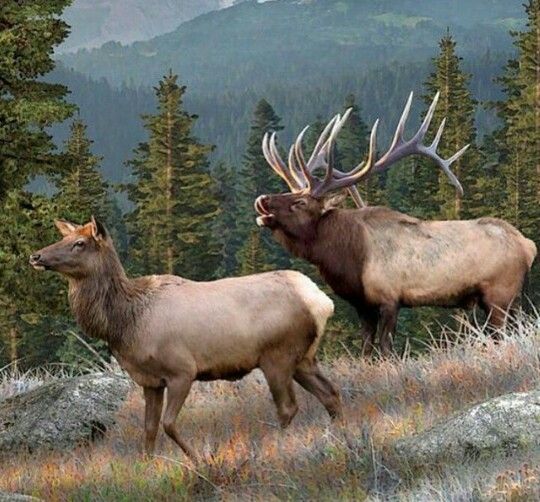
Found in the foothills and mountains of different regions in North America, the elk is the most advanced subspecies of the red deer.  In the overall deer species, only the moose is larger in size.

Here are some interesting facts about the elk:

  • Weight:  bulls, 700-1,000 pounds; cows, 450-650 pounds
  • Native American name:  wapiti (in Shawnee, means white deer)
  • Habitat:  forests and woodlands in mountainous regions, some may migrate to to grasslands
  • Diet:  grass, leaves, tree bark (herbivores)

In Native American culture, the elk served as a vital source of food, hides for clothing and shelter, and bones for tools.  Before European colonists and explorers arrived on the continent, the natural territory of the elk was vast compared to today’s territories.  Today, most reside in the foothills and mountains of the western Rocky Mountains and isolated, smaller mountain ranges.  Some still venture onto prairies and grasslands, especially during the winter season when food may become more scarce.

The elk has proven to be a vary adaptable animal.  They survive the long, cold winters of the mountain west.  They have proven to be fast runners with outstanding endurance.  During the colder months, their light hide color darkens, and a well-developed dark neck mane thickens.  

Their chief protection from natural predators is to assemble in large groups, usually single-gender except during the autumn rut season.  Elk serve as a food source for wolves, mountain lions, coyotes, bobcats, and grizzly bears.  

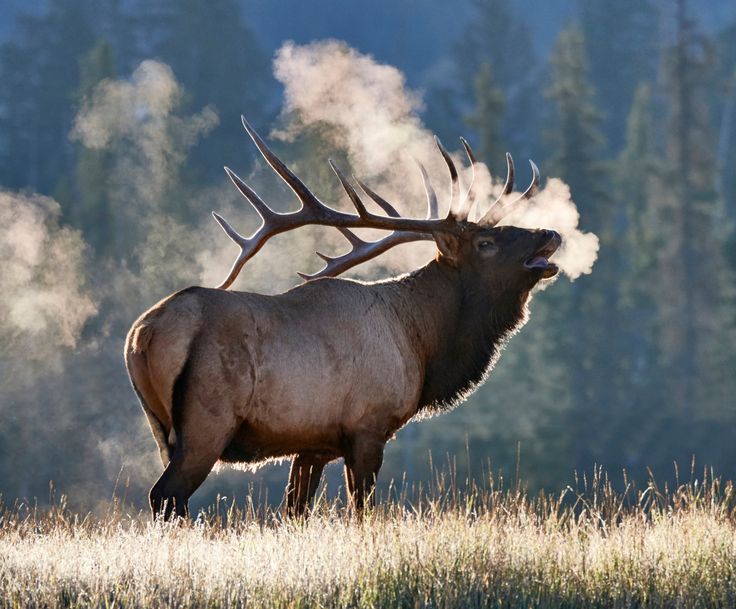
During the rut season, the strongest bulls will lead groups of cows.  Heard over several miles, bulls use a high-pitched bugling call to attract cows to their group, and they will defend their harem (as it is called) against any other bulls. 

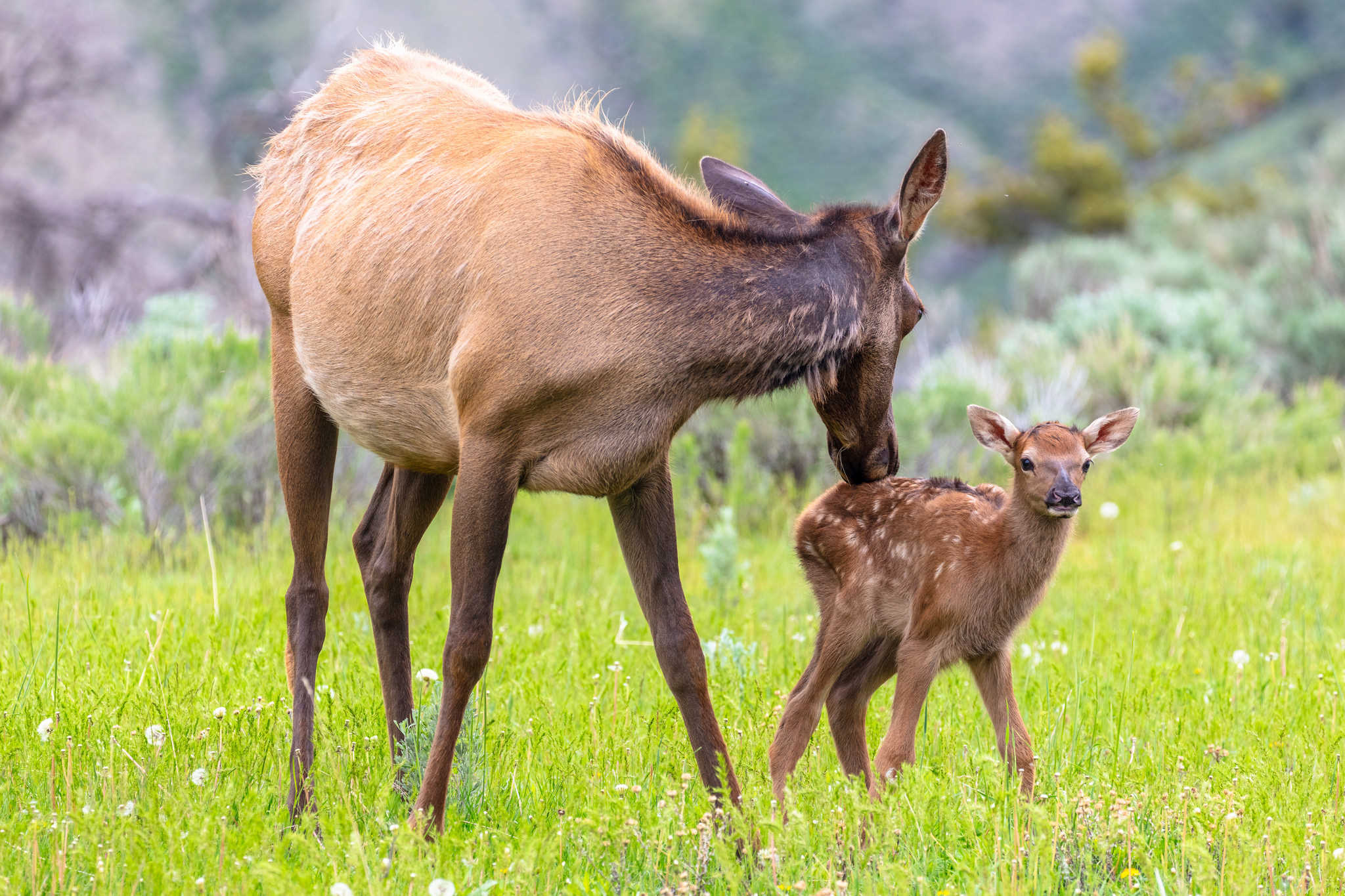
Calves will be born in May to June.  They feature spotted hides, and they are scentless.  Each calve will stay with mother for about a year.  Usually the autumn season encourages these maturing calves to leave their mothers.  

When conditions are ideal for food, a mature elk will eat approximately 20 pounds of plant matter.  Bulls will shed their antlers after the autumn rut, but they will reappear in spring.

photo gallery:  moving from top left and clockwise.  Bull elk on a cold, frosty morning.  bull and cow together.  cow with a recently born calf.  bull with a harem of at least two cows.  bull walking in yellowstone national park at mammoth hot springs.  elk herd at the national elf refuge outside of jackson hole, wyoming.  Bugling bull.  during autumn rut, two bulls dueling for supremacy.

All images courtesy of Pinterest.

Answer to Brain Teaser Question

Thumb.

Trivia’s Facts and More (11/23)

Photo by Pixabay on Pexels.com

This informative post will be published on Saturday in place of my regular one.  You are invited to participate with the opening question.

Brain Teaser Question

A bus driver goes the wrong way along a one-way street.  A police officer passes him, yet he does not stop the bus driver.  Why?

(answer found at the end of this post)

Featured Facts

Found throughout the continental United States, red foxes are known for their clever and cunning intelligence.  They have been characterized as one of nature’s original artful dodgers.

Here are a few quick facts about red foxes:

  • Body length:  18-34 inches
  • Tail length:  12-22 inches
  • Weight:  6-20 pounds
  • Top speed:  30 mph
  • Lifespan:  2-4 years

Because of their ability to adapt, foxes live in a diversity of habitats:  forests, grasslands, deserts, marshes, and mountains.  Featuring a rusty, reddish brown fur, foxes are larger than their cousins, the grey fox and Arctic fox.

Being an omnivore, foxes enjoy a variety of food sources:  insects, crayfish, fruits, reptiles, rodents, birds, eggs, and rabbits.  They are members of the dog family (canidae), but they lack necessary facial muscles to bare their teeth.

During the daytime, most foxes remain hidden in burrows or dens.  Their acute sense of hearing greatly aids their search for prey.  They have the ability to jump high in the air before pouncing upon their next meal.  Being nocturnal hunters, they usually hunt alone.  If they have surplus food, they will likely bury it.  

With the arrival of autumn, foxes’ fur thickens for the coming winter season.  Seeking warmth on a cold night, foxes enjoy being curled up within their long, bushy tails.  For mating purposes, males and females frequently pair up during the winter months of December through February.  

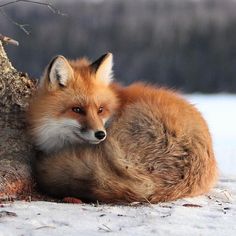
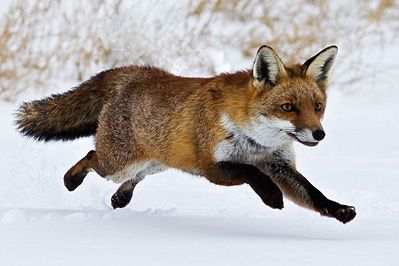
Moving from top left and clockwise:  adult foxes.  final two images:  pairs from the younger generation.  (Images courtesy of Pinterest)


Answer to Brain Teaser Question

The bus driver is walking.

Trivia’s Facts and More (10/19)

Photo by Pixabay on Pexels.com

This informative post will be published on Saturday in place of my regular one.  You are invited to participate with the opening question.

Brain Teaser Question

David’s father has three sons.  Two are named Snap and Crackle.  What is the third son’s name?

(answer found at the end of this post)

Featured Facts

The second largest wild cat in the Western Hemisphere is the cougar, which also goes by several names:  puma, mountain lion, panther, jaguar, and catamount.

Here are a few quick facts about the cougar:

  • Height (at shoulder):  2-3 feet
  • Length (body):  5-8 feet
  • Weight:  adult male, 130 pounds; adult female, 100 pounds
  • Top Speed:  25-35 miles per hour
  • Lifespan:  8-15 years, but some may live 20 years

The cougar’s range extends throughout the western United States and Canada, and all of South America.  This wild cat has proven to be vary adaptable as it is able to live in snow-covered mountains as well as in tropical rainforests.

With its short, coarse coat, long tail, and brownish color, cougars have been widely photographed.  Being a carnivore, its diet might consist of small- to medium-sized mammals such as coyotes and rodents.  While Its favorite prey is deer, cougars may also seek food from domestic livestock:  poultry, sheep, calves, goats, and pigs.

Being a nocturnal, stealth hunter of its prey, cougars are solitary as they stalk each kill.  They generally hunt at dawn or dusk.  Because of their mysterious hunting times, they are sometimes nicknamed ghost cats.  Larger animals may prey upon cougars, such as bears and wolves. 

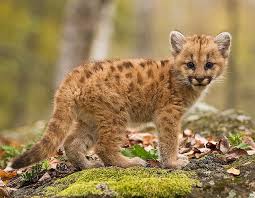
Generally, females give birth to kittens every other year.  Average size of a litter is three.  The gestation period is about 90-100 days.  Kittens are covered with dark spots, and their banded tails serve as camouflage.  Kittens stay with their mothers for up to two years.  

The physical traits of cougars’ agility and strength are legendary.  Some may be able to leap up to 18 feet from the ground to a tree branch.  Others have been observed covering a length of ground with a single bound of 20-35 feet.

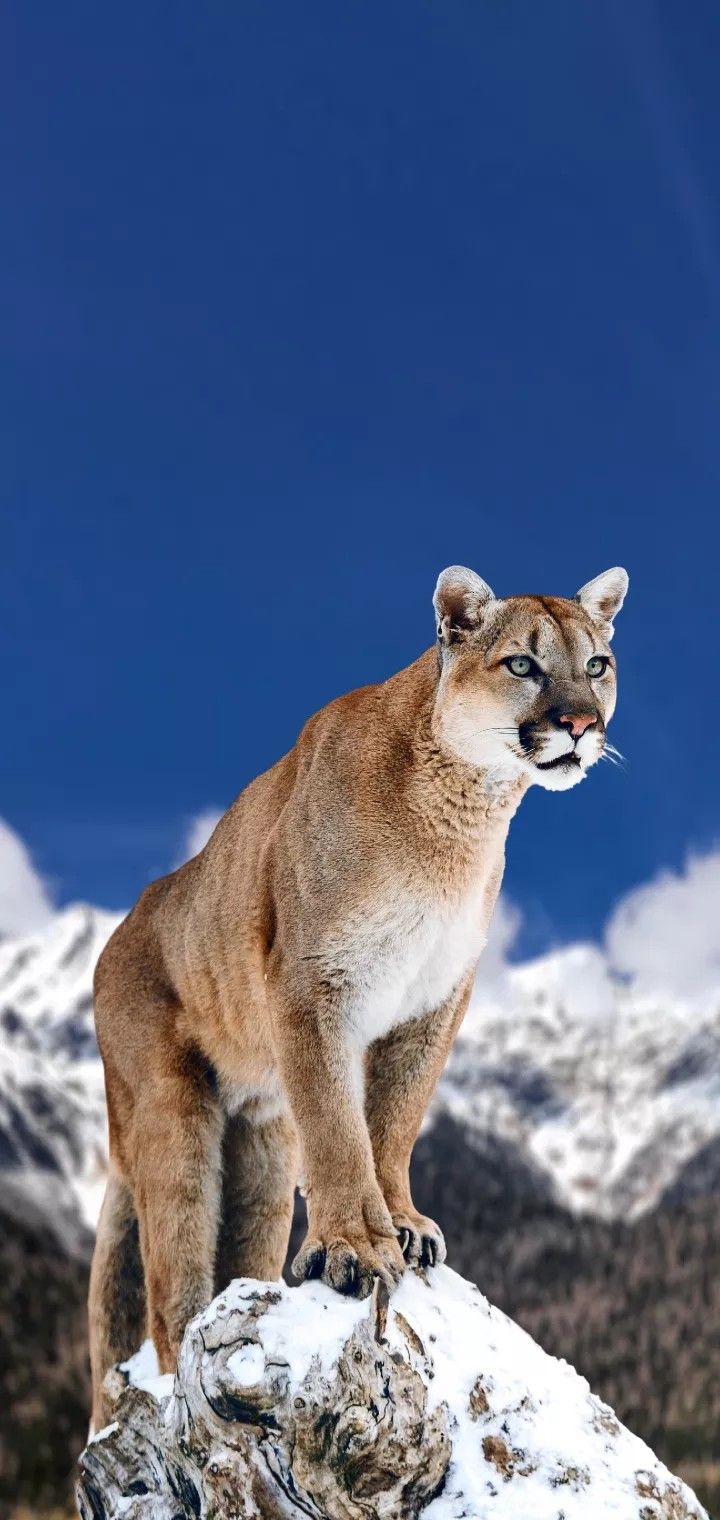
top row:  VARIOUS male cougars.  bottom row:  female with kittens and single spotted kitten (seeming to be posing for the photo).  (Images courtesy of Pinterest)


Answer to Brain Teaser Question

David (sorry, he is not nicknamed “Pop”)

Trivia’s Facts and More (9/14)

Photo by Pixabay on Pexels.com

This informative post will be published on Saturday in place of my regular one.  You are invited to participate with the opening question.

Brain Teaser Question

My attitude seems to change daily, sometimes in the very next hour.  Please pardon my windy breath, cold touch, hot temperament, and moist fingers.  Who am I?

(answer found at the end of this post)

Featured Facts

One of North America’s most curious creatures is the diminutive kangaroo rat, which lives in the dry and semi-arid deserts and grasslands.

Here are a few quick facts about the kangaroo rat:

  • Body length:  about 4-6 inches
  • Tail length:  about 7-8 inches
  • Weight:  about 5 ounces
  • Diet:  seeds, leaves, stems, grains, fruit (herbivores)
  • Lifespan:  averages 3-5 years

As one of the smallest of rodents, the kangaroo rat is related to mice and rats.  It is sometimes called the desert rat.  It possesses a large head with big eyes and small ears.  Usually its color is a sandy brown.

Being called a “kangaroo” rat, the nearly 20 different species borrow some characteristics from the Australian kangaroo.  Equipped with long rear limbs with four toes, they are able to hop like tiny kangaroos.  They also use their muscular hind legs to drum the ground.  

Being most active at night, the kangaroo rat benefits from the cooler temperature as well as using the darkness to avoid interactions with predators, such as owls, snakes, bobcats, foxes, badgers, and coyotes.  Its ability to hop up to 9 feet proves to be another asset in its necessary defense from predators.

Males and females remain separate except during during the breeding season.  Each kangaroo rat acts quite territorial as it protects its burrows and food storage.  The underground burrows provide an escape from the heat of the sun, and its kangaroo-like pouches in its large checks act as an efficient way to carry food back to store.

The life cycle of the kangaroo rat allows for breeding once or twice each year.  The gestation period lasts for 3-4 weeks.  Litters of pups average about five in number.  Pups are weaned after 2-3 weeks, and they reach sexual maturity in about 2-3 months.

top left and moving clockwise:  close-up of mature kangaroo rat, a series of underground burrows are nestled in the hillside’s sandy-like soil, a kangaroo rat entering a burrow, notice the length of the tail in contrast with the body size of the kangaroo rat, and a kangaroo rat preparing to hop.  (Images courtesy of Pinterest)


Answer to Brain Teaser Question

The weather