
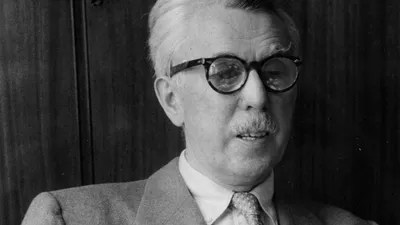
From the 20th century, one of Ohio’s true cosmopolitan individuals is James Thurber. Well-traveled with a diversity of talents, he leaves behind treasures for future generations to enjoy.
How does one describe James Thurber? His career covers so many avenues: humorist, cartoonist, author, playwright, and journalist. His talents remain visible even today in his short stories, illustrations, fables, commentary, and children’s fantasy.
Born in Columbus on December 8, 1894, Thurber grows up on the east side with the inner hub of the city located at his doorstep. His parents, Charles and Mary, raise four boys. Thurber attends Sullivant Elementary School and Douglas Junior High before graduating from East High School in 1913.
Thurber’s mother, Mame being her nickname, becomes quite an influence on young James. With her personality and humor, many of her jokes and theatrics offer him material to harvest from for his future stories and characters.
Ready to begin his next adventure, Thurber attends The Ohio State University from 1913 to 1918. He writes for the university newspaper, The Lantern. He serves as editor-in-chief of The Sun Dial, a humor and literary magazine. These further prepare him for his future years as a writer.
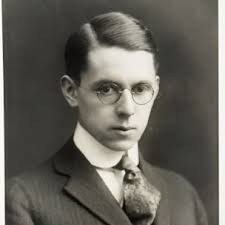
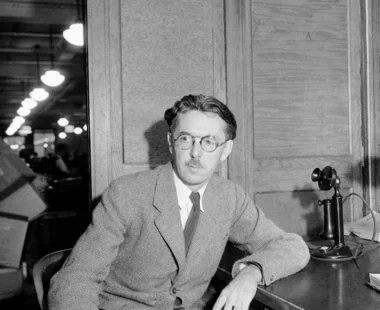
Thurber’s younger years.
In 1918, Thurber serves as a code clerk with the U.S. State Department in Washington, DC. Later he moves to Europe to work at the American embassy in Paris.
By 1920, Thurber returns to Columbus where he is employed as a newspaper reporter for The Columbus Dispatch. In 1922, he returns to Paris as a journalist for the Chicago Tribune.
By 1926, Thurber is now working as a free-lance writer for the New York Evening Post. He experiences the good fortune of a friendship with writer E. B. White (author of Stuart Little and Charlotte’s Web).
White introduces Thurber to Harold Ross, editor of The New Yorker. He is hired by Ross where he continues with his drawings and writings. Thurber’s relationship with the magazine will continue for many years to come.
Thurber remarries in 1935. Helen Wismer becomes his wife and caretaker for the rest of his life.
Many of Thurber’s drawings recall his love of dogs as well as his family life while growing up in Columbus. The New Yorker continues to use many of his drawings for its cover as well as publishing some of his short stories.
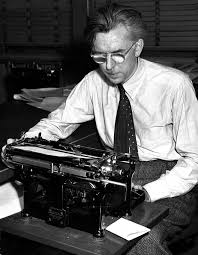
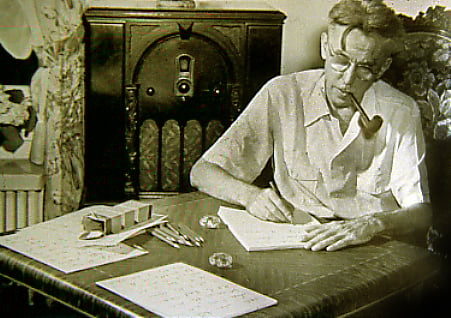
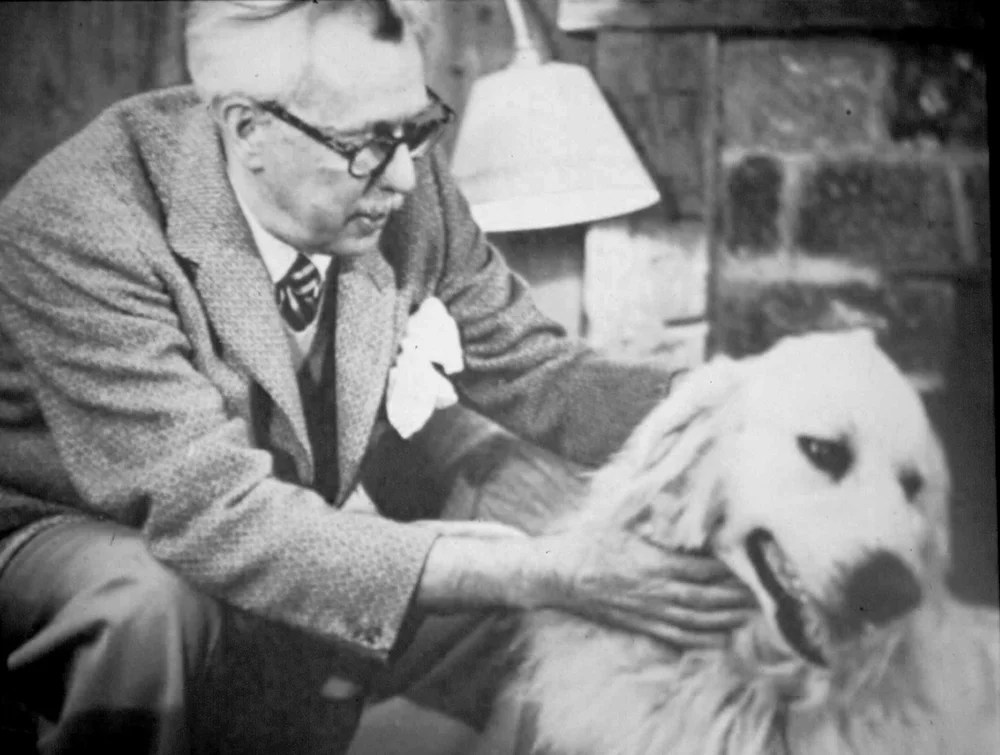
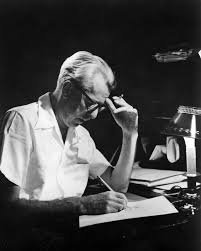
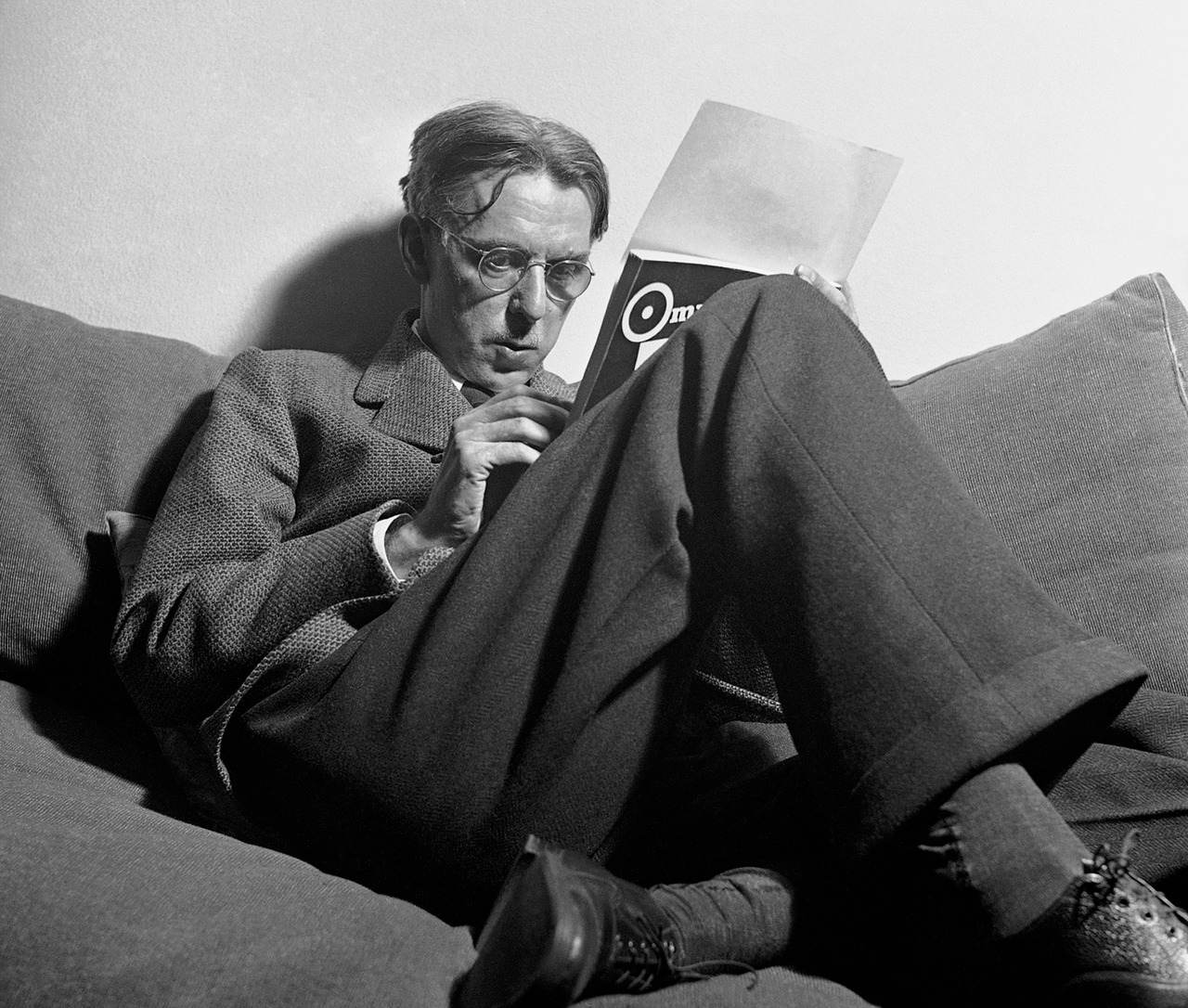
Thurber’s later years.
As a result of a childhood accident, Thurber loses his left eye. Over several years, his healthy right eye’s vision continues to deteriorate. Even with approaching blindness, he manages to produce a steady flow of drawings and writings until late in his life.
One of Thurber’s most famous short stories, “The Secret Life of Walter Mitty”, is successfully adapted for film screenplay. Its theme revolves around how a man escapes from his dull life via daydreams filled with adventure and heroism. The film stars Danny Kaye and is produced in 1947. Later the story is adapted for the Broadway theater in 1960 with Tom Ewell in the lead role.
Thurber remains active with his career’s journey until his final years. Declining vision and poor health eventually overtake him. On November 2, 1961, he passes away in New York City. He is buried in the Thurber family plot at Green Lawn Cemetery in Columbus.
Between 1914-1917, the Thurber family lives on Jefferson Avenue, a short distance from downtown Columbus. In 1984, preservation groups unite to purchase the home, which is built in 1873. With its Victorian era design, the former home continues to thrive as a museum for Thurber’s memorabilia, and it contains photographs and other items from this time period. The home also serves as a literary center for writers while sharing endless treasures of Thurber’s drawings and writings.
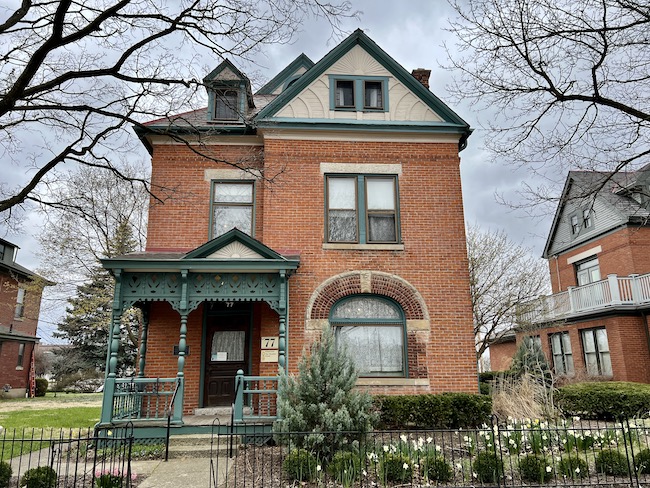
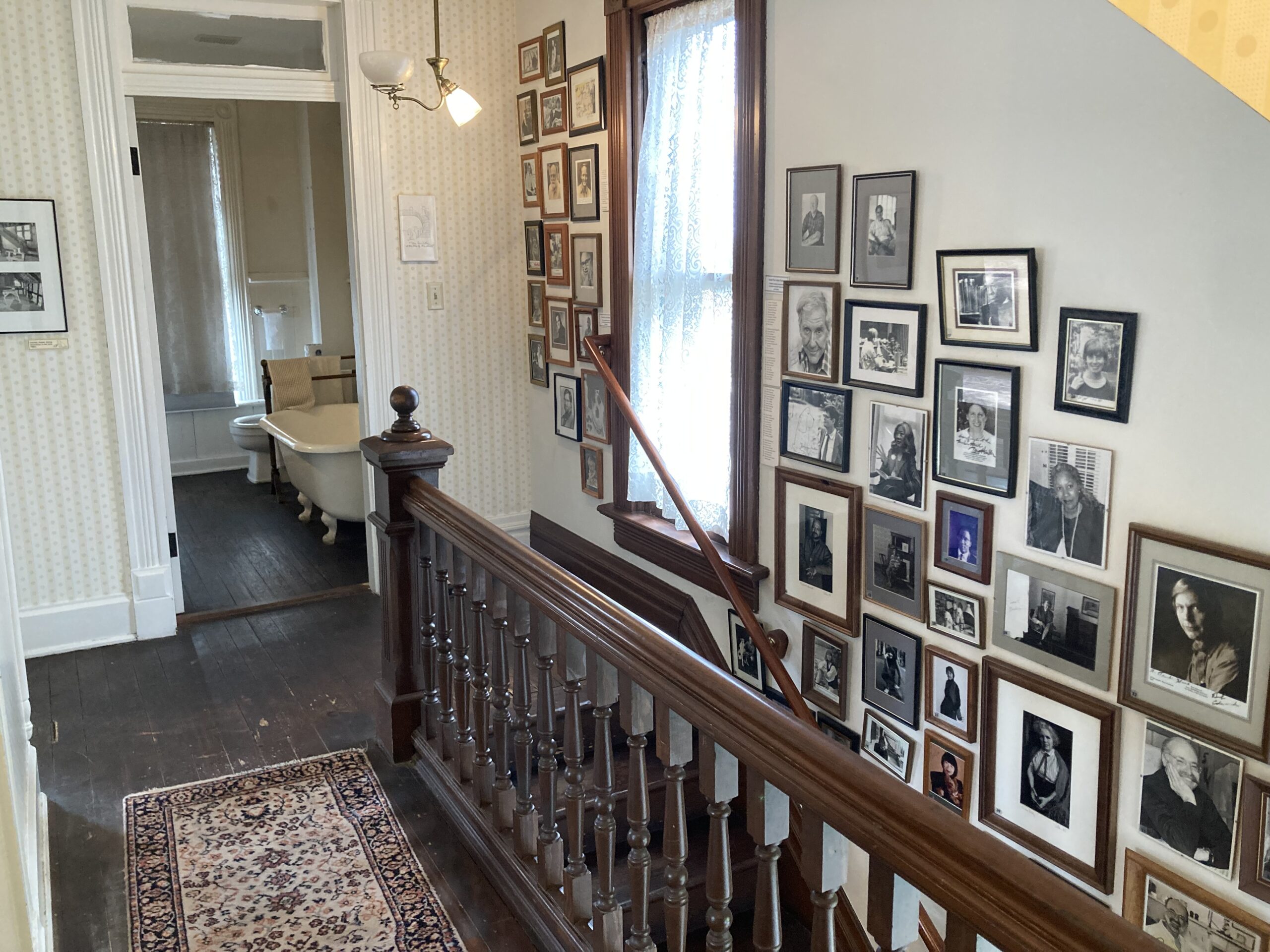
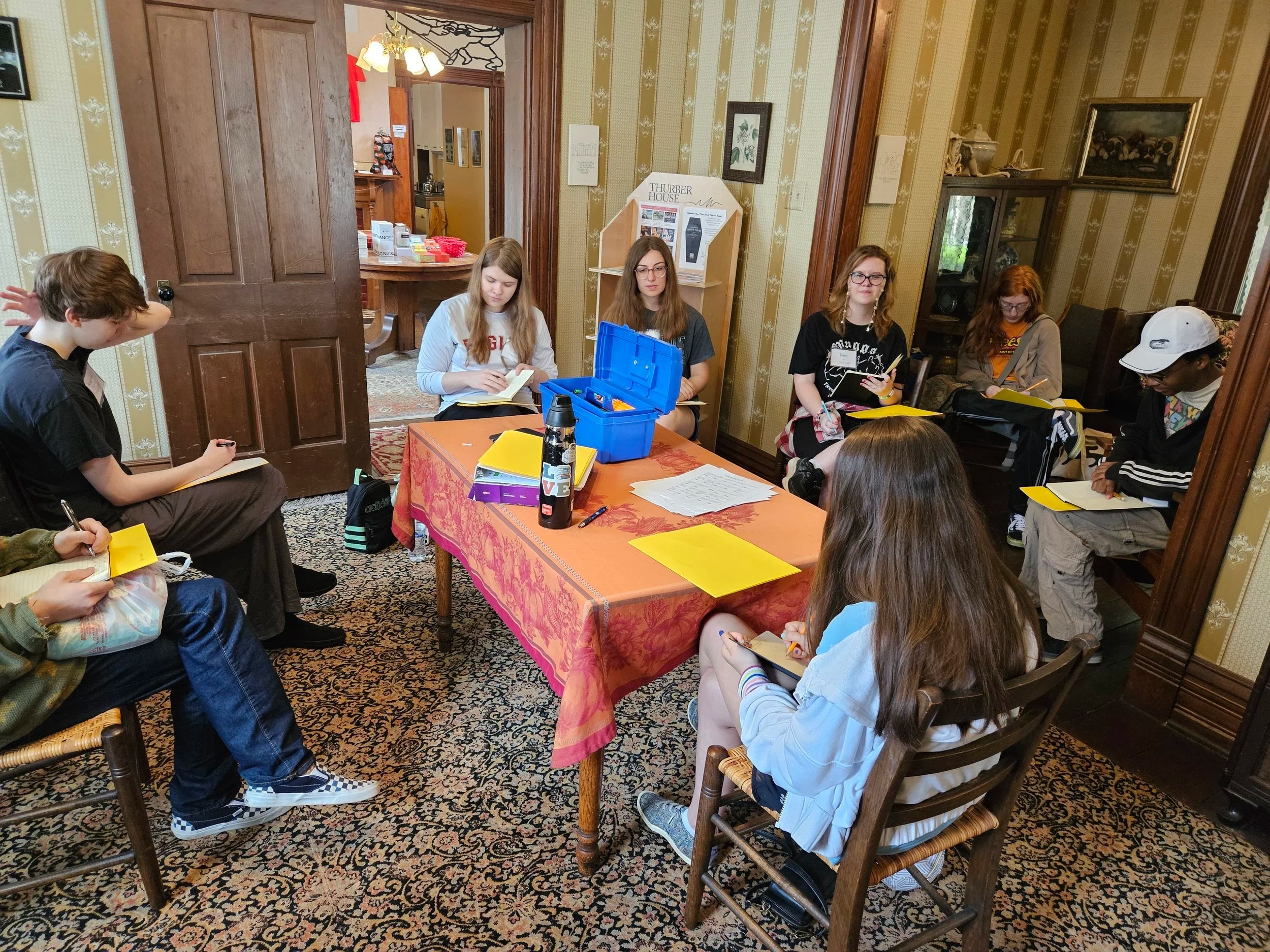
The Thurber House in Columbus.
All images courtesy of Pinterest.
 Big Sky Buckeye
Like these historical snapshots! ~ Rosie
LikeLiked by 1 person
Rosie, thank you for sharing your appreciation for this historical post.
LikeLike
I sure didn’t realize Thurber was from Ohio. Perhaps because of his connections to New York publications and such, I always thought of him as a New Yorker. One of my favorite quotations is his: “Don’t get it right, get it written.”
LikeLiked by 1 person
Linda, you are correct in knowing that Thurber’s home was in NYC in his later years. Thanks for sharing the quote.
LikeLiked by 1 person
Interesting bio of a fellow Ohioan. I wasn’t aware of Thurber’s vision issues. He sure didn’t let it hold him back! 🙂
LikeLiked by 1 person
I agree. I was spellbound in reading how he persevered in his later years with his vision nearly gone.
LikeLiked by 1 person
I knew Thurber was from Columbus. My in-laws lived their later years at the Westminster-Thurber Retirement Center there. But I’d forgotten that Thurber wrote “The Secret Life of Walter Mitty.” It was one of my favorite stories in our high school, freshman lit textbook. Thank you for sharing his bio, Richard!
LikeLiked by 1 person
Nancy, thank you for sharing more details about Thurber. I, too, can remember encountering Thurber in my high school years (probably American literature).
LikeLike
I loved watchng The Secret Life of Walter Mitty.
LikeLiked by 1 person
Awesome Kev. I need to find this film and view it myself. Your praise for it means a lot.
LikeLike
Pingback: Welcome to My Writer’s Corner | Big Sky Buckeye