
This informative post will be published on Saturday in place of my regular one. You are invited to participate with the opening question.
Brain Teaser Question
Why did the spider get a job in I.T.?
(answer found at the end of this post)
Featured Facts
One of the largest species of deer in North America is the mule deer. Its range runs from the Yukon in the north to northern Mexico in the south.
Here are some interesting facts about mule deer:
- Size: large bucks weigh on the average 200 pounds, but some have been found as large as 300 pounds (female does are smaller)
- Defining physical characteristic: large ears which resemble those of a mule
- Diet: (herbivores) dry leaves, buds, fruit, flowers, sprouting grasses, small twigs, lichens
- Lifespan: about ten years
Mule deer closely resemble white-tailed deer, yet there are significant differences. Mule deer’s larger ear size and body size separate them from white-tailed deer. Their antlers feature a forked structure, with a much wider spread between them. Many hunters prize the antlers of a mule deer buck.
Habitat is essential for a mule deer’s survival needs. Bucks seek areas rich in nutrients that will stimulate body and antler growth. In searching for these types of food, they become more vulnerable to attacks from predators (primarily wolves and coyotes). Does prefer more secure locations that will provide safety for themselves and their young fawns.
Mule deer possess outstanding vision, hearing, and smell. All of these senses provide their best defense against predators. They prefer open, rugged landscapes when they migrate away from the protection of the forest. Being incredibly agile, they can flee with the use of stotting. This technique describes how deer hop along and land on all four feet.
The rut season for mule deer usually runs from October into December. During this mating season, bucks compete for supremacy. Many are wounded several times from their battles with fellow bucks. Following the rut, they retreat into hiding in order to recover from exhaustion and injuries.
Following a seven-month long gestation period, does give birth usually with twin fawns in late spring and early summer. This time period allows for a greater abundance of nutritious food. Following birth, fawns remain hidden and protected for several days.
In some locations, mule deer numbers are declining. Interbreeding with white-tailed deer makes them more at risk to predators because a hybrid deer can neither run nor jump as well as a purebred. Forestry, drought, and growing predator populations also affect mule deer population figures.

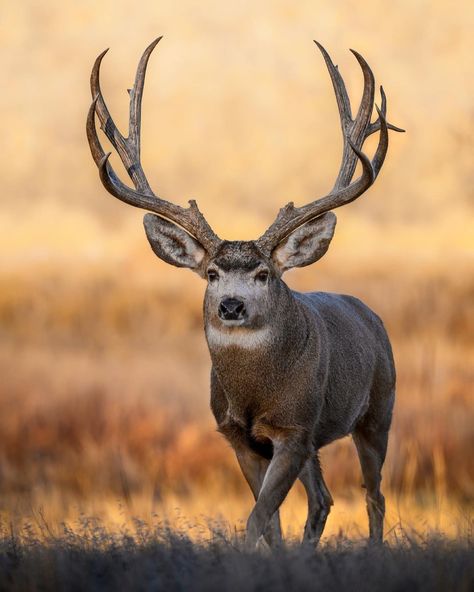


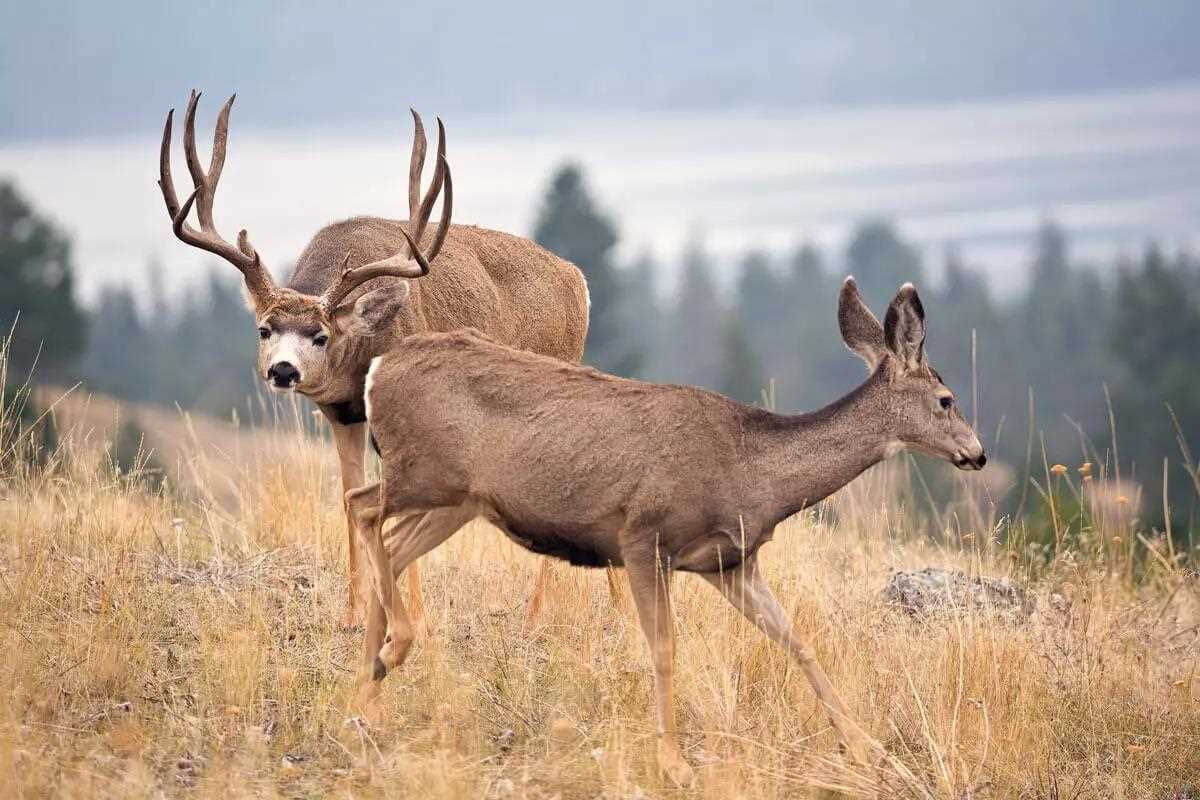
From top left and moving clockwise: trio of bucks jump a fence, buck with wide spread antlers, doe with pair of fawns, buck and doe during rut season, and two large bucks in combat during the rut. (all images courtesy of PINTEREST)
Answer to Brain Teaser Question
Because he excels in web design.
 Big Sky Buckeye
Ha, good one!
LikeLike
My words weren’t the same, but I got the thought: because it knows how to construct a web!
Mule deer are beautiful. I’ve seen them only a few times, farther west: in western Kansas, and in Utah. They’re in Texas, though: the Transpecos has desert mule deer, and the Panhandle has a mixture of Rocky Mountain and desert mule deer. One of the great stories I’ve heard about them came from a game manager on a huge ranch. He said mule deer have learned the trick of lying flat on the ground, hidden by grasses, when I vehicle comes around. Once it’s passed, they’ll get back up and continue to graze.
LikeLike
Amusing trivia, even though I didn’t get it! I think I will pass it on to my very smart grandchildren and see if they can figure it out. I think we have mostly white-tailed deer in VA although I think I have seen mule deer before in PA.
LikeLike
Beautiful creature
LikeLiked by 1 person
Indeed! My own encounters with deer in Ohio have only included white-tailed ones. I have seen a few mule deer during my years in Montana. The mule deer remind me more of the fictionalized Bamboo as an adult.
LikeLiked by 1 person
Nice
LikeLiked by 1 person