

This informative post will be published on Saturday in place of my regular one. You are invited to participate with the opening question.
Brain Teaser Question
Which of the following must will result in a positive answer.
(A) The product of 2 positive numbers
(B) The product of a positive and a negative number
(C) The sum of 2 negative numbers
(D) The product of 2 negative numbers
(answer found at the end of this post)
Featured Facts
In many parts of North America as well as the rest of the world, the mating sounds of the cicadas fill the air during late spring and early summer.
Here are a few quick facts about the cicadas in the United States:
- Body size: approximately 2 inches
- Wing span: approximately 2-3 inches
- Color: brown, green, or black body with dark head; clear wings with orange or black veins
- Habitat: wooded areas, pastures, suburban areas
Two major groups of cicadas are found in the United States. The annual species is found in much of the world while the periodical species live in the eastern region of the country and parts of the Midwest.
Cicadas resemble beetle-like creatures with very short antennae. Being herbivores, the nymphs suck on tree-root sap while the adults do not eat.
Adult cicadas are large, flying insects with bulging eyes and veined wings. Nymphs appear as stocky and grublike with legs. After reaching adulthood, the average lifespan of a cicada is 3-4 weeks.
The life cycle of a cicada begins when a female makes a slit in a tree branch. She wedges her eggs inside the branch. Hatched nymphs drop from the branch to the ground where they burrow into soil to reach the juicy, nutritious tree roots.
In late spring and early summer, adult cicadas emerge from the warming soil, which has sustained them as nymphs. They scale a nearby tree to finish their final transformation. During the molting stage, they will acquire wings. Depending upon the species, they may emerge every three years (“dogday” cicadas) or after 13-17 years (periodical cicadas).
As the mature adults begin their short lifespan, males begin their mating ritual with their loud clacking or buzzing songs. The life cycle begins all over once again.
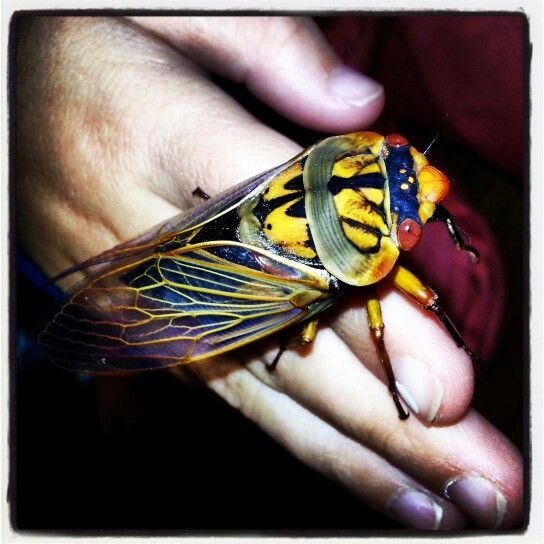
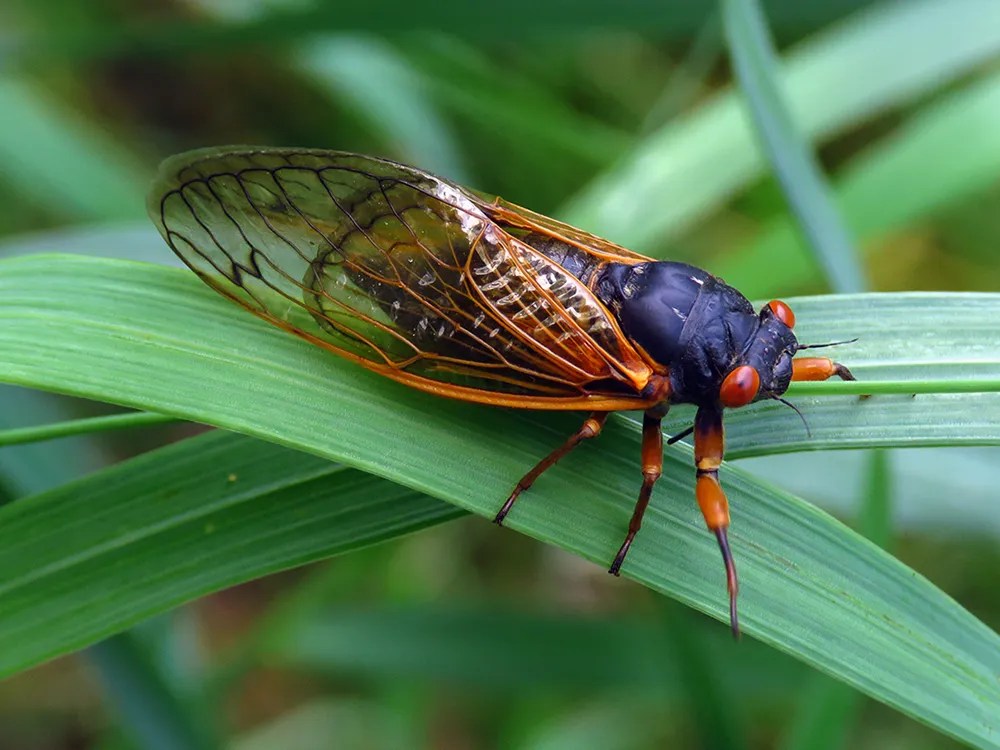

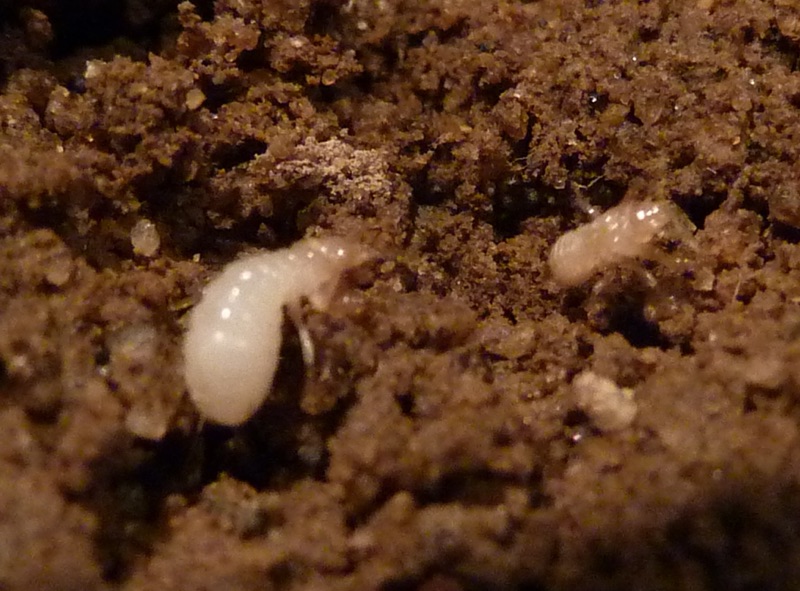
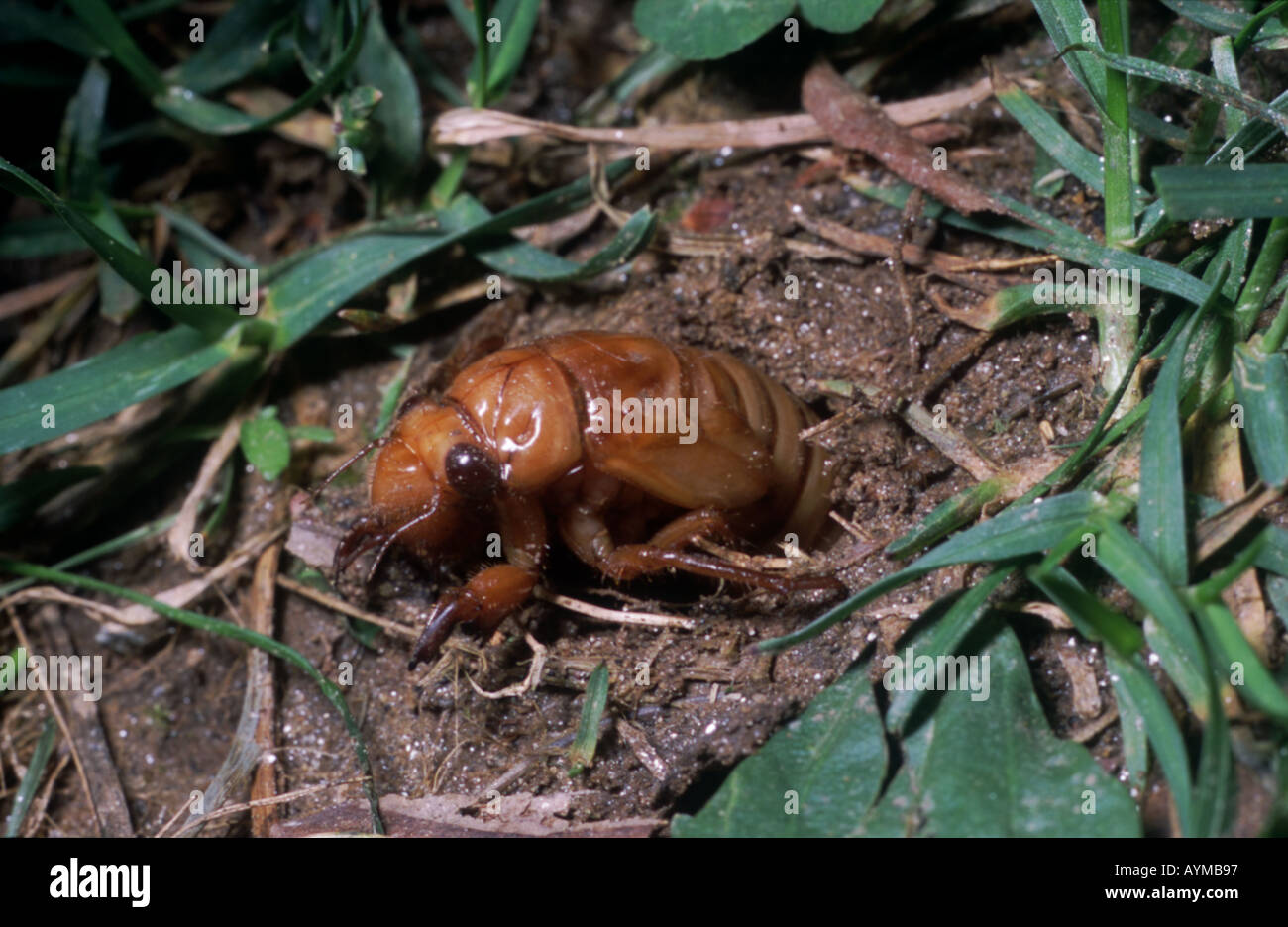
top three photos: adult cicadas. Bottom two photos: cicada nymphs. (Images courtesy of Pinterest)
Answer to Brain Teaser Question
A and D
 Big Sky Buckeye