

This informative post will be published on Saturday in place of my regular one. You are invited to participate with the opening question.
Brain Teaser Question
Find the next letter in the sequence.
A B D G K P ?
(answer found at the end of this post)
Featured Facts
Sometimes called a timber wolf, the gray wolf’s numbers have declined significantly in the United States. They are still plentiful in many rural areas around the rest of the world.
Here are a few quick facts about the gray wolf:
- Habitat: forests, mountains, grasslands, tundra, and deserts
- Weight: males up to 145 lbs or 65 kg, females up to 100 lbs or 45 kg
- Diet: small mammals (rats, squirrels, rabbits) and large mammals (deer, elk, caribou, moose, and even bison)
- Lifespan: typically 6-8 years
In the United States, the historic range of the gray wolf once covered nearly two-thirds of the country. Today, wolves are primarily found in Alaska, northern Michigan, northern Wisconsin, western Montana, northern Idaho, northeastern Oregon, and Yellowstone National Park.
Hunted extensively, America’s wolf population plummeted. In Yellowstone National Park, the last wolf was killed in 1926. Reintroduced in 1995, the numbers in Yellowstone have grown to approximately 100.
Following a kill, a wolf will eat 20-30 lbs. (10-13 kg) of meat. They are capable of surviving up to two weeks without eating. In some areas, they threaten livestock. In the Yellowstone ecosystem, elf make up nearly 90 percent of the wolves’ diet during the winter months.
Wolves are organized together in packs of 4-7 adults. They are highly intelligent and hunt as a group. Being excellent and diligent hunters, they may hunt all night. They can run long distances, and some hunt in territories up to 1,000 sq. miles (2,600 sq. kg).
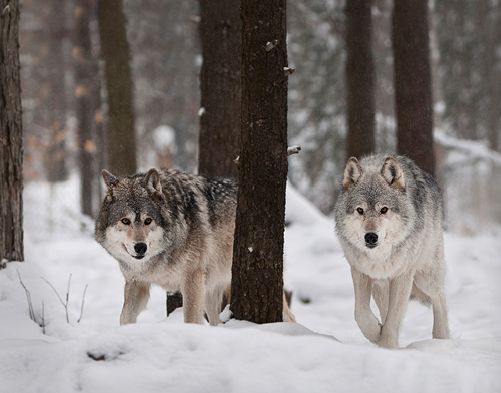
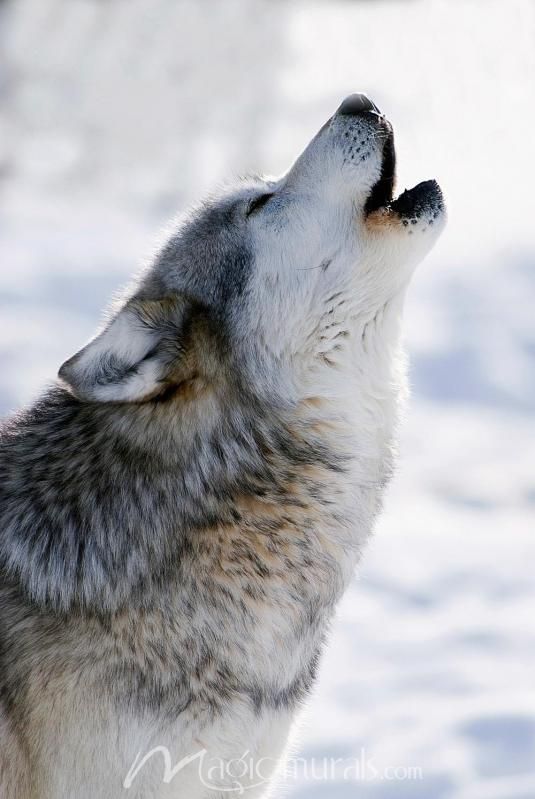
left: pair of wolves on the prowl. right: howling wolf (their own form of gps). (photographs courtesy of pinterest.)
Answer to Brain Teaser Question
V
 Big Sky Buckeye