

This informative post will be posted on Saturday along with my usual writing. You are invited to participate with the opening question.
Brain Teaser Question
“We’ve yet to receive a complaint about our Vulcan vacuum cleaner.” This sales pitch would seem foolish if the customer knew that the Vulcan cleaner:
(A) is a very good machine
(B) is a new model that just came out
(C) has been sold to more homeowners than any other vacuum cleaner
(D) may be used on all different types of carpet
(E) is the end product of six years of research and development
(answer found at the end of this post)
Featured Facts
Much-aligned is the common flea. This blood-feeding parasite thrives in humid environments, and it is capable to carrying and spreading disease.
Here are some interesting facts about the flea:
- Color: Reddish-brown to dark brown
- Size: Smaller than a grain of rice
- Habitat: Among hairs or feathers of “host” mammals and birds
- Diet: Larvae: organic matter; adults: blood
Females are generally larger than males, and they are capable to laying up to 50 eggs per day. Over a lifetime, many will lay up to 2,000 eggs.
The bodily characteristics for this small, wingless insect include: long back legs, flat abdomen with spines and bristles, and a touch outer skin (makes it more difficult to kill).
Fleas have been a major carrier of diseases when they transfer from a host to humans. Many can jump up to 13 inches (33 cm), which allows each to transfer easily to infect another host. Fortunately, modern antibiotics and sound sanitation practices have minimized the fleas’ impact in today’s world.
As history has shown, this has not always been the case. During the Middle Ages the European continent was devastated by the bubonic plague (also called the black death). Fleas fed on infected rats, the rats died, and the fleas spread sickness to humans. Many communities were totally devastated.

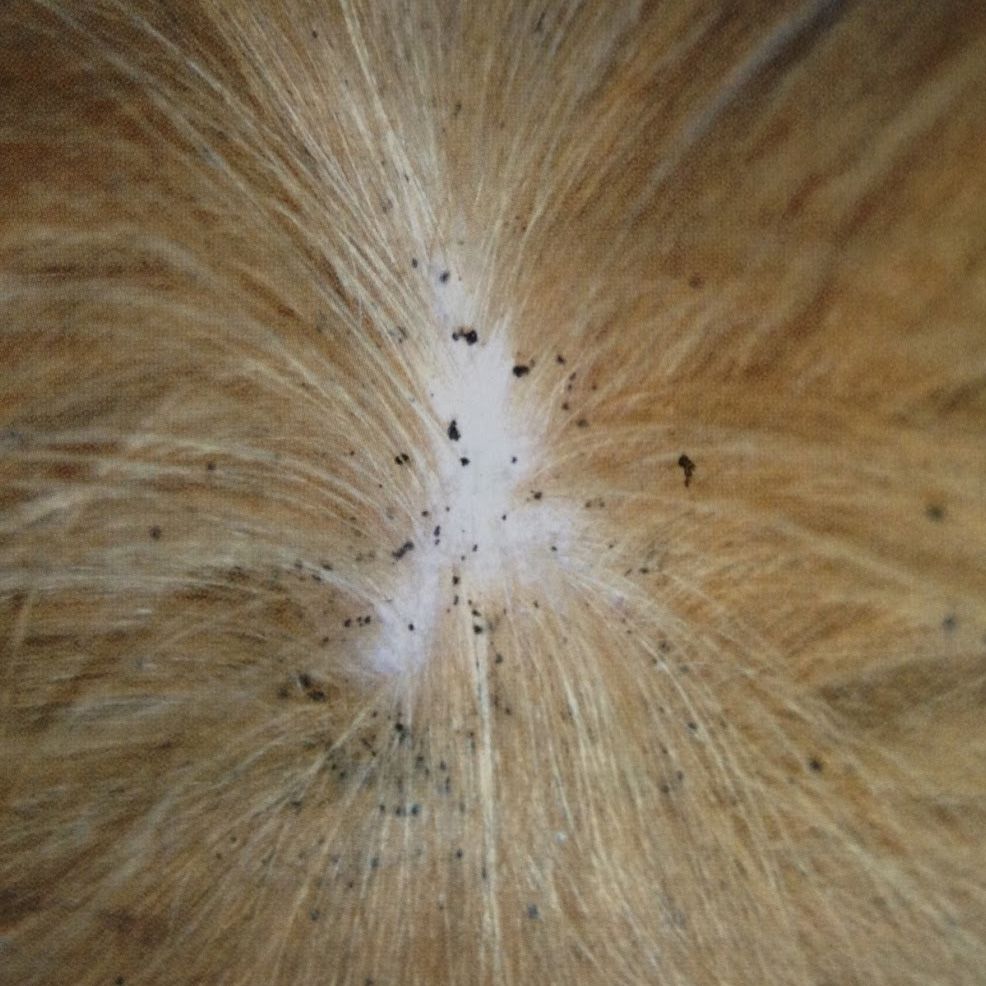
left: adult flea. right: flea infestation on a dog. (Courtesy of pinterest)
Answer to Brain Teaser Question
Answer “B”
 Big Sky Buckeye